Tag Archives: food

Navigating the Great Retro Revival

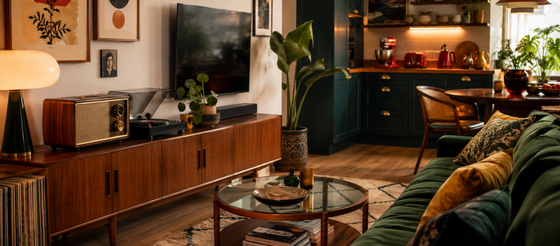
There was a time, not so long ago, when the “home of the future” was envisioned as a sterile, white-on-white laboratory. It was a world of hidden wires, touch-sensitive glass, and appliances that looked more like medical equipment than domestic companions. But walk into any stylish UK home in 2026, and you’ll find a very different story unfolding. The clinical minimalism that once dominated our Pinterest boards has been unceremoniously evicted, replaced by what design experts are calling “Eclectic Maximalism.”

For those of us in the electrical retail and trade sector, this isn’t just a shift in wallpaper choice. It is a fundamental pivot in how consumers view the hardware in their lives. Design is no longer a secondary consideration to be checked off after the spec sheet; for the modern consumer, design is the spec sheet. We are witnessing a “Retro Revival” that blends the warmth of the past with the intelligence of the future, and the opportunities for retailers are as vibrant as a cherry-red fridge.

Minimalism to Personality

The UK’s living rooms are currently undergoing a fascinating transformation. We are seeing a move away from the “buy it new, hide it away” mentality toward a more curated, character-rich aesthetic. The data tells a compelling story: the UK’s second-hand furniture market is on a trajectory to hit £1.1 billion by 2027. This represents a staggering 40.8% growth since 2022.

Why does this matter to the CE (Consumer Electronics) industry? Because the backdrop against which our products sit has changed. Consumers aren’t looking for a television or a speaker that blends into a white wall; they are looking for pieces that complement a “vintage maximalist” vibe, a search term that has spiked by 260% recently.

When a customer spends thousands on a mid-century sideboard or a refurbished 1970s velvet sofa, they don’t want a plastic-heavy, utilitarian piece of tech sitting on top of it. They want hardware that feels like furniture. This is the era of the “statement piece.” Retailers who understand this shift are no longer just selling gadgets; they are selling the finishing touch to an interior design dream.

Vinyl and Beyond

Nowhere is this nostalgia more evident than in the home entertainment sector. If you had told a tech analyst twenty years ago that in 2025, vinyl records would account for nearly 63% of all physical music sales, they would have laughed you out of the boardroom. And yet, here we are.

The UK vinyl market saw a massive 19.9% year-on-year increase in 2025, generating £174.7 million. This isn’t just a niche hobby for audiophiles anymore; it’s a mainstream cultural phenomenon. The tactile nature of physical media has returned with such force that even cassette tapes, a format many of us thought we’d left in the glovebox of a 1988 Ford Sierra, saw a 204.7% surge in early 2025.

But here is the most interesting part for the retail trade: 50% of people who bought a vinyl record in the UK last year did so as a collector’s or display item, without actually owning a record player. This highlights a critical insight: the aesthetic of the tech is often as valuable as its function.

However, for those who do want to listen, the demand for hardware is following suit. We’re seeing a boom in turntables and radios that look like they’ve been plucked from a 1950s diner but house high-fidelity internals. Take the radio market as a prime example. While analogue AM/FM listening has plummeted to 19%, DAB has become the titan of live radio, accounting for 48% of listening hours. The winning formula for retailers today is “Vintage Shell, Modern Soul” DAB radios with wood-grain finishes, tactile dials, and cloth speaker grilles that nonetheless offer seamless Bluetooth connectivity and crystal-clear digital reception.

The Kitchen Revamp

If the living room is the soul of the home, the kitchen is the heart, and currently, that heart is beating in full colour. For years, “safe” was synonymous with white or light grey cabinetry. Those days are over.

According to the latest Houzz UK Kitchen Trends Study, we are rapidly abandoning the clinical look. Grey still holds a lead at 21%, but blue (17%) and green (13%) are catching up fast. Interestingly, the UK has developed a particular love affair with green kitchens, leading the way in Europe. This shift toward deeper, more organic tones is creating a massive demand for appliances that can either contrast or complement these bold choices.

Enter the “Cherry Red” vibe. Identified as a major design trend for 2025 and 2026, this bold, retro-inspired shade is becoming the ultimate statement colour for small domestic appliances (SDAs). When a consumer invests in a kitchen renovation where the median spend has risen by 34% year-on-year, they aren’t looking for a £15 supermarket toaster. They are looking for the “cherry on top” of their £20,000 investment.

The SDA market is currently a powerhouse, valued at £2.8 billion in 2025 and forecast to hit £3.7 billion by 2030. This growth is being driven by design-led, multi-functional models. Consumers are looking for that perfect intersection of a retro silhouette, think rounded edges, chrome levers, and analogue temperature gauges and “smart” functionality.

The “Thrifty” High-End Consumer

One of the most surprising trends we’ve identified at Gekko is the rise of the second-hand kitchen. Much like the furniture market, there is a growing movement toward purchasing high-quality, pre-owned kitchen furniture. This is driven by a mix of sustainability concerns and a desire for “eclectic styling” that you simply can’t get from a flat-pack showroom.

For the electrical retailer, this presents a unique challenge and opportunity. A customer who has saved money by sourcing a high-end second-hand kitchen often has more “headroom” in their budget for premium, brand-new appliances. They want the vintage look of the cabinetry to be punctuated by the reliability and efficiency of modern technology. They are looking for the contrast of wood or laminate worktops (which hold a 14% market share) against the sleek, colourful pops of a retro-style kettle or a high-end range cooker.

Navigating the Retail Landscape

With 73% of UK consumers now choosing to purchase SDAs online to compare styles and prices, the role of the physical showroom has never been more vital or more pressured. To compete, the high street must lean into the “theatre” of the Retro Revival.

Online shopping is efficient, but it is rarely emotional. You cannot feel the weight of a chrome lever or see the way a “Cherry Red” finish catches the light on a digital screen. Retailers need to move away from “aisles of boxes” and toward “lifestyle vignettes.” Show the customer how that DAB radio looks on a mid-century sideboard; show them how the green cabinetry pops against a copper-trimmed toaster.

Final Thoughts

The “Retro Revival” is more than just a trend; it is a reaction. In an increasingly digital, intangible world, consumers are hungry for things they can touch, feel, and connect with. They want the reliability of 2026 technology, but they want it wrapped in the comfort and character of the past.

As we look toward 2027 and beyond, the winners in our industry will be those who recognise that we aren’t just selling “units.” We are selling the components of a home. Whether it’s a vinyl enthusiast looking for a deck that matches their “vintage maximalist” lounge, or a home cook looking for a stand mixer that serves as a piece of art on their green marble worktop, the message is clear:

Design isn’t just “everything”, it’s the only thing that makes a house feel like a home.

To read the full published article by Rupert Cook, Marketing Director, please visit ERT Magazine

Tagged , , , , , , , , , , , ,

The nostalgia trend: Why do companies revive old brands?

A cultural institution in the 90s, defunct in the 00s and making a comeback in the 20s. MFI Furniture is set to relaunch on the British high street after owner Victorian Plumbing revealed plans to relaunch the brand in early 2026, promising a refresh without the frustrations of long online queues or dynamic pricing. Other legacy brands such as Comet and Debenhams have also relaunched in recent times, capitalising on a trend of nostalgia sweeping across retail. But what’s behind this retro revival? Are these brands filling a gap that British retail is missing – or, like the Gallaghers reforming Oasis, simply cashing in on the feel-good factor of our youth?

Why do companies revive brands?

Founder and CEO of OnBuy Cas Paton, the company which is behind the revival of electronics brand Comet, stated that the company’s decision to revive the brand was driven by a genuine appreciation for its place in British retail history.

“For many, Comet represented more than just a store. It was a trusted destination for technology and home appliances and a name people grew up with. We saw an opportunity not just to revive a brand, but to reimagine it for a new era. This was about honouring a legacy while creating something meaningful and relevant for today’s consumers.

“Comet is a name that resonates deeply with generations of UK consumers. It carries a legacy of trust, value and expertise, but it never fully realised its potential in the digital space. Despite its absence from the market, the brand still enjoys significant recognition and goodwill, which is increasingly rare in today’s retail landscape,” he says.

However, Daniel Todaro, CEO of marketing consultancy Gekko and Isobel Grad, strategy director at brand and design consultancy Elmwood, believe that relaunches like this are just looking to capitalise on the nostalgia attached to these brands. Daniel Todaro, CEO of marketing consultancy Gekko, believes that revivals happen because people do not like change and that they relate to brands which have a nostalgic element to them. “The brand reminds you of your childhood or it reminds you of going there to buy your first suit or all the other kinds of personal moments in your life,” he says.

Grad agrees stating “in these chaotic and unprecedented times, nostalgia acts as a welcome comfort blanket, giving us a feeling of continuity and security, and for retailers, bringing back a lost, once much-loved, brand can be a lucrative move.”

Todaro notes that this nostalgia gives the brands a leg up as they already have brand awareness despite effectively being a new company. A brand new company would have to spend a lot of time and money establishing itself as a brand that people were aware of and trusted but a brand like Comet or Debenhams already has recognition and a certain expectation from consumers.

Vicky Bullen, CEO at design agency Coley Porter Bell states that “consumers already have a deep-seated emotional connection with a brand that they may have known from their younger days. People already know what these brands stand for, they already understand its place in their lives meaning that less investment is needed to re-establish a brand than to start afresh with a new brand.”

For Paton, reviving an old brand is about more than just bringing back a familiar name. “Consumers are increasingly looking for credible alternatives to the dominant players, and Comet gives us a powerful platform to take on some of the bigger players in consumer electronics like Currys and Amazon. Backed by OnBuy’s marketplace infrastructure, we’re creating a fresh, competitive environment that will offer better value, more choice, and a renewed focus on trust,” he states.

Is it really the same brand?

Often, revived brands return in name only. Debenhams, for example, now exists solely online under Boohoo’s ownership, and functions more as a rebranded sub-label than a department store chain. Todaro believes this can cause confusion amongst people who were not already familiar with the fact that Debenhams was already a sub brand of Boohoo.

Similarly, revived brands risk falling short of nostalgic expectations. Consumers may associate names like Comet or MFI with a certain quality – one the new incarnation may struggle to match. In some cases, customers may even overestimate how good the original brand was, further raising the bar.

While legacy recognition can provide a shortcut to market, it also opens the door to harsh comparisons that new brands don’t face. And some shoppers may hold negative associations from the past, making them less willing to give the new version a chance. “If a company is trying to replicate a brand as it was back in the day, then the danger is you it’s potentially not going to be as people remembered it,” says Todaro.

Does the nostalgia trend say anything about wider society?

This revival trend extends beyond retail. Many clothing and fashion brands have been designing and selling clothes taking inspiration from the fashion of the 90s and the Y2K era of the early to mid 00s. It is also not just specific to fashion and extends into the revival of vinyl. It is not solely specific to retail either, numerous movies or TV shows from the past have been rebooted or been given sequels suggesting nostalgia in retail is merely reflective of a wider societal trend where we have become more nostalgic than previous generations. “We are a society facing big challenges, cost of living worries, a world full of war, and political upheaval here and abroad. All these things make people yearn for simpler, better times. Nostalgia is born of that,” Bullen explains.

“I think we are more nostalgic than in the past because we’re all looking for something secure and comfortable. We are in a society now where things cost more money, it’s more difficult to live and to make ends meet. We end up in households where our kids stay with us much longer. We end up in households where students don’t necessarily go and live away from home. We see nostalgia as comforting but it’s also value for money. We like to invest in the things that we think we know well and trust,” agrees Todaro.

What comes next? Woolworths?

The consensus seems to be that until things change, nostalgia is here to stay. Both Bullen and Todaro suggest it’s a likely candidate for revival. As generalist retailers like Wilko disappear and WHSmith undergoes rebranding, there may be space for a trusted high street name to return.

Todaro posits that the loss of Wilko on the high street and the imminent rebrand of WHSmith opens the door for a more generalist kind of shop to return. He also believes that the fact Poundland is looking to cut back on space and is potentially looking to sell could make the demand for Woolworths even higher. “If Poundland was to disappear off the high street, there would be no retailer left that you could go into and buy a bar of soap and a packet of screws,” he says.

Overall, it remains to be seen if this model has any longevity once the initial burst of nostalgia fades. Any company which chooses to revive a legacy brand will have to ensure that it has planned for what comes after this otherwise the brand will be condemned to repeat history.

To read the published article featuring comments by Dan Todaro, Gekko Group CEO, please visit Retail Sector

Photo by Mike Bird

Tagged , , , , , , , , , ,

Let’s take this outdoors

As the great British weather improves our attention moves to making the most of every moment we can enjoy outdoors, in our gardens, balconies or public spaces with friends, family and pets. We do so at home with a view to bring the indoors outdoors and live alfresco to eat, drink, play, listen and watch. As a result, this change in habits opens up new trends for the consumer electronics industry and opportunities across many categories for all retailers.

With the advent of the bifold door, the garden as an additional room to your house is now common and therefore with more families spilling out into the garden, it’s not that unusual to see an outdoor kitchen combined with dining and living spaces which convert into entertaining and cinemas spaces at dusk.

So let’s start with cooking outdoors and the new appliances appearing on the wish lists of would-be chefs looking beyond traditional BBQs and wanting to offer their guests more than the usual fare of burgers, bangers and cremated chicken drumsticks. Peaking into the world of Grilling opens up a plethora of options for homeowners with buying decisions being made for a variety of reasons including their culinary ambitions, the desire to impress guests, the outdoor space available and of course budget.

The Grilling category includes portable grills, smokers and outdoor ovens and in the UK is estimated to be worth around £177 million currently and is expected to reach almost £200 million within 5 years, growing at a CAGR of 3.70% during the forecast period (2024-2029).

One brand leading the way here is Shark Ninja, which offers a range of innovative outdoor cooking appliances to meet the needs of many consumers and in doing so, enhancing their culinary experiences. The Ninja outdoor range, which has been marketed heavily over recent months, includes the Woodfire Electric Outdoor Oven, Ninja Woodfire Electric BBQ Grill & Smoker & the Woodfire Pro Connect XL Electric BBQ Grill & Smoker, which as the name suggests, features smart connectivity allowing the user to control their BBQ & monitor cooking progress on their phone.

Another area for growth is the outdoor Pizza oven market which is anticipated to grow at a considerable rate over the next 5 years. A number of brands are making their mark including Gozny, Ooni and Witt, all of whom offer a modern, convenient, user-friendly take on the pizza oven.  Together with outdoor electric grills, pizza ovens are something home appliance retailers should certainly consider ranging, opening up sales opportunities in other areas of the home.

One step on from the outdoor appliances are actual outdoor kitchens, something that frequently makes me envious. Imagine having an outdoor kitchen equipped with built-in appliances like refrigerators and sinks. Standard in smart Mediterranean villas for decades but now popping up in Acacia Avenue across Britain, this is a trend that for many who sell kitchens, may see their business evolve over time. Believe it or not, the outdoor kitchen category grew globally from $6.3 billion last year to $6.7 billion in 2024 and is estimated to grow to almost $9 billion by 2033.  

So once you’ve whipped up a culinary feast in your outdoor kitchen, what’s next? Well perhaps kick back and set the mood with a smart outdoor lighting system allowing homes to control and customise their setups with ease. These app controlled solutions, from the likes of Philips Hue, can be programmed to change colours, adjust brightness levels and can be combined with your music via an outdoor audio system to enhance the outdoor living experience. We all know that music adds ambience to outdoor spaces and all-weather solutions are becoming increasingly popular, with weatherproof speakers and sound systems specifically designed for outdoor use that are wireless and Bluetooth-enabled, allowing users to stream music from their smartphones or other devices.

To complete the indoors outdoors experience, CE retailers should be adding some outdoor TV options to their ranges, offering their customers the opportunity of immersive outdoor cinema experiences, day or night. The category is starting to build momentum and unsurprisingly Samsung is at the forefront with The Terrace which comes in both 65” and 75” screen sizes and is specifically designed for open-air use. Another brand to watch is Sylvox which has a much larger range of outdoor TVs. Aside from being weatherproof, they are also more durable and resistant to extreme temperatures and feature exceptionally bright, anti-reflection screens so you can enjoy your favourite content even on the sunniest of days.  Bearing in mind the high price points, the large screen sizes and the intended setting for these TVs, I would suggest that offering an installation service would be a real benefit to your customers.

So, British weather permitting, it is entirely possible to create a new heart of the home, outdoors. By transforming your garden into a living, dining and entertainment space, homeowners can truly embrace an al fresco lifestyle. As we head towards summer, retailers can capitalise upon the opportunity by complementing their usual in-store offering with something different, where your customers can let their imaginations run wild!

To read the published article written by Dan Todaro, Managing Director please visit ERT

Photo From Brown Jordan Outdoor Kitchens

Tagged , , , , , , , , ,