Monthly Archives: July 2026

How can you capitalise on the £9bn Back-to-School Market?

With parents facing financial squeezes and children influenced by social media, Rupert Cook explores how housewares retailers can win big on hydration, food-on-the-go, and durability.

The annual “Back to School” (BTS) window is a commercial juggernaut, firmly established as one of the most critical trading periods for UK retail outside of the Golden Quarter. Valued at between £8.82 billion and £9 billion ($11.44 billion USD) in 2024, the market is on a robust trajectory, with a projected compound annual growth rate (CAGR) of 4.14% leading up to 2035.

For housewares retailers, however, the challenge is breaking through the noise of uniform promotions and apparel lines to secure a slice of this massive spend. While the electronics segment commanded the largest market share by value in 2024 due to the rising necessity of digital learning tools, the shifting habits of the British household open up lucrative doors for the home and kitchen sectors, if retailers know where to steer their inventory.

The Food-on-the-Go Phenomenon

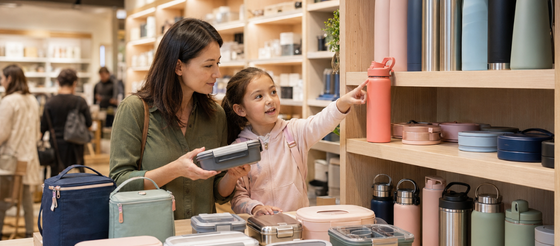
The daily school lunch has evolved far beyond a basic sandwich wrapped in clingfilm. Packed lunches are now a major lifestyle category, driven by a mix of nutritional awareness and economic shifts.

Data from early September 2025 highlights what can only be described as the “Lunchbox Spike.” As the autumn term commenced, grocery data revealed massive spending surges on packed lunch staples compared to the preceding fortnight:

  • Yogurt: Up 26%
  • Cheddar cheese: Up 24%
  • Sliced cooked meats: Up 17%

While grocery retailers naturally enjoy the immediate lift in food sales, it is housewares stockists who supply the hardware to make these lunches possible. Parents require high-quality, reliable vessels to store, protect, and cool these perishables.

Furthermore, when looking at what children actually want, the desire for high-end lifestyle products is undeniable. Consumer research tracking the most requested items by UK children and teenagers for the new term shows that functional housewares are competing directly with fashion:

Top Term-Time Requests by UK Youth:

  • New clothes: 43%
  • New stationery/notebooks: 35%
  • Branded schoolbags: 34%
  • Premium water bottles: 27%
  • Designer bags: 23%

The fact that premium water bottles outrank designer bags and closely trail stationery is a massive indicator for housewares buyers. Hydration is no longer a utility; it is a status symbol on the school desk. The youth market has moved decisively away from basic plastic towards vacuum-insulated stainless steel, trend-led colourways, and innovative features like built-in straw lids and leak-proof seals.

The Budget vs ‘Pester Power’ Paradox

Navigating the upcoming BTS season requires an understanding of a clear consumer paradox: parents are feeling a severe financial squeeze, yet children are wielding more influence than ever over what gets bought.

On one side of the coin, the financial strain is stark. Parents reported an expected spend of £329 per child for the 2025 back-to-school season. For a fifth of families, this represented an average increase of £137, or a staggering 70% spike, compared to the previous year. Consequently, 56% of parents admitted to feeling intense pressure to spend beyond their means, with 28% relying on savings built up throughout the year to cover the costs.

This drive for value caused a notable shift in the clothing sector: while the overall childrenswear market dipped slightly over the summer of 2025, grocery retailers (such as Tesco, Asda, and Sainsbury’s) grew their BTS childrenswear sales by 8.4% due to convenience and value pricing. Similarly, 13.1% of schoolwear shoppers moved toward the circular economy, purchasing pre-worn uniform items through second-hand platforms like Vinted or community swaps.

On the other side of the coin sits the youth demographic. Over a third (36%) of UK parents claim that social media is driving their children’s demand for trendy new school essentials, with peer pressure and online influencers cited as the primary culprits.

Actionable Opportunities for Housewares Retailers

To capitalise on this £9 billion market, housewares retailers must position themselves as the solution to both sides of this paradox: offering the value and longevity that parents need, alongside the aesthetic appeal that children demand.

1. Implement a Tiered ‘Good-Better-Best’ Strategy

With over half of parents feeling the pinch, a solid foundation of value-driven, durable food prep containers is a must. However, given that 27% of children are actively demanding premium water bottles, retailers must not under-index on high-end stock. Ensure your inventory covers both entry-level utility and high-margin, brand-led hydration and lunchware solutions.

2. Capitalise on Content and Visual Merchandising

If 36% of demand is driven by TikTok and Instagram trends, your instore displays need to feel visual and “shareable.” Avoid sterile rows of plastic boxes. Instead, create colour-coordinated, lifestyle-focused “Fuel Station” displays that showcase matching sets of insulated lunch bags, bento boxes, and thermal flasks.

3. Sell the “Cost-Per-Use” Longevity Angle

Connect with the 13.1% of sustainability-minded consumers by marketing products on their durability. A parent under financial pressure may balk at a premium lunch flask initially, but clear signage highlighting that a stainless steel, impact-resistant thermal flask will last for years saving money on broken plastic replacements, changes the value proposition entirely.

4. Drive Cross-Category Bundles

Maximise transaction values by bundling complementary items. Pair lunch storage with small preparation gadgets (like mini food processors for making healthy snacks or egg cookers) to target parents who are actively meal-prepping to save money during the term-time rush.

Balancing the Basket

The back-to-school market is no longer a purely utilitarian exercise in buying trousers and pencils; it has transformed into a lifestyle-led retail event. By balancing value-driven durability with the aspirational products driven by social media, housewares retailers can secure an enviable and highly profitable share of this seasonal peak.

To read the published article by Rupert Cook, Marketing Director, please visit Housewares Magazine

Tagged , , , , , , , ,

What the World Cup Reveals About Effective Sales Promotions

Global sporting events have long represented some of the biggest opportunities in the marketing calendar and the recent World Cup has been no exception, generating huge audiences, heightened consumer spending and an influx of brand activity. But beyond the headlines, the biggest successes highlight how more brands are adding real value without the hefty spend associated with sponsorship deals and advertising.

Effective sales promotions were not built around the event itself, they are built around consumer behaviour. The brands that were performing best during the World Cup were not necessarily those with the biggest sponsorship deals, but those that understand how fans are watching, shopping, celebrating and sharing throughout the tournament.

Global sporting events still offer real commercial opportunity

According to a Bank of America report, the 2026 World Cup was set to be the biggest in history, with 75% of the world set to engage with the event in some way. The opportunity was not simply the size of the audience, but the opportunity to resonate with them by building promotions around real consumer moments and behaviours.

But adding football branding to existing campaigns will never get the job done. The most successful campaigns highlighted an important lesson for marketers: promotional activity only works when it is timely, relevant and gives fans a reason to engage, offering something genuinely useful, like Lidl’s £500,000 World Cup voucher giveaway, or creating a memorable and shareable photo opportunity, such as the giant World Cup trophy LEGO built from 1.3 million bricks.

England’s progress to the quarter finals was estimated to have generated a £500m boost for the UK economy, while Barclays reported spending increases across beer, pubs, clothing and online retail. The opportunity for brands wasn’t simply visibility, it was about understanding that consumers were already primed to spend, and setting up the most effective promotions to encourage it.

Global retailers responded in different ways. Here in the UK for example, Tesco supported England matchdays with free deliveries, football-themed merchandising and playful in-store touches like packaging redesigns to resemble footballs, recognising that consumers weren’t just watching football; they were shopping, hosting and celebrating around it.

The brands that recognised that consumers stocked up before kick-off, browsed their phones during breaks, celebrated wins with friends and were more willing to spend when emotion and occasion aligned are those scoring the goals.

Promotions are a worthy alternative

Beyond responsive campaigns, this year’s World Cup made it clear that brands do not need an official logo on the pitch or a multimillion-pound media budget to benefit from the tournament. While Fox Sports reportedly charged between $200,000 (£152,000) and $300,000 (£227,000) for a 30-second World Cup advertising slot, rising to around $750,000 (£567,000) during USA matches and the latter stages of the competition, many brands found more accessible ways to capitalise on heightened consumer demand.

This World Cup required non-partner branding to be concealed at tournament stadiums, and as the naming rights partners of two main fixture stadiums, Gillette and Levis both took this into their own hands. Levis masked the wordmark of its distinctive logo with a simple sheet, but its distinct batwing silhouette ensured it was still familiar. Similarly, Gillette covered its stadium branding in shaving foam, with both brands capitalising on the moment across their social channels, and owning the narrative. Among FIFA World Cup fans, Levi’s WOM Exposure rose from 17.4 on June 11 to 22.9 on July 12, while Gillette’s increased from 16.1 to 19.2.

Advertising can play an important role in driving growth, but it does not act alone. WARC notes that advertising is only one contributor to growth, with brand performance shaped by a much broader mix of commercial factors. Advertising still matters, but promotions often become the mechanism that converts awareness into action.

Investing in promotional mechanics is offering a more measurable route to commercial return than competing for expensive broadcast visibility. Instead, many retailers and challenger brands are focusing on these tactics to encourage immediate action. Loyalty offers, limited-time discounts, CRM campaigns and in-store activations allow brands to engage consumers in the moments they are already thinking about food, drink, gatherings and celebrations.

Meet audiences where they are

Leaning into today’s dual screen environment, mobile traffic data from Virgin Media O2 revealed increased smartphone activity during hydration breaks and half-time, reinforcing how naturally audiences now move between watching, scrolling and shopping. Reaching those audiences at exactly the right time is delivering dividends.

Rather than offering standalone discounts, the strongest campaigns integrated with the wider fan experience, rewarding existing customers, encouraging repeat purchases and creating reasons to engage throughout the tournament rather than only during the biggest fixtures. This resulted in worthwhile promotional activity that felt timely and relevant, while delivering clear commercial outcomes, highlighting how promotions can be used during global sporting events – with lessons that can be applied across BAU activity.

Relevance beats visibility

Any major sporting event generates a huge volume of marketing activity, and fans have come to expect that brands will inevitably participate, but generic campaigns can quickly blur into a sea of logos and noise. The most effective campaigns have stood out by interpreting the occasion in a way that still feels true to the brand.

Brands that have acted in the heat of the moment, driving conversation with clever social or activations, and made viewing occasions more than just a gathering with friends to watch the game are those that will earn lasting brand equity.

For example, in the final week of the tournament, UK supermarket Iceland’s decision to rename stores in England players’ hometowns landed well because it was simple, locally resonant and easy for consumers to engage with. The small-budget activity drove headlines while still feeling connected to the event.

During major sporting events, consumers are already shopping differently and the brands that connect marketing activity with those moments authentically are more likely to turn attention into measurable ROI.

Beyond the global pitch, how do marketers stay ready?

Any global event, whether sport or entertainment, creates the same temptation for brands to prioritise presence over purpose. But the biggest lesson from this World Cup is not that brands need to shout louder, it is that promotional activity performs best when it reflects how people actually experience the tournament.

Whether this was through retail offers, loyalty rewards, CRM, local activations or social campaigns, the strongest brands did not simply tap into football’s audience. They understood the moments that matter to consumers and built valuable promotions worth acting on, giving consumers surprise and delight moments that brought a tournament happening thousands of miles away to life.

To read the published article by Daniel Todaro, CEO, Gekko Group, please visit Advertising Week

Tagged , , , , , , , , , , , ,

Have human interactions become the new premium retail experience?

AI adoption for customer service is accelerating. Not only is it seen as a solution for making interactions faster and more efficient, but it is also seen as an investment to ultimately cut overheads in the face of increasing wage bills and tax burdens. The pace of transformation is so fast, in fact, that Gartner predicts Agentic AI will autonomously resolve 80% of common customer service issues without human intervention by 2029.

Just because we can, doesn’t mean we should – at least not until it can be embedded seamlessly into the customer experience. It’s not uncommon to have been frustrated by unintuitive, unhelpful chatbots and, despite 83% of consumers preferring to speak to a real person, the opportunities to do so are few and far between.

Consumers still exercise choice

To add insult to the injury of not being able to engage with customer service in the way they’d prefer, consumers are faced with poor quality AI interactions – and that’s costing businesses. A study from CEBR and Trustpilot revealed that poor experiences may have cost UK retail firms as much as £8.6bn in the previous 12 months, with two-thirds of consumers lessening their interactions with a business as a result of AI.

AI is also impacting the broader customer experience, with over two-thirds of consumers who have used AI when shopping unable to name a single experience that impressed them. Given the reliance on AI overviews, search and summaries, inaccurate information is likely the cause. Accurate tagging and product descriptions are critical for AI to do its job well, but many retailers aren’t monitoring and optimising their digital shelves effectively, which means experiences are falling flat.

While bad experiences put consumers off shopping with a retailer, the reverse is also true: great experiences are worth more. As consumers pursue experiences that meet their preferences, brands well-known for providing superior customer service are winning out.

It comes down to choice

Digital channels are not the only places where AI and technology are disrupting the retail journey. In-store retail experiences are being deprioritised, with on-the-ground headcount steadily falling as technology once again replaces the human touch.

Outside of the Black Friday rush, 75% of purchases are still made in-store, but omnichannel shopping is increasing. The growth of both webrooming – where consumers browse online before making a purchase in-store – and showrooming, where the opposite is true, highlights the need for consistently excellent experiences across channels.

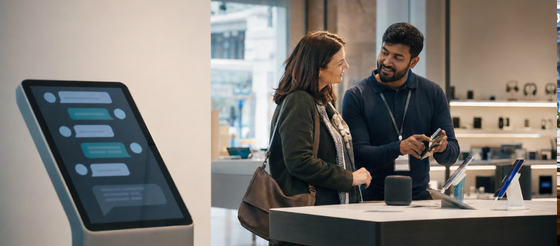
When it comes to big-ticket items, many shoppers still prefer to go into store to see and feel a product, even if they then shop around for the best price. With technical specifications becoming more complicated, it is harder to understand which product best meets our needs, and – in addition to seeing a product in the flesh – many head to store to seek advice and reassurance, which means sales staff must be knowledgeable and, more importantly, available.

A lack of human interactions in store compounds any concerns about digital service. If you cannot engage with humans at any point in the purchase journey – from consideration to aftercare – how comfortable do you feel making a purchase with that brand?

Human experience is the new premium

It is vital that retailers continue to meet consumers’ expectations of their purchase experiences. High-quality service engenders trust and brand equity, with brand reputation and previous encounters also steering consideration. In the current operating environment, where gaining or maintaining share of market and achieving sales targets is already challenging, service standards should be a priority.

As AI interactions continue to disappoint and access to in-store support becomes limited, the human touch is becoming a rarity. Most consumers are prepared to pay more for better customer service, but being able to engage with real people – online and face-to-face – should not be limited to consumers willing to pay a premium. Ultimately, people buy from people they know, like and trust.

For retailers, this means balancing the financial benefits of transformation with customer centricity. Failing to deliver what your customers want can foster dissatisfaction. If your customers start to look elsewhere, no amount of cost-cutting can save you: as once trust is gone, it’s likely gone forever.

To read the published article by Daniel Todaro, CEO, Gekko Group, please visit Retail Sector

Tagged , , , , , , , , ,