
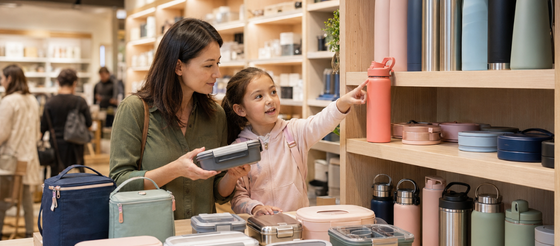
With parents facing financial squeezes and children influenced by social media, Rupert Cook explores how housewares retailers can win big on hydration, food-on-the-go, and durability.
The annual “Back to School” (BTS) window is a commercial juggernaut, firmly established as one of the most critical trading periods for UK retail outside of the Golden Quarter. Valued at between £8.82 billion and £9 billion ($11.44 billion USD) in 2024, the market is on a robust trajectory, with a projected compound annual growth rate (CAGR) of 4.14% leading up to 2035.
For housewares retailers, however, the challenge is breaking through the noise of uniform promotions and apparel lines to secure a slice of this massive spend. While the electronics segment commanded the largest market share by value in 2024 due to the rising necessity of digital learning tools, the shifting habits of the British household open up lucrative doors for the home and kitchen sectors, if retailers know where to steer their inventory.
The Food-on-the-Go Phenomenon
The daily school lunch has evolved far beyond a basic sandwich wrapped in clingfilm. Packed lunches are now a major lifestyle category, driven by a mix of nutritional awareness and economic shifts.
Data from early September 2025 highlights what can only be described as the “Lunchbox Spike.” As the autumn term commenced, grocery data revealed massive spending surges on packed lunch staples compared to the preceding fortnight:
- Yogurt: Up 26%
- Cheddar cheese: Up 24%
- Sliced cooked meats: Up 17%
While grocery retailers naturally enjoy the immediate lift in food sales, it is housewares stockists who supply the hardware to make these lunches possible. Parents require high-quality, reliable vessels to store, protect, and cool these perishables.
Furthermore, when looking at what children actually want, the desire for high-end lifestyle products is undeniable. Consumer research tracking the most requested items by UK children and teenagers for the new term shows that functional housewares are competing directly with fashion:
Top Term-Time Requests by UK Youth:
- New clothes: 43%
- New stationery/notebooks: 35%
- Branded schoolbags: 34%
- Premium water bottles: 27%
- Designer bags: 23%
The fact that premium water bottles outrank designer bags and closely trail stationery is a massive indicator for housewares buyers. Hydration is no longer a utility; it is a status symbol on the school desk. The youth market has moved decisively away from basic plastic towards vacuum-insulated stainless steel, trend-led colourways, and innovative features like built-in straw lids and leak-proof seals.
The Budget vs ‘Pester Power’ Paradox
Navigating the upcoming BTS season requires an understanding of a clear consumer paradox: parents are feeling a severe financial squeeze, yet children are wielding more influence than ever over what gets bought.
On one side of the coin, the financial strain is stark. Parents reported an expected spend of £329 per child for the 2025 back-to-school season. For a fifth of families, this represented an average increase of £137, or a staggering 70% spike, compared to the previous year. Consequently, 56% of parents admitted to feeling intense pressure to spend beyond their means, with 28% relying on savings built up throughout the year to cover the costs.
This drive for value caused a notable shift in the clothing sector: while the overall childrenswear market dipped slightly over the summer of 2025, grocery retailers (such as Tesco, Asda, and Sainsbury’s) grew their BTS childrenswear sales by 8.4% due to convenience and value pricing. Similarly, 13.1% of schoolwear shoppers moved toward the circular economy, purchasing pre-worn uniform items through second-hand platforms like Vinted or community swaps.
On the other side of the coin sits the youth demographic. Over a third (36%) of UK parents claim that social media is driving their children’s demand for trendy new school essentials, with peer pressure and online influencers cited as the primary culprits.
Actionable Opportunities for Housewares Retailers
To capitalise on this £9 billion market, housewares retailers must position themselves as the solution to both sides of this paradox: offering the value and longevity that parents need, alongside the aesthetic appeal that children demand.
1. Implement a Tiered ‘Good-Better-Best’ Strategy
With over half of parents feeling the pinch, a solid foundation of value-driven, durable food prep containers is a must. However, given that 27% of children are actively demanding premium water bottles, retailers must not under-index on high-end stock. Ensure your inventory covers both entry-level utility and high-margin, brand-led hydration and lunchware solutions.
2. Capitalise on Content and Visual Merchandising
If 36% of demand is driven by TikTok and Instagram trends, your instore displays need to feel visual and “shareable.” Avoid sterile rows of plastic boxes. Instead, create colour-coordinated, lifestyle-focused “Fuel Station” displays that showcase matching sets of insulated lunch bags, bento boxes, and thermal flasks.
3. Sell the “Cost-Per-Use” Longevity Angle
Connect with the 13.1% of sustainability-minded consumers by marketing products on their durability. A parent under financial pressure may balk at a premium lunch flask initially, but clear signage highlighting that a stainless steel, impact-resistant thermal flask will last for years saving money on broken plastic replacements, changes the value proposition entirely.
4. Drive Cross-Category Bundles
Maximise transaction values by bundling complementary items. Pair lunch storage with small preparation gadgets (like mini food processors for making healthy snacks or egg cookers) to target parents who are actively meal-prepping to save money during the term-time rush.
Balancing the Basket
The back-to-school market is no longer a purely utilitarian exercise in buying trousers and pencils; it has transformed into a lifestyle-led retail event. By balancing value-driven durability with the aspirational products driven by social media, housewares retailers can secure an enviable and highly profitable share of this seasonal peak.
To read the published article by Rupert Cook, Marketing Director, please visit Housewares Magazine

