Sport sponsorship: the good, the bad and the politics

Image

Sponsoring major sporting events on an international playing field can bring rewards to brands. It’s any marketer’s dream and brings boundless opportunities for brands. There is return, beyond the cache of being associated with such high profile events. After all, there is the index-linked effect on sales, which can’t be ignored, as well as the value of a brand’s stock and overall stature in today’s economic climate.

You only have to tot up the figures to see how lucrative this market is. Adidas claims that the London 2012 Olympics boosted its sales, while Kantar reports that from 2004 through 2013, the Super Bowl game has generated $2 billion of network advertising sales from more than 130 marketers.

However, while sponsorship can give brands a chance to promote themselves on a global stage, as well as enter new markets, they must be prepared for the politics too. The 2008 Beijing Olympics saw sponsors targeted for their association with the event, with protesters putting pressure on them over China’s human rights record. There was also much scrutiny spotlighted on the London 2012 over brands that were not aligned with the Olympic values. Heineken and Cadbury, McDonalds and Coca-Cola bore the brunt of the negativity in light of not being wholly associated with good health. When people took to the streets in Rio over the Brazilian Governments preparations for the 2014 World Cup, the media turned to the sponsors for their response.

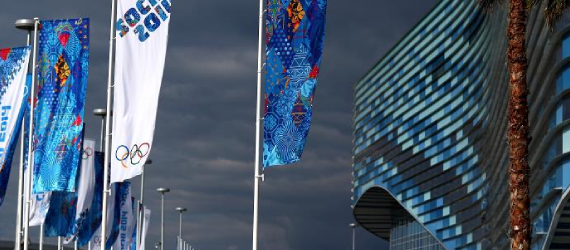
Now, it’s Sochi where some sponsors have found themselves having to handle difficult political questions over human rights and the government’s controversial law banning so-called gay ‘propaganda’. These are brands that simply signed up to sponsor one of the biggest events in the world, and presumably support the ethics of the Olympics movement. When McDonald’s started using #CheersToSochi on Twitter to cheer on athletes, protestors hijacked the hashtag.

Now when you search for the hashtag you’ll see reams of fiery messages directed at sponsors. Commentators have used the same McDonald’s branded Twitter feed to attack Visa, Procter & Gamble and other long-time Olympic sponsors that have issued statements backing a non-discriminatory games — but stopped short of condemning Russia’s “homosexual propaganda” laws. AT&T, a Team USA sponsor but not a global Olympics backer, has been the only brand with official Olympic ties to publicly condemn Russia’s laws.

Many brands take a ‘politics-neutral’ approach, avoiding taking sides on controversial or political issues. Silence can often be golden if a brand doesn’t have anything relevant to say or the credibility to say it. However, when they’re involved in massive sponsorships, it becomes very difficult for brands to maintain this position. And when they don’t respond they’re deemed as complicit anyhow. Or they could be like Google and change their Doodle to the colours of the rainbow.  

But regardless of whether a brand decides to jump headfirst into the political ring or stay well clear, if they do so they must be prepared for the consequences.  The reality is that we need these global brands to support the global events they sponsor. They serve to inspire us, our children, our nations and create a bubble where for several weeks of the year, the world unites around one event together in the name of sport. We should never ignore the issues but for the sake of the athletes, perhaps put the politics to one side and get on with the games and applaud human endeavour made possible with the support of brand sponsorship.

By Dan Todaro, MD, Gekko

Read the full article at http://www.utalkmarketing.com/Pages/Article.aspx?ArticleID=23636&Title=Sport_sponsorship:_the_good,_the_bad_and_the_politics

Tagged , , , , , , , , ,

Wearable tech could be very lucrative with the right execution

Image

Britain is a country with a passion for the latest technology. Consumption figures are huge with Britons spending £9billion on new tech devices. Clearly, this underlines just how present gizmos and gadgets are in our daily lives. What this figure also represents is a healthy sector that is ripe for the picking and one that technology and electronic retailers operate in. However, with the dawn of another year new tech trends are making themselves known and retailers must be abreast of them in order to get a slice of a lucrative market.

At the International Consumer Electronics Show in Las Vegas many new devices made an appearance. One of this year’s stars looks to be a Bluetooth-enabled toothbrush from Kolibree, which will tell your phone how “efficiently” you’ve been brushing your teeth, and for how long.

Technology by its very nature is an ever evolving sector, with the new quickly replacing the old and all but the most tech-adverse consumers wanting to keep abreast of what is coming on to the market. This desire to have what’s hot and new is one of the reasons why 2014 looks like it will be the year of wearable technology products. Beyond the constraints of the typical mobile phone or tablet, wearable tech means products that are not only portable, but are hands-free. Think of Google’s Glass or Samsung’s smartwatch. Much more than a straightforward time keeping device, the smartwatch is a transportable tech hub giving users access to all their data points, conveniently located on their wrist. In essence, its convenient aspect complements the general rhythm of the wearer’s everyday life.

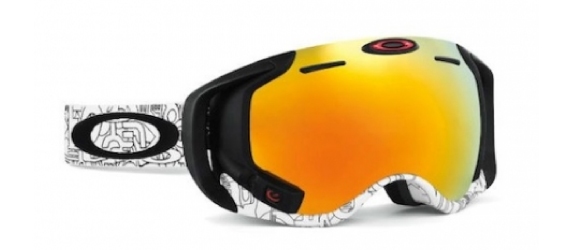
This lifestyle-based approach is often targeted towards the health conscious. Personal health and wellbeing will be important factors in all wearable devices as consumers try to rationalise buying ‘gadget bling’ under the pretext of it improving their health and fitness. Take the Fitbit Force, a newly released wristband that learns your daily activity, calories burned, your sleeping patterns and weight. The brand understands that to be successful, wearable tech must not only chime with consumers’ lifestyle needs but also present a level of desirability. The consumer must genuinely want to buy the product and that usually means presenting it more as a lifestyle item and less like a complicated piece of technological innovation. CES has also shown that wearable technology and the connected health category now even extends to your pets, with US tech firm Voyce announcing a smart collar for dogs.

There is also a significant trend to manufacture tech with a more obvious focus on fashion and style. There were clear examples at CES to demonstrate that tech companies are starting to think about fashion and design. The Netatmo June bracelet is made with Louis Vuitton and Camille Toupet-designed jewels that track your sun exposure. There was also the MetaWatch, designed by ex-Fossil engineers and made with expensive metals and classic leather wristbands. However, the most noteworthy wearable at CES was the Pebble Steel smartwatch. It’s designed to be worn with either a stainless steel band or a genuine leather strap, forgoing the ostentatious sportiness of the original for a modern, sleek look – essentially embedding a level of customisability to match its style nous. Its designer Steve Johns said that the new design was influenced by both traditional watches and modern technology like mobile phones. This is a balancing act that may prove difficult, but will ultimately be what the consumer is looking for.

But what does this mean for the retailer? Clearly the fashion-focused watches represent the apogee of interactive but stylish consumer technology. However, it also represents that the more accessible, wearable tech items are of primary interest to the retailer. These devices that have a strong consumer lifestyle element mean that retailers are in the privileged position of being able to sell big-ticket items that have an inherent level of desirability. This means that these products are relatively simple to sell; retailers just need a structured through-the-line approach with multiple touchpoints in order to exploit them. Get the execution right and this new trend could turn out to be very lucrative indeed.

read the full article at http://www.pcr-online.biz/news/read/opinion-wearable-tech-could-be-very-lucrative-with-the-right-execution/033011

Tagged , , , ,

IPA Bellwether Q4 2013: Industry reaction

bellwether

The Q4 2013 IPA Bellwether Report, published on Thursday, reveals a strong upwards revision to marketing budgets, marking the fifth quarter of consecutive growth and the second-highest rate of growth in the survey’s history.

The latest report also indicates that companies are “loosening their purse strings” as worries about the wider UK economy subside.

Here, Newsline presents industry reaction and analysis to the findings from Daniel Todaro of Gekko:

This is another remarkably encouraging report that highlights wider industry confidence in the British economy and its future prospects. Although the report is broadly positive, there is a clear split in where marketers’ money is going.

Once again, digital spending takes the lead as more and more people consume through smartphones and tablets, while sales promotion is also up, which suggests that attracting shoppers through neat tactics in-store and through mobile is paying off.

However, with marketing budgets on the up there will be increasing pressure on brands to deliver. As the consumer landscape broadens, with more and more comprehensive pictures being built up through the combination of data analytics, strategic thinking and predictive modelling, new consumer profiles are coming to the fore.

Marketers need to be aware of these in order to operate effectively. With increased budgets there is more opportunity to build long lasting relationships with consumers. Brands just need to be aware of increased expectations.

Read the full article at http://mediatel.co.uk/newsline/2014/01/16/ipa-bellwether-q4-2013-industry-reaction/

Wearable Tech: The Ultimate Lifestyle Product?

cesblog

Britain is a tech hungry country. Last year, Britons spent £9 billion on new tech devices and carried around £22billion worth of gear around with them – a hefty sum, reflecting the dominance of gadgetry in our everyday lives. Preparations for Christmas 2013 focused on new and up- and – coming technology, with many tech brands pushing their latest product heavily. This trend is set to continue in 2014 as high-end consumer-facing technology becomes an ever more viable and long-lasting proposition.

The new devices set to make an appearance at the International Consumer Electronics Show in Las Vegas this week are a perfect example. One of this year’s stars looks to be a Bluetooth-enabled toothbrush from Kolibree, which will tell your phone how “efficiently” you’ve been brushing your teeth, and for how long. Technology by its very nature is an ever evolving sector, with the new quickly replacing the old and all but the most tech-adverse consumers wanting to keep abreast of what is coming on to the market. This desire to have what’s hot and new is one of the reasons why 2014 looks like it will be the year of wearable technology products. Beyond the constraints of the typical mobile phone or tablet, wearable tech means products that are not only portable, but are hands-free. Think of Google’s Glass or Samsung’s smartwatch. Much more than a straightforward time keeping device, the smartwatch is a transportable tech hub giving users access to all their data points, conveniently located on their wrist. In essence, its convenient aspect complements the general rhythm of the wearer’s everyday life.

This lifestyle-based approach is often targeted towards the health conscious. Personal health and wellbeing will be important factors in all wearable devices as consumers try to rationalise buying ‘gadget bling’ under the pretext of it improving their health and fitness. Take the Fitbit Force, a newly released wristband that learns your daily activity, calories burned, your sleeping patterns and weight. The brand understands that to be successful, wearable tech must not only chime with consumers’ lifestyle needs but also present a level of desirability. The consumer must genuinely want to buy the product and that usually means presenting it more as a lifestyle item and less like a complicated piece of technological innovation. CES has also shown that wearable technology and the connected health category now even extends to your pets, with US tech firm Voyce announcing a smart collar for dogs.

This is not to say that innovation is to be ignored; far from it. Wearable tech has the potential to become an even greater part of everyday life and this has been reflected in recent developments. For instance, at CES Samsung unveiled their plans for a Smart Home. This is a house that can be controlled through various smart devices – including wearable tech. For example, washing machines could be manipulated through a smartwatch whilst the wearer is at work.

Samsung’s Smart Home concept may be a long way from full fruition but it does highlight that wearable tech has the potential for greater integration into our daily lives. Far from being a flash – in –the –pan gimmick wearable tech will continue to grow. Analysts already expect 1.5 million wearable devices to be sold in 2014. Clearly, this is a growing market. However, what technology producers must be aware of is that the consumer wants devices that are in synch with their everyday life and can complement it. This means that brands should focus on making their products accessible and more ‘lifestyle’ based in lieu of concentrating on marketing the innovative technological advancements that only appeal to a niche market.

Read the full article at http://www.brandingmagazine.com/2014/01/13/wearable-tech-ices-2014/

Google Endorsements: Industry reaction

Image
This weekend Google announced its latest advertising platform – Shared Endorsements. Similar to the soon-to-be defunct Sponsored Stories option on Facebook, Google’s Shared Endorsements will pull in users’ names and profile pictures in adverts, ranging from Google Play store recommendations to adverts for restaurants.

Following the announcement The Drum asked a cross section of marketers what the introduction of Shared Endorsements could mean for advertisers and what lessons Google could learn from Facebook’s mistakes.

It’s no surprise that Facebook’s Sponsored Stories didn’t meet with vast amounts of success. So how can Google’s Shared Endorsements avoid that trap?

The trick is to offer consumers exactly what they want. No-one likes to be bombarded with messages that are completely irrelevant to their tastes and buying behaviours. Think how frustrating it would be to be marketed a beer ad if you only drink wine.

Nonetheless, the potential this offers to marketers is huge, with a massive, global audience who will potentially see their ad.

Therein lies its key factor – its reach. Google’s audience is so vast that it outstrips all other forms of advertising. What brands must ensure, however, is that the content that they are putting in front of people actually appeals to them. After all, a targeted campaign will always be more effective than a blanket approach.

read more at: http://www.thedrum.com/news/2014/01/14/google-endorsements-industry-reaction-digitaslbi-havas-mec-iprospect-and-more

Tagged , , , , , , ,

2014 Is the Year of Sport

Image

I don’t know about you, but I can’t wait for the year of sport that will be 2014. It’s any marketer’s dream and brings boundless opportunities for brands, whether officially or unofficially linked to the Sochi 2014 Winter Olympics, 2014 FIFA World Cup Brazil and Glasgow 2014 Commonwealth Games. It will be the year of sporting endeavour, which some may argue can only be made possible with the support of partners, sponsors and suppliers; but is there a return beyond the cache of being associated with the event? I’d argue a lot. After all, there is the index-linked effect on sales, which can’t be ignored, as well as the value of a brand’s stock and overall stature in today’s economic climate. The blue chips of this world are index-linked to our livelihoods, through the people they employ and effect on the local economy, regardless of whether we are consumers of their products or not. We simply cannot escape the loop.

P&G, Visa, Longines, Omega, Toshiba, Panasonic, VW, Emirates, Ford, Sony, McDonald’s and Coca-Cola are just some of the great and good that make these events possible. London 2012 secured 80% of its £700m target from sponsors and Sochi 2014 is predicted to have raised the same amount from sponsors. These sporting events really do light up the eyes of brands who know the positive effect a global event can have on their brand equity, recall and awareness.

Those who argue that Coca-Cola or McDonald’s shouldn’t take part in such gigs have every right to expose the ironic discrepancy in dubious health benefits of their products against a landscape of sport and genuine health. However, as demonstrated by Jeremy Paxman on Newsnight with James Quincey, President of Coca-Cola Europe, this argument is weak. Most nations would certainly fight against a Nanny State where consumer lifestyle choices are controlled. I agree we shouldn’t glamorise smoking and alcohol above-the-line, but when it comes to what we eat, who has the right to tell us to stop?

Like it or not, these brands are the ones with the resources to prop up good causes and keep major sporting events alive through sponsorship. As consumers, we have the choice to decide for ourselves what is good for us to eat. A brand has the moral obligation of encouraging a healthy lifestyle for both mind and body, but is it acceptable for a brand to be told that it cannot be a sponsor because of its relevance to the event in question? Without the exposure which sponsorship allows these brands to develop, thousands of employees worldwide face the risk of losing their jobs because a dictate stated we can no longer drink sugary beverages or that sugary beverage brands cannot support good causes. The worst case scenario is that the stock market declines on the back of poor trading statements and share prices fall to affect the economy. Brands are vital to general wellbeing in our economy and societies, which finishes with our consumption.

Let’s remember what makes a brand great. It is how we, the consumers, perceive it. You may not like every brand, but there will always be others that do. Every brand has the right to be philanthropic and give back no matter how evil you may consider them to be. The reality is that we need these global brands as much as the global events they sponsor which serve to inspire us, our children, our nations and create a bubble where for several weeks of the year, the world unites around one event. I still have fond memories of the electricity running through the UK during the Olympics last year. It was infectious and generated a unique sense of national pride in all, facilitated perhaps in part by these brands supporting and creating a buzz through ATL. You have the choice to buy or not to buy – that is your democratic right – but let’s allow those brands who want to spend their invaluable money on these events to do just that. Through our choices, we control the consequences.

Read the full article at http://www.brandingmagazine.com/2013/12/19/2014-year-sport/

Tagged , , , , , , , , ,

YouTube ad revenue surge: Industry reaction from Gekko

Image

A report from eMarketer has estimated YouTube’s 2013 ad revenue will shoot up by 51.4 per cent to $5.6bn, signalling the massive appeal of online video content for advertisers and marketers. 

Increased mobile activity along with the explosion of Smart TVs with YouTube connectivity has afforded YouTube incredible opportunities to create a valid revenue stream via advertising. Every LCD/LED on the market today offers connectivity, and if they don’t, just take a look at the integration of YouTube on Apple devices right through to Apple TV. Streaming is now also the norm, with adults and young people alike viewing video content they’ve searched for or have been sent to view.

Although advertising opportunities for brands on YouTube are plentiful, caution is certainly required. Banners are accepted and are either ignored or absorbed subconsciously. Furthermore, if users have to view an advert before viewing a brand’s video content, this becomes dangerous territory. Power to you, YouTube.

Daniel Todaro, Gekko

Read the full article at http://www.thedrum.com/news/2013/12/12/youtube-ad-revenue-surge-industry-reaction-carat-ebuzzing-gekko-iprospect-mec

Tagged , , , , , , ,

Can Anything Be Done To Save The Ailing PC Sector?

pcblog
Following what was described as the longest decline in history back in the summer, PC shipments are now at a five year low – and it shows no signs of abating, despite the traditionally fruitful festive period impending.

Steve Jobs, sitting on stage at a conference in 2007 with Gates, first raised the idea of a “post-PC” era, a time when the traditional PC would no longer be the centre of a user’s universe. Instead, more mobile, function-specific devices would come into play, and would make computers much more personal than the PC. The proposal of a post-PC era was certainly in the interests of Apple, but the vision would quickly come to fruition with the iPhone kicking a smartphone revolution; one that would also include such vendors as Samsung and HTC, as well as bringing Google’s Android operating system to the fore.

Flash-forward to Christmas 2013 and fewer consumers have a new PC on their wish-list this year?  Gartner research shows the desktop and laptop market in Western Europe is declining even faster than expected and would likely continue to do so. The UK has been hit especially hard, making for particularly grim reading following a brutal 2012. But should this be a surprise?

Well, we can point to frugality as one reason, with consumers and businesses unwilling to trade in and upgrade their current PCs until absolutely necessary (with Windows 8 no doubt having an impact on this decision), but tablets and smartphones are taking huge chunks out of PC market share.

This is evidenced in no clearer detail than the contrasting fortunes of Lenovo and Acer in recent weeks. Lenovo, the world’s biggest PC maker, has been focusing on mobile devices amid a slowing global PC market. The result? A 36% jump in profits. Meanwhile Acer, the world’s fourth largest computer manufacturer and has been hit by further losses.

Ofcom’s Communications Market Report points to how that is playing out in terms of usage. When consumers are active users of smartphones (now at 51% penetration in the UK) and tablets (now double the penetration of 2012 at 24%, 56% of which is iPad), those consumers are swaying away from using desktop PCs and laptops. Our smaller, less expensive and Internet-friendly alternatives are taking over. It’s perhaps too soon for this Christmas now, but brands in this space need to adapt quickly.

With new brands entering the tablet market all the time, trying to grab a slice of the fortunes (Tesco’s Hudl the latest in a long line), it has driven a tremendous level of choice and value to the consumer; enabling it to become a cost-effective option for the vast majority of consumers.

Moreover, the connectedness provided by our smartphones and tablets also mean that we’re using our PCs significantly less. Whether it be shopping, banking, socialising or e-mail, the strain is now spread across three of four devices and with less functions to be relied upon, the PC upgrade more often than not will be bottom of the priority list. With lower usage means a longer product life too.

However, despite the market shrinkage, I believe there is still a place for PCs in people’s lives. But they have to quickly find and define a new purpose. If e-mail, shopping, banking and even TV-streaming are to be handled by tablets, then in addition to the latter, photography, gaming and design can be the new points of emphasis. Likewise, how can manufacturers tailor their offering to their business audience?

The critical issue when looking at the dip in shipments is that the lost unit sales are largely at the lower end of the PC market. Cheap, commodity-spec, throw-away boxes powered by low-end chips have been made obsolete by tablets. Rather than attempting to be as multi-purpose as possible should PC manufacturers look to consolidate function and emphasise value within USPs.

PCs may never regain the market share they once enjoyed, but there is still plenty of space for them to exist in a complementary role —more portable, more energy-efficient and in a range of new form factors. Whether targeting businesses or the consumer, the PC remains an integrated part of the user’s wider digital consumption habits, becoming the hub of your digital life which tablets and smartphones complement as satellite devices.

By Daniel Todaro, MD, Gekko

read the full article at http://www.techbubbles.co.uk/blog/can-anything-be-done-to-save-the-ailing-pc-sector/

Tagged , , , , , , ,

Why Sony and Microsoft’s head to head may prove self-defeating

Image
Sony’s PS4 is going head to head with Microsoft’s Xbox OneSony’s PS4 is going head to head with Microsoft’s Xbox One

Wow, like buses you can wait for a considerable amount of time – seven years in the case of Sony – and all of a sudden two will arrive in tandem.

If you’re over 12 years old, you may be one of many people out there who has been waiting with baited breath for the arrival of PlayStation 4 and Microsoft Xbox One. Their arrivals are going to be filling up many fans’ time from now through to Christmas and new year. These are two huge brands killing Nintendo as the must have game platform.

Can these brands really attract a willing audience, especially with launches so close? And how do they benefit?

With brand loyalty at an all-time high, won’t those loyal to Sony or Microsoft continue to be loyal without the need for the media hype and PR frenzy, which for one will result in likely negative publicity and a potential drop in share price? Why wait seven years to go head to head with your biggest rival?

These brands invest so heavily in their equity. And in the case of gaming, they have on their hands a fickle audience where the right brand or platform is crucial for them to appeal to their peer groups. They’ve already transformed the functions of their consoles to do more than just provide an outlet for gaming.

With the console industry’s revenue falling, these brands have had to stretch their limbs to provide a kind of living room one-stop set-top box that offer all types of digital entertainment. These devices are now used to watch and control live television as well as streaming video from services such as Netflix and Hulu. No call for living on your sofa could be stronger than these incentives.

Launching deliberately so close together to create a battle may potentially be self-defeating and could have more far-reaching ramifications for the larger brand portfolio. After all, Sony, having just written down its profit forecast by 40 per cent, is taking a huge risk on one platform at the expense of the brand as a whole.

Social criticism is part of the nature of gaming, where violence, gender stereotyping, swearing and not forgetting the health inflicting aspects all have a cross to bear. Is it not time for these brands to consider the wider brand impact? Gaming is one of the most inventive, creative and technologically advanced industries within the developed world, and in the case of the UK, is a considerable contributor to the economy through forward thinking studios supplying Sony and Microsoft. Its social effect is vast and growing and once my generation fades into a distant memory, I imagine it will be hard to find anyone who doesn’t use a console to be socially active.

However, this all hinges on the brands’ survival and the luxury of choice Nintendo, Microsoft and Sony provide, which through self-imposed brand wars could disappear if the brand as whole dies. This could leave us with no choice but to head towards a future of dull conformists with only one platform to play on.

Dan Todaro is managing director of Gekko

read the full article at http://www.thedrum.com/opinion/2013/11/29/why-sony-and-microsofts-head-head-may-prove-self-defeating

Tagged , , , , , , ,

Europe’s Warm Embrace to Advertising

Image

I understand the importance of a uniform approach for global brands, ensuring the same message, feel and equity is experienced by consumers whether they’re in Bangkok, Bombay or New York. However, on a recent trip to the style capital of Europe Milan, I experienced a global brand that successfully tapped into a region where style and brand are paramount.

As marketers we must not only make our brands inspirational but also accessible to all and in Milan, Samsung has tapped into a demographic you may have never thought possible through some particularly clever use of technology.

The Ambrosiana Gallery in Milan’s Duomo district was once the studio of Michelangelo and displays not only the works of the great man, but precious artwork in a remarkably beautiful and ancient setting. Samsung however, has cleverly added a unique modern twist through the use of technology, integrating smart phone functionality as a means of interpreting the art. Next to each piece is a magnetic/electronic chip that gives visitors more information when they place their smartphones over it.

In this instance it’s about the art that you’re viewing but – to Samsung – it’s about you engaging with the brand and experiencing the technology as a portal bestowing you entrance. For some it’s a revelation and I’m guessing that for many of the visitors who make a point of using the feature, it is just that.

What better way for a brand to show that it understands the consumer than by placing a campaign in a venue that is synonymous with the city’s characteristics and fits the perception of Milan. Samsung not only takes into account the consumer demographics within the city, but also uses a variety of publicly-available information to create a picture of how well-suited the city is to the brand. Beyond Samsung this model is adaptable for virtually any type of product. For a fashion label, I am sure a place like the Ambrosiana Gallery would make a beautiful home for greeting fashion-conscious consumers. A depiction of understanding for the cultural life of cities makes all the difference when analysing whether a brand’s campaign is relevant or not.

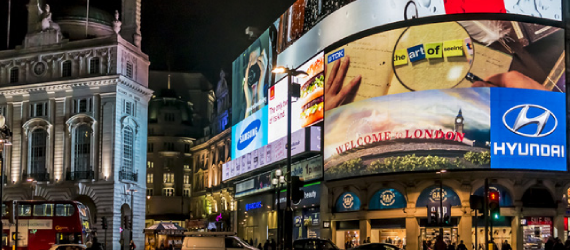
You only have to read the stats to know that Italy is a place of adland freedom, with a huge Samsung advert adorning the side of the city’s iconic Duomo Cathedral as it undergoes renovations. Could you imagine Samsung creating something like this in the UK, a Christmas installation in St. Paul’s Cathedral? In the UK, our heritage buildings are fiercely protected and they would certainly lock their doors to a brand’s knock. In Italy however, advertising can be found on buses, trams, buildings in glorious Technicolor lights, allowing brands to speak to their target audiences, even when they least expect it. Rules, whether right or wrong, are abandoned. Brands have a luxury of freedom that they don’t have in other countries.

Italians are I suppose, used to a heavier level of brand messaging. Just look at the production values of national TV (in particular any transmitted by a Berlusconi company). The advertising is plentiful and sometimes even better than the programme being watched! With this in mind, are Italians (or European’s in general) more accepting of consumer electronic brand advertising as they know what they want and their maximum price point for quality products or specific brands?

Subsequently I believe this has resulted in a market where brands are not commoditised and able to sell at a price point that enables a margin and sustainable, profitable growth as opposed to crowded categories with brands trading at a loss and eventually abandoning the category altogether.

Could this be why so many UK retailers have unsuccessfully succeeded in Europe and beyond?

Image credit: Leonard Ambrosiana 

Read the full article at http://www.brandingmagazine.com/2013/11/25/europes-warm-embrace-advertising/

Tagged , , , , , , , , , , , ,