
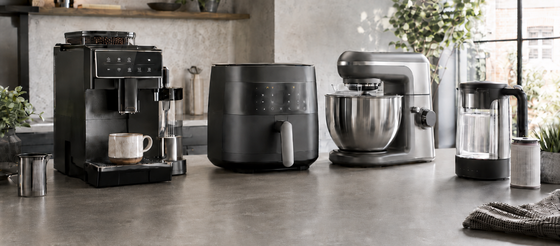
While the wider economic climate remains cautious, the UK’s Small Domestic Appliance (SDA) sector is proving that it’s more than just a ‘nice-to-have.’ With the market on track to reach £3.7 billion by the end of the decade, we look at the trends from Gen X spending power to the circular economy that are defining the retail winners of 2026.
The kitchen counter is currently the most hard-fought real estate in the British home. Following several years of volatile consumer confidence, the Small Domestic Appliance (SDA) market has emerged not just intact, but as a primary driver of retail growth. Valued at £2.8 billion in 2025, the sector is projected to climb toward £3.7 billion by 2030.
But for retailers, the “how” and “why” of purchasing has fundamentally shifted. As we move deeper into 2026, success is no longer about simply stocking the latest viral gadget; it’s about meeting a more disciplined, value-conscious, and tech-literate consumer.
The Demographic Tug-of-War
The digital transformation of the sector is undeniable, with 73% of UK SDA purchases now taking place online. This shift is spearheaded by the 16–34-year-old demographic, whose reliance on social commerce and peer reviews has turned “value-hunting” into a high-speed digital sport.
However, smart retailers are keeping a close eye on the “Quiet Powerhouses”: Generation X. While younger shoppers dominate the online traffic, those aged 45–60 are currently the highest-spending segment globally. This group is less likely to buy on impulse but far more likely to invest in premium upgrades high-end bean-to-cup coffee machines, cold press juicers, and professional-grade mixers even when their current appliances are still functioning. For this group, the “upgrade” is a lifestyle choice rather than a necessity.
Beyond the App: Innovation That Earns Its Keep
We have moved past the era of “smart for smart’s sake.” In 2026, consumers are looking for innovation that solves genuine pain points: energy costs and longevity.
- AI-Powered Maintenance: One of the most significant shifts is the move toward “self-healing” tech. Manufacturers are increasingly integrating AI diagnostics that alert users to maintenance needs before a breakdown occurs. This builds a level of trust that is essential for premium price points.
- The Urban Footprint: As single-person households and urban living increase, there is a surge in demand for compact, multi-functional design. Space is a premium commodity, and appliances that can air-fry, steam, and slow-cook within a single, sleek footprint are winning the battle for the countertop.
- The Connected Ritual: IoT is finding its home in ritualistic appliances. We are seeing high demand for smart water purifiers and coffee machines that don’t just “turn on” via an app, but utilise cloud computing to perfect and automate a user’s specific preferences.
The Circular Opportunity
Perhaps the biggest opening for UK retailers right now lies in the “Circular Economy.” Sustainability has moved from a marketing buzzword to a core purchase driver. Build quality and energy efficiency are now top-tier concerns for the UK shopper, largely driven by the long-tail effects of the energy crisis.
Retailers who offer trade-in programmes, refurbished lines, and crucially DIY repair options are finding a double-win: they appeal to the eco-conscious Gen Z while providing a budget-friendly entry point for price-sensitive households. Building a “repair over replace” narrative is no longer a threat to sales volume; it is a way to build lifelong brand loyalty.
Driving Growth in a “Deferred” Market
Data from the start of the year shows a clear trend: the UK consumer is becoming a master of the “wait and see.” Many are deliberately deferring big-ticket purchases until tactical promotional windows, such as January clearance or targeted spring campaigns.
For the physical high street, the challenge is clear. With footfall fluctuating, the store must become an “experience centre” rather than a warehouse. To protect margins and combat the threat of global supply chain shifts, there is a growing appetite for “Made in the UK” branding. Highlighting local manufacturing and robust build quality provides a sense of security that imported, unbranded alternatives cannot match.
The Bottom Line
The SDA market in 2026 is defined by a “flight to quality.” Whether it’s a Gen X shopper looking for a professional-grade morning espresso or a young renter looking for a repairable, multi-functional air fryer, the demand is there. Retailers who lean into experiential stores, transparent pricing, and the circular economy will find that while the consumer is more cautious, their appetite for genuine innovation is stronger than ever.
To read the full published article by Rupert Cook, Marketing Director, please visit Housewares Magazine

