Tag Archives: Gekko

Top 7 tech gadgets to gift this Christmas

Image

From health gadgets to espresso machines, we present the festive hot list 2013

Brits now spend £9bn on new tech devices each year, carrying around £22bn worth of gear around with them. Preparations for the Christmas rush are under way and all but the most-forward thinking of consumers is beginning to think about what to buy. You’ll already be getting bombarded with glamorous retailer ads with annoying tunes. For those who will struggle to buy that gift for the busy business-driven loved one in your life, here are my top seven recommendations which will spread joy beyond any advert or celebrity endorsement.

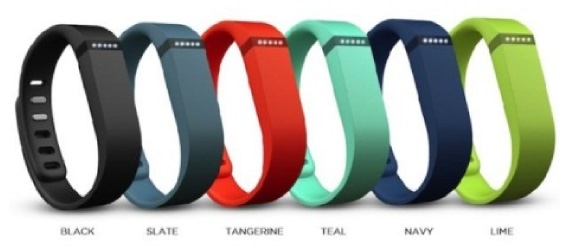
1. Fitbit Flex
Image
This is the ideal gift for any healthy-minded individual. This bit of kit learns your daily activity, calories burned, your sleeping patterns and weight. It is lightweight and very comfortable and all you have to do is upload wirelessly and see progress on your mobile or online.

2. iPhone 5S
Image
Of course there has got to be an Apple product in this list! The beautifully designed iPhone 5S looks like the iPhone 5, but goes so much further under the hood. It has a new finger print identity sensor, 64-bit A7 chip, faster and better iSight camera and ultrafast LTE wireless.

3. Panasonic NC-ZA1 Bean-to-Cup Espresso Machine
Image
This compact and stylishly designed machine fits into any kitchen and will impress discerning coffee connoisseurs with its state of the art technology. A decent coffee to start the day is a must and the new Panasonic NC-ZA1 Bean-to-Cup delivers a personalised cup, just to your taste as it’s delivered through the easy touch screen function.

4. Eastpak Gybbs bag
Image
Perfect for storing all your gadgets in one stylish but hardy bag. It is roomy and is available in lots of on trend colours to suit smart or casual dress.

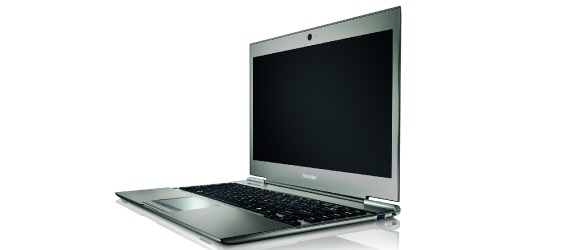
5. Toshiba Portégé Z930 Ultrabook

Image
Ultra light at 1.1kg and thin at 8.3 mm, it delivers with an Intel Core i5 processor, 128GB SSD, HD Graphics, non-reflective display. The steel grey metallic, magnesium chassis and matt black keyboard makes it a stylish gift. The perfect business tool and leisure too, portable and fast.

6.Samsung UE55F9000 LED 4K Ultra HD TV
Image
This is arguably the world’s most advanced Smart TV system and probably one of the year’s most exciting and eagerly awaited TVs. A 4k ultra HD 3D Smart TV with built in Freeview HD gives you viewing choices shaped around your viewing needs. It is clever enough to recognise your face and voice, it has gesture control and upscales your content to four times the resolution of Full HD. It is the first UHD TV that upscales HD 3D content to a UHD resolution.

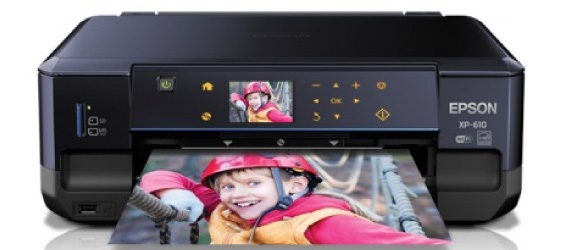
7. Epson Expression Premium XP610
Image
The Expression XP-610 Small-In-One Wi-Fi is a premium printer, perfect for home users who are interested in printing photos and need a Wi-Fi printer that can print glossy photos and crisp, clear text documents. It has touchscreen control that will do your document printing as well as any scanning and copying you need too. What’s more is that there are two loading trays so that you don’t have to keep switching between photo and plain papers. It works from your iPhone too with Epson iPrint sending prints directly from your phone.

Gifts for all pockets that any tech aficionado will know all about and perhaps wish for.

Dan Todaro is the MD of field marketing agency Gekko

Read the full article at http://www.londonlovesbusiness.com/top-7-tech-gadgets-to-gift-this-christmas/6858.article

Tagged , , , , , , , , , , , , , , , , ,

Are retailers wasting money with their big budget Christmas TV campaigns?

Image

When your local supermarket, department store or specialist retailer breaks a brand new above-the-line ad in November, you know the silly season is upon us. With so much revenue and profit generated in this quarter you can understand why the stakes are high. Ads increase exponentially in prime time slots to lure us and retailers live off the hope that the shopping public will spend their hard earned cash through their cash registers. Production values go up, a memorable ditty is sung and a plethora of celebrity smothers the campaign, but do retailers really need to spend so much on the celebrity endorsement? As a marketer, I fully embrace the necessity of advertising and I understand the value in it. I agree that prime time advertising slots are a must if you want to make an impact, as are production values, but based on the criticism lauded on the lacklustre impact Marks & Spencer’s “Leading Ladies” campaign, can retailers justify the expense?

In August Annie Leibovitz shot and featured 10 leading ladies from Oscar winning actress Helen Mirren and artist Tracey Emin to drive sales of ladies fashion (pictured). Did the campaign need to be so “high budget”? Beautiful and well produced was the advert, but I can’t help feel that the garments the ladies were selling were somewhat lost in the foray of the campaign. It was not great fashion and to be honest I doubt many women felt drawn to the concept that these leading ladies really dress in M&S, felt comfortable in what they were told to wear or really engaged with consumers to convince that M&S was back on trend. After all, they’re usually sporting the latest designer labels down the red carpet. With Marks & Spencer posting its ninth consecutive quarter of falling clothing sales, the results certainly don’t live up to the celeb hype. Therefore, you’d believe a rethink was in order for Christmas Peak but not so. Rosie Huntingdon Whitely, David Gandy and another Oscar winner Helena Bonham Carter feature but I reserve my judgment on whether this will truly resonate with the average M&S shopper this time round.

From Waitrose to Debenhams to John Lewis with its just released Lily Allen advert singing the Keane song Somewhere Only We Know, retailers will spend according to market analyst Nielsen, an estimated £390m on advertising over the last three months of 2013. That’s £128m more than one retailer M&S reported in profit for the first 6 months trading. But then John Lewis reported record sales last Christmas, so ads can work but you need the quality products to help close the loop.

Brands in crowded categories may require celebrity endorsement to drive advocacy, however some do it better than others. Do retailers really need to drive our emotion to shop in their stores with the glamour of celebrity wearing, eating or commenting on the quality, style and taste of what are really just run of the mill products? What’s more, how much of the campaign is devoted to the celebrity? I can’t imagine that the aforementioned Oscar winning actresses are inexpensive; on the contrary, they are eating into an already squeezed margin. And do celebrities themselves truly embrace the brand enough to tap into its target audience? I doubt the M&S leading ladies of the summer are donning M&S’ A/W collection, even when they pop out for a pint of milk.

Some of the heavyweights have ditched celebrities this Christmas. Asda has slashed investment in its Christmas advertising campaign and blasted rivals’ “celebrity filled” ads. The grocer has cut its budget by 10% and put value at the heart of its festive messaging.  It has also been announced that the Tesco ad will not be celebrity-focused either. We shall see if they turn their savings this Christmas into profit.

Brands are increasingly defined by experiences, so the use of celebrities has to perpetuate the story and allow consumers to visualise the products as part of their lives. Celebrity ads have become ubiquitous. Marketers often scrap over celebrities for a chance to use their name. The need for standout means marketers are exploring new approaches to maximise the celebrity’s appeal. Some work, others fail, some are unproven. Regardless of approach, the ad has to be credible and authentic.

For brands, often such deals give advertisers a direct line to celebrities’ fan followings via their personal Twitter accounts and Facebook pages. However, the true asset is a star’s relevance, buying a marketer the kind of buzzy exposure that only a Hollywood headliner can bring. The choice has to be right. So why tech brands have enrolled the world’s biggest stars to endorse cutting-edge tech products is anyone’s guess. Kevin Bacon for EE, Robert Downey Jr for HTC and David Beckham for Motorola back in the day; I really can’t see the connections here – please tell me if I’m wrong. Brand recall is vital but let’s not forget the goal here, revenue, and whilst Beyoncé may drive me towards buying Pepsi, do I care which retailer I purchase it in?

No one will argue more than me that ATL campaigns are crucial. But I shall enjoy critiquing from my sofa the raft of celebrity appearances and voiceovers, which will grace my TV screen over the coming months. Perhaps I will be congratulating my choice in viewing via Freeview+ to allow me to pre-record and fast forward past the ads to my favourite Christmas special. Then again I may just hold out for John Lewis’ much lauded Disney –inspired masterpiece.

Read the full article at http://wallblog.co.uk/2013/11/12/are-retailers-wasting-money-with-their-big-budget-christmas-tv-campaigns/

Daniel Todaro is Managing Director at field marketing agency Gekko.

Tagged , , , , , ,

Has Product Placement Gone Too Far?

Image

Product placement within film and TV is hardly breaking news. Since the dawn of broadcast media, brands have been eager to muscle in on our attentions and put their logos in front of us. We now expect to see James Bond with his Omega watch, driving his Aston Martin and flashing his latest smartphone. But I have to ask, are brands now taking product placement to a whole new patronising level?
 
Recently, we took the kids on a cinema trip to see The Smurfs 2 (not my choice, I hasten to add!). I can’t say I was expecting an Oscar-worthy, two-hour emotional tour-de-force of filmmaking, but I was astounded by the degree of product placement within the film. Prior to the screening, I wasn’t aware that it was a Sony Pictures production, but by the end I was wondering if the script was actually based around Sony products!
 
From the newscaster presenting in front of a Sony LED TV to every single adult cast member using a Sony Mobile (of course, demonstrating its full range of services), I actually think it’s difficult to argue that the brands didn’t tailor the script to meet their product placement needs. The villain Gargamel even used a Sony Vaio tablet to cook up his dastardly plans. Twice!
 
As it transpires, Sony Pictures secured deals worth $150 million from over 100 corporate partners to promote a raft of products within the film, far exceeding the production budget of $110 million. To my kids, and I’m sure every other child in that theatre, this likely didn’t register. But for us more brand-aware adults, it was so blatant that I have no doubt I missed several more Sony products woven into the script.
 
Are brands beginning to push their luck a bit too far? Investment in the film and TV industry is crucial, but, in exchange for a sizable cash injection, brands are naturally going to push for as much of the limelight as possible, with scant regard for the script. The larger the investment, the larger the degree of control exerted.
 
The trend was highlighted in typically overstated-fashion by Morgan Spurlock last year with The Greatest Movie Ever Sold – a documentary on product placement with a $1.5 million budget entirely funded by… product placement. As brands become an even more ever-present constant in every facet of our lives, the natural progression is that the volume will further increase and the stakes raised even higher.
 
The connotations for the film and TV industry are slightly worrying, particularly at a time where the industry – I believe – is enjoying the rudest of health in recent years through some remarkable films, TV content and documentaries. I wonder if, as brands seek greater screen-time, we are going to see a day in the not-too-distant future when an actor will refuse to endorse a brand in a movie? Or will the lure of money continue to trump all as more and more blockbuster movies appear as little more than very long adverts with a storyline bolted on?
 
To some extent, audiences do want to see product placement within films; for example, to see a character entering Starbucks as opposed to a trademark-friendly, fictional alternative adds a degree of realism to proceedings. However, there is a fine line that needs to be observed or else the brand risks sticking out like a sore thumb. Unfortunately, since James Bond swapped his Martini for a Heineken, Will Smith dwelt a bit too long on a pair of Converse in I, Robot and Superman reboot Man of Steel hedged it’s box-office failure by securing over 100 global brand partners to the tune of $160 million, the act of product placement has been increasingly taking the spotlight away from the actual stories themselves.
 
I like to think I can appreciate both great branding and great filmmaking, but how closely should we be allowing these two disciplines to merge? With cinema visits in decline and gimmicky features such as 3D failing to take off, the money has to come from somewhere after all. But is it in the brands’ best interests to push their own agendas at the expense of great filmmaking? Is it in their best interests to appear cheesy, naff and downright uncool, thereby damaging their valuable brand equity?
 
You would think not, but, still, I can’t help but feel that it’s up to us – the audience – to make that stand.

Read more at: http://www.brandingmagazine.com/2013/11/05/has-product-placement-gone-too-far/

Tagged , , , , , , , , , , ,

Rajar Q3 2013: Industry reaction

Image

Rajar has today announced 90% of the adult (15+) UK population – 47.7 million people – tuned in to their selected radio stations in the third quarter of 2013. This is up by approximately 1 million adults on the same quarter of the previous year.

Highlights this quarter include a major decline for Nick Grimshaw’s BBC Radio 1 breakfast show – recording the lowest listening figures in 20 years. However, better news for Kiss FM, which saw a 16.5% quarterly and yearly increase – taking its weekly reach to more than 5 million.
 
Here, Newsline presents industry reaction on the latest results, with opinion from Dan Todaro of Gekko:

‘What stands out for me is the extent to which our lives are so increasingly dominated by smartphones. Convergence is an oft-used term, but radio consumption in particular provides a stark illustration at the speed in which this is happening. Consider that back in Q1 of 2011 and the iPhone 4 was still very much a novelty for most consumers and less than three years later consumption in the 25+ category has almost doubled, whilst the age group fuelling this shift – the 16-24s has jumped from 28.6% to well over 40%.
 
With digital listening increasing across DAB, Digital TV and online through PCs and laptops, it too paints a portrait of how our lifestyles are being fundamentally altered by the technology around us. Everything is so easily accessible and radio is no longer restricted to specialist devices.

Far from being a platform in decline, I think the possibilities for brands to engage is ever-increasing as the way in which we engage and interact with radio changes. Particularly as our current 16-24’s grow older and give way to a new generation of even more highly connected, digitally savvy youths, we’ll soon know of radio only as a medium.’

Read the full article at: http://mediatel.co.uk/newsline/2013/10/24/rajar-q3-2013-industry-reaction/

Tagged , , , , , , , ,

Freeview unveils experiential road show featuring dancing tadpoles

Image

Freeview is looking to extend its latest campaign with a new experiential road show featuring two dancing tadpoles.
 
Created by Gekko, the activity features a large dome structure containing a digital floor projection featuring the tadpoles, recognisable from the ongoing TV campaign, with children able to ‘splash water’ and interact with the tadpoles.
 
James Chambers, retail marketing manager at Freeview, said: “With our latest experiential road show we wanted to demonstrate that entertainment is even better when it’s free. By creating something fun and a bit out of the ordinary, we hope to get people thinking about Freeview differently.”
 
The road show will be fully integrated with current ATL, digital, PR and social media activity.
 
A team of ambassadors will also be on hand to demonstrate all the benefits on offer from Freeview.

Read more at http://www.thedrum.com/news/2013/10/22/freeview-unveils-experiential-road-show-featuring-dancing-tadpoles#RO8hMRtOS53fuIdw.99

Tagged , , , ,

Marketing key to capitalising on back to university rush

Image

Daniel Todaro, MD of field marketing agency Gekko, shares his views on what retailers and resellers can be doing to maximise their sales to students and universities.
 
The yearly appearance of autumn leaves signal two things for retailers: it marks the end of summer, but it also signals the annual back to school rush.
 
With children of all ages preparing for the new school or university year, thousands of parents will be charged with the task of effectively equipping their offspring with the equipment necessary to navigate the upcoming year. Recent research shows the back to school bill for the UK totals £1.3 billion alone, but to believe this investment is purely made in stationary and PE kit would be a grave mistake.
 
Following the school rush, thousands of teenagers will be making the pilgrimage back to university too; a journey that could not possibly be made without the latest technology. While the parents will be the ones inevitably opening their wallets, many are allowing their offspring to take increasing ownership over the purchase decision-making on high ticket electrical items. Now, more so than ever, it represents a significant opportunity for retailers and brands to drive sales.
 
This time of year is always accompanied by a surfeit of advertising targeting parents to make their purchases for the inevitable return to school. The effectiveness of this advertising is not in question but it cannot work in isolation. Advertising serves to drive customers through the door but it doesn’t necessarily guarantee that footfall will translate into much needed sales.
 
Without help, consumers will naturally gravitate towards value and promotions; which for brands can result little more than a sales roulette – particularly with frugal parents looking to limit their losses with their free-spending children.
 
The largest impact will inevitably be made at point of sale. However, like TV, this cannot act in isolation. What is crucial is a robust through-the-line marketing approach; a seamlessly joined up experience characterised by a strong narrative through the line, from the TV to the in store.
 
Having staff that are correctly trained to deliver the messages communicated in the advertising is pivotal. Staff should be able to communicate the messaging effectively and consistently; able to deal with any question. This human element is pivotal, and what many consumers visit the store for – the ability to have a real conversation with an expert and receive guidance in making a decision. After all, no one wants to speak to a robot(or buy the wrong product!).
 
Empathy is crucial, particularly in a category where consumers are not likely to be experts on the products and fearful of making the wrong choice and wasting money. However, compliance – which is often overlooked, is equally important. A brand may spend millions on artistic ATL, but this can be for nothing if the product and promotion is not displayed accurately in store.
 
Back to school is a gift to retailers, especially retailers specialising in technology. With a ready-made calendar hook to fuel footfall retail outlets need to put the work in only to convert this into sales. Retailers must ensure that they implement a through-the-line approach to convey a seamless message in-store where every available touch point is utilised to maintain the brand experience and drive sales with a higher average basket value.
 
Daniel Todaro is from field marketing agency Gekko

Read the full article at http://www.pcr-online.biz/news/read/opinion-marketing-key-to-capitalising-on-back-to-university-rush/032029

Tagged , , , , , , ,

Training: Get in the groove and go with the data flow

Image

Omnichannel marketing means freeing up your data and schooling employees in the analytic tools necessary to sharing digital content with social networks.

Toshiba, a longstanding client of Gekko, share their views:

For Toshiba, training is all about engagement through interaction. We work with field marketing expert Gekko to ensure our retail field team are fully immersed in the brand through interactive training.

The level of data management with our training allows us to offer more information and knowledge because we are able to have a greater understanding of the hundreds of stores nationwide that carry Toshiba products and promotions.

Data collection, for example, enables us to monitor activity on a highly detailed level, which, in turn, positively affects the information we pass onto store staff. The training element evolves constantly.

We use our own Toshiba tablets to equip staff using information in real time to bring them up to speed on the latest developments and promotions. As more information becomes available, staff are able to learn how to respond to shopping trends and promotions immediately.

It’s essential that store staff are fully up to date with key features and the latest product developments. If staff can project Toshiba’s brand message seamlessly in their approach it will form an intuitive reputation among consumers to drive sales and loyalty.

Read more at: http://www.marketingweek.co.uk/trends/training-get-in-the-groove-and-go-with-the-data-flow/4007797.article

Tagged , , , ,