Category Archives: Articles

Digital shelf analysis: The secret weapon for brands this golden quarter

In Britain, 67% of consumers plan to spend the same or more than last year during the 2024 golden quarter1 so brands will need to pull out all the stops to get their slice of the pie, particularly when it comes to sales and marketing strategies.

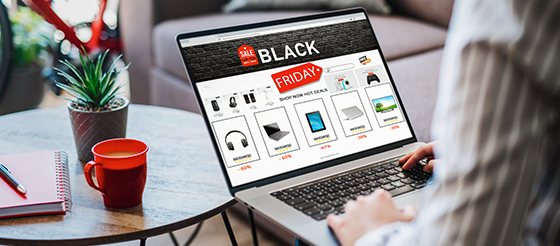
With huge retail events like Black Friday and Cyber Monday on the horizon, plus the flurry of activity surrounding Christmas gifting, having clear visibility of online activities and transaction success has never been more crucial for brands and retailers.

Smart shelf analysis with Gekko’s GWS

Maintaining a clear overview of inventory online has become harder due to capacity and sheer volume of points of sale. Online, data analytics is transforming the ways brands monitor data about both their own products and the others on the shelf, providing insights that help improve performance and the overall customer experience.

Digital shelf analysis is a secret weapon in helping brands understand what’s working, and what’s not. New tools and enhancements like GWS from retail experts Gekko provides brands with clearer visibility of metrics from retailers such as share of voice, pricing, stock availability plus ratings and reviews, providing visual and actionable insights to enable brands to maintain market share and execute strategic marketing objectives.

GWS helps brands to monitor, manage and review e-commerce performance across selected retail platforms, gathering digital shelf data from specific retailers and presenting it back in an easy to digest dashboard. In turn, this data helps brands to understand their performance against the competition, including monitoring and reporting on sponsored positions to understand which brands are investing with which retail partners, providing crucial information to better manage strategies, partners and product listings.

By monitoring how products are presented, these tools also help to enhance the customer purchasing experience online, as it allows brands to ensure that descriptions, images and positioning is consistent across third-party retail sites. Additionally, with customer reviews and star ratings of products being some of the biggest factors in converting sales online, web-scraping assists in constantly checking and maintaining the display of this information to enhance the purchase experience, and ultimately help to gain market share over competitors.

Maintaining the competitive edge

Despite Black Friday maintaining its position as the most anticipated retail event of the year, it is becoming more diluted than ever before. Coupled with high inflation and the continuing cost-of-living crisis, brands need to secure a competitive edge.

As many consumers are now making split-second purchasing decisions based on price rather than brand preference, retailers also need to consider how they respond. Unlike other web-scraping tools, GWS offers analysis of the full digital shelf, allowing brands to track real-time competitor activity and establish a strategy to maintain competitiveness, particularly at this time of year, when costs fluctuate so frequently.

Price monitoring via e-commerce platforms can provide last minute insights for brands to track prices and share of shelf against competitors to ensure they are offering the most compelling deals and packages; a clear advantage amid the deals battles of Black Friday and Cyber Monday, and across the omnichannel strategy.

Analysing the full spectrum of shelf availability provides a great overview of stock requirements in line with demand. Additionally, it provides clear and precise predictions many months in advance of seasonal discount days, like Amazon Prime Days, Black Friday, Cyber Monday and the Christmas gifting season.

Stamping out the competition for success

With this in mind, the best way to get ahead is to plan ahead. Having a full view of a product’s retail landscape and that of its competition provides brands with the information needed to negotiate with retailers for better pricing and placement throughout the year – but it is vital during the golden quarter.

Competition from other retailers and brands limits how successful traditional calendar events like Black Friday can be. So, brands need to get a leg up on the competition by taking a holistic view of the entire shelf, and adjusting their activity and pricing accordingly. This way, they can secure a higher return on investment, along with a wider understanding of consumer behaviours and the ever-changing market.

To read the published article by Toby Stupples, Client Delivery Director please visit Retail Sector

Tagged , , , , , , , , ,

IFA 2024 – Business as Usual?

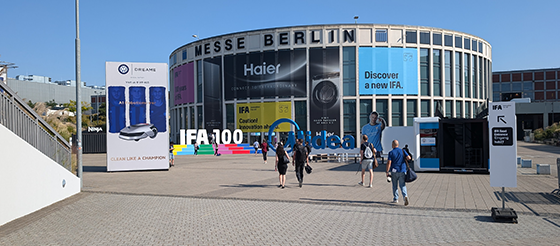
IFA Berlin 2024, Europe’s largest consumer electronics show, was as usual full of exciting product announcements showcasing key trends for all to look forward to in the months ahead and beyond. It was another sold-out show celebrating its Centenary with a new image and fresh approach paving the way for the next 100 years ahead. Recording 215,000+ visitors from 138 countries who came to Messe Berlin over the course of 5 days to witness innovation, experience inspiration, and discover the future of tech from over 1,800 exhibitors. Whilst IFA Berlin may have changed considerably since 1924, some may think that 2024 was a deja vu experience.

Ok, so there’s a lot of AI on offer from almost every brand stretching and relying on the most tenuous of references to AI in relation to their products. AI aside, it could be considered all a bit the same. Once you’ve seen one air fryer, you’ve seen them all and I suspect if you lined up all the air fryers on display in Berlin it would pave a crispy path all the way to London.

However, in all seriousness, IFA remains an essential part of the product life cycle, launching innovation that may have been talked about at CES in January but becomes reality by September for all to marvel and revel in at IFA.

The vast majority of innovation ranged from future tech to the present day and reflected various consumer trends, old and new. Naturally, AI was an important feature, with brands aware that consumers are expecting adoption and development. While AI was prevalent, it largely fed into the idea of user convenience with features that centre around making consumers lives easier. These innovations are present predominantly in products like AI-enhanced appliances, where automations are set to enhance efficiency.

The affordable premium trend also continued, with brands responding to people’s desire for maximum features and durability at a justifiable price. As the cost of living crisis effects continues, consumers are still looking for access to the best aspirational features from savvy brands. Categories delivering this ethos ranged from phones, foldables, smart home devices, laptops and drones, alongside AV and MDA categories, with consumer-centric innovations which are vital in driving the recovery and development of the consumer electronics industry.

The trends evident at IFA were AI, sustainability, and connectivity. All were linked back to AI, which creates convergent devices that save you time, energy, waste, and money as demonstrated fabulously by those geniuses at Samsung who presented the reality of family life in a real house, with kids, pets, clutter and reflective of how the vast majority of us truly live. Time strapped, cash conscious and tired, needing a little bit of help, whether through your Samsung Jet robotic vacuum that docks or Samsung’s Family Hub AI Vision fridge doors that open by voice command and also scan the dates on your produce to tell you what you need to eat quickly and wait for it, even suggests a recipe using those items on the turn that need to be consumed immediately – in my case usually spring onions. This is CE embracing AI to help consumers make decisions they’d rather not have to make, facilitating our choices and enabling consumers to spend their time and money more astutely.

The new Galaxy ring was particularly impressive and its ability to control your phone and other devices from it, as was the new Galaxy Notebooks and Frame Speaker which for me was the stand-out product. The Frame Speaker is quite simply a brilliant idea. Connect up to five in a room and immerse yourself in surround sound in a discreet and stylish manner. This 45x45x5 frame not only looks great on your wall as decorative art but also sounds truly amazing.

Amongst the noise, there was a lot of mediocre news with some new branding for legacy brands like Hoover & Candy, also this year’s on-trend colours for last year’s devices from many and even for some, the same stands. On the whole IFA 2024 was business as usual for many of the big brands and a game changer for others. Whilst many established brands did pull it out of the bag successfully, the innovation also came from those start-ups in IFA Next and from the ever-ambitious and increasingly more exciting challenger brands.

Of note is Hisense’s 8K Sonic Screen Laser TV which is a groundbreaking TV that combines 8K resolution with laser projection technology. Its standout feature is the “Sonic Screen,” where sound is emitted directly from the screen itself, creating an immersive audio-visual experience without external speakers. In the world of wearables and health tracking, RingConn Gen 2 was shown off. This is the world’s first ultra-thin smart ring designed with sleep apnea monitoring capabilities. It continuously tracks health metrics like heart rate and sleep patterns, offering advanced insights for sleep health and wellness and integrating with both Apple Health and Google Fit.

Moving into the world of Mobile’s Honor Magic V3 was showcased at IFA 2024, which is their latest foldable smartphone. The Magic V3 boasts the thinnest, sleekest design, top-tier performance, and a flexible display. Next up is Google’s Pixel 9 Pro which is Google’s latest and greatest flagship phone that has a big focus on AI, equipped with the latest AI-driven photography features and a sleek, user-friendly design. It continues Google’s legacy of delivering top-tier camera performance and seamless Android integration in three form factors. Moving into the laptop category Acer introduced two new laptops with AI at its core. These two laptops are the Swift 14 AI & Swift 16 AI which are both lightweight, powerful ultrabooks that integrate AI features for enhanced productivity. It’s designed for professionals who need a sleek, portable device that doesn’t compromise on performance, with AI tools embedded for tasks like smart photo editing.

Away from the standard everyday categories, IFA also enables and nurtures new categories to showcase products that initially may be considered niche but eventually become a competitive and growth category copied by many. One such item that may be the next growth category is the Outin Nano portable espresso from the brand Buydeem. It’s a hidden gem, with the ability to make coffee on the go with either your favourite ground coffee or the convenience of off-the-shelf pods. It certainly has the potential to be a stocking filler winner, especially for those who enjoy outdoor living and require decent coffee anytime and anywhere.

Another emerging brand with two notable devices that sit within the ‘care’ category is SKG. They offer products that I think could just be what some on the move or at home relaxing may include in their daily schedule. Their E3 Pro Eye Massager is small and whilst not discrete, gives the user full vision transparency enabling the user to see out while no one can see in. It is reasonably priced and offers a heated eye massage to help relax and de-stress. The other is the G7 Pro Fold neck massager which could appear to many to be headphones or a fan positioned around your neck. It actually provides a relaxing massage, with a heated option to soothe knots and muscle tension as you drive or read on the train or bus home after a stressful day at your desk or indeed as you are working from home. Both products sit within the CE category and can fit comfortably into any retailer’s product roadmap as self care becomes increasingly more popular across all age groups.

Innovation that was teased at IFA 2024 and will undoubtedly become standard in 2025 is Wireless Power which now rather impressively takes a leap from the smartphone to the smart home. The Wireless Power Consortium (WPC) announced its new Ki wireless power transfer standard. It offers a new era of wireless power for the kitchen, eliminating the need for power cords being able to transfer power through granite, quartz, marble and even wood. With manufacturers likely to introduce Ki-compatible wireless kitchen appliance ranges this year, it has the potential to change the way we cook and prepare food in the kitchen. Imagine what a game changer this will be in not only the appliances category but also kitchen design. Midea announced its first range at IFA 2024 and I’m confident many more will follow soon.

So could IFA 2024 signal something of a smart home renaissance? Well maybe. Matter, the smart home protocol aimed at unifying devices from multiple brands, was back in focus with multiple support announcements from key brands. There was also Samsung integrating its smart rings with SmartThings which enables the device to trigger smart home automations, and even robot vacuums that climb stairs. Everyday appliances are becoming more intelligent and increasingly better integrated.

The vast majority of what was on display at IFA 2024 is shipping today or landing very soon and retailers of all specialism will no doubt be ranging a significant proportion of them. So with this in mind, don’t take it as business as usual, wait and see approach. Be in the business of surprising and delighting your customers by showcasing new categories and the innovative and appealing new products on offer. Work with your chosen brands to create a customer journey which enhances the brand experience and enables it to pop, full of life and energy to develop categories and create sales.

Real world examples are the best way to sell what some think they may not need or dream about. We don’t all live with clean lines, no clutter, kids without toys or muddy pets. The reality is that we are tired, busy humans who occasionally just want to lounge in our homes and speak commands, set timers linked to programmes, be suggested recipes, sleep peacefully, launder at speed, save money and do our bit for the planet. Keep it aspirational but make it real. Put the product into real world scenarios, not merely a magazine dream that maybe doesn’t translate to the average consumer?

To read the published article by Dan Todaro, Gekko Group CEO, please visit ERT

Tagged , , , , , , , ,

Customer Loyalty

“Lasting loyalty is underpinned by the customer experience – so from start to finish, it is critical that brands meet consumers’ needs. But true loyalty needs to be earned, not forced and that is where many brands are currently at the top of a slippery slope. We are currently seeing a shift from a points-based reward system to membership offering reduced pricing at the point of purchase. This forces customers to join and become ‘loyal’ so that they can access products at promotional prices. It is becoming a necessity rather than a choice, which has a knock-on impact on the customer experience and scuppers the ability to build long-term, authentic, two-way relationships, relying merely on pricing to keep customers coming back. While it may be popular, moving to an app-only loyalty system could also be bad for business, as it alienates and excludes some customer groups. Those who do not have a smartphone or know how to use one – typically vulnerable consumers – are not able to access the same deals as smartphone savvy shoppers. This level of digital ageism and ableism is not inclusive or conducive to loyalty. In addition, the growing trend for ‘dumb devices’ amongst younger consumers who are avoiding digital noise is creating another new segment who would not be able to benefit from an apponly loyalty programme. Brands should offer everyone the same experience of loyalty, however they choose to engage. Giving customers options is crucial for building lasting customer loyalty, whether via a loyalty programme or through their browsing and purchasing interactions. Providing choices ensures that customers feel heard, seen and understood, building much stronger long-term relationships. Instead of forcing loyalty, give consumers a reason to keep coming back and avoid digital exclusion that will eventually see them abandon your brand in favour of others.”Daniel Todaro, CEO at Gekko Group

To read Daniel Todaro’s, CEO at Gekko Group Comment, please visit A1 Retail Magazine

Tagged , , , ,

Retail Reboot: Transforming Likes into Sales with Digital Marketing

Callum Puffett, Digital Marketing Manager at Gekko looks at some of the tools that can be utilised to help retailers of all sizes get a foothold on the Digital Marketing ladder to help improve their brand visibility and most importantly drive traffic. 

The Importance of Social Media

Today, digital retail marketing is crucial for brands to connect with customers. It means creating attractive online experiences that show products, build trust, and boost sales. It can encompass social media, search engines, emails, and online stores to, most importantly, help brands reach customers where they spend their time. In short, it’s an unavoidable tool for retailers looking to broaden their reach and communicate more effectively with their target audience, and crucially can greatly increase a retailer’s visibility and revenues.

Furthermore, a well-considered Digital marketing strategy allows small and medium-sized retailers to take on much larger competitors, even with limited resources. Small-budget retail marketers can conveniently promote their brand globally and reach consumers across the nation with ease.

Talking of small budgets, one of the easiest and cheapest gateways into digital marketing is social media. Social media channels can and should be used by almost every business, especially by ones wishing to talk to consumers, but their effectiveness varies depending on how they are utilised. Research conducted by LOCALiQ surveyed more than 500 businesses on the importance of certain tools; for Social Media Marketing the survey stated that 40.3% of businesses find it somewhat important with 46.6% indicating it is very important, indicating that the vast majority of businesses find it to be a very pivotal tool. This is also shown in their spending, as 31.3% of businesses will spend between £1,000 and £5,000 on social media advertising, with another 22% spending more​. These social media advocates appear to be most heavily invested in Facebook, allocating 24.4% of their budget to the platform, followed by X(16.4%) and Google (13.8%)​​.

In terms of the Return on Investment, when effectively utilising the tool it was shown that 73% of marketers find social media marketing to be cost-effective with the average ROI for social media ad campaigns being 250%​ according to (The Goat Agency)​​ (MarketingScoop)​.

Content is King

Most readers will no doubt be using social media as part of their marketing strategies and I’m not going to run through a list of the platforms available and their merits. But whatever opinions, statistics and case studies there are on social media marketing working for other businesses, these don’t help you make content that will sell your products or engage with your audience. Content is king and whether you choose to create it in-house, rely on the hopefully professional output of the brands you stock or a mix of both, making it appealing, engaging, effective and consistent is fundamental. Employing someone to manage this for you will make a real difference but that will come with a cost. Moreover, will they have all the creative and technical skills to create this content from scratch?

Rewind 5 years and the task could be overwhelmingly challenging. Fast forward back to the present and we now have a potential ally in the form of AI. You can now generate an idea into a finished product in 15 minutes with the help of AI. Businesses can now implement AI to assist them with their social media marketing, from creating content to writing copy to even analysing statistics. Need an Instagram post that talks to Gen Z or a LinkedIn post that is more B2B focussed? AI can very easily and rapidly adapt the approach and tone.

It can be a real lifeline for these smaller retailers that don’t have the budget of these bigger businesses. There’s a whole plethora of AI tools out there that will assist your business in the Social Media Marketing world and these can be cost-effective with many charging a reasonable monthly subscription. You will no doubt have heard of ChatGPT but there is a new kid on the block in the form of Gemini from Google that is currently being marketed on TV by the brand. 

Gemini in itself is very similar to ChatGPT but offers better integration with the whole Google Ecosystem, whether that’s their online office suite or on the latest Pixel phone, you’ll have your own AI assistant everywhere you go meaning there’s no reason not to be able to generate engaging captions or product descriptions for your business. But AI doesn’t stop there, there are all sorts of AI tools and assistants ranging from ones that will create professional quality videos from a few words such as Lumen5. This AI tool will also provide voice-over for your content to provide that extra impact. Want to appeal to your Welsh-speaking customers? How about using Sonix AI to translate all your content in a flash? No longer is it an arduous task to translate and produce content in multiple languages. 

The beauty of all of these tools is that they can be used in harmony, whether that’s using Google’s Gemini to come up with a script for a video, then using Lumen5 to create the video with a voice-over, and if you want to go that extra step further you could even use more AI tools to translate the video to another language to further your reach via Sonix. Then to finish it up you could even use the AI tool Pixlr to help create images to accompany your social media post. The possibilities are endless. 

Helping your content be found

One of the most overlooked tools at the disposal of digital marketers is SEO (Search Engine Optimisation), something most will have heard of but not necessarily fully understand.  SEO can be the difference between having a steady flow of traffic to your website or being a non-entity when it comes to internet search engines, relegating your business down from the all-important first page on the likes of Google or Bing. 

SEO in simple terms is the practice of enhancing a website so it ranks higher in search engine results. This involves using relevant keywords, creating quality content, improving site speed, and ensuring a good user experience. The goal is to increase organic (non-paid) traffic to the site by making it more visible to people searching for related information or services. The importance of SEO speaks for itself when compared to PPC (pay per-click) as SEO delivers a higher conversion rate (2.4%) compared to PPC ads (1.3%)​ (WPBeginner)​. 

Most SEO implementations can be free to do, making it the most cost-effective tool. The simplest way to begin this process is to ensure keywords for each page on the website are appropriate. E.g. if you’re selling televisions or laptops use these as keywords. This way when anyone searches online and uses one or more of the keywords you have attached to your website page the chances of your website appearing on the first page of results is significantly higher than without SEO Keywords.

From AI to SEO, retailers have a whole plethora of tools at their disposal to assist with a multitude of tasks whether that is generating content to appeal to your target audience with the help of AI tools or even helping your brand get discovered more easily through SEO. By harnessing the power of social media, AI and SEO, retailers can significantly enhance their digital presence and achieve substantial growth.

To read the published article written by Callum Puffett, Digital Marketing Manager please visit ERT Online

Photo from ERT Online

Tagged , , , , , , , , , , ,