
Monthly Archives: October 2026

Make the golden quarter count

It wasn’t that long ago that Black Friday meant a single, frantic day of in-store queues and website crashes. Today, the reality of peak trading looks very different. We are now navigating a drawn-out “Golden Quarter,” where the build-up begins long before the winter coats even come out of the wardrobe. In fact, research from Barclays reveals that the majority of shoppers now start their deal hunting as early as October. And as Retail Week reports, those early promotional revenue spikes routinely hit almost two weeks prior to the main event.

Yet, even with this extended timeline, the core weekend itself hasn’t lost its bite. Black Friday remains the undisputed, highest-volume transaction day of the year, driving retail volumes well above the daily average.

The sheer scale of what’s at stake is hard to ignore. Barclays projects that UK consumers will spend over £10 billion over the Black Friday weekend alone. Bargain hunting is a priority across the board, particularly for Gen Z shoppers who are highly engaged with the sales cycle this season. Surprisingly, there is also a genuine sense of spending optimism. Deloitte research shows that nearly a third of UK consumers plan to increase their spending this Christmas compared to last year, comfortably outpacing the European average.

But retailers cannot afford to be complacent. We are operating in a distinctly tricky economic climate. While the recent change in government and proposed policies aimed at boosting disposable income, like raising the minimum wage and public sector salaries, offer some hope for increased consumer spending, this is heavily counterbalanced by reality. Shoppers are anxious about looming tax increases, and the lingering cost-of-living crisis means they are going to be fiercely protective of their discretionary budgets.

Overcoming the Pricing Trust Deficit

Consumer scepticism currently stands as the most significant barrier to conversion. Insights from Barclays highlight that a large majority of British consumers are deeply sceptical about the real value of Black Friday and Cyber Monday deals. While Retail Week notes that the average discount offered by UK retailers during the window has slightly increased year-on-year to roughly 25%, blanket percentage cuts are failing to resonate. Shoppers are demanding transparent, genuine price drops on specific items rather than ambiguous, store-wide banners.

Budgeting for this period has become remarkably disciplined. Consumers are actively ring-fencing and saving money throughout the year specifically for the sales period. If they cannot perceive genuine value, they will simply hold onto their cash. Among those choosing not to participate in the peak sales, PwC highlights that most simply do not feel the need to buy anything, rather than being restricted by a lack of funds.

To counter this scepticism without eroding brand equity, retailers must deploy smarter promotional mechanics. Alternative incentive structures, such as tiered discounts that scale with basket size (e.g., 10% off £50, 20% off £100), encourage higher spending while maintaining margin integrity. Flash sales, executed correctly with limited timeframes, can generate urgency and excitement without looking like a desperate stock clearance. Crucially, these aggressive promotions demand rigorous planning; building supply chain resilience and diversifying suppliers is essential to safeguard product availability against sudden demand spikes.

The Self-Gifting Surge and the Electricals Boom

The psychology of peak season purchasing has shifted heavily towards personal acquisition. Data from PwC reveals that well over half of shoppers plan to purchase items for themselves rather than solely ticking off Christmas lists for others. This self-gifting trend is heavily led by male shoppers, who are projected to outspend women significantly during the event.

Technology and electricals dominate these self-gifting target lists. A massive portion of the male demographic intends to buy a new gadget or electronic item during the peak promotional events. This early purchasing of high-ticket goods also serves a distinct psychological function. With Deloitte finding that a third of UK consumers consider Christmas shopping inherently stressful, securing major electrical gifts during the November sales acts as a highly strategic mechanism to alleviate late-season holiday panic.

AI Deal-Hunting and Social Commerce

Search and discovery mechanics are undergoing a rapid technological transformation. A recent report from Barclays indicates that a growing contingent of UK adults, and a significant portion of Gen Z shoppers, are now using AI tools like Gemini or ChatGPT to source and compare deals. The influence of generative AI now extends well beyond price scraping; Deloitte research shows that many younger shoppers plan to use GenAI to help make their festive shopping decisions from scratch. Retailers must adapt their SEO and digital marketing strategies to ensure their product catalogues and promotional pricing are easily indexable by these emerging AI tools.

Simultaneously, social commerce is capturing a massive share of the younger market. Barclays notes that nearly half of Gen Z consumers are turning to platforms like TikTok Shop for deals, a rate three times higher than that of older shoppers. If promotional strategies are not natively embedded into these social feeds, brands risk entirely missing a highly engaged, high-intent audience.

Digital Infrastructure and Fulfilment

Online platforms remain the undisputed primary channel, with Barclays stating that the vast majority of consumers plan to shop the sales digitally rather than in-store. This reliance makes digital infrastructure critical. Historical precedent shows that website load capacity issues continually plague retailers during peak events. A site crash due to overwhelming traffic triggers a spiral of lost sales, customer irritation, and negative reviews. Ensuring servers are pressure-tested to handle unprecedented, AI-driven traffic spikes must be a central pillar of operational planning.

Fulfilment and returns policies also require urgent reassessment ahead of the Golden Quarter. While a growing number of retailers are now charging for returns by passing postage costs onto the consumer, free returns remain highly valued by shoppers and offer a distinct competitive advantage in a crowded market. Regardless of the chosen financial model, the returns process must be streamlined and clearly communicated to prevent straining customer service teams during the post-event rush.

Hybrid fulfilment methods like click-and-collect serve as a vital bridge between digital convenience and physical retail, with PwC noting they consistently account for a healthy share of all online Black Friday spending.

Revitalising Physical Retail and Staff Empowerment

Despite the dominance of e-commerce, physical retail retains a highly specific, strategic utility, particularly for younger demographics. Surprisingly, Barclays data reveals younger demographics have a strong preference for returning to physical stores to assess product quality in person. Across the broader population, many venture out to shop in person to handle the products firsthand, or explicitly to avoid delivery costs.

This intentional foot traffic aligns with broader industry and governmental efforts to revitalise the high street. Labour’s pledge to reform the business rates system aims to level the playing field between brick-and-mortar stores and pure-play online retailers, theoretically freeing up capital for physical stores to invest back into the customer experience. Combined with measures like the introduction of local banking hubs and a crackdown on shoplifting via increased police presence, the physical shopping environment is slowly becoming safer and more viable.

To fully capitalise on this in-store traffic, the role of the sales advisor is paramount. Today’s shopper arrives on the shop floor having already conducted extensive digital research; simply repeating the information displayed on point-of-sale materials is no longer sufficient. Retailers must equip their staff with deep, nuanced product expertise to validate the choices of highly informed customers.

Suppliers can play a critical role here. Brands are often eager to assist with robust product training or the deployment of temporary brand ambassadors, which boosts their direct sales while elevating the overall store experience. By seamlessly blending digital convenience with high-quality physical retail interactions, businesses can leverage this elongated peak season to build loyalty that extends well into the next financial year.

To read the full published article by Callum Puffett, Marketing Executive, Gekko Group, please visit ERT Magazine
Tagged , , , , , , , , , , ,

AI and autonomous hardware takes centre stage at IFA 2026

From the moment you arrive at IFA 2026, a tangible shift is immediately palpable. Someone has been listening, and the changes are resoundingly positive. With an influx of new brands and a sharp focus on innovation—particularly artificial intelligence and its capacity to elevate hardware capability—this year marks a seminal evolution in IFA’s rich history. Welcoming over 240,000 visitors from 155 countries and featuring more than 2,000 exhibitors, this record-breaking edition firmly reaffirmed IFA’s position as an indispensable global stage for consumer technology.

Since its inception in 1924, IFA Berlin has served as the premier platform where technology leaders, innovators, and industry experts gather to shape the future of consumer electronics. Uniquely positioned as the only trade show where B2B and B2C audiences converge seamlessly in one venue, it fosters direct interaction between suppliers, trade professionals, and end consumers. This dynamic dialogue yields invaluable feedback, deep insights, and lucrative business opportunities.

Innovation took centre stage this year, with unprecedented solutions operating alongside vastly enhanced products powered by AI. As the CEO of Google DeepMind predicted, the sheer velocity of change driven by artificial intelligence is accelerating progress at a pace tenfold greater and faster than the Industrial Revolution. On the exhibition floor, traditional appliances gave way to hyper-connected home ecosystems and autonomous helpers, cementing AI and robotics as the central focal points of IFA 2026.

While debate persists around democratising AI and addressing its broader societal impact, the technology’s ability to solve complex global challenges and drive human progress is undeniable. Exhibitors showcased everything from advanced humanoid assistants designed for daily chores, to AI-driven robotic pets offering emotional companionship. Intelligent home appliances—such as next-generation refrigerators that actively manage inventory and highly automated floor cleaners- were ubiquitous. However, the standout product for me was the Hypershell Halo: a remarkably lightweight mobility exoskeleton providing structural assistance during walking and running.

In the context of consumer electronics (CE), we stand on the precipice of a major hardware super-cycle as products evolve to deliver enhanced consumer utility. The overall outlook remains positive, underscored by a 16.6% growth in the global CE sector since 2021. However, with a local slowdown of -5% in China, Chinese brands are aggressively expanding into international markets. Navigating this shift represents one of five macro challenges impacting the global CE landscape alongside consolidation, memory shortages, regional conflicts, and currency fluctuations.

Hisense demonstrated this trajectory with its generative AI companion suite, transforming traditional user interaction. By sensing, evaluating, and adapting to household habits, the system customises interface layouts and recommendations in real time. Grounded in a privacy-first foundation, Hisense’s AIOS ecosystem spans across its entire lineup of televisions and smart appliances; including an AI-enabled oven engineered to streamline meal preparation.

This approach is shared across the sector, with television and major domestic appliance (MDA) manufacturers leveraging software-driven AI functionality to complement hardware refinements. Sleek aesthetic choices—brushed steel finishes, flush controls, and minimalist designs—created striking showroom displays, even if their practicality for high-traffic domestic environments remains to be seen.

Could the end of manual domestic chores be near? That was the core theme of Miele’s presence at IFA Berlin, where the company highlighted how AI, advanced sensors, and connected systems can minimise decision-making in daily tasks.

Leading their flagship lineup was the new G8 Diamond dishwasher, featuring an integrated camera that uses AI to analyse load contents and capacity, automatically optimising wash and dry cycles. Miele also showcased Cary, a concept washing machine engineered to detect fabric types automatically, alongside CulinaryCoach, an AI assistant providing tailored culinary guidance via the Miele app. Miele’s strategy focuses on deliberate simplification: deploying intelligent hardware to alleviate cognitive load for the consumer.

While Samsung Electronics opted out of a traditional exhibition booth at IFA 2026, hosting an off-site event in Berlin’s museum district instead, their presence reinforced the ubiquity of integrated AI. Their showcase included the Bespoke AI Washing Machine, the interactive Premiere 5 projector, and an expansive TV portfolio highlighting Micro RGB displays and gaming-focused enhancements. Although Samsung delivered a comprehensive connected narrative across home and entertainment, their off-site strategy opened up significant room for rival brands exhibiting directly on the IFA floor to capture primary attention.

Meanwhile, Anker Innovations introduced MindBase, a smart-home central hub built on local AI processing. Powered by its TrueSmart Agent, MindBase processes security feeds and event summaries locally without heavy cloud reliance, supporting Matter protocols and major platforms like Google Home, Amazon Alexa, and Apple HomeKit, with expandable storage up to 48TB.

In automated garden care, Anker eufy introduced the Robot Lawn Mower S2 Max, featuring a retractable trimming arm designed to eliminate manual edge trimming along walls and driveways. Utilising onboard 3D mapping and AI navigation, it operates without boundary wires across areas up to 3.7 acres and gradients up to 80%.

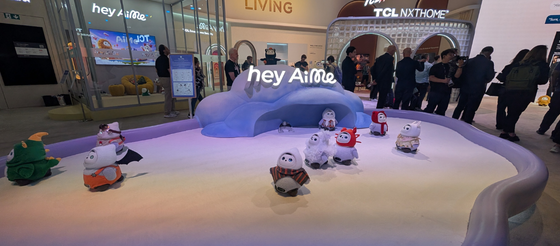
IFA also gave the public the opportunity to meet AiMe, TCL’s modular AI companion robot being showcased at IFA Berlin. Designed to feel more like a companion than a conventional smart-home device, AiMe can hold conversations, play games, tell stories and learn household routines. It can also move around the home, capture photos and videos, and respond to voices, expressions and emotional cues.

Its modular design brings together three detachable components: the expressive Baby Core, mobile Drive Core and portable Mini Core, allowing AiMe to adapt to different moments and spaces.

What caught our attention was TCL’s focus on giving AI a sense of personality and physical presence, exploring how future technology could offer interaction as well as functionality.

In specialised display tech, Sylvox highlighted its Frameless Pro Outdoor TV, featuring a 1.5mm ultra-narrow bezel, 2,000-nit peak brightness for direct sunlight visibility, IP56 weather resistance, yes, to rain also and integrated Google TV with an AI wallpaper generator.

Smart cleaning innovations were equally prominent at Dreame’s display, headlined by the Aqua20 Pro Ultra Roller X Complete vacuum. Equipped with 180°C steam mopping, extendable rollers, and AI cameras recognising over 320 object types, it exemplified the shift toward higher automation in floor care.

Collectively, industry leaders like Dreame, TCL, Haier, Midea, and Miele demonstrated how AI integration, space optimisation, and premium finishes are redefining modern residential living, establishing a strong momentum heading into retail channels.

Robotics maintained an omnipresent force across the venue, spanning a range of functional and creative implementations:

  • Senso by Soildtech Technologies: An AI plant sensor delivering real-time soil, temperature, and sunlight tracking via a gamified interface.
  • Rise by Viaim: AI agent earbuds designed to record, structure, and convert verbal conversations into actionable work items.
  • TRON by Airseekers Robotics: A wire-free robotic mower combining vision-based navigation with a FlowCut mulching system.
  • Solvia 8×32 by MatataXplore: AI-powered outdoor binoculars integrating species identification and media recording.
  • SunLED Life Science: Near-infrared light therapy devices designed for passive workplace wellness and mood enhancement.
  • 733 Healthcare Robot by Bodyfriend: An AI wearable massage robot offering customised joint mobility and active stretching routines.
  • Omni S2 & MarsWalker by Anker eufy: A multi-floor robotic cleaning solution utilising a tracked stair-climbing carrier.
  • AiMe by TCL: A modular companion robot combining adaptive social AI with detachable functional hardware cores.

Wearable technology is moving beyond wrists and glasses, and not only the standout wearable but also the overall standout innovation of the show mentioned above;  the Halo exoskeleton from Hypershell. Featuring a carbon-fibre and titanium frame weighing 2.6kg, it coordinates four quad-motors and over 30 sensors to assist lower-body movement up to 20km. Portable and foldable, it represents a transformative leap for mobility assist tech at an accessible price point.

Ultimately, IFA 2026 underscored an industry moving decisively toward intelligent, autonomous living. For savvy retailers and consumers alike, the rapid integration of AI across hardware promises a compelling new wave of opportunities with products reaching store shelves and consumers’ homes in the immediate future.

To read the full published article by Daniel Todaro, CEO, Gekko Group, please visit ERT Magazine

Tagged , , , , , , , , , ,