Tag Archives: Opinion

Retail Reboot: Transforming Likes into Sales with Digital Marketing

Callum Puffett, Digital Marketing Manager at Gekko looks at some of the tools that can be utilised to help retailers of all sizes get a foothold on the Digital Marketing ladder to help improve their brand visibility and most importantly drive traffic. 

The Importance of Social Media

Today, digital retail marketing is crucial for brands to connect with customers. It means creating attractive online experiences that show products, build trust, and boost sales. It can encompass social media, search engines, emails, and online stores to, most importantly, help brands reach customers where they spend their time. In short, it’s an unavoidable tool for retailers looking to broaden their reach and communicate more effectively with their target audience, and crucially can greatly increase a retailer’s visibility and revenues.

Furthermore, a well-considered Digital marketing strategy allows small and medium-sized retailers to take on much larger competitors, even with limited resources. Small-budget retail marketers can conveniently promote their brand globally and reach consumers across the nation with ease.

Talking of small budgets, one of the easiest and cheapest gateways into digital marketing is social media. Social media channels can and should be used by almost every business, especially by ones wishing to talk to consumers, but their effectiveness varies depending on how they are utilised. Research conducted by LOCALiQ surveyed more than 500 businesses on the importance of certain tools; for Social Media Marketing the survey stated that 40.3% of businesses find it somewhat important with 46.6% indicating it is very important, indicating that the vast majority of businesses find it to be a very pivotal tool. This is also shown in their spending, as 31.3% of businesses will spend between £1,000 and £5,000 on social media advertising, with another 22% spending more​. These social media advocates appear to be most heavily invested in Facebook, allocating 24.4% of their budget to the platform, followed by X(16.4%) and Google (13.8%)​​.

In terms of the Return on Investment, when effectively utilising the tool it was shown that 73% of marketers find social media marketing to be cost-effective with the average ROI for social media ad campaigns being 250%​ according to (The Goat Agency)​​ (MarketingScoop)​.

Content is King

Most readers will no doubt be using social media as part of their marketing strategies and I’m not going to run through a list of the platforms available and their merits. But whatever opinions, statistics and case studies there are on social media marketing working for other businesses, these don’t help you make content that will sell your products or engage with your audience. Content is king and whether you choose to create it in-house, rely on the hopefully professional output of the brands you stock or a mix of both, making it appealing, engaging, effective and consistent is fundamental. Employing someone to manage this for you will make a real difference but that will come with a cost. Moreover, will they have all the creative and technical skills to create this content from scratch?

Rewind 5 years and the task could be overwhelmingly challenging. Fast forward back to the present and we now have a potential ally in the form of AI. You can now generate an idea into a finished product in 15 minutes with the help of AI. Businesses can now implement AI to assist them with their social media marketing, from creating content to writing copy to even analysing statistics. Need an Instagram post that talks to Gen Z or a LinkedIn post that is more B2B focussed? AI can very easily and rapidly adapt the approach and tone.

It can be a real lifeline for these smaller retailers that don’t have the budget of these bigger businesses. There’s a whole plethora of AI tools out there that will assist your business in the Social Media Marketing world and these can be cost-effective with many charging a reasonable monthly subscription. You will no doubt have heard of ChatGPT but there is a new kid on the block in the form of Gemini from Google that is currently being marketed on TV by the brand. 

Gemini in itself is very similar to ChatGPT but offers better integration with the whole Google Ecosystem, whether that’s their online office suite or on the latest Pixel phone, you’ll have your own AI assistant everywhere you go meaning there’s no reason not to be able to generate engaging captions or product descriptions for your business. But AI doesn’t stop there, there are all sorts of AI tools and assistants ranging from ones that will create professional quality videos from a few words such as Lumen5. This AI tool will also provide voice-over for your content to provide that extra impact. Want to appeal to your Welsh-speaking customers? How about using Sonix AI to translate all your content in a flash? No longer is it an arduous task to translate and produce content in multiple languages. 

The beauty of all of these tools is that they can be used in harmony, whether that’s using Google’s Gemini to come up with a script for a video, then using Lumen5 to create the video with a voice-over, and if you want to go that extra step further you could even use more AI tools to translate the video to another language to further your reach via Sonix. Then to finish it up you could even use the AI tool Pixlr to help create images to accompany your social media post. The possibilities are endless. 

Helping your content be found

One of the most overlooked tools at the disposal of digital marketers is SEO (Search Engine Optimisation), something most will have heard of but not necessarily fully understand.  SEO can be the difference between having a steady flow of traffic to your website or being a non-entity when it comes to internet search engines, relegating your business down from the all-important first page on the likes of Google or Bing. 

SEO in simple terms is the practice of enhancing a website so it ranks higher in search engine results. This involves using relevant keywords, creating quality content, improving site speed, and ensuring a good user experience. The goal is to increase organic (non-paid) traffic to the site by making it more visible to people searching for related information or services. The importance of SEO speaks for itself when compared to PPC (pay per-click) as SEO delivers a higher conversion rate (2.4%) compared to PPC ads (1.3%)​ (WPBeginner)​. 

Most SEO implementations can be free to do, making it the most cost-effective tool. The simplest way to begin this process is to ensure keywords for each page on the website are appropriate. E.g. if you’re selling televisions or laptops use these as keywords. This way when anyone searches online and uses one or more of the keywords you have attached to your website page the chances of your website appearing on the first page of results is significantly higher than without SEO Keywords.

From AI to SEO, retailers have a whole plethora of tools at their disposal to assist with a multitude of tasks whether that is generating content to appeal to your target audience with the help of AI tools or even helping your brand get discovered more easily through SEO. By harnessing the power of social media, AI and SEO, retailers can significantly enhance their digital presence and achieve substantial growth.

To read the published article written by Callum Puffett, Digital Marketing Manager please visit ERT Online

Photo from ERT Online

Tagged , , , , , , , , , , ,

How brands can build loyalty by helping parents with the back-to-school rush

Parents everywhere are about to heave a massive sigh of relief as millions of kids head back-to-school after a long summer.

Of course, this also means there’s lots to prepare for in terms of buying new uniforms, technology and other essential school supplies.

Daniel Todaro, CEO at creative customer experience marketing agency, Gekko, believes there’s also a £2.3bn opportunity for brands to build loyalty if they step up to help parents with the last-minute dash for supplies for their young learners…

School starts up again next week, and with that comes the inevitable back-to-school spend.

According to our recent research, buying school supplies before the new year sets parents back an average of £452.40 per child, when including everything from school uniforms and backpacks to laptops and mobile phones.

With seven out of ten (71%) of parents agreeing that rising costs are making it harder to afford back-to-school spending, and 61% worried about how they will foot the bill, many parents are left feeling stressed about the experience before they even begin.

Whether they have a tendency to leave things to the last minute to accommodate a child’s potential growth, or waiting for payday, many parents may find themselves rushing around the shops in these last few days before the new term, adding to the pressures they are facing.

Over the next few days, retail marketers have an opportunity to build and strengthen their relationships with parents.

Smooth customer experiences and appropriate support from brands and retailers can go a long way to helping ease parents’ pain points – and those who do it well will be remembered.

Focusing on the in-store experience

Given there are only a few days left before the start of term, online shopping may no longer be an option for some items, and there is limited time to research more complex products.

This means parents with shopping still to do, are more likely to venture in-store looking for retailers to be prepared to help.

Back-to-School-gekko-Graphic

With teams briefed on how they can identify and support parents coming in for last minute school supplies and those in the same boat being empathetic, are able to offer support to cash-strapped parents looking for value and the right kit.

Whether it is on the most popular products this year, product features and functionality or directing them to the right place – support channelled in the right tone can elevate their in-store experience, making them more likely to recommend and return as customers to your store.

Advice is most likely to be pertinent and valued for big-ticket items like laptops and tablets.

Three-quarters (76%) of schools now expect children to have their own tech but only 12% of schools have suggested specific products, leaving parents, who often do not have a good technical understanding of products or the differences between them, to figure it out for themselves.

Ultimately, one in five (19%) rely on in-store and specialist help – so it is important that sales teams are able to provide them with the support they need.

The stores that are most helpful will be remembered and preferred in future, while those that are unprepared or have inadequately trained staff could only create frustration and dissatisfaction.

Ensure consistency across channels

With next-day delivery broadly available, some parents will still be browsing for products online, and attempting to compare both features and prices.

Brands who work with omni-channel and pure online retailers to distribute their products can add value by ensuring that their appearance, descriptions and pricing is consistent as much as possible.

Using a web scraping service or monitoring your stockists is critical for providing a good brand experience.

When retailers are presenting the same product in different ways, parents can potentially waste valuable time, further increasing pressure, trying to figure out which of two options is the best when they are actually looking at the same product on two different sites.

Creating additional confusion and frustration could prevent parents from considering your brand in future and push them towards competitors that are more clear and consistent in their messaging and product placement.

Little things can make a big difference

With parents spending a total of £2.3 billion on back-to-school supplies each year, retailers and brands are keen to be getting a piece of the action.

Special offers that make the cost more affordable will go a long way, but are a somewhat short-term solution – the relationship only lasts while prices remain low.

Brands that can make the experience less stressful and reduce the pressure parents are feeling, on the other hand, will have consumers coming back year after year.

It is easy to get caught up in the excitement of online or app-based retail, but this is a prime example of when the in-store experience really matters too.

These suggestions may seem small, but having knowledgeable teams and providing a consistent empathetic experience will go a long way in creating a smooth customer journey across all channels and winning loyal customers for the duration of a child’s schooling and beyond.

To read the published research featuring a comment by Dan Todaro, Managing Director please visit MediaShotz

Tagged , , , , , ,

Emerging Trends in Recruitment Technology

Rapid advancements in technology are reshaping the way employers attract, assess, and hire talent. Long gone are the days of posting CVs in the closest letterbox or taking physical copies into offices and stores directly, now it is easier than ever to get your CV to organisations. However, many elements of the process have become more challenging for job seekers to navigate with increased automation, gamification, and more platforms than ever to look for roles. 

Virtual and Augmented Reality in Recruitment

Virtual Reality (VR) and Augmented Reality (AR) are revolutionising the recruitment process. Rather than a traditional, less immersive experience, some organisations are offering an engaging candidate experience through VR and AR, allowing them to get a feel for the office, colleagues, and company culture without having to make the trip. 

Virtual Tours 

Increasingly, it is possible for employers to offer candidates virtual tours of the workplace. This strengthens employer branding and allows for a tour to be more easily organised. Seeing the workplace gives candidates a glimpse into the work environment and culture, with the potential for them to interact with people already working with the organisation. This saves time and travel costs while still allowing candidates to make informed decisions with as much exposure to the company as possible. 

Virtual Interviews

Interviews have often moved to video platforms, but there is a high chance in the future this will progress to interviews in VR. These are more involved than video calls, functioning as if the interviewer and candidate are in the same room, and would allow for some level of proxemics. Much like virtual tours, they save time and money and allow job seekers to attend more interviews as they don’t require travelling between physical locations.

Gamification in Recruitment

Companies have been using gamification, the incorporation of game elements into non-game contexts, in various elements of their candidate and employee experiences. There has been lots of talk about gamification in training and development, but it has taken off in recruitment too. 

Engaging Assessments

Gamification can evaluate candidate skills in a more engaging and interactive manner, such as at Deloitte. Other organisations actively use it during the screening process, such as Unilever, who use mobile games at this stage, making the initial stages more enjoyable and immersive, as well as presenting them to potential employees as an innovative employer. 

These games often assess competencies like problem-solving, decision-making, and strategic thinking. By making the process fun and different to other organisations, companies can attract top talent and gain deeper insights into the abilities of their candidates.

Gamification and AI for Insights

As part of this process, gamified assessments often utilise AI to analyse performance and provide insights. AI can identify patterns and behaviours in line with what it knows of a job role, giving some indication of suitability. This approach may prove controversial at the moment, when candidates feel anxiety about a lack of human touchpoints in the early stages of the process, but do help employers make more data driven hiring decisions. 

Blockchain Technology for Credential Verification

Blockchain technology, well known for its secure and immutable nature, is well positioned to gain traction as part of the hiring process, more specifically for the verification of credentials and work history. 

Once information is added to a blockchain, it cannot be altered or deleted. This makes blockchain technology an ideal solution to the time-consuming task of verifying educational qualifications, professional certifications, and employment history. Institutions would be able to issue digital certificates on a blockchain, which the candidate can give their potential employer access to. This would allow employers to verify credentials quickly and accurately, without the need to contact multiple institutions. While this innovation looks promising, it has not been enacted yet, so while it may provide a more trustworthy and efficient process this has yet to be demonstrated in reality. 

Up-and-coming technological changes and advancements have already made huge waves in recruitment trends, but stand to transform these even further. Incorporating more innovative technological solutions can help a business position itself as attractive to top talent, but does risk creating quite the disparity between organisations who can implement such new technologies and those who cannot – who may struggle to recruit the same level of talent as a result.

Article written by Lizzie Street, Recruitment Executive

Photo from Pexels

Tagged , , , , ,

First Impressions Count

Experience is everything and our research has seen that if you capture the imagination of the consumer and embrace them through the customer journey, 81% of consumers are willing to shop or spend more for experiences that take traditional store shopping to the next level. In simple terms, for a shopper to make a trip to your store, it has to be worth their time, effort and expenditure, creating an experience that exceeds merely the convenience of simply buying online from the comfort of their home.

In these tough economic times, yes it’s hard for both retailers and customers. Retailers can’t necessarily create the experience they’d prefer for their consumers and for the shopper, no one wants to be hard sold a product they don’t like or need, especially during distress purchases, such as the replacement of a large appliance. 

There are some retailers that unscrupulously look to charge brands for access to their doors, which is something many brands refuse to do as it squashes margin and only serves the retailer and not the brand. However, for those more willing retailers, inviting brands into your store is a start in the process of enhancing the customer experience. Create zones that enable a branded product expert to sell directly to the consumer and show your staff how it’s done. A recent report from Westfield showed that 60% of consumers are expecting over half of any given retail space to be driven by these kinds of experiential services. Driving knowledge through an expert enables the customer journey to be elevated, enhancing the possibility of closing more sales and increasing your average basket value through selling up through a range or creating opportunities for attachment sales. 

Think about your store layout and the customer flow. When the consumer bestows the honour of entering your store, yes it’s an honour, they aren’t doing you a favour, think about what greets them. Is it enticing, does it naturally lend itself to making them feel comfortable and can they find what they are looking for with ease. Ask if they require assistance and give them space and let them know that you’re there to help when they need it. 

I’m about to be a judge at the ERT Awards and my pet hate is seeing stores piling it high. Microwaves displayed atop washing machines, dishwashers and cooling. How many of those microwaves do you sell? Is it a cornerstone product that you rely on to generate revenue? Probably not. So to make them stand out like that isn’t, in my opinion, a pleasing aesthetic, more so an eyesore. So why do it when you could make your store look visually stimulating and clear of clutter to enable the consumer to see immediately what you range without having to fight through the riot of product and noise.

If I’m looking to spend some serious money in your store, I want to know that you’re the kind of store that cares about how I’d like to spend it. Listen to what the consumer needs and their budget. Keep it relevant to them and not you. No one likes a bore or someone who clearly doesn’t listen because they want to talk about themselves. The key area of focus within your store to really think about is in making it an immersive environment that your customer feels comfortable in and encouraged to explore and play. 

Enhancing the senses of consumers with your store can be done through very simple things like light, sound and smell but also interactive displays that make the consumer feel connected to the brands that are ranged in your store, enhancing the retail experience for both. Displays aren’t just about enticing shoppers to come in-store. They’re about drawing attention, displaying information and setting products apart from the competition. In the world of considered purchases, integrating tech effectively into display systems can add to the experiential and immersive experience that shoppers increasingly expect from their high street visits, helping to excite and engage consumers.

Personalisation is another factor to consider and one that is increasingly more critical in the customer journey and I hope that what you sell and the brands you range speak to target audiences. McKinsey research has shown that successful personalisation strategies, driven by customer data and increasingly AI solutions, can mean up to 10-15% revenue growth. Is what you sell and the manner you display it and sell it relevant to all and done in a manner which heightens the senses and creates an emotional connection that enhances the experience.

In 2024, the consumer’s purchasing decisions are, it seems, heavily influenced by a product’s ability to resonate with their identities and aspirations, this need can surpass mere cost considerations enabling a potential increase in basket value. This change reflects a departure from older generations’ perceptions, increasing the importance of aligning brand values and the retail approach in line with a consumer’s priorities in a competitive landscape.

Make the consumer feel listened to and important and enable them choice of not only product but also payment terms and delivery. Did you know that 43% of sales are abandoned due to delivery charges or concerns. This is relevant both in-store and the online customer journey, which leads me to your Omni channel experience.

While you might think that younger generations shop online more, actually for considered purchases such as CE, 63.5% want to shop in-store. However, this does not mean that the e-commerce opportunity is any less, especially when it comes to socials. So how does your retail experience translate online through your website and social media? With more and more consumers searching online to research the next considered purchase, do you hold your desired audience and compel them to continue their experience in your store.

It’s also understood that four in five consumers follow brands on social media, with an impressive 95% saying that their purchasing decisions are influenced by what they see and read on social media. It’s therefore important to consider the percentage of consumers that still prefer to shop in-store when shopping for high-ticket items, the future shopper and customer journey will increasingly be based around the online and social media experience. Therefore the importance of getting both right in the context of the customer journey and overall experience, are critical for a retailer’s success.

Core drivers to consider for enhancing the experience for consumers and enhancing that customer journey for both your store and the brands you range spanning an omni-channel approach are; 

  1. The online presence of your store may be the first touch point for your customers, therefore making it enticing and motivating enough to bring the consumer to your door is crucial, especially if you’re looking to attract that younger 63% that want to shop in-store. 
  2. Create theatre that immerses the consumer through lighting, sounds and clear navigation of your store with clearly defined zones that encourage the consumer to dive in and feel invited to play. 
  3. Engage with consumers in a knowledgeable and supportive manner through your staff and continue the customer journey with clear, impartial and knowledgeable advice that is relevant to the consumer, not just merely you or your opinion. 

To read the published article written by Dan Todaro, Managing Director please visit ERT

Tagged , , , , , , , ,

How can retail recruitment face down the gig economy threat?

With consumer finances feeling squeezed amid high inflation and a stalling economy, the retail sector has faced a difficult year – with an average of 39 bricks-and-mortar stores closing every day. This, along with increasing product choice, particularly when it comes to big-ticket items, is making it more challenging for brands to stand out from competitors, with customer experience becoming a focus for driving differentiation.

One way of achieving that customer experience is to play to the strengths of physical retail, offering something that the online world will struggle with: the human touch. People buy from people, and the use of brand ambassadors to focus on positive customer experiences, is a win for brand, retailer and shopper alike. A successful campaign of this nature very much hinges on the team you put in place, which means finding candidates with the personalities, skills, attitude, and experience to work in the retail sector.

In an ideal world, you will be bringing in trained experts with experience of working in the sector – but the talent pool is shrinking with the rise of the gig economy. That, compounded with low awareness of the opportunities available, means that retail recruitment is becoming increasingly difficult. So, what can brands do to draw in their ideal talent?

Competing with the appeal of the gig economy

According to research by the CIPD in 2023, just under 500,000 people are part of the gig economy, from private hire driving and food delivery to web development or translation, and with the rise of platforms like Taskrabbit and Fiverr, workers have even more opportunities.

Despite some significant downsides, workers are being drawn to the flexibility and autonomy offered by these platforms, and as a result there are fewer people willing to work on temporary retail campaigns. With a smaller talent pool to draw from, making it harder for brands to find workers with the skills and experience they need.

How to attract the right people

To compete with the appeal of the gig economy, brands should take a targeted approach, focusing both on their recruitment strategy and their value proposition.

  1. Know your talent pool
    Each brand needs to understand the job market to stand the best chance of attracting qualified candidates who can represent your brand and enhance the customer experience. This means understanding priorities, pressure points and how to reach the right people, and tailoring your approach to appeal to them, including using the right language or tone of voice, creating employee profiles, and highlighting brand values.
  2. Get your timing right
    Anticipating future needs and employing data tools to model demand is essential, especially in industries with variable requirements. Recruitment efforts need to align with job availability to prevent negative impressions and bolster the perceived suitability of the work for potential candidates.
  3. Highlight the benefits
    In a market where many desirable candidates are turning to the gig economy, highlighting how campaign work differs and addresses some of the downsides, can appeal to qualified candidates.

    Despite the flexibility and autonomy offered by gig economy work, there is a lack of security that can lead to work-related anxiety and financial vulnerability. Gig workers do not receive the same benefits as those on PAYE, such as sick pay and paid holiday, and they also face the additional hassle of completing tax returns. When it comes to pay itself, gig workers often find that they earn less than minimum wage after overheads, when campaign recruitment would pay more.

    By focusing on the additional pay, increased security, other benefits, and flexibility (if it’s on offer) brands can show the value of campaign work and draw in employees who would otherwise turn to gig work.
  4. Increase visibility
    Most campaign work offers similar flexibility to gig work, but it languishes in relative obscurity. Put simply, the right candidates simply don’t know it exists. Opening up discussions and promoting this type of work as an alternative to the gig economy will help to net top talent.

The challenge of finding the right team for campaign work is a burden for many brands, which are also juggling other complex priorities. Working with a company, like Gekko, which can draw on a pool of readily trained experts to create promotional teams that can be dropped into stores and immediately deliver results for brands.

To read the published article by Lizzie Street, Recruitment Executive, please visit Retail Sector

Photo from Pexels

Tagged , , , , , , , , , ,

Let’s take this outdoors

As the great British weather improves our attention moves to making the most of every moment we can enjoy outdoors, in our gardens, balconies or public spaces with friends, family and pets. We do so at home with a view to bring the indoors outdoors and live alfresco to eat, drink, play, listen and watch. As a result, this change in habits opens up new trends for the consumer electronics industry and opportunities across many categories for all retailers.

With the advent of the bifold door, the garden as an additional room to your house is now common and therefore with more families spilling out into the garden, it’s not that unusual to see an outdoor kitchen combined with dining and living spaces which convert into entertaining and cinemas spaces at dusk.

So let’s start with cooking outdoors and the new appliances appearing on the wish lists of would-be chefs looking beyond traditional BBQs and wanting to offer their guests more than the usual fare of burgers, bangers and cremated chicken drumsticks. Peaking into the world of Grilling opens up a plethora of options for homeowners with buying decisions being made for a variety of reasons including their culinary ambitions, the desire to impress guests, the outdoor space available and of course budget.

The Grilling category includes portable grills, smokers and outdoor ovens and in the UK is estimated to be worth around £177 million currently and is expected to reach almost £200 million within 5 years, growing at a CAGR of 3.70% during the forecast period (2024-2029).

One brand leading the way here is Shark Ninja, which offers a range of innovative outdoor cooking appliances to meet the needs of many consumers and in doing so, enhancing their culinary experiences. The Ninja outdoor range, which has been marketed heavily over recent months, includes the Woodfire Electric Outdoor Oven, Ninja Woodfire Electric BBQ Grill & Smoker & the Woodfire Pro Connect XL Electric BBQ Grill & Smoker, which as the name suggests, features smart connectivity allowing the user to control their BBQ & monitor cooking progress on their phone.

Another area for growth is the outdoor Pizza oven market which is anticipated to grow at a considerable rate over the next 5 years. A number of brands are making their mark including Gozny, Ooni and Witt, all of whom offer a modern, convenient, user-friendly take on the pizza oven.  Together with outdoor electric grills, pizza ovens are something home appliance retailers should certainly consider ranging, opening up sales opportunities in other areas of the home.

One step on from the outdoor appliances are actual outdoor kitchens, something that frequently makes me envious. Imagine having an outdoor kitchen equipped with built-in appliances like refrigerators and sinks. Standard in smart Mediterranean villas for decades but now popping up in Acacia Avenue across Britain, this is a trend that for many who sell kitchens, may see their business evolve over time. Believe it or not, the outdoor kitchen category grew globally from $6.3 billion last year to $6.7 billion in 2024 and is estimated to grow to almost $9 billion by 2033.  

So once you’ve whipped up a culinary feast in your outdoor kitchen, what’s next? Well perhaps kick back and set the mood with a smart outdoor lighting system allowing homes to control and customise their setups with ease. These app controlled solutions, from the likes of Philips Hue, can be programmed to change colours, adjust brightness levels and can be combined with your music via an outdoor audio system to enhance the outdoor living experience. We all know that music adds ambience to outdoor spaces and all-weather solutions are becoming increasingly popular, with weatherproof speakers and sound systems specifically designed for outdoor use that are wireless and Bluetooth-enabled, allowing users to stream music from their smartphones or other devices.

To complete the indoors outdoors experience, CE retailers should be adding some outdoor TV options to their ranges, offering their customers the opportunity of immersive outdoor cinema experiences, day or night. The category is starting to build momentum and unsurprisingly Samsung is at the forefront with The Terrace which comes in both 65” and 75” screen sizes and is specifically designed for open-air use. Another brand to watch is Sylvox which has a much larger range of outdoor TVs. Aside from being weatherproof, they are also more durable and resistant to extreme temperatures and feature exceptionally bright, anti-reflection screens so you can enjoy your favourite content even on the sunniest of days.  Bearing in mind the high price points, the large screen sizes and the intended setting for these TVs, I would suggest that offering an installation service would be a real benefit to your customers.

So, British weather permitting, it is entirely possible to create a new heart of the home, outdoors. By transforming your garden into a living, dining and entertainment space, homeowners can truly embrace an al fresco lifestyle. As we head towards summer, retailers can capitalise upon the opportunity by complementing their usual in-store offering with something different, where your customers can let their imaginations run wild!

To read the published article written by Dan Todaro, Managing Director please visit ERT

Photo From Brown Jordan Outdoor Kitchens

Tagged , , , , , , , , ,

Love is not all around for retailers: 24 million will skip Valentine’s gifting

  • 54% of UK adults aren’t going to buy gifts this Valentine’s Day
  • Under 35s are more than twice as likely to buy cards, gifts and experiences
  • Limited spend and a growing focus on experience-based gifts should be cause for concern for retailers

New research from customer experience marketing agency Gekko suggests that Valentine’s Day is no longer the retail bonanza of old, with over half of UK adults (54%) not bothering to buy any gifts for their significant others, friends or family members.    

Of the 46 per cent UK adults that will buy gifts, only 13% plan to spend more than £50 on a gift, with consumers most likely to spend up to £20 on a gift (34%), so not great news for those big-ticket retailers. In fact, people are likely to spend less on significant others than they would on family and friends, which is perhaps due to the changing relationship dynamics in society.

Young love still drives Valentine’s Day with nearly three in five (58%) of those aged between 18 and 35 agreeing that it is important to mark the day with those you love, including friends and family. This age group are more than twice as likely to buy cards, gifts and experiences for loved ones as over 55s (65% v 31%).  

Another trend that was evident in the research is that experiences are becoming far more popular as a Valentine’s Day gift preference, with 37 per cent of adults saying they prefer to give experiences over physical gifts. This includes taking a significant other to dinner (27%) or gifting an experience like gig tickets and wine tasting (6%). 

This shift towards experiences suggests that retailers may need to reframe their strategy to rely less on the gifting moments throughout the year. More than two-thirds (67%) dislike the consumerism associated with gifting days and moments, with nearly three-quarters agreeing that retailers put too much focus on Valentine’s Day.

With most consumers inclined to purchase fewer, less expensive physical gifts, retailers are left trying to entice a smaller share of the market. A quarter (25%) of consumers agreed that discounts would encourage them to buy physical gifts, but ideas that would help make a gift ‘extra-special’ also appealed to consumers, particularly 18-34-year-olds. 15 per cent of UK adults agreed that product personalisation would encourage them to spend, and 12 per cent liked the idea of limited-edition products, increasing to 22 per cent and 20 per cent respectively amongst under 35s.

Daniel Todaro, MD at Gekko, said: “With consumers’ focusing more on experiences and creating memories with their loved ones, amongst growing disaffection with commercialised gifting moments, retailers will have to reinvent their strategies so that they can get a larger piece of the shrinking heart-shaped pie. And while offering discounts is one way to go, it would be best for competing retailers to avoid a race to the bottom. Instead, setting your offer apart can help to drive differentiation, with personalisation, limited editions and even customer service itself all helping to make Valentine’s Day work harder.”

Tagged , , , , , , , , , ,

Fast Foward – AI Will Dominate in 2024

There is one main trend that has taken the world by storm in 2023 and it will only increase and improve its presence and capabilities into 2024. This is for some, the elephant in the room….AI. Contrary to popular belief, AI has actually been around for many years but not as prevalent as it is now, its resurgence has completely changed the game. From writing entire books and songs to being implemented into consumer electronics and domestic appliances to make the products more intelligent. If you take a look at some of the big players in the market you’ll notice more and more are adopting AI, whether this is for energy-efficient washing cycles or improving picture quality on TV, the use cases are becoming less niche and more general. 

2024 will see a huge shift in focus to implementing AI into many products, some that many may find surprising and will no doubt continue to enter every category. It will be used as a selling point, in the context of productivity. As evident with Microsoft who is actively using AI (Copilot) to carry out a plethora of tasks in a matter of minutes that would otherwise be considered either time-consuming or tedious processes. Alongside this, automation will see a rise in 2024, with AI becoming more intelligent and its capabilities increasing, allowing users to automate many more processes and streamline work, in turn making them more productive in a short period of time.

Integrate this capability with artificial intelligence, which helps track patterns in your laundry, cooking, and cleaning routines. This integration allows the AI to seamlessly update the software of your connected appliances, akin to updating apps on your phone or tablet. The AI features enhance efficiency, optimising processes like a more energy-efficient wash cycle that maintains excellent cleaning results through seamless connectivity.

2024 will also see the rise in sustainable technology which we saw becoming a focus in Q4 2023. The front runners of Google and Apple making their products either out of sustainable materials or providing continuous support to their products for years to come in an effort to reduce e-waste. Gone are the days when your phone would have a 3-year life cycle before needing to be replaced.

This scrutiny on sustainability extends to every device and appliance on our person and in your home and AMDEA, I think, explains it best:

“Over the last twenty years AMDEA members have focused on design and new technologies which have dramatically and continuously reduced energy and water consumption of appliances in our homes. With 170 million essential large appliances in the 28 million homes across the UK, the technology in each machine that contributes to mitigating climate change can collectively make a major contribution to carbon neutrality”

Visit https://www.amdea.org.uk/campaigns/sustainability/ for more information

Another trend that will be sought after by many businesses rather than consumers will be cyber security. With more and more companies falling victim to cyber security breaches with countless consumer data being leaked subsequently, 2024 will be the year companies double down and invest. Research has shown that one in two businesses fall victim to a successful cyberattack in the past three years with the cost of these attacks to the industry expected to grow to over $10 trillion by the end of 2024.

In the context of the independent retailer whilst you may think that these trends do not necessarily apply to your business immediately, don’t delay to understand their importance. Generationally the relevance of sustainability is huge as will the shift to AI in the context of improved functionality, ease and sustainability.

AI is our friend, not a foe. It not only helps us magically enhance the photos we take on our smartphones, it helps us save money on our wash cycle and improve our cooking skills and so much more. Get to grips with it and understand it as you won’t be able to avoid the conversation in the context of your range, sales process and customer experience. It’s going to dominate in 2024 and that was evident from IFA and will be again at CES this coming January.

To read the published article written by Dan Todaro, Managing Director please visit ERT Online

Photo by ThisIsEngineering

Tagged , , , , , , , , , , , ,

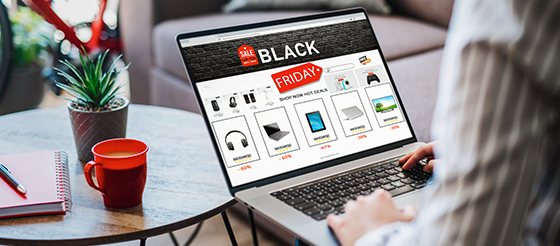
Has Black Friday lost its gloss?

When Black Friday first emerged onto the scene just over a decade ago, retailers could expect queues out the doors, and on some occasions even fighting in the aisles as consumers sought bargain deals. When Cyber Monday entered the fray, retailers’ websites regularly crashed under the strain of excited bargain hunters.

While these events used to provide a boost across the board, there are now clear winners and losers as Black Friday discounting loses its shape and starts to merge into the Christmas shopping. With marketing and sales events starting earlier each year, is now the time for a re-think?

Pressure on retailers

It has been a tough year for retailers. Again, we have seen big names disappear from the high street, and for those that remain the environment is challenging. Increases in production and supply chain costs muddled with competition from big online retailers are reducing profit margins, leaving leaders with tough decisions to make.

Many larger retailers can afford to discount their products as brands support margins and economies of scale apply. However, it is not the case for smaller independents who have to take the hit. They feel they need to take part in Black Friday to compete, and unfortunately, this is adding to the strain they face in keeping their doors open.

Poor deals result in underwhelming sales

Those retailers who can afford to offer site or store-wide discounts are still doing well, but the deals available on Black Friday are not what they once were. Many offers are only applied to end-of-line items or overstock that were heading to the sales anyway.

As a result, many consumers are left underwhelmed. With the cost-of-living crisis, consumers have been spending more carefully than before too. While Nationwide announced a 2 per cent increase in transactions, Barclaycard transactions were down 0.6 per cent year-on-year, suggesting that consumers were happy to spend, but less comfortable with borrowing than they have been in previous years. This hesitation to spend means that consumers are often only prepared to spend on items they were already planning to buy.

The offers created are typically determined by scale and buying power of the retailer, so while large retailers can offer bigger discounts on more products, small retailers are forced to be more selective, leaving them with a smaller piece of the pie, or with severely cannibalised margins.

Lack of differentiation makes Black Friday pointless

We started out with just Black Friday – just one day of epic discounting – and over the years this has expanded to include the weekend, and the following Monday (which is, of course, now known as Cyber Monday), then the weeks before and after, and now the entirety of November, it seems.

Not only has the Black Friday discounting period expanded, but Christmas promotions, supported by seasonal adverts, also seem to start earlier and earlier. It is tough to see any differentiation or even a gap between when one event ends and another begins. Diluting Black Friday only serves to make it disappear into the ether.

The expansion of the sales window means retailers can take a chunk of the seasonal revenue in November as there’s no longer the frenzied buying for Christmas in December. And for consumers, there’s no panic to buy over black Friday weekend as they know there will be other sales, which is understandable and makes commercial sense.

Do consumers care if Black Friday dies?

Recent research from PwC reveals that online interest in Black Friday has dropped from 61 per cent in 2022 to 44 per cent this year. This is mirrored by Google Trends data, which reveals that ‘Black Friday’ as a search is less than half as popular as it was four years ago. With waning consumer interest, it’s clear that Black Friday just doesn’t hold the same intrigue it used to.

Rather than thinking about what we could do to rejuvenate Black Friday, perhaps it’s time to think about whether we should. Black Friday certainly isn’t working for all retailers, in particular independent retail, and it is starting to lose consumers too. It no longer delivers the same benefits for consumers: excitement, buzz and big bargains, or the same, sizeable sales uplift for brands. In some cases, it is coming at the expense of the customer experience, which threatens the long-term performance of brands.

Is it actually worth retailers’ time and effort? My hunch is that it has detracted from the millions invested in Christmas advertising campaigns that now seem almost irrelevant, and blend in as white noise as we skip through the ads to go make a brew.

To read the published article written by Dan Todaro, Managing Director please visit BDaily

Tagged , , , , ,

IFA 2023 – A Core Ingredient in the Evolution of CE

Once again IFA 2023 was the place to be seen for all technology brands and not just those from the CE category. With the show sold out across 26 halls covering 130,000 sqm of exhibition space, filled by 2059 brands from 48 countries, there is no other show that competes. IFA 2023 affirmed its position as the de facto CE showcase, forecasted to host 180,000 visitors from 144 countries over 5 days.

The fact that we have witnessed all markets contract in every category, shrinking by an average of 7% and in particular CE which is down 12.4% globally. The EU market outlook is looking increasingly positive at a more palatable contraction of 4.5% year on year. No doubt this is making the rest of the world a bigger problem for those whose presence is not as prevalent in the EU market, compared to other brands. The economic reality is that the globe is in a  Polycrises, a simultaneous occurrence of several negative global events such as war, extreme weather events, food and energy Inflation which is compounded by increased Interest rates and social unease, unsurprisingly stops people from spending. Therefore the need for a brand to increase its voice rather than remain silent is critical and to do this with a new perspective. Doing so through a new lens that better understands the pain points consumers are experiencing and appeals to the user’s pleasure points. Perhaps achieved through ethical practices, practical time and cost-saving innovations that help ease the pain on a macro level, rather than add to the global situation. That’s why IFA as a cultural hub, is so much more than an exhibition, its place is essential to the industry as the centre stage for the globe’s CE brands not just to brag but to demonstrate how to solve the problems we share as we coexist on this planet. Making IFA a core ingredient in the evolution of the consumer electronics industry.

All brands, big and small, were in attendance with 350 of those 3059 brands being CE startups from across the globe. These included all manner of concepts and categories and there were several robotic floor care startups displaying and showcasing, however, one that caught my imagination was Dreame’s Revolutionary Flagship Robotic Vacuum L20 Ultra with Industry First AI-Driven Mop Extend™. Which is definitely worth a look. However one of my most memorable chats was with the haircare brand SharkNinja and its ultra compact SpeedStyle hairdryer. The irony is, as a follically challenged man, I’ve not owned a hairdryer for 30 years yet I was enthralled by its functionality, design and huge potential consumer appeal, it’s going to be a Christmas wish list essential item.

The themes were consistent across every manufacturer and focussed on Sustainability – Renewables – Connected by AI and  Premium. Let’s start with the latter as while aspiring to be a premium brand is admirable there, in relative terms, there can only ever be a few brands who genuinely sit in the category otherwise it defeats the terminology of ‘premium’. It’s down to the consumer’s perception of what constitutes premium based on how much they are prepared to pay for your products and brand. What you and I may think of as being premium may well not be the view of others and is likely to vary greatly, depending on whether you’re Gen Z or Gen X.

These generations and to be fair, everyone now, wants quality as standard and brought to them at a reasonable price, as well as being produced ethically in all aspects including the manner in which those products are brought to market. Whilst GfK expects the global CE market to still be in the red by the end of this year, the trend is for consumers to replace appliances, as home tech becomes increasingly more innovative, making even those devices and appliances of five years ago look exceptionally dated in look and functionality. Today many want technology which most now consider commonplace in the home, not luxury or the unattainable.

Almost all appliance brands included smart connectivity in their product line-ups presented at IFA 2023, which enables you at a basic level of connectivity, to control your appliance from your phone, hub or television. Personalisation is the next step in the development of your smart home where you can not only change the panels and the lighting of your cooling appliances such as the LG MoodUP Instaview Freezer but also create your own wash program and save it as your personal wash cycle as LG have also done as part of their wider LG THINQ UP 2.0 concept. Taking cooking to new levels of perfection as Haier has done with the ID series featuring a unique style and the exclusive Bionicook technology. With the ID Series, you can not only view what’s cooking in your oven with its built-in camera but also see it on your phone or TV and the built-in screen on the oven’s facia. It’s opening up the options for personalisation in your home tech to meet the needs of the household to a unique level of personal satisfaction.

Combine this with AI, assisting in noting your trends on laundry, cooking and cleaning, which enables it to update the software on your connected appliances as you would update the apps on your phone or tablet. The AI functionality improves the efficiency of, for example, a more effective wash cycle so that it uses less energy while still giving you a great wash thanks to the connectivity and the hOn app which allows users to get the most out of their Candy Machine. Increasing innovation and enhancing sustainability credentials which for many brands also extends throughout the entire product, and not just its materials. With almost all brands now adopting a policy where a percentage of all products are made utilising recycled materials and not just its packaging. At the forefront of this message was both LG and Samsung who were championing this throughout their product categories. Taking the initiative a step further, linking these credentials into the aspirational brand qualities, which many consumers are now looking for in a true premium brand.

So what’s different this year is that people are asking more questions and drilling down on the specifics. While 74% said they will search online before buying, search data also shows sustained growth in terms containing questions — up 25% compared to the past three years during the same period — and searches for “which is best” and “where to buy” continue to garner momentum in the shopping category on Google Trends. Those searching online, we know like to shop in-store when it is a considered purchase. So make sure you feature on that where to buy ist.

Whilst the wealth of bands at IFA 2023 were vast, you could not miss one brand in particular whose branding adorned the neck of almost everyone with its very clever lanyard sponsorship. That brand was Hisense who was this year, IFA’s headline sponsor and gave the opening keynote delivered by its Global President,  Fisher Yu whom also announced the brand’s sponsorship of the Euro 2024 Football tournament due to be held in Germany. When you are a brand that not only makes TV but also appliances and applications, it’s easier to integrate your devices and with VIDAA at the heart of the ecosystem, Hisense products and its fellow brand stable mates can integrate via the VIDAA interface making the TV in your home, the hub of the household that connects your smart home ecosystem. Making the screen the focus of your living space where you control your appliances around the house via your Smart TV. With ViDAA now in 180 countries and connected to 22 million devices, the task for Hisense is perhaps slightly easier than it may be for other brands in the CE sector. Coupled with the shift from content to services the next step is how to monetize this conversion and its integration with responsive and predictive AI, to further enhance the user’s experience and lifestyle. Easier done when you own the platform and make the devices it connects to.

It’s fair to say that the outlook for retailers is exciting with increasingly more innovation in all categories and an enhanced social responsibility tone that now takes on many more subject matters. These include AI and sustainability which are now common parlance in the sales approach by brands to their target consumers, old and new. For those amongst us who ignore the trends that come out of IFA, do so at some risk, as these trends will inevitably become standard messaging across every category and brand within the year, not the distant future. It’s crucial for the success of all within the industry to embrace, understand and develop these trends to create meaningful consumer conversations.

To read the published article written by Dan Todaro, Managing Director please visit ERT

Tagged , , , , , , , , ,