Tag Archives: Field Marketing

Hey Google, play ‘Deck the Halls’

The magic of Christmas is getting a high-tech makeover. This year, holiday wish lists are moving beyond the typical gadgets and into the realm of the truly smart home. While a new television is still a coveted gift, modern shoppers are seeking next-generation devices that do more than just entertain. They want technology that simplifies daily life, saves energy, and offers peace of mind. This holiday season is all about bringing the future home, with gifts that make every room in the home a little smarter.

A New Era of Home Entertainment

While smart homes are all about efficiency and function, they’re also revolutionising our leisure time. The UK’s television market is set to grow significantly, with consumers always choosing smart TVs because it’s the only option available. However, the latest models from brands like Hisense and Samsung are, as we know, more than just screens to watch and stream to; they are increasingly becoming the central hub of the connected home. The push towards the most advanced display technologies, like brighter OLEDs and more sophisticated Mini-LED backlighting, is a key driver in the purchasing decisions consumers make on their customer journey. These innovations not only deliver incredible picture quality, making everything from blockbuster films to immersive visual feasts, but also create a hub for movie nights, sporting event parties, gaming and casting your treasured photos. Some could argue that with such a powerful TV, why do I need a soundbar? Doesn’t it already have the best possible sound I could get in any TV? Yes, but think of it like the difference between that watch, the one with or without diamonds; it’s the same watch, but it makes a bigger impact. Soundbars, like the Hisense HT Saturn or the Sonos Arc Ultra, are hugely popular for their ability to deliver cinematic audio without the clutter of a full surround sound system. Smart home projectors are also gaining traction, offering the ultimate in-home movie experience. Brands like Hisense and Nebula are making high-quality projection more accessible, turning any living room wall into a gigantic screen for gaming or film nights.

Automated Cleanliness & Comfort: The Rise of Smart Living

The convenience of an automated home is no longer a luxury but a growing expectation; it’s standard for many. The UK’s smart home market continues to grow, with a value estimated at £8.07 billion in 2025 and over 80 per cent of consumers already owning at least one smart product. This trend is driving demand for a new generation of household essentials that span multiple categories in the home. Leading the charge are devices like robot vacuums and mops from brands like Dreame, equipped with advanced navigation and self-emptying docks, which have become highly desirable for maintaining a tidy home with minimal effort. This desire for automated cleanliness extends to smart laundry appliances and even smart lawnmowers, creating a truly effortless living environment. Beyond cleaning, the desire for comfort and health is increasing the popularity of a range of gadgets. Sales of air purifiers and adaptive lighting systems are on the rise, creating the perfect atmosphere and mood with the touch of a button, while smart fragrance diffusers add another layer of sensory comfort. Furthermore, the market for smart health devices is booming, with products like smart scales that track a variety of metrics and air quality monitors that help users understand and improve their home environment. These devices are all part of a larger ecosystem of connectivity and integration, making every aspect of home life smarter and more intuitive than ever before.

Smart Savings for a Sustainable Season

With energy costs still a key concern, especiallyas we approach those months when the heating is switched back on, consumers this Christmas will be very much thinking about smart, cost-saving investments. Thanks to the ongoing smart meter rollout and a growing push for sustainability, energy-efficient appliances are a must-have. The UK’s smart thermostat market is a prime example, with significant growth projected as consumers look for ways to manage utility bills and reduce their carbon footprint. Smart thermostats, such as the Nest, go beyond simple scheduling. They learn your routine, use geofencing to detect when the house is empty, and can even sense an open window, automatically adjusting the temperature to prevent wasted energy. Giving a gift that helps someone save money and reduce their carbon footprint is a present that keeps on giving all year long. This sentiment also extends to other energy-conscious gifts, from smart plugs that let you remotely switch off power-hungry devices to smart lighting systems

that allow for precise control and scheduling, reducing electricity consumption for lighting by up to 80 per cent. These thoughtful gifts empower people to take control of their energy usage, making their homes more comfortable and their wallets a little fatter in the long run.

Peace of Mind Under the Tree

The desire for a secure home to protect those things you hold dear is a year-round priority, making smart security a prime gift category. The smart home security market is a powerhouse, valued at GBP 30.07 billion and continues to grow with innovations like AI-powered video analytics. For the holidays, popular gifts like the Google Nest Doorbell offer more than just technology—they offer peace of mind, allowing people to monitor their homes and feel safe, no matter where they are. This security-focused trend extends beyond simple doorbells to a wide range of devices. Sophisticated smart locks that allow keyless entry and track access are becoming increasingly popular, as are wireless outdoor cameras with must-have features like infrared night vision and customisable motion zones.

Small Gifts, Big Impact

While some gifts aim to transform a whole room, others are designed to elevate a single moment. This holiday season, thoughtful, smaller gifts are making a huge impact byenhancing daily life without a large footprint or a significant price tag. For those looking to introduce a touch of smart living, devices like smart plugs and individual smart bulbs such as LIFX are a perfect choice, offering the ability to automate appliances and control lighting from a phone. In the kitchen, the trend is all about efficiency and convenience, with compact appliances like personal blenders, e.g. from Ninja or Nutribullet, and smaller air fryers proving to be highly sought-after gifts that make cooking healthier and easier. For a more personal touch, a smart mug, such as the Ember Mug, that keeps a drink at the perfect temperature, or a portable Bluetooth speaker with more functionality than just playing music, such as the Robert’s Radio Petite which lets you play music, listen to the radio and even has a built-in alarm clock feature which makes it an excellent small gift option.

This year’s most sought-after gifts are practical, innovative, and designed for a better quality of life. From smart entertainment systems to automated chores, the perfect present for tech lovers is those that make every day feel a little more effortless, providing satisfaction in the process. The subtle integration of AI is a key trend. Devices are not just responding to commands but learning routines and anticipating needs. This creates a smarter, more intuitive home experience. Whether it’s a gift that automates daily tasks or one that provides a sense of security and well-being, the best presents this Christmas are those that seamlessly enhance the modern home and the life within it.

To read the published article by Dan Todaro, Gekko Group CEO, please visit ERT

Tagged , , , , , , , , , , ,

Curating the clutter: How brands can cut-through product overwhelm

Consumers are met with an overwhelming volume of information each day, leading to decision fatigue that can make it difficult to choose products, and even cause them to abandon their shopping baskets altogether. When this happens, shoppers are more likely to stick to a well-known brand or pick up the first thing they see – so brands need to stand out.

Curate the clutter

To be a category leader – and encourage consumer switching – brands need to be seen and heard for all the right reasons. The features and packaging of the product itself is only one factor in a consumer’s consideration process, with visibility, brand positioning and consistency all playing a significant role in the wider customer journey.

Taking a strategic approach to curating the clutter across digital and physical channels helps consumers to notice and understand your brand, clearly see what your products offer, and appreciate their true value in relation to user need.

Cutting through the online chaos

In contrast to a good physical store, where effort will have gone into curating the offering, online there is often too much choice, leaving many shoppers overwhelmed and having to decipher things for themselves. Many third-party sales platforms are nothing short of chaotic, but their convenience has been a boon for time-poor consumers. These platforms can make comparing products easier for consumers but, with so many options, brands need to go the extra mile to make sure they are firmly in the mix.

Investing in an effective web scraping service, such as GWS (Gekko Web Services) – can help brands to understand their digital performance in granular detail. By monitoring and analysing the digital shelf, GWS offers powerful insights that can drive smarter decisions about pricing and product descriptions.

Pricing

Price remains the main driver of purchases for consumers, and it is mission critical that brands understand how their product pricing compares with the rest of the category. Digital shelf analysis provides the clarity product owners need to make quick and confident decisions based on their brand positioning and in response to market shifts, particularly during discounting periods.

Product descriptions and tagging

Showing up in searches via both search engines and on specific sites requires the right keywords in product descriptions, as well as tagging appropriately in line with retailers’ filters. Monitoring is critical for maintaining a smooth customer journey, ensuring that your brand shows up with consistent messaging that aligns with your brand positioning.

Driving in-store visibility

In the same way that your brand’s digital footprint is vital for online retail, its physical presence in stores is also an important consideration. While few brands have control over shelf positioning, products can attract consumers and increase consideration through clever merchandising and in-store promotions.

Investing in point-of-sale merchandising can often be more valuable than expensive activations elsewhere. Strategically placing promotional materials and displays near the point of purchase can capture attention and encourage consumers to make impulse buys or consider additional products.

Sales promotion continues to be an effective way to engage consumers in store. Recent research from Savanta revealed that, while half (47%) of shoppers have favourite brands, 40% will try something new if a product is on promotion, highlighting how brands can shift consumers’ preferences through strategic and well-timed campaigns.

Consideration through careful curation

Balancing brand presence and driving sales across owned and third-party channels online and in-store is a tall order, especially when competition and complexity only continue to grow.

With a strategic approach, brands can curate the clutter to ensure they stand out from the crowd. Brands that can enhance the customer journey through clarity, consistency, visibility or positioning will be more memorable, and ultimately succeed in a busy and potentially overwhelming retail setting.

To read the published article by Dan Todaro, Gekko Group CEO, please visit Retail Sector

Tagged , , , , , , , ,

Listen Up!

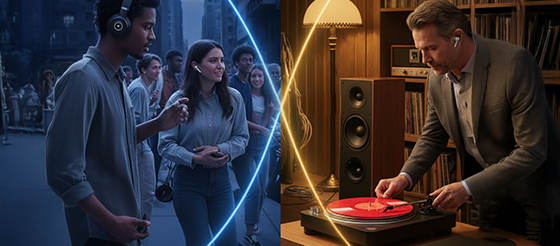
One of the most common traps we see is treating the entire audio market as a single entity. It’s not. In reality, it’s split into two categories. The first is the hypervolatile world of personal audio. Here, trends in wireless earbuds and portable speakers move like fast fashion; a feature like AI-powered noise cancellation or spatial audio can go from a differentiator to a baseline expectation in a single generation of product releases.

The second is the considered purchase, high-investment world of hi-fi. This is a marathon, not a sprint. The customer journey is longer, driven by a deep appreciation for craftsmanship, acoustic heritage, and demonstrable performance. Here, trust is the primary currency. A retailer’s authority is built over years, not months, and a single misguided product choice can damage a carefully curated reputation. Trying to apply the same strategy to both is a recipe for failure — you’ll either exhaust your hi-fi customers with fleeting trends or appear ancient to the earbud crowd.

First up is the Headphone (1), Nothing’s first-ever pair of over-ear headphones. It’s a significant move for the brand, taking them into the premium audio space to compete with established giants. True to their style, the headphones feature a distinctive transparent design but also add practical, tactile controls
(a roller and paddle) instead of relying only on touch. To ensure high-quality sound. Nothing entered into a major Partnership with KEF, the highly respected British brand, co-engineering the acoustics for the Headphone (1).

Amp up

Next up, the resurgence of vinyl. It is no longer just a trend; it’s a significant, mainstream
movement backed by hard numbers. In the UK, vinyl sales have now seen an incredible 17 consecutive years of growth, with music fans purchasing 6.7 million LPs in 2024 alone (BPI/Official Charts Company).
But here’s the modern dilemma: the very people driving this revival have built their home lives around the convenience of wireless, multiroom speaker systems. So, how do you bridge that gap?
That’s precisely the problem the Victrola Stream Onyx was built to solve. The Victrola Stream Onyx taps directly into this by offering a simple, elegant solution. In non-technical terms it’s a high-quality record player officially certified to work wirelessly with any Sonos speaker in your home.

Meanwhile, the hi-fi audio category continues to hold its ground and even grow, despite the fast shifts in other areas of personal audio. In 2025, the global hi-fi market is projected to grow from £12.4 billion to over £13.1 billion, with long-term forecasts estimating a rise to more than £22.2 billion by 2033 (DataHorizzon Research, 2025; The Business Research Company, 2025). Wired systems, prized for their clarity and fidelity, still account for roughly 68% of global revenue (GlobeNewswire, April 2025), but wireless hi-fi is gaining ground fast, particularly in residential and automotive segments.

Tune in

The UK’s own hi-fi market is expected to hit £1.1 billion by the end of the decade (Future Market Insights, 2025). This growth isn’t just being driven by longtime audiophiles; there’s a new wave of listeners who value audio quality but also want the simplicity of smart home integration, wireless setups, and even AI-enhanced tuning. Beyond the established worlds of headphones, earbuds, and even high-end hi-fi, a new form factor for portable music is quietly emerging: smart audio glasses.

The leading example of this trend are Meta’s range AI glasses. While they are known for their hands-free camera, a core feature is their ability to play music and take calls. This is achieved through discreet “open ear” speakers built into the arms of the glasses.

This isn’t about replacing headphones; it’s about creating a new category of use. The customer for audio glasses is someone who prioritises convenience and safety over critical listening. They are buying into a lifestyle where music and information are seamlessly layered onto their daily activities.

Understanding your customer’s intent is everything. Personal audio, home audio, and hi-fi are no longer just product categories; they’re expressions of identity, taste, and lifestyle. Treat them that way, and the strategy will follow. Ignore the nuance, and you’ll miss the mark entirely.

To read the published article by Rupert Cook, Marketing Director, please visit ERT

Tagged , , , , , , , , , ,

Creating strategic friction through experiential to harness sales

The in-store shopping experience has emerged as a critical differentiator for physical retail, where shoppers have increasingly high expectations. Creating an enhanced in-store experience is standard practice within many retailers, in particular with the considered purchase sector.

Exceptional customer service remains high on the list for customers, with knowledgeable, friendly, and proactive staff playing a crucial role in guiding and assisting shoppers. Our own research has shown what matters to shoppers with 60 per cent wanting a pleasant retail environment, while 42 per cent of people want to speak to knowledgeable staff. However, it may come as a surprise to many of you that consider your store to be the best customer experience for your customers; whilst 75 per cent of us prefer to shop in person, it’s shocking to realise that only 9 per cent are usually happy with their in-store experience. 

Audiences today are demanding more from their in-store experience, and for good reason, because 73 per cent of consumers consider experience as an important factor in their purchasing decisions, behind price and product quality. It’s not just the experience in-store that counts either, because getting your brands involved to support you to help enhance the shopper journey could help you tap into the 91 per cent of consumers who confirmed they would feel more optimistic about a brand’s product or service after actively participating in a brand activation or experience.

When you consider that your opportunity to grab the attention of shoppers is between 5-180 seconds, your displays and how visitors are greeted and served is essential in converting browsers into shoppers. 

Retailers that offer immersive experiences can see a significant increase in dwell time and average basket size, particularly in consumer electronics and home appliances. So creating strategic friction to not make the customer feel rushed, is becoming increasingly welcomed, as is personalisation, as two-thirds of shoppers are more likely to spend with brands that offer personalised in-store experiences, using data and relevant content that relates to them. 

Experiential marketing has a profound impact on consumer purchasing behaviour, with 85 per cent of consumers more inclined to buy after attending a live marketing event. It not only attracts new customers but also fosters loyalty, with 70 per cent of consumers becoming regular customers after an experiential marketing event. A significant 65 per cent of brands acknowledge that experiential marketing events are directly related to sales success, underscoring the strategy’s effectiveness in driving revenue. 

At the intersection of where retail meets experiential, the lines are often blurred and occasionally the term experiential is referenced when in reality there has been zero positive impact to the consumer based on their experience. The need to create retail theatre that is proportionate to your audience and outlets where you sell your products is critical to your experiential success. The online experience therefore needs to match the experience in-store and seamlessly connect, as this may be the customer’s starting point. At the point of purchase, the moment the consumer steps in, the experience begins, not merely when they begin to browse, look, touch, or listen. The customer journey should reflect you and the brand’s advertising and create a pleasurable experience, which reflects positively on both retailer and brand to create buyers and long-term advocates of your brands and repeat customers to your store.

The experience should include real-life user scenarios, not the dream glossy lifestyle magazine, because we don’t live that way. We inhabit homes that have clutter and move at the pace of a growing family and therefore the customer relates to the achievable and not the unobtainable. It’s great to instill aspiration and keeping up with the Joneses but keep it real and relatable so that it resonates with the customer. This creates an experience worthy of their hard-earned cash, because when it comes to the considered purchase sector, there is no greater enemy to a brand than a poor customer experience.

To read the published article by Dan Todaro, Gekko Group CEO, please visit ERT
Tagged , , , , , , , , , , ,

The nostalgia trend: Why do companies revive old brands?

A cultural institution in the 90s, defunct in the 00s and making a comeback in the 20s. MFI Furniture is set to relaunch on the British high street after owner Victorian Plumbing revealed plans to relaunch the brand in early 2026, promising a refresh without the frustrations of long online queues or dynamic pricing. Other legacy brands such as Comet and Debenhams have also relaunched in recent times, capitalising on a trend of nostalgia sweeping across retail. But what’s behind this retro revival? Are these brands filling a gap that British retail is missing – or, like the Gallaghers reforming Oasis, simply cashing in on the feel-good factor of our youth?

Why do companies revive brands?

Founder and CEO of OnBuy Cas Paton, the company which is behind the revival of electronics brand Comet, stated that the company’s decision to revive the brand was driven by a genuine appreciation for its place in British retail history.

“For many, Comet represented more than just a store. It was a trusted destination for technology and home appliances and a name people grew up with. We saw an opportunity not just to revive a brand, but to reimagine it for a new era. This was about honouring a legacy while creating something meaningful and relevant for today’s consumers.

“Comet is a name that resonates deeply with generations of UK consumers. It carries a legacy of trust, value and expertise, but it never fully realised its potential in the digital space. Despite its absence from the market, the brand still enjoys significant recognition and goodwill, which is increasingly rare in today’s retail landscape,” he says.

However, Daniel Todaro, CEO of marketing consultancy Gekko and Isobel Grad, strategy director at brand and design consultancy Elmwood, believe that relaunches like this are just looking to capitalise on the nostalgia attached to these brands. Daniel Todaro, CEO of marketing consultancy Gekko, believes that revivals happen because people do not like change and that they relate to brands which have a nostalgic element to them. “The brand reminds you of your childhood or it reminds you of going there to buy your first suit or all the other kinds of personal moments in your life,” he says.

Grad agrees stating “in these chaotic and unprecedented times, nostalgia acts as a welcome comfort blanket, giving us a feeling of continuity and security, and for retailers, bringing back a lost, once much-loved, brand can be a lucrative move.”

Todaro notes that this nostalgia gives the brands a leg up as they already have brand awareness despite effectively being a new company. A brand new company would have to spend a lot of time and money establishing itself as a brand that people were aware of and trusted but a brand like Comet or Debenhams already has recognition and a certain expectation from consumers.

Vicky Bullen, CEO at design agency Coley Porter Bell states that “consumers already have a deep-seated emotional connection with a brand that they may have known from their younger days. People already know what these brands stand for, they already understand its place in their lives meaning that less investment is needed to re-establish a brand than to start afresh with a new brand.”

For Paton, reviving an old brand is about more than just bringing back a familiar name. “Consumers are increasingly looking for credible alternatives to the dominant players, and Comet gives us a powerful platform to take on some of the bigger players in consumer electronics like Currys and Amazon. Backed by OnBuy’s marketplace infrastructure, we’re creating a fresh, competitive environment that will offer better value, more choice, and a renewed focus on trust,” he states.

Is it really the same brand?

Often, revived brands return in name only. Debenhams, for example, now exists solely online under Boohoo’s ownership, and functions more as a rebranded sub-label than a department store chain. Todaro believes this can cause confusion amongst people who were not already familiar with the fact that Debenhams was already a sub brand of Boohoo.

Similarly, revived brands risk falling short of nostalgic expectations. Consumers may associate names like Comet or MFI with a certain quality – one the new incarnation may struggle to match. In some cases, customers may even overestimate how good the original brand was, further raising the bar.

While legacy recognition can provide a shortcut to market, it also opens the door to harsh comparisons that new brands don’t face. And some shoppers may hold negative associations from the past, making them less willing to give the new version a chance. “If a company is trying to replicate a brand as it was back in the day, then the danger is you it’s potentially not going to be as people remembered it,” says Todaro.

Does the nostalgia trend say anything about wider society?

This revival trend extends beyond retail. Many clothing and fashion brands have been designing and selling clothes taking inspiration from the fashion of the 90s and the Y2K era of the early to mid 00s. It is also not just specific to fashion and extends into the revival of vinyl. It is not solely specific to retail either, numerous movies or TV shows from the past have been rebooted or been given sequels suggesting nostalgia in retail is merely reflective of a wider societal trend where we have become more nostalgic than previous generations. “We are a society facing big challenges, cost of living worries, a world full of war, and political upheaval here and abroad. All these things make people yearn for simpler, better times. Nostalgia is born of that,” Bullen explains.

“I think we are more nostalgic than in the past because we’re all looking for something secure and comfortable. We are in a society now where things cost more money, it’s more difficult to live and to make ends meet. We end up in households where our kids stay with us much longer. We end up in households where students don’t necessarily go and live away from home. We see nostalgia as comforting but it’s also value for money. We like to invest in the things that we think we know well and trust,” agrees Todaro.

What comes next? Woolworths?

The consensus seems to be that until things change, nostalgia is here to stay. Both Bullen and Todaro suggest it’s a likely candidate for revival. As generalist retailers like Wilko disappear and WHSmith undergoes rebranding, there may be space for a trusted high street name to return.

Todaro posits that the loss of Wilko on the high street and the imminent rebrand of WHSmith opens the door for a more generalist kind of shop to return. He also believes that the fact Poundland is looking to cut back on space and is potentially looking to sell could make the demand for Woolworths even higher. “If Poundland was to disappear off the high street, there would be no retailer left that you could go into and buy a bar of soap and a packet of screws,” he says.

Overall, it remains to be seen if this model has any longevity once the initial burst of nostalgia fades. Any company which chooses to revive a legacy brand will have to ensure that it has planned for what comes after this otherwise the brand will be condemned to repeat history.

To read the published article featuring comments by Dan Todaro, Gekko Group CEO, please visit Retail Sector

Photo by Mike Bird

Tagged , , , , , , , , , ,

Why Forcing Loyalty Could Be a Terrible Long-Term Strategy

Nearly everyone in the UK is signed up to at least one loyalty scheme, according to the Competition and Markets Authority (CMA). But the shift from a points-based reward system to a membership that offers reduced pricing at the point of purchase strong-arms consumers into signing up, irrespective of want or need.

Following high inflation over the past two years that has seen prices rocket, many consumers are trying to cut their costs. The sizeable discounts on offer for those signed up to loyalty schemes are a welcome gesture for many consumers, but some may feel they do not have a choice.

Others may feel the exchange of data for discounts is justified, but this new approach is shifting loyalty from earned to transaction.

Mind the values gap

It could be argued that when brands offered rewards, they gained trust, goodwill and loyalty from consumers. But this transactional approach makes it almost impossible for brands to build authentic, two-way relationships that would perhaps keep consumers coming back regardless of the rewards or discounts on offer.

Granted, in crowded categories, rewards can create churn amongst consumers who decide to switch brands because products are on offer, and in the process they try something new that they prefer.

Strong relationships are typically built through high quality customer interactions and experiences, but given the current economy, where many consumers are trying to cut costs, brands are more often focusing on the quick wins by offering discounts.

Short-term approaches may deliver results, but long-term, focusing on customer experience (CX) will win out — and result in lower acquisition costs and a loyal customer base that won’t be lured by offers from competitors.

Not only does ‘forced loyalty’ impact a brand’s long term relationships with customers, it has the potential to create a divide between brand and consumer values. More than two in five (43%) shoppers consider it unfair that loyalty scheme members pay lower prices for some products, and while it does not put them off signing up, it does suggest dissatisfaction and frustration with the shopper experience, creating apathy towards retailers.

The risk of digital exclusion

This unfairness between customers is even more pronounced when it comes to vulnerable consumers. In the same way that older consumers and those with learning difficulties prefer to make payments via physical means — either cash or card — they also find it much easier and less confusing to use a loyalty card, rather than an app.

Yet, almost all retailers are opting to move to app-only loyalty schemes.

While operating a digital-only loyalty scheme is acceptable to many consumers, especially when AI and machine learning offer greater personalisation, it can result in digital exclusion of others.

Only two-thirds (67%) of consumers over 65 have access to a smartphone, which means a third of pensioners are unable to access the best deals from retailers despite being some of the most financially vulnerable consumers.

Even for brands whose audiences skew younger, there is still a risk of excluding those with learning disabilities – and while there is a drive to appear inclusive, the focus on app-delivered loyalty schemes brings the authenticity of those initiatives into question. Brands must consider who their app is for, and whether it delivers true value for all consumers.

The latest developments are even more concerning. Some brands are trialling systems by which consumers cannot even enter a store without having an app downloaded, which means that those who do not have a smartphone will be excluded from the store itself, as well as the best discounts.

Forcing loyalty may be counterintuitive

While companies are securing customer data by all but forcing consumers to sign up to their loyalty schemes, the loss of the reward experience is only increasing brand switching. If a competitor starts undercutting on price, many consumers will switch without a second thought. Why? Because they have been given no other reason to stay and irrespective of loyalty it’s the price that will always win through for them.

Customer experience should be at the heart of brands’ loyalty strategy. Consumers’ value choice, and yet the focus on transactional loyalty restricts their options. Instead, brands should focus on giving consumers’ a wider choice of how they interact with the brand, ensuring that those from vulnerable groups are not excluded — and then give them reasons to keep coming back, whether that is through exceptional customer service, rewards or shared values.

To read the published article by Dan Todaro, Gekko Group CEO, please visit CXM

Tagged , , , , , , , , , ,

The Retro Revolution

Like fashion, interior design cycles through eras and defines consumer trends that filter through to consumer electronics and more so MDA categories and right now, the dial is firmly tuned to ‘Retro Revival’. This isn’t just about dusting off relics; it’s a vibrant movement injecting an individual’s personality into our homes by cleverly marrying the distinct aesthetics of decades past with the smarts of today’s technology. After years where clinical minimalism often reigned, there’s a clear craving for spaces that tell a story, feel warm, and express individuality.

Increasingly, consumers are seeking out items – for their living rooms,kitchens, and even their family rooms or dens – that offer both stylish throwback appeal combined with totally modern performance. Finding these unique pieces is easier too, thanks to the booming move for used furniture in the UK. This market is predicted to reach £1.1 billion by 2027 after huge 40.8 per cent growth (2022-2027, GlobalData). Buying secondhand also helps people find unique items at affordable prices and is good for the planet. It shows people want unique styles – Pinterest saw searches for “Vintage maximalism” jump by 260 per cent this year.

This love for character is showing up in kitchens too. Instead of just white or grey, cabinets that have dominated interior design for the past decade, they are becoming colourful and random. Recent Houzz UK figures show greens (used by 21 per cent for lower units) and blues (16 per cent) are popular choices, often matched with wood finishes (seen in 14-18 per cent of worktops or cabinets). Eye-catching appliances are key: like fridges in bright colours are popular centrepieces and give the kitchen a focal point that becomes a conversation piece, often alongside matching small gadgets like retro-style toasters and kettles. Retro on the outside but pack all the latest tech inside.

The trend is to move away from white, off white and great and move towards a more colourful pallet based on today’s colour pallet making them still on trend – Pinterest reported searches for “Cherry vibe” were up an amazing 325 per cent. Without doubt the most well-known brand for retro appliances is SMEG, with their range of refrigerators plus an array of other retro-style appliances and SDA ranges including kettles, toasters, and coffee machines. 

Vintage is in

There are other brands offering the same and arguably at a more appealing budget suitable to all pockets like Swan who offers a comprehensive “Retro Range” with kettles, toasters, microwaves, slow cookers, and so many more, often in a variety of colours and at a more accessible price point.

It’s not just how our homes look – it’s the sound as well. Vinyl records have been making a huge comeback for a while. UK sales hit 6.1 million LPs in 2023 – an 11.8 per cent increase and the highest since 1990 (BPI/ WhatHiFi). People enjoy holding the record, the process of playing it, and the warm sound quality vinyl is known for. At the same time, the classic radio is getting a stylish, modern makeover. Brands like Roberts Radio and Pure do this well, creating radios like the ‘Revival Icon’ that have that great vintage look but include modern features like digital radio (DAB+), streaming, and smart connectivity.

As with every decade, styles and tastes evolve to match the zeitgeist and it seems that ‘Retro Revival’ is clearly more than just a short-term fad. The move to creating unique and personal looks as an extension of a person’s personality is especially important in today’s fast-paced world where social media is crowded with copy cats. It’s not about copying the past exactly, but about carefully curating styles with today’s features we all need and want in our homes.

As designers keep coming up with new ideas and user cases create needs that have not yet been imagined or invented, expect to see even more interesting ways that merge past styles and future tech, it seems that taking inspiration from the past is helping us create better spaces for the future.

To read the published article by Dan Todaro, Gekko Group CEO, please visit ERT

Tagged , , , , , , , , , , ,

How retailers can thrive by connecting with their communities

The UK retail landscape is undergoing a rapid transformation; while e-commerce continues its growth, physical stores still hold a significant appeal. However, simply having a presence on the high street is no longer enough. Large retail chains often demonstrate a disconnect from the needs and wants of local communities, frequently using financial difficulties as justification for store closures, and neglecting the potential for community engagement to drive growth and brand loyalty.

This echoes a broader trend where many retailers have lost the innovative spirit that once defined the industry, failing to understand why customers are choosing to shop elsewhere. Offering a dull, unengaging experience simply won’t cut it in today’s market, where consumers crave experiential retail to capture their imaginations. A recent Shopify study found that 35 per cent of shoppers prefer this type of experience, yet many retailers fail to even engage with basic strategies like embracing seasonality.

Local marketing in a digital age

So, how can local independent retailers succeed where large corporations have failed? Local businesses have the opportunity to connect with their communities in a unique and resonant way; this is crucial because consumers are actively seeking local connections. Data highlights the importance of online visibility and strong customer reviews:

  • Around 80 per cent of consumers search for local businesses on Google
  • 76 per cent of “near me” searchers visit a store within a day
  • 88 per cent of smartphone users searching for local businesses visit one within a week (Backlinko)
  • 96 per cent of small businesses use social media for marketing and 78 per cent depending on it for revenue (Cropink, Synup)
  • 78 per cent of shoppers research products on social media before purchasing (Synup)
  • 98 per cent of consumers read reviews about a product before purchasing (Forbes).

These statistics underscore the vital role of a strong online presence, positive reviews, and active social media engagement. Comments and likes can drive online traffic and influence purchasing choices.

Today, local marketing matters more than ever. And several factors contribute to its increasing importance:

  • “Near me”: The rise of location-based searches indicates high purchase intent, making local SEO optimisation crucial
  • Personalisation: Local marketing allows retailers to tailor their offerings to the specific needs of their community
  • Connections: Becoming an active part of the community through sponsorships and partnerships enhances brand reputation
  • Competition: Local retailers can differentiate themselves by offering a personal touch and community connection that online giants struggle to replicate
  • “Shop local”: Consumers are increasingly aware of the importance of supporting local businesses, creating an opportunity for retailers who actively engage with this sentiment.

Implementing effective strategies

There isn’t a one-size-fits-all approach; retailers need to develop marketing strategies that align with their specific business goals and target audience.

So a tailored approach is essential, but here are some key tactics:

  • Optimise your Google My Business profile: Ensure accuracy and completeness, encourage reviews, and respond promptly
  • Local SEO optimisation: Use location-based keywords in website content and build local citations
  • Run targeted social media campaigns to reach local customers
  • Engage with local influencers: Partner with local figures to expand reach and build credibility
  • Community involvement: Participate in local events and support local causes
  • Offer in-store exclusives: Drive foot traffic with exclusive deals
  • Share news and community initiatives with local publications.

In an increasingly digital world, local marketing provides a critical link between retailers and their communities. By embracing these strategies, UK retailers can not only survive – but thrive. Local marketing is not a fleeting trend; it represents a fundamental shift in how businesses connect with customers. Retailers who prioritise local engagement, personalise the customer experience, and build strong community connections will be the ones who succeed in the evolving retail landscape, understanding that in the age of global commerce, local is the new global.

To read the published article by Dan Todaro, Gekko Group CEO, please visit ERT

Tagged , , , , , , , ,

Elevate your personal wellness with smart tech

A new smart tech wellness brand is launching into the UK market with a new range of products to help on-the-go consumers mitigate muscle tension and stress.

SKG is a smart technology brand that specialises in wearable health and wellness devices. Using smart tech, each product is designed to help users decompress and easily elevate their wellness routine. The cleverly designed G7 Pro-Fold Neck Massager and E3 Pro Eye Massager can seamlessly integrate into your daily routine both at home and on the go.

Firstly, the SKG G7 Pro-Fold Neck Massager is a pulse massage machine that helps reduce stress-induced neck pain and strain. Its 180-degree foldable design ensures easy portability, making it the perfect option for both the gym and travel. Experience instant relief and ultimate relaxation anytime, anywhere with this must-have on-the-go massager.


Equipped with red light technology, the G7 can penetrate muscles to a depth of 10mm, providing a faster, quicker relief from pain and tightness.

The G7, which won an IF Design Award last year, can be controlled through your phone, providing instant release at your fingertips. With five different massage modes, six pulse levels and four levels of heating, the convenient app puts you in control for effortless, instant relief.

Then there’s the SKG E3 Pro Eye Massager – a relaxing massager that helps alleviate eye fatigue and sooth eye pressure. Its innovative 3D groove design ensures no direct pressure on the eyes, helping users to decompress and unwind with ease.

Featuring a see-through mask for added visibility, it seamlessly integrates into your daily routine. And with six separate pressure points, the eye massager provides a delicate and gentle pulse motion for a truly spa-like experience.

For those travelling overnight or looking to reduce eye inflammation, the E3 includes a heat compression functionality to help under eye bags and reduce dark circles, leaving you feeling refreshed and revitalised.

SKG strives to make wellness accessible to everyone by combining education, innovation, and over a decade of experience in the tech and wellness space. The brand aims to be a one-stop shop for people looking to improve their health and well-being through technology.

To read the published article, please visit ERT

Photo by ERT

Tagged , , , , , , , , , , , , ,

Why data is key to maximising potential for the customer experience in 2025

With a new year underway, brands are looking to enhance their digital marketing agility, with data use at the core of their strategies.

So here, Toby Stupples, Client Delivery Director at field marketing specialist, Gekko Group, takes us through some of the essential elements that brands need to bake into their digital plans to maximise customer experience online in 2025…

Retailers and brands invest millions on advertising and marketing support every year to encourage consumers to purchase products or services in a fiercely competitive landscape.

However, the efforts of marketing teams and the crucial spend can be negated in an instant if the customer has a negative experience when they go online. According to research, 78% of online shoppers abandon their carts due to a poor customer service experience.

According to recent reports from the BRC, two thirds of leading retailers in the UK claim that they will be forced to hike prices to cope with the increase to National Insurance costs brought in by the New Labour government this year.

Having worked hard to shield customers from higher costs, with slow market growth and margins already stretched thin, it’s inevitable that consumers will bear some of the burden, so effective sales that lead to ROI are more crucial than ever.

With that, it’s time for brands and retailers to take a more holistic overview to the omnichannel customer journey, particularly when it comes to considered purchase items.

As a new year starts, e-commerce plans for 2025 are seeing many brands seeking to enhance operational agility online to remain competitive to appeal to their desired audiences.

Laying a strong data foundation

With consumers bombarded with deals hourly across multiple platforms, presenting a functional, transactional website is not enough when it comes to the savvy consumer.

Underpinning it all, there needs to be a well-considered data stack as the solid foundation, providing customers with the experience they have come to expect, and to help identify their needs at every touchpoint.

Helping to shape the marketing activity accordingly, brands continue to harness the power of consented first party data, and work closely with third-party sites and stores to gain an in-depth understanding of their customers.

The current reality is that there is low metric transparency from third-party websites to the brands, as they, in turn, seek to monetise their proposition.

When it comes to digital merchandising performance, it’s critical to think beyond consistency, stock levels and presentation, and assess the success of the whole shelf, and how specific products compare to those of competitors.

As many brands find themselves working with more third-party retailers, data and insight models become a crucial part of the marketing mix in order to better serve their customers in a trustworthy way.

Digging deeper into shelf analysis

Everyone wants to get the best deal, but trying to compare products becomes more challenging when descriptions, specifications and images are inconsistent, leading to potential loss of sales to competitors that are better aligned on the finer details.

This is why consistent presentation in digital merchandising is critical for avoiding confusion.

For brands working with multiple retailers, reviewing and tracking how products are presented manually can be a monumental, and an arguably impossible undertaking.

Digital shelf analysis tracks both a brand’s own, and the competitors’ product lines, which can help to create an effective real-time competitor strategy, combining data from web-scraping with retail expertise to respond to activity from the competition with vigour at the optimum time and across the right platforms.

Rather than relying on shared data, an end-to-end web scraping solution could help to marry e-commerce intelligence with insights from bricks and mortar retail to provide visual and actionable trends.

This type of service provides a dashboard that consolidates insights from different websites, allowing brands to track other measurables, like share of voice, availability, pricing, promotion and reviews, and use the data to build more informed strategies.

Unlocking Retail Media Potential

Retail media is a colossal advertising medium, with global revenue from retailer e-commerce sites expected to exceed television revenue by 2028.

For brands, the potential of reaching target consumers while they are already browsing or shopping in the category cannot be ignored.

Combining this type of digital advertising with physical shopping environments ensures that brands are showing up in the right places and at the times across relevant channels.

When this is done well, relying on insights from data and human expertise, this ensures continuity within the purchase journey alongside consistent brand messaging, which will ultimately bring the consumer closer to making a purchase.

However, brands should be careful that they do not de-prioritise data and insight in their rush to play in the retail media space.

As retail media supply increases brands will have to manage campaigns across multiple networks, and it will be those with campaign control and strong insight reporting that will unlock the potential of the data to truly drive innovation in the space.

Getting ahead of the competitor curve

Personalisation drives performance and better customer outcomes, which requires a strong data foundation. Although, brands still need to think about what their insights mean for the digital shelf.

Browsing the digital shelf is the equivalent of exploring products in-store, but they need to be discoverable quickly on listing pages and under relevant search terms.

Benchmarking against competitors for pricing, promotions and presence is critical and this data, along with on-site performance metrics, are incredibly valuable to brands.

This can be a complex and time-consuming process, but with an automated solution like web scraping, brands gain the same knowledge that can be used to form campaigns, and free up time for sales and marketing teams to focus on other priorities.

What’s to come in 2025 for brands and retail?

With the continued evolution of how we track and manage consumer data, brands should be prepared to optimise their own tracking data and work closer with third party retailers.

As retail media grows in years to come, keeping track of metrics across the board becomes vital for maintaining consistency, managing campaigns and influencing presence, and also performance on partner sites.

2025 provides opportunities for brands and retailers to equip their teams with the best actionable information that will influence change in the relevant e-commerce channels.

The unpredictability of pricing trends underscores the value of retail monitoring tools, helping provide smarter insights to understand shifting consumer demand, and adapting strategies to remain competitive in an increasingly fragmented and challenging environment.

To read the published article by Toby Stupples, Client Delivery Director please visit Mediashotz

Photo by Mediashotz

Tagged , , , , , ,