Tag Archives: Fashion

The nostalgia trend: Why do companies revive old brands?

A cultural institution in the 90s, defunct in the 00s and making a comeback in the 20s. MFI Furniture is set to relaunch on the British high street after owner Victorian Plumbing revealed plans to relaunch the brand in early 2026, promising a refresh without the frustrations of long online queues or dynamic pricing. Other legacy brands such as Comet and Debenhams have also relaunched in recent times, capitalising on a trend of nostalgia sweeping across retail. But what’s behind this retro revival? Are these brands filling a gap that British retail is missing – or, like the Gallaghers reforming Oasis, simply cashing in on the feel-good factor of our youth?

Why do companies revive brands?

Founder and CEO of OnBuy Cas Paton, the company which is behind the revival of electronics brand Comet, stated that the company’s decision to revive the brand was driven by a genuine appreciation for its place in British retail history.

“For many, Comet represented more than just a store. It was a trusted destination for technology and home appliances and a name people grew up with. We saw an opportunity not just to revive a brand, but to reimagine it for a new era. This was about honouring a legacy while creating something meaningful and relevant for today’s consumers.

“Comet is a name that resonates deeply with generations of UK consumers. It carries a legacy of trust, value and expertise, but it never fully realised its potential in the digital space. Despite its absence from the market, the brand still enjoys significant recognition and goodwill, which is increasingly rare in today’s retail landscape,” he says.

However, Daniel Todaro, CEO of marketing consultancy Gekko and Isobel Grad, strategy director at brand and design consultancy Elmwood, believe that relaunches like this are just looking to capitalise on the nostalgia attached to these brands. Daniel Todaro, CEO of marketing consultancy Gekko, believes that revivals happen because people do not like change and that they relate to brands which have a nostalgic element to them. “The brand reminds you of your childhood or it reminds you of going there to buy your first suit or all the other kinds of personal moments in your life,” he says.

Grad agrees stating “in these chaotic and unprecedented times, nostalgia acts as a welcome comfort blanket, giving us a feeling of continuity and security, and for retailers, bringing back a lost, once much-loved, brand can be a lucrative move.”

Todaro notes that this nostalgia gives the brands a leg up as they already have brand awareness despite effectively being a new company. A brand new company would have to spend a lot of time and money establishing itself as a brand that people were aware of and trusted but a brand like Comet or Debenhams already has recognition and a certain expectation from consumers.

Vicky Bullen, CEO at design agency Coley Porter Bell states that “consumers already have a deep-seated emotional connection with a brand that they may have known from their younger days. People already know what these brands stand for, they already understand its place in their lives meaning that less investment is needed to re-establish a brand than to start afresh with a new brand.”

For Paton, reviving an old brand is about more than just bringing back a familiar name. “Consumers are increasingly looking for credible alternatives to the dominant players, and Comet gives us a powerful platform to take on some of the bigger players in consumer electronics like Currys and Amazon. Backed by OnBuy’s marketplace infrastructure, we’re creating a fresh, competitive environment that will offer better value, more choice, and a renewed focus on trust,” he states.

Is it really the same brand?

Often, revived brands return in name only. Debenhams, for example, now exists solely online under Boohoo’s ownership, and functions more as a rebranded sub-label than a department store chain. Todaro believes this can cause confusion amongst people who were not already familiar with the fact that Debenhams was already a sub brand of Boohoo.

Similarly, revived brands risk falling short of nostalgic expectations. Consumers may associate names like Comet or MFI with a certain quality – one the new incarnation may struggle to match. In some cases, customers may even overestimate how good the original brand was, further raising the bar.

While legacy recognition can provide a shortcut to market, it also opens the door to harsh comparisons that new brands don’t face. And some shoppers may hold negative associations from the past, making them less willing to give the new version a chance. “If a company is trying to replicate a brand as it was back in the day, then the danger is you it’s potentially not going to be as people remembered it,” says Todaro.

Does the nostalgia trend say anything about wider society?

This revival trend extends beyond retail. Many clothing and fashion brands have been designing and selling clothes taking inspiration from the fashion of the 90s and the Y2K era of the early to mid 00s. It is also not just specific to fashion and extends into the revival of vinyl. It is not solely specific to retail either, numerous movies or TV shows from the past have been rebooted or been given sequels suggesting nostalgia in retail is merely reflective of a wider societal trend where we have become more nostalgic than previous generations. “We are a society facing big challenges, cost of living worries, a world full of war, and political upheaval here and abroad. All these things make people yearn for simpler, better times. Nostalgia is born of that,” Bullen explains.

“I think we are more nostalgic than in the past because we’re all looking for something secure and comfortable. We are in a society now where things cost more money, it’s more difficult to live and to make ends meet. We end up in households where our kids stay with us much longer. We end up in households where students don’t necessarily go and live away from home. We see nostalgia as comforting but it’s also value for money. We like to invest in the things that we think we know well and trust,” agrees Todaro.

What comes next? Woolworths?

The consensus seems to be that until things change, nostalgia is here to stay. Both Bullen and Todaro suggest it’s a likely candidate for revival. As generalist retailers like Wilko disappear and WHSmith undergoes rebranding, there may be space for a trusted high street name to return.

Todaro posits that the loss of Wilko on the high street and the imminent rebrand of WHSmith opens the door for a more generalist kind of shop to return. He also believes that the fact Poundland is looking to cut back on space and is potentially looking to sell could make the demand for Woolworths even higher. “If Poundland was to disappear off the high street, there would be no retailer left that you could go into and buy a bar of soap and a packet of screws,” he says.

Overall, it remains to be seen if this model has any longevity once the initial burst of nostalgia fades. Any company which chooses to revive a legacy brand will have to ensure that it has planned for what comes after this otherwise the brand will be condemned to repeat history.

To read the published article featuring comments by Dan Todaro, Gekko Group CEO, please visit Retail Sector

Photo by Mike Bird

Tagged , , , , , , , , , ,

The Retro Revolution

Like fashion, interior design cycles through eras and defines consumer trends that filter through to consumer electronics and more so MDA categories and right now, the dial is firmly tuned to ‘Retro Revival’. This isn’t just about dusting off relics; it’s a vibrant movement injecting an individual’s personality into our homes by cleverly marrying the distinct aesthetics of decades past with the smarts of today’s technology. After years where clinical minimalism often reigned, there’s a clear craving for spaces that tell a story, feel warm, and express individuality.

Increasingly, consumers are seeking out items – for their living rooms,kitchens, and even their family rooms or dens – that offer both stylish throwback appeal combined with totally modern performance. Finding these unique pieces is easier too, thanks to the booming move for used furniture in the UK. This market is predicted to reach £1.1 billion by 2027 after huge 40.8 per cent growth (2022-2027, GlobalData). Buying secondhand also helps people find unique items at affordable prices and is good for the planet. It shows people want unique styles – Pinterest saw searches for “Vintage maximalism” jump by 260 per cent this year.

This love for character is showing up in kitchens too. Instead of just white or grey, cabinets that have dominated interior design for the past decade, they are becoming colourful and random. Recent Houzz UK figures show greens (used by 21 per cent for lower units) and blues (16 per cent) are popular choices, often matched with wood finishes (seen in 14-18 per cent of worktops or cabinets). Eye-catching appliances are key: like fridges in bright colours are popular centrepieces and give the kitchen a focal point that becomes a conversation piece, often alongside matching small gadgets like retro-style toasters and kettles. Retro on the outside but pack all the latest tech inside.

The trend is to move away from white, off white and great and move towards a more colourful pallet based on today’s colour pallet making them still on trend – Pinterest reported searches for “Cherry vibe” were up an amazing 325 per cent. Without doubt the most well-known brand for retro appliances is SMEG, with their range of refrigerators plus an array of other retro-style appliances and SDA ranges including kettles, toasters, and coffee machines. 

Vintage is in

There are other brands offering the same and arguably at a more appealing budget suitable to all pockets like Swan who offers a comprehensive “Retro Range” with kettles, toasters, microwaves, slow cookers, and so many more, often in a variety of colours and at a more accessible price point.

It’s not just how our homes look – it’s the sound as well. Vinyl records have been making a huge comeback for a while. UK sales hit 6.1 million LPs in 2023 – an 11.8 per cent increase and the highest since 1990 (BPI/ WhatHiFi). People enjoy holding the record, the process of playing it, and the warm sound quality vinyl is known for. At the same time, the classic radio is getting a stylish, modern makeover. Brands like Roberts Radio and Pure do this well, creating radios like the ‘Revival Icon’ that have that great vintage look but include modern features like digital radio (DAB+), streaming, and smart connectivity.

As with every decade, styles and tastes evolve to match the zeitgeist and it seems that ‘Retro Revival’ is clearly more than just a short-term fad. The move to creating unique and personal looks as an extension of a person’s personality is especially important in today’s fast-paced world where social media is crowded with copy cats. It’s not about copying the past exactly, but about carefully curating styles with today’s features we all need and want in our homes.

As designers keep coming up with new ideas and user cases create needs that have not yet been imagined or invented, expect to see even more interesting ways that merge past styles and future tech, it seems that taking inspiration from the past is helping us create better spaces for the future.

To read the published article by Dan Todaro, Gekko Group CEO, please visit ERT

Tagged , , , , , , , , , , ,

Gekko recruits Rob Holmes as UK and Ireland Sales Manager to head up Reze partnership

17th May 2024: Gekko, the retail sales and marketing agency, has appointed Rob Holmes as UK and Ireland Sales Manager to head up its new Reze partnership, bringing new consumer technology brands to the UK and Ireland.

Rob is a highly experienced Commercial, Go-to-Market & Premium brand-building professional. He has managed and developed premium global CE and tech brands including Google & Panasonic, where he spent over 11 years in senior National Account roles. Of particular note is his role in establishing & growing Fitbit from a start-up to the category dominant & market leading brand.

Working alongside Daniel Todaro, Gekko Group CEO, Rob will be responsible for identifying suitable brands and their product portfolios, identifying sales opportunities and defining the GTM planning. In addition, he will provide ongoing management and continued support to develop emerging partner brands into category leading brands.

Through the partnership, brands represented by Reze internationally will work with Gekko Group as their sales and marketing partner to secure their first footholds in the UK market with retailers and distributors. With product categories from personal care to small domestic appliances as well as sound and vision, Gekko will be aiming to establish and develop these new and innovative brands in the UK retail channel, offering retailers high-quality alternatives to some of the most exciting new consumer tech products.

Commenting on the appointment, Daniel Todaro, Group CEO, Gekko said:Rob’s impeccable sales credentials and our retail marketing and customer experience is a brilliant combination to ensure our Gekko x Reze partnership flourishes. There’s so many exciting brands and products that want to assist in launching in the UK and Irish market by providing a 360 service from distribution to marketing.

Rob Holmes, UK and Ireland Sales Manager comments: This is an exciting time to be joining Gekko to lead the Reze collaboration. The consumer technology market is constantly evolving and there’s an array of fantastic brands and high-quality products, not yet available in the UK and Ireland, that consumers and retailers alike are going to love.”

Tagged , , , ,

Retail therapy: The health & beauty brands delivering the best in-store experiences

Lush keeps it simple on the High Street

Physical retailers have faced immense challenges in recent years as shoppers have taken their purchases online, Covid closed shop doors for months and the global cost of living crisis has forced a decline in footfall and, as a result, sales.

This means that traditional brick-and-mortar retailers now have to fight harder and think more creatively than ever before to deliver seamless customer experiences in their stores. So, which brands are doing it the best in the eyes of marketers?

We continue the Retail Therapy series by looking at health and beauty retailers.

Daniel Todaro, group CEO, Gekko: “Without a doubt Lush, started in 1994 and still rocking it on the High Street. It’s not about tech or gimmicks; it’s about knowing and staying true to who it is, what its customers want and how to deliver it. And the fact that it doesn’t sell online means it has constantly evolved and prioritized its physical environment. The smell of a Lush store teases the senses and invites you in. Once in, it’s a playground of discovery for all ages, full of affordable products accessible to everyone’s pocket. Greeted by friendly staff who encourage you to play immediately, testing products in sinks and enabling you to try before you buy, or not, but still immersing you into the brand and its ethical range of products. Clever at retail and culturally on-point, the Saltburn bath bomb was genius reactive marketing. Bravo Lush.”

Clare Cryer, EMEA vice-president of growth, Outform: “Shoppers flock to Charlotte Tilbury, the luxury beauty brand, for newness, bestsellers and incredible advice. Its phenomenal success has led to growth across the makeup segment at its parent company, Puig. CT concessions have made the beauty counter a place to ‘play’ and feel part of a community getting better and repeatable experiences. They are a destination. The human element is paramount. Products are showcased with clear navigation and messaging. In-store ‘zones of learning’ inform, inspire and drive sales brilliantly, explaining complex product features and formulations in terms of how to use and product benefits, all brought to life by authentic content and reviews.”

Sara Parrish, experience strategy director, Imagination: “It’s clear retail experiences are changing. The Korean eyeglass brand Gentle Monster offers an escapist atmosphere akin to a surreal avant-garde gallery, while House of Vans in London has successfully created an entertainment space that features a skate park along with rotating art, music, and cinematic installations. Experiential retail stores serve as a powerful tool for building understanding around a brand’s products. Dyson understood its technology was innovative in its category, so it took a leap and created the Dyson Demo Store. These pop-ups offer customers space to learn, demo and use their technology. This blend of educational and aesthetic elements creates an immersive space for consumers to interact in a meaningful way and increases the likelihood of customer retention, building loyalty through experience.”

Lee LeFeuvre, chief commercial officer, SMG: “Boots has revamped 170 beauty halls and launched its first beauty-only store in Battersea, creating a ‘beauty destination’ with over 250 brands. Offering services from LED light treatments to Dyson hair styling stations, the digital-first store features over 10 screens for an engaging experience, including a trending pillar for influencer and TikTok content. Boots regularly hosts free experiential events, like the Braun IPL launch with Frankie Bridge and a gamified campaign with Fenty, giving customers a chance to spin to win. This immersive approach leaves customers informed, entertained and more knowledgeable about their beauty regimes, offering a unique experience that online shopping can’t match.”

James Barnes, co-founder, Backlash: “Beauty is a hyper-competitive retail sector. It probably has the greatest number of new products and new brand launches of any category to contend with. The multi-brand beauty retailer Space NK appreciates that social hype and experiences excite beauty audiences. As a result, it has built a regular program of in-store and out-of-store beauty experiences with immersive, experiential pop-ups. These experiences generate anticipation for consumers, encouraging them to engage with the brand to find out when the latest launches and pop experiences are happening. In addition, the in-store experience is exciting and ever-changing, with areas dedicated to pop-ups and exclusive promotional offers from the brand. In the past 12 months, we have created an immersive, 4D-sensorial Japanese Zen Garden experience in Covent Garden for Space NK X Tatcha and highly themed, in-store pop-ups for Ilia Beauty and Caudalie, with many more brands activating on an almost weekly basis.”

Vic Drabicky, CEO and founder, January Digital: “We have found the best retail store experiences combine elements of curation, community and ease. One of the best examples is Kendra Scott. It has an incredibly well-curated assortment, each store is tied into the local community, and the shopping experience is virtually frictionless. While there are many retailers who nail one or potentially two of these elements, executing all three greatly accelerates the retail experience and sales.”

To read the published article featuring a comment by Dan Todaro, Gekko Group CEO, please visit The Drum

Photo from The Drum

Tagged , , , ,

Getting ready for the post-covid retail boom

From being in the grip of the second wave in a bleak mid-Winter two months ago with so much uncertainty and anxiety there really has been a remarkable turnaround due to the determination of all to fix this situation. A majority of the population have been vaccinated and sunnier days are here literally, well almost, but also metaphorically. The Bank of England say the economy is all set to bounce back quickly, driven by a boom that will dwarf predecessors in its intensity and size, predicting that Britons will spend around 5% of the estimated £250bn of savings accumulated over the past year. Others predict nearer 20%, which would still be £50bn.

It is already time to start predicting what will be the key drivers for growth in this transitional period. The roaring twenties were brought about after hardship which triggered a rebound in consumer spending and prosperity. Even if what is to come doesn’t quite last as long, there will still be a heightened passion to enjoy a return to normality and indulgence in the things consumers have missed out on the most. Whilst the 1920’s was more than a lifetime ago, most of us remember the 90’s. The latter part became ‘cool Britannia’ creating a wave of confidence which undoubtedly became the precursor for the shared will and determination to be ourselves today and do it with swagger.

So how do brands and retailers plan for this, project their swagger and reward customers who have remained loyal? Gekko has pulled together some key insights and trends to consider with retail doors open once again.

Consumer confidence is back

Research by McKinsey & Company shows that optimism regarding the UK’s economic recovery is at the highest recorded level during the COVID-19 crisis. Despite different generations experiencing decreased household income and/or increased savings, optimism has also led to an increase in spending. Forty-seven percent of consumers showed an intent to splurge in 2021 to reward themselves for the trials and tribulations of the past year. Younger consumers, especially Gen Z, 71% are indicating a higher intent to spend or treat themselves, and are keen to get back to enjoying themselves.

The rise of localism

It is likely that a significant proportion of pent up spend may continue on local businesses which have found plenty of support during the pandemic. YouGov found out last year that 64% of people want to support local businesses and buy local products. This has been borne out by our own recent survey of predicted consumer behaviour post-lockdown. 35% of respondents said they have purchased from a local or independent store that they would not have done pre-pandemic. Meanwhile 52% of men, and 49% of women have been more loyal than not to their high street stores. While the expectation might have been the very oldest might be the most loyal to the High Street, interestingly 35-44 year olds were the most loyal, with 74% professing loyalty to their High Street. This shows the strength of multi-age support we have had for the local businesses who have so supported us during this time.

Although the trend may quieten once all stores reopen, local share of business will remain higher than it was pre-pandemic, and is an area to utilise for retailers. The personal experience and convenience of local can be tapped into. With most people still working from home, local shopping is set to continue this year and beyond to meet the needs of its immediate community.

Innovations led by physical retail are set to continue

An encouraging aspect of the past year has been the ability of smart retailers and indeed physical businesses of all description to pivot and adapt to survive. While there have been some high profile casualties, the reality remains those who have been nimble have seen the benefit. It has also shown up the myth that all innovation occurs within the digital realm. It is likely that more than a few of the innovations will last in this new retail era which continues to evolve. For example there is renewed and growing enthusiasm for click and collect, due to the convenience and hygienic aspects. It is now an embedded part of many consumer journeys, especially in grocery shopping, but also increasingly in all non-essential retail. Our own research has shown that over 35% of people want to see this trend continue even after the pandemic. Retailers need to react to those continuing to want to use this method. An obvious example being upselling products in a collection environment.

There will be a continuing overlap of online and offline in some purchasing journeys. In response, retailers should make sure they offer a slick omnichannel experience which will appeal to all generations. Click and collect will remain a great way to appeal to Generation Z. This is an audience that wants to shop online but also have a focus on sustainability with concerns about the environmental impact of the deliveries in terms of the distance travelled and packaging.

Customer experience is crucial

With online shopping now fully embedded, physical retailers need to emphasise the instore user experience to provide that differentiating factor from the online realm. A good customer experience means your customers will spend more. In fact, 86% of buyers are willing to pay more for a great customer experience. The more expensive the item, the more they are willing to pay, according to a research from PWC. CX also influences on-the-spot purchasing too, as 49% of buyers have made impulse purchases after receiving a more personalized experience. A Walker study found that at the end of 2020, customer experience had overtaken price and product as the key brand differentiator. This becomes increasingly more important amongst those generations that intend to spend more than they’ve saved.

Looking at our research, when asked what makes people want to return to the High Street, the experience was the thing that was really missed. 62% said it was the ability to see, hold and try a product. while 52% miss the ability to browse. The same number, 52% reported the sheer enjoyment of shopping as a key factor in returning.

Retailers should react by stimulating the senses and having the right experts instore. People who truly understand the product, can answer questions and can close a sale. This is something the online world can not replicate. To complement the expert, think about presenting those products in an appealing way. You will want to focus on products that that have increased in popularity during the pandemic – those supporting lives now more centred at home. Make them visually appealing with great displays and demos. Ensure you have clearly labelled product details, features and benefits and ensure any promotions are clearly highlighted, ie. what it integrates or works well with.

Prepare for the megapeak!

As we bounce back from these long months closed, retailers have the opportunity to make up for lost time with a real focus on peak trading times and trends. We may not all be going on holiday but we will be taking holiday and enjoying summer as best we can. This year peak trading times will return like no other year. In Q4 2020, we saw the advent of what could be described as a 10 week ‘mega peak’ that upended the usual promotional strategies of the season. Average spend went up to £86.06 (+£7.22 vs 2019). The goalposts were shifted once Amazon announced that Prime Day would move into October from July. Black Friday and Christmas plans that have become retail tradition saw this newcomer arriving earlier and reacted by also shifting their strategies accordingly, leading to an extended mega peak. The expectations are now set for this year, and it is unlikely that Amazon will give up its new slot without a fight. Wunderman Thompson predict it will again aim to be the one to kick off the festive promotional period.

Others will need to get their operations ready to counter, the right marketing, offers, and consumer experience will be vital. At least this time they have more notice. We may have changed in many ways but the propensity of shoppers to spend as a key way back to normal life looks certain.

Retailers need to be ready as we look forward to the boom and continuous change.

To read the full article please visit Retail Sector.

The photo that accompanies this article is by Amina Filkins from Pexels

Tagged , , , , , , , , , , , , , , , , ,

For Conscious Generations, Will Luxury Brands Become Irrelevant?

Gekko Retail Marketing Male Headphones

With a market of over £200B globally, the luxury fashion brand sector is significant; you only have to look at conglomerates such as Richemont, LVMH Group, and Kerring which within their stables boast, Alexander McQueen, Balenciaga, Chloe, Cartier, Dior, Fendi, Gucci, Saint Laurent, and Stella McCartney to name a few.

Whilst in China, the market share is set to increase with 14% by 2025, it is set to contract by 8% in Europe and the US. However, the global trend of luxury consumerism seems to be on the increase, with 43%. It is forecasted that within the next decade Generations Y and Z will represent approximately 55% of the luxury fashion market up from 32%, offsetting the sales decline among older generations. But can perceived ‘luxury’ brands be so sure that their mass appeal can extend beyond the superficial?

Is fashion, in general, no longer tribal? The vast majority of Gen Y, Z, and Alpha, the less ‘well off’ generations, seem to adopt a more fluid approach to fashion as they may do to gender, sexuality, technology, socializing, etc. That sees an anything-goes approach in fashion, focused less on brand and more on individualism.

Long gone is the need to conform to a stereotype, or compete with others. The fashion I see is an eclectic mix of second-hand clothes – let’s avoid the pretense that it’s ‘vintage’ and be realistic – combined with fast fashion which is naturally, ethically sourced to create a look. A look that’s unique to a persona and voice, occasionally punctuated with luxury brand items to complete the style.

So will this approach to high-end fashion make the luxury sector grow in particular for the brands that ‘get it’ or contract with perhaps some brands becoming obsolete to generations X, Y, and more importantly Alpha? After all, this generation which may be on a budget, won’t necessarily be in a decade’s time and if they have no aspirations to own luxury branded items, they may choose to share the budget more sparingly with brands that speak to them – investing in brands that resonate with the zeitgeist, not tradition, and demonstrate a social conscience in manufacturing, environment, sustainability, and how they give back a proportion of their vast profits to society.

Some high-end brands are already evolving to appeal to the upcoming generations, Supreme and Balenciaga have adapted to meet the needs of their new consumers. From their collectible, Instagram ‘like-worthy’ pieces to the gender-fluid online shops, the brands are listening closely to their audience and are adjusting accordingly, seeing them become more popular than the traditional stuffy luxury brands.

With both ‘luxury’ and ‘fast fashion’ known to be a considerable contributor to global greenhouse gasses, water and air pollution, combined with poor working conditions, we are seeing a conscious effort by many people to change their fashion habits. These changes include a ‘less is more’ strategy, buying second hand, opting for natural fibers, and researching brand practices, often cajoling them to share the manufacture process and provenance.

According to Oxfam, over eleven million items of clothing end up in the landfill. The charity has launched its Second Hand September campaign, with artists who performed at Glastonbury 2019 donating stage outfits for auction or win. Its purpose is to change habits and encourage people not to buy new apparel for one month and thereafter wear clothing more often and not throw away unwanted clothing.

In contrast, the recent ‘willy-waving’ that was the ego-inflating philanthropy towards the drive to rebuild Notre Dame topped $700M with the billionaires behind these luxury giants pledging $339M. Without question, this landmark is culturally worthy and should be rebuilt, however, some may argue that these donations serve to demonstrate that the priorities of the owners of luxury brands may not be in tune with the market they will be designing and marketing to in less than a decade and beyond. With the Energy Agency estimating that by 2030 the planet will require 50% more water and 50% more energy, scarcity of natural resources will be a known factor forcing every brand to change. No one is immune.

On the opposite end of the spectrum, fashion retailer H&M has reported an 11% increase in net sales to 57.4B in Swedish kroner (£4.8B) in its Q2 results (July 2019), compared with the sales rise of 2% seen during the same period last year. It is the fifth straight quarter of consistent sales growth for the company, but despite the increase, shares in the retailer dropped by 1.8% in early trading in July, with H&M saying “hard work and many challenges still remain.”

Developments in the Luxury sector are slow compared to ‘fast fashion’ and with a year-on-year decline in revenues and profitability, there are not only economic factors at play but also the way that Generation Alpha consumer will be more selective and conscious. From 2025, it is estimated that Generation Alpha will be over 2 billion-strong and anticipated to start spending their own cash. Therefore, the change in narrative and approach ‘brands’ chose to market to a growing generation, needs to begin now.

Much like those brands who were considered too big to fail, is the end in sight for many luxury brands who continue to focus their attention on a dying generation?

To read the full article please visit Brandingmag.

Tagged , , , , , , , , , , , , , , , , , , , , , ,

Why Shopping In-Store is in our DNA

fashion shopping banner

Whilst online shopping is big business for all brands, in today’s developed omni-channel world, the need to physically immerse ourselves into a brand is still really important.

When we go to a shop, we like to choose our fashion purchases carefully, weigh up our options and try them on, or at least appreciate that it may fit based on its cut and quality. Our research shows that around three-quarters of consumers say the ability to touch, feel, choose and compare products before they buy them is a key benefit of shopping in a physical store. More than a transactional experience, shopping is a social activity that we like to share with others. Over half (53.25%) of shoppers like to take their friends, partners, or family shopping – either as a social occasion or to help decide what to buy.

An open, sociable atmosphere can be harnessed by trained and amiable staff that consider the needs for shoppers that not only want to hang out with friends, but also want to discuss their ideas before making a purchase decision. Indeed, over a third (39.20%) of shoppers say they value advice from in-store staff whilst shopping. Brand staff need to be collaborative with shopping groups to not only help with purchase goals but also to create an environment that these social groups will want to return to.

To support the shopping process, brands need to offer an engaging in-store experience that accentuates the need for a social environment and immerses the shopper into the brand. When it comes to buying clothes that require a careful decision, almost three quarters (73%) are likely to go in-store. Fashion choices especially evoke discussion, debate and positive emotions amongst shoppers as they compare clothes and spend. The physical shop still provides that connection with your brand and instant association and buzz that people need to become a follower of your brand.

As shoppers we like, especially for those special luxury purchases, immerse ourselves in the total brand experience from the plush carpet to the lighting and customer service which add to the customer journey and make that product seem exceptionally good value in comparison to high street brands.

A lot has been said about the retail environment changing due to the influx of channels to engage with, but in many ways the deep rooted desire to shop for apparel is still the same. We still need the physical experience of shopping. More than a pastime for many – it’s an intrinsic part of life and brands become engrained in the fabric of our lives when it comes to what we choose to wear.


Read more at: http://digitalmarketingmagazine.co.uk/offline/why-shopping-in-store-is-in-our-dna

Tagged , , , ,

Luxury Brands Launch Wearable Tech as Fashion at CES2015

fashion wearables banner

You may have noticed that last week the world’s largest Consumer Electronics Show was in full swing in Vegas and whilst most mainstream technologies were announced, in and around these announcements were many new wearable tech ideas flirted by many brands that will undoubtedly come to market within the decade and change the way we view our coveted fashion brands as wearable technology. The advancement of wearables at CES 2015 as a fashion statement is potentially huge, not to be ignored and begins the brand debate.

At this year’s CES we began to see the second generation of many wearable devices, including updated reveals from traditional tech brands: Epson, Sony, LGGarmin and Fitbit to name a few. With the looming release of the unmistakably fashionable Apple Watch, many wearable makers are following suit by consciously developing fashion that conceals our technology as clothing, watches and jewellery.

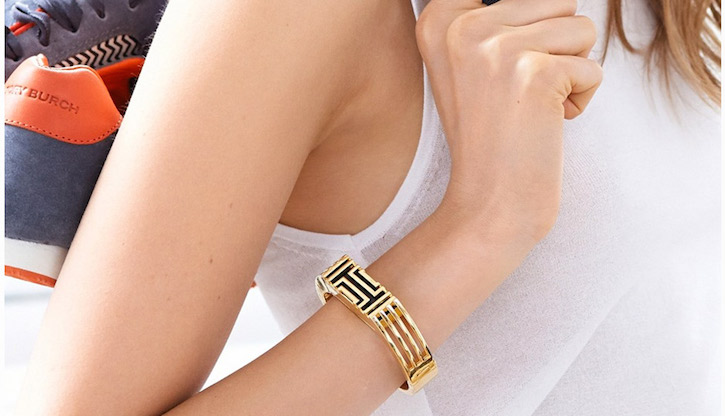
For example, take a look at the Tory Burch range for Fitbit which turns your wearable fitness technology into high-end fashion jewellery. None of your friends or colleagues would know you’re counting calories or you’re on a detox. It would appear that fashion brands have realised a new category of consumers. If you like high-end watches, then why would you swap your favourite brand(s) for a rubber smart device that looks, in some instances, ugly and conspicuous.

ces2015-fitbit-1

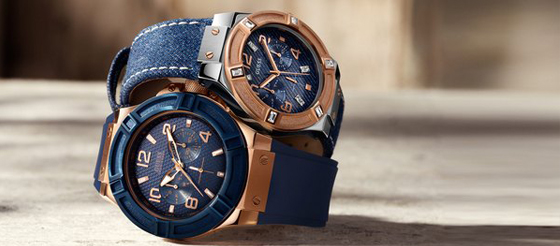
Wearable maker Misfit has teamed up with Swarovski to produce the “Shine,” a customisable series of fitness trackers disguised as jewellery. Hidden beneath Swarovski crystals, the Shine tracks activity such as steps, swimming strokes, and sleep via an accompanying app. It is also the first solar-charging wearable, reflecting sunlight through its crystals. The Martian developed “Guess Connect,” a Guess watch that looks like normal, but has the addition of small screen which displays caller ID and other alerts, Bluetooth connectivity, and can interact with Siri or Google Voice commands via an inbuilt microphone. Other offerings from watchmakers intending to join the wearable revolution are Tag Heuer and Mont Blanc

I suspect many more to follow once they’ve seen how it works for other luxury brands and how it fits within their own strategy, portfolio, and demographic. Rolex, Cartier, and Jaeger-LeCoultre may not be jumping on the bandwagon just yet and why should they if it doesn’t meet the brand’s ethos and heritage. Is there a need to adapt, dilute, or license the precious brand just to be in the wearable tech game? Is this another advancement the luxury watch makers & brands can’t ignore? 

As predicted, these innovations suggest just how wearables will begin to blend into existing fashion, becoming easily mistakable for a normal watch or piece of jewellery. These new wearables will suit any situation, not just the gym. Smart devices that are office-appropriate will increase the popularity of wearables for health, communication, and productivity use. Interestingly, take a look at CES winner in the “Best Offbeat Product” category, a new brand called Belty. Like Nike with its power laces, Belty is a motorised belt buckle –yes you read that correctly. It slackens and tightens to make you more comfortable, for example if you’ve eaten too much. More seriously, it has the tracking capabilities to aid diet and body shape. CES believes it’s a fun, quirky, and potentially viral product.

Belty

Consumers will ultimately decide the limits of wearable tech and for brands this is a risk. Do luxury heritage brands risk potential ridicule or failure for the sake of changing demographics and technology or do they focus on what they do best? There’s a consumer for every heritage brand and, with the exception of some gradual, natural, and subtle advancements in technology, we should keep brands focused on their authenticity. 

Tagged , , ,