Does social media ad spend equate to consumer engagement?

social media banner

Instagram and Pintrest have both announced that they are opening the doors to advertisers, and M&S is aiming to invest 20% of total media spend on social media to increase its story telling. And as if that wasn’t enough social media hype, this was hot on the back of the BBC claiming that it is planning to turbocharge its Instagram profile after an executive claimed that it has learned more about social media from brands, including Burberry, Nike and Netflix.

One could say that social media is making an impact on traditional advertising, as expected in a brand’s pursuit of Generation Y. However, what about the rest of us who are a shade older and perhaps with more disposable income, or younger or I hasten to add, just not interested in social media.

After all not everyone who likes M&S or its demographic customer is necessarily a fan of social media.

So is it a case that social media works for some brands but not all?

Gekko has understood through its shopper tribes research that the shopper journey which finished with a purchase in traditional retail has started online for 52% of those shoppers and therefore highlighting the importance of omnichannel for all brands but can you quantify 20% of your media spend on social media to generate 20% of total sales.

Claims by social media platforms would naturally draw any advertiser to favour one platform over another. After all, this is no different to how traditional media works. What’s interesting are the claims which don’t ultimately add up to sales.

Facebook claims that a recent campaign for mobile carrier Three achieved a click through rate of over 4% and reached 21 million unique users. The fact is, how does this translate to sales? No one knows the truth.

We can assume and attribute spikes to marketing spend, but I suspect in the long run we as consumers don’t necessarily want to mix are Social Media with brand advertising, and the negative feedback Instagram is receiving demonstrates this.

Now I don’t deny that social media is an amazing tool with which to engage, enthuse and affiliate a brand to a target audience and with Facebook, Twitter and YouTube claiming over two billion global users (101 million in the UK). It’s undeniably a powerful tool but we use it to connect with friends, tell our story and more importantly for pleasure to view and laugh at videos like Fenton the dog and sadly Psy’s Gangnam style, which to date is the most viewed You Tube video with more than two billion views.

Brands and social media platforms should consider, do we really want to be sold to every time we dip into social profiles and email via our smart phone a recorded 214 times a day. That’s a lot of ads and brands to digest and perhaps get annoyed with

Read more at: http://bit.ly/1KmhGO7
Tagged , , , ,

A sporting chance for 4K

4k banner

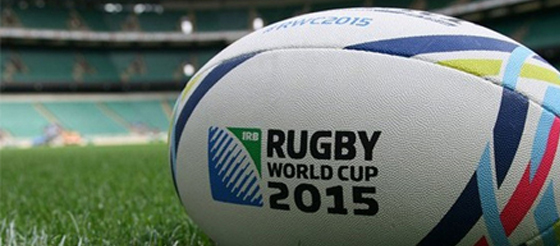
This year’s rugby coverage in 4K and improving content availability will play a key part in driving sales, says Daniel Todaro, managing director of field marketing agency Gekko.

It’s springtime and many of us are looking to update and upgrade our homes, not only in the kitchen and garden, but also in the living room and the entertainment we choose for our viewing pleasure.

Sales of 4K TVs are on the increase, with GfK recording 100,000 4K TVs sales in November and December 2014. Sales in the UK are predicted to reach one million by the end of 2015, accounting for 10 to 15 per cent of the total TV market volume. With sales predicted to reach between two and 2.5 million units in three years’ time, are retailers ready?

In September/October, we have the rugby world cup being broadcast by ITV, which is rumoured to be in 4K, as indicated by pay-TV broadcasters, with BT Sport’s director of TV Alex Green admitting that the broadcaster was working “very hard” to secure 4K transmissions of its Premier League matches for the 2015/16 season. The average price of a 4K TV at the end of 2014 was just over £1,000, and the average screen size was 50in. This is clearly a considered purchase and so store staff need to have the knowledge and understanding of not only the technology, but also the sales techniques to succeed in closing those valuable sales.

Last summer, Gekko’s connected home research uncovered that a smart TV was the third most popular choice of smart product, with 36 per cent of shoppers interested in purchasing one.

What’s more, half of women and 42 per cent of men do their research online first. They then buy in-store on the day, with 44 per cent of those aged 35 to 44 and 58 per cent aged 55 plus.

Understanding the importance of the omni-channel proposition in driving sales on the shopfloor is critical. Starting online and ending on your shopfloor, the customer experience is an ever more important aspect of the sales journey for you and your brands.

In the past year, retailers have benefited from two large sporting events, the Fifa World Cup and the Super Bowl in the US, uplifting sales of 4K TVs. More than half (59 per cent) of the 4K market value in April 2014 came from 50in to 60in models, and in May 2014 UHD made up just over eight per cent of market value, assisted by the average price of a UHD TV falling 15 per cent, with GfK stating that this was due to the World Cup effect. With seven out of 10 rugby fans in the UK watching international rugby on TV (Source RadiumOne – Rugby fans and technology) 89 per cent of those will watch at home. Could this sporting event see another boost in 4K sales? I expect so.

But it’s not just about sport. More original 4K content is becoming available via Netflix, Amazon, as well as remastered 4K content. Despite being very quiet since their formation, the UHD Alliance sent out a press release on 
April 7 calling for contributing members to define the next-generation entertainment experience.

They want more companies to get involved in the alliance. We may be at the frontier of the 4K revolution, but with broadcasters, streaming services and not only film studios but also gaming studios creating in 4K formats, the future of 4K is promising.

But, will we have the homes big enough to
 accommodate that optimum viewing experience in 4K? I suspect, driven by studios and broadcasters to inject rapid growth, manufacturers will produce smaller variants of their 4K TVs to drive popularity of the 4K format as the next industry standard. Shipments as a share of the total LED market for 4K are up year-on-year from 5.1 per cent to 14.2 per cent according to data from WitsView, which clearly demonstrates an appetite for growth. Unfortunately, no there’s such story for curved.

The average time spent per day by UK adults using technology increased from 7h:38m in 2011 across all platforms to 9h:34m in 2015, driven primarily by the increase of tablet, PC and smartphone viewing (recorded by eMarketeer).

TV viewing only fell marginally in the same period (3h:19m to 3h:12m), demonstrating that the TV remains the hub of the of the home for our viewing entertainment and shows no sign of dropping off with such appetite for growth in smart TVs, catch-up facilities from Freeview and streaming devices like Chromecast.

It’s a category that drives technological innovation and growth.


Read more at: http://ertonline.co.uk/Opinion/Opinion-Daniel-Todaro0515.htm

Gekko reveal new brand identity and website

gekko reveal banner

Gekko are delighted to reveal our new brand identity and website, that gives a fresh look to the UK’s number one tech-focused Field Marketing agency.

Daniel Todaro, MD, Gekko said “Complementing the recent brand refresh, Gekko continue creating rewarding connections with our new website. Over the past 13 years, Gekko has maintained its ability to adapt in retail, the most dynamic of industries, to bring your brand to the right people and the right people to your brand. Gekko Field Marketing helps complete your customer journey and brand experience with measurable ROI and insight complementing your brand’s ATL.”

Tagged , , , , , , ,

The General Election and ‘brand politics’

brand poltics wall

It’s General Election time in the UK, and we go again to the polls on 7 May with a more fractured group of parties to choose from than ever before, and voter apathy at its highest.

A while back I tweeted that in order for Labour and more specifically Ed Miliband to win, he needs to be ‘on brand’. This caused much derision as many followers said brand had ‘nothing to do with politics’.

No, it shouldn’t, but in amongst the policies, brand is now a major consideration when aiming to reduce voter apathy and appeal to first-time voters.

Needless to say, as we hit the home straight, brand and leader appeal is now a serious factor. Who wants to vote for policies associated with a leader such as David Cameron who can’t decide which football team he supports, and in the process proving himself as not necessarily the most reliable or authentic brand.

Ed Miliband should never try and high five a child on camera for fear that it may backfire as it did making his brand a little bit uncool, but ahead on trust.

Over the past five years in office, Nick Clegg has never regained the trust of others in his brand and is now overshadowed by the new emerging brands of Plaid Cymru and the Scottish National Party, who have as most new brands which speak differently do, established positive brand credentials amongst voters old and new.

Today’s society, whether we like it or not, is driven by brand appeal from the clothes, technology, food and beverages we choose and whoever endorses them. Yes, I and many others would like to see politics come back to policy irrespective of personality, but as society changes, perceptions are influenced and social media can sway your personal brand appeal in minutes, not hours.

When will politicians grasp that we want to vote for leaders who we trust and inspire all to make us want to realise our potential and the potential of our society to achieve, rather than false gods who will say and do anything to gain our vote and fail?

With no overall majority in sight, the UK is desperately looking for that inspirational leader and they must come along soon to change the outcome of British politics in 2020. In the interim, we will more than likely have to make do for the coming five years with one of the current mediocre potential leaders in office whose brand never quite achieved the equity needed amongst voters to secure an overall majority and represent the nation as one voice.

Make the most of the Shopper Journey this Spring

window vac banner

With spring cleaning on shoppers’ minds, a fresh wave of potential customers will be coming into store hunting for the best appliances to spruce up their homes and meet their IoT [Internet of Things] needs.

This poses an opportunity for increased sales, so it’s time for retailers to match consumer enthusiasm by entering new categories and stocking this wave of innovative products.

Floorcare and handheld cleaning appliance brands, such as Kärcher and Electrolux, will be taking advantage of this increased consumer demand by releasing above-the-line campaigns and promotions for the spring. Retailers should take advantage of these campaigns as they can drive footfall into store.

Retailers need to complete the customer experience. Make sure your store is properly 
merchandised to draw attention to these hero products. Guide consumers on a shopper journey and convert them into shoppers.

With the economy picking up, consumers are willing to spend that little bit extra to get the best products that will improve their lifestyles, with reduced power consumption and ease of use.
Recent research by Gekko shows that there has been a seven per cent drop in consumer cost-consciousness over the past year. With this in mind, retailers should look to enter new categories and begin stocking innovative products.

We can see from the rise in popularity of such products that consumers are willing to pay for the added benefits brought by innovation. Cordless ‘handstick’ vacuums are an excellent example. With space at a premium, handsticks have rocketed in popularity since entering the market in 2013, as people are doing away with conventional vacuum cleaners. The sector is now worth £64 million. With the average handstick costing around £200, consumers are clearly interested in purchasing premium, innovative products, as long as the lifestyle benefits are clear.

The rise of smart appliances will also make a big impact this year, as more consumers become aware and understand that the IoT is no longer a concept, it’s real. With many shoppers looking to replace their outdated appliances as part of the spring spruce-up, electrical retailers should capitalise on the current smart-home trend to increase sales of premium appliances.

Smart appliances, such as the Samsung WaterWall range of dishwashers and Grundig’s MultiSense washing machine, are good examples, incorporating smart technology into everyday appliances. Why not try a new category like the smart home, with products such as the Hive smart thermostat?

What’s important for retailers is to have trained staff that can properly explain these benefits.

Tagged , , , , , , , , ,

Is tech on any of the main parties’ radar ahead of the General Election?

globe tech

Whilst we may all be feeling election fatigue, we still have several days of bitter, nationalist electioneering from more parties than we have ever had to choose from in the UK.

Do any of the parties come up with anything radically new? No. Technology does not seem to be high on many parties lists of priorities – but you decide who gets your vote come 7th May.

Of the top three, Labour mention ‘a longer term approach to drive innovation’, advocating continued advancement in digital and manufacturing technologies as a way to help business.

The Conservatives promise to have 95% of the country covered by superfast broadband by 2017, along with 90% of UK landmass covered by voice and SMS coverage by 2017, and the Lib Dem manifesto contains a section called ‘securing global leadership in technology’.

Here they highlight the competitive advantage that the UK has in key digital sectors and the need to support this area of the economy and that 15% of new companies last year were digital companies. They also state that the digital sector in the UK currently employs around 1.5 million people.

The UKIP manifesto is light on any mention of technology. However in the Education section they have a paragraph stating “to increase the uptake of science learning at secondary level, we will follow the recommendations of the Campaign for Science and Engineering and require every primary school to nominate a science leader to inspire and equip the next generation.”

The Green Party manifesto also has a small section on science and technology. Although technology is mentioned, it is not directly detailed in the policies, which include the free publication of all publicly funded research, preventing the patenting of genes and living organisms, and conducting research ethically.

The SNP talk about research and creativity, pointing out the technology and innovation are central to economic growth across Europe. They support increases in R&D financial ceilings that will allow large scale EU projects to go forward. Plaid Cymru are keen to develop a new manufacturing strategy for Wales, which will take advantage of the existing skills, helped by research and development.

They also highlight the need for children to understand the technology around them, through coding and advanced computer technology development lessons, such as the Raspberry Pi device.

The key messages from most parties regarding technology are focused on education: by educating the next generation of innovators, we can ensure that the UK remains at the forefront of invention and innovation. But, none explain how these advances will be funded and or seem to understand the impact of the digital economy on Britain.

Much like cuts in defence, which we will leave the UK, sooner than you think, no longer a superpower on the world stage, it’s unlikely that we will compete in technology, science or the digital economy. In 2012, £10.0 billion was spent on Science, Engineering and Technology (SET) by the UK Government, a 1% decrease compared with 2011, and continued the downward trend in SET expenditure since 2009.

In comparison, by pouring cash into science and technology faster than its economy has expanded, China has for the first time overtaken Europe on a key measure of innovation: the share of its economy devoted to research and development (R&D). In 2012, China invested 1.98% of its gross domestic product (GDP) into R&D — just edging out the 28 member states of the European Union (EU), which together managed 1.96% according to OECD.

Meanwhile the ranking of EU Countries by download speed (EU Average 16.80Mbps) puts the UK twelfth below Lithuania, Netherlands, Sweden, Romania and Portugal. Why? Because many of them have more advanced fibre optic networks in the ground. However, we still come ahead of Germany (13), France (18) and Spain (21) but this is likely to change in the near future as for example, France has committed 20bn Euros to build a national fibre network.

In comparison, that’s 20 times less the equivalent Broadband Delivery UK (BDUK) spend, as the Government is investing just over £1 billion in improving broadband and mobile infrastructure to provide basic broadband (2Mbps) for all by 2016 and superfast broadband to 95% of the UK by 2017.

Can the UK really compete when no party appears to understand the importance of technology to the UK economy to dedicate pages rather than mere paragraphs in their manifestos with estimated budgets? The parties need to clearly lay out how they propose to develop the UK as a technological innovator and leader today and into the future.


Read more at: http://bit.ly/1bwgycR

Tagged , , , , , , ,

A Digital Challenge for Brands: Creating A Consistent Customer Experience

mobile in store banner 2

Understanding the shopper journey and what motivates a shopper to buy your brand is essential to ensure your brand speaks to your target audience. New research has found that the number of consumers researching products online before buying in-store has decreased by 7 percent over the past year. The study, conducted by OnePoll, asked 2000 respondents what motivates them when shopping in retail. The research reflects the changing relationship between e-commerce and the high-street, the Omni-channel. Buying behaviours are becoming more complex, with consumers increasingly using both in-store and online research when making purchasing decisions, particularly on considered “high ticket” purchases.

Recent research conducted by Epson Europe also found that 45 percent of UK purchases are made online, meaning that the majority of purchases are still made in-store. However the gap is closing, with online sales in the UK making up the largest share in Europe, 7 percent above the average. The study also found that 20 percent of shoppers purchase goods online while in-store via mobile devices, using their in-store visit to guide their online purchases. It’s clear that shoppers are becoming more connected in-store, with smart phones beginning to make a clear impact on retail. Researching products online whilst in-store is common and the norm amongst some, with shoppers now able to compare prices on the shop floor more often and likely to become even more common with the development of wearable technology.

In-store social media use is also increasing among consumers, with 14 percent of 18-to-35 year olds using Facebook to ‘check-in’ to stores, and 15 percent using social media to discuss products with friends. Engaging with brands and retailers through social media is most prevalent with the younger age category, with older generations shying away from the social experience however, they are increasingly using online research before making purchases. Shoppertribes research identified that 58 percent of shoppers aged 55 and over use online research to aid their in-store purchases of electronic goods, and in crowded categories, brands should not ignore such a statistic. With all age groups engaging with brands across many digital platforms, it is unsurprising that the online experience, be that through e-commerce or social media, is beginning to shape how we chose to shop for certain items and brands, with those in the 35 and under more likely to shop online for smaller purchases, choosing to go down the traditional and more sociable route of shopping on the high street for those rewarding considered purchases.

Although the number of shoppers researching online and buying in-store is decreasing, the importance of the Omni-channel experience remains clear. The impact of e-commerce should not be underestimated as nearly half of all sales, predominantly small as identified by the average online basket, are now made online, a number which will likely increase. However, the primary motivation for consumers to shop in-store remains: ‘the ability to see and touch the product.’ This desire to engage in the brand experience is common with considered purchasing decisions associated with high ticket consumer electronics and luxury brands. Increasingly, in our digitally connected, social media world, the brand you carefully chose to wear, carry, and live with as an expression of your identity and lifestyle needs to be seen in person and not in the virtual world.

The benefits of the in-store experience can outweigh the convenience of shopping online. Brands need to combine their approach with seamless branding between online and in-store experiences and streamline the overall brand experience for consumers. Matching online branding in-store can assist sales by improving product recall to guide consumers through the in-store journey. By using an integrated approach, brands can guide the shopper journey, initially driven by ATL from online and social media recommendations to in-store where the unique selling points in relation to the design and quality of brand products are realised in person, which online can’t always achieve. That retail experience remains more successful in achieving the valuable emotional connection consistent with a brand and keeps “shopping” as a sensory event rather than just another virtual experience.


Read more at: http://www.brandingmagazine.com/2015/03/25/a-digital-challenge-for-brands-creating-a-consistent-customer-experience/

Tagged , , , ,

How important is digital and retail experience for brands?

online instore banner

Now in its second year, new Shopper Tribes research from Gekko has found that fewer shoppers are researching products online before buying in-store, with numbers falling by 7% over the past year.

As buying behaviours become more complex, with consumers increasingly taking a multi-channel approach when purchasing goods, the relationship between the digital and retail experience is ever more important for brands.

Recent research conducted by Epson Europe  found that the majority of UK purchases are still made in-store, with 55% still visiting the high street when making considered purchases. However, the gap is closing, with online sales in the UK making up the largest share in Europe, 7% above the average.

The study also found that 20% of shoppers used mobile devices whilst in-store to make purchases online. Rather than purchase in retail, these shoppers preferred to use the high street to guide their online purchases.

With smartphones now in almost every pocket, shoppers are becoming more connected in-store, increasingly using their devices to compare prices on the shop floor.

Gekko identified that younger generations are also increasingly using social media to guide their shopping experience, with 14% of 18 to 35 year olds using Facebook to ‘check-in’ to stores, and 15% using social media to discuss products with friends.

While brand engagement over social media is far less prevalent among older generations, they are increasingly using online research to aid in their purchasing decisions, with 58% of those 55 and over making use of online research before making purchases in-store. Across the generations, the online experience, be that through social media or product research, is becoming more of an influence on shoppers in relation to those rewarding considered purchases.

Although fewer consumers on average are researching online before buying in-store, the importance of a omni-channel approach remains clear for brands. Although nearly half of sales are now made online, a figure which will likely increase, the primary motivation for consumers for shopping in-store remains: ‘the ability to see and touch the product’. This desire to engage in the brand experience is common with considered purchasing decisions associated with high ticket consumer electronics and luxury brands.

The benefits of the in-store experience can outweigh the convenience of shopping online. Brands need to combine their approach with seamless branding between online and in-store, streamlining the overall brand experience for consumers.

Matching online branding in-store can assist sales by improving product recall, and likewise employing brand ambassadors to guide consumers through the in-store journey can help convey the unique selling points of your products.

By using an integrated approach, brands can guide the shopper journey from ATL or online to in-store, converting shoppers into customers of your brand.

Tagged , ,

Is Apple about to be given a bloody nose by the real watchmakers?

luxury smartwatch banner

At this year’s Baselworld watch fair in Switzerland, smartwatches were in abundance fusing the traditional with the modern. But are traditional luxury brands running scared of the impending Apple Watch, or just being coy and know that those of us that like our watches will never succumb to the mundane?

In a market where Swiss watches make up just under 3% of the market but over 50% of its value, the fight is on and something tells me it’s going to be good.

We had announcements from established watch houses such as Frederique Constant with its Android & iOS enabled, and keen priced, Horological Smartwatch. Tag Heuer in partnership with Google and Intel also announced something exciting that will be Android based, and likely an excellent product.

Will.I.Am and Gucci announced a smart band that will work independently to your phone thanks to 3G, and Brietling with its B55 referencing its heritage, pilots, who legally need to record all their flying times. My personal favourite is the Mondaine Helvetica 1 creating a minimalist smartwatch that looks quite simply classic and beautiful in every way.

All these brands have one thing in common: they are coveted by collectors and true followers of fashion alike who appreciate the intricacies of a Swiss timepiece and don’t want to lose that appeal for the sake of technology.

A luxury time piece is not only an item of personal joy to the wearer but also an expression of your style and taste. The odds of bumping into someone else on any given day, wearing your IWC Portofino, TAG Monza, Rolex Airking etc. are long.

With analysts forecasting Apple Watch units totalling 14 million in FY15, the likelihood is that before long that Apple Watch you so coveted is the antithesis of cool and no longer unique as millions of others share the same wrist jewellery, and your odds of being cool are now very short.

Tagged , , , , ,

MWC 2015: Is It More of the Same or Change for the Sake of Change?

mwc banner small

Mobile brands, including carriers and social media grandees such as Mark Zuckerberg, are in Barcelona at MWC15 to announce, prophesise, and speculate on what we as consumers will want, or think we need, in the form of mobile devices and the connected landscape. It’s true to say that we are a generation that relies on our mobile devices, even to the extent that we feel naked without a device to access the web 24/7. This now extends to wearables for fitness, virtual reality, gaming, and next, our virtual wallet and transport.

Next week at its March 9th ‘Spring Forward’ event, and as ever separately to every other brand, Apple will likely launch the Apple Watch to a global audience who may just be underwhelmed considering the announcement of advances in Android-based wearables demonstrated by HTC, Huawei, LG and Sony to name a few at MWC15. Underwhelmed is perhaps unlikely based on consumer enthusiasm, but the exclusive snapshot of the Apple Watch given by Lisa Armstrong, Telegraph Fashion Editor, demonstrates that Apple is offering what every brand must deliver to its consumers — choice. Apple offers choice of styles, straps, and faces, and of course the Edition variant in 18ct rose or yellow gold for those who like their wearables with a bit of bling. One thing these new arrivals, Apple included, all have in common is that they start to transcend the chasm of tech into fashion. They look great, work effectively, and are worthy cost-effective options (with the exception of Apple) that will further ignite the wearables market.

MWC_20153

But who’s copying who? Fashion brands such as Guess, and luxury watch brands like Tag and Mont Blanc, have made their intentions clear and some could argue are being driven by tech brands. However, why should tech need to look traditional to enable adoption, especially if it only works when I remember to charge it? Where is the value, efficiency, and worth?

On the other hand, we may be blown away by our friends in Cupertino. We have more to digest such as those car rumours in which Google is further ahead in realising, as are some of the more forward-thinking automobile brands. Volvo, for example, is exploring connected car services and is announcing a trial launch, progressing its published plan to create a fleet of driverless cars by 2017.

It’s an obvious move to connect our devices to our transportation – our devices will soon show us how to get to our destination and then take us there in the most efficient manner. Easier said than done, as we all know the pitfalls of satellite navigation. Does a driverless car have the potential to become annoying like a cab driver who is lost, can’t drive, or drives dangerously? Without exception, any mobile or wearable device that connects with our vehicle and 3rd-party applications, like social media, are going to involve advertising, data, and subscriptions, further sacrificing the joy of a quiet and peaceful drive home.

MWC_20152

With connected devices creating more opportunities for brands, every manufacturer understands that they need to have a cross-category approach to devices including phones, wearables, and VR, which is evident from the announcements made at MWC15. As the technology develops, however, brands also need to create amazing, intuitive, and secure software to encourage us to part with more of our tangible assets and transactions, in order to communicate and live virtually.

Are we ready or would we rather, brands included, slow down the pace? Technology is moving so rapidly that innovations are becoming obsolete before they have a chance to become a recognised part of history. The hardware needed to operate these innovations can become redundant sooner thus creating obvious problems in disposal as we can’t indefinitely deal with it by sending it off our shores to become someone else’s problem. Our perceived need to demand more out of our devices, brands, and lifestyles compounded with being forced to update, upgrade, and adopt as a result of market forces may be what drives us to come to a full circle and look for a device that allows a simpler and more traditional private life; unlikely but not impossible.

Tagged , , , , ,