Tag Archives: retail

2020 will be a smarter year for retail

gekko-retail-marketing-smart-home

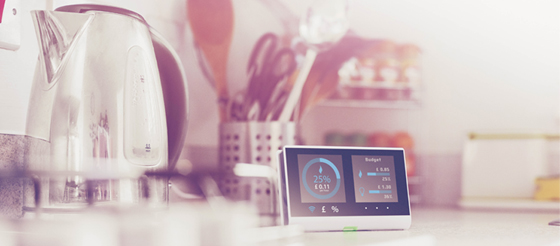
We know that smart home technology has revolutionised the way we live at home and according to PWC’s recent white paper, Connected Home 2.0, £10.8bn will be spent on smart home devices in the UK in 2019. With the increased availability and adoption of 5G in the UK, I predict that the options on offer will only get smarter and extend their reach to every room in the household.

There’s been a lot of hype around 5G – from downloading a full HD movie in under five seconds to making fully automated vehicles a reality – but I believe 5G will be a transformative technology for the home, as it’s spearheading a multi-dimensional world connecting devices, brands and people in real time with its fast bandwidth and reduced latency. Take a look around your home, count up the numerous devices that are connected and smart. It’s only going to get more prevalent in our lives and the places we reside and work in.

Barring any changes as a result of the General Election, the government were supportive of a £530 million proposal from the UK’s mobile network operators for a Shared Rural Network with the potential for it to be matched by a £500 million investment from the government. This would be a world-first deal with all the UK carriers – EE, O2, Three, Vodafone – investing in a network of new and existing phone masts they would all share.

For consumers it means they will be able to rely on their own provider’s network to use their mobile phones wherever they are in the UK. More importantly it will improve connectivity in areas with poor or no broadband. The upcoming 5G rollout is one reason why experts predict that more than 36 billion devices globally will be connected to the internet by the end of 2020, all of them smart.

Away from mobile phones, the connected home covers pretty much every category from AV, including smart speakers to thermostats, lightbulbs, your washing machine, fridge, oven and kettle. You name it and it’s probably smart and will integrate into your life with the tap of a device or command of your voice. That’s why Google has created the Google Assistant Connect programme, which for manufacturers means that they can create custom devices that serve specific functions and are integrated with Google Assistant making more assistant enabled devices available within all categories.

With this mass adoption across multiple CE categories it’s anticipated that the user experience will undergo a significant shift in how users utilise and interact with smart technology and AI.

This would mean a more ‘Multi Experience’ model which changes the manner, usage and approach with our smart devices to shift both perception and interaction to a multisensory experience. For instance, adapting the lighting to a mood that’s personal to you and not generic, or managing your life more personally by telling you how your commute to work will be and what to wear based on the weather forecast before you’ve even thought about it, just by looking at your diary, which of course you’ve integrated or shared voluntarily with your AI device.

All this would happen more seamlessly, without the need to constantly repeat a ‘wake word’ such as ‘Hey Google’ or ‘Alexa’ and instead using the wake word once to continue the instructions with your AI device not only making the usage of AI more beneficial when multitasking but also more of a user centric experience.

And all these devices will need to be connected, and if not by 5G it will be through the development of WiFi 6, which drastically improve wireless communication protocols, increasing download speeds by three times the current WiFi 5 we use today and enabling even more connected devices, which will be more adept at natural language.

The upshot is that we will inevitably utilise smart devices with built in AI to a much greater extent, such as for ordering shopping, which is incidentally predicted to jump globally by 2020 – a blow for traditional retail, especially when you consider that it’s estimated a staggering 85% of purchasing suggestions made by Amazon are effective. It’s no wonder why retailers are torn on supporting Amazon or not. For example, in November, Nike withdrew all its products from sale on the Amazon platform.

It’s true to say that technology in 2020 will give with one hand and take from another, all for the sake of progress and convenience, but for consumers, it’s about choice. The choice to automate much of what we may consider tedious or periphery. The choice to share your data with any amount of organisations, known and unknown (you may wish to read those T&Cs you freely agree to. I know you won’t, nobody does).

There is also the choice for retailers to take on the challenge of selling smart technology effectively in an engaging manner that enables a positive experience for the consumer. More importantly for offline retail to rise to the challenge faced by online retailers and offer more – starting with a better customer journey.

Tor ead the full article please visit PCR.

Tagged , , , , , , , , , , ,

Can collaborative retail save our high streets? Consumers urge independent retailers to merge to survive

Gekko Retail Marketing Tech Wearable

New research from Gekko has revealed that 73% of UK consumers think independent retailers should collaborate.

The ‘Collaborative Retail’ report features comments from over 2,000 UK adults, and has found that many believe independent retailers should “think creatively and work together” to avoid going to the wall and revitalise beleaguered high streets.

In the report, nearly three quarters said they think independent retailers should collaborate to come up with innovate ideas like sharing shop space and marketing costs, cutting down on their individual overheads. Most popular ideas for shop collaborations included independent shoe and clothing retailers, favoured by 71% of consumers, followed by book shops and cafes 68% and bakeries and greengrocers 65%.

Top reasons given by consumers for suggesting collaborations are supporting the high street (64%), supporting local businesses (63%), choice (56%), convenience (52%) and an enhanced shopping experience (48%).

Alongside collaborations, nearly 90% of consumers thought it was important large national retail brands roll out their new store designs and concepts to regions other than just the major high street destinations. Over 50% said they would visit their local high street more if brands did this.

Nearly three quarters (70%) of consumers said they were concerned about the impact of online sales on the high street and the local economy, but felt that the high street still had a major role to play with benefits such as ‘try before you buy’ (62%), browsing and leisure (55%), buy and takeaway (51%) and the opportunity to visit multiple shops (40%).

“We cannot just sit back and watch our high streets continue to degrade. Our research clearly shows that UK consumers are worried about the future of the high street and the impact its demise will have on their communities. They would love to see more independent retail collaborations and believe this is a very exciting way to inject life back into the high street and it does make sense,” commented Daniel Todaro, MD of Gekko.

“However, this approach to retail requires new and imaginative ideas from Government that support the legal and financial infrastructure of such initiatives. Our high streets do have a lot to offer so Government and retailers need to work together to make it an enticing proposition and lure people back.”

To read the full article please visit PCR.

Tagged , , , , , , , , ,

It’s not just retail; it’s M&S retail

The Drum MS Blog

The UK is historically a nation of shoppers, which more often than not puts it in the top five markets for many global brands. Right now, however the economy is tough, and retail is hurting.

With so many retail brand names disappearing from the high street, reducing choice and damaging local communities or shopping districts, the retailers that remain are struggling to survive.

Marks and Spencer, founded in 1884, is a brand unique to the UK, with no global footprint. It serves a niche market of 63 million residents, many of whom have lived with it their entire life. But it’s been well documented that the chain has struggled to connect with a younger audience, and by trying to do so has started to lose its appeal to its core audience.

By trying to be something for everyone, it’s starting to mean nothing to anyone.

One of the main issues with M&S is the fact that it’s a brand with no subsidiaries, and it doesn’t sell any third party products across fashion, homeware, and furniture, with only a few exceptions in the cosmetic and food categories. That makes it very different to some of the brands it competes with, like H&M Group – who have a broad global audience to speak to across 62 counties. Its many brands include H&M, H&M Home, Arket, COS, Weekend, Cheap Monday, Monki, and Other Stories. With approximately 4,500 doors and eight clearly defined brands, H&M Group meets the needs of so many generations and demographics in a way that M&S can’t.

A public breakup

With falling sales and decline across all categories except food which registered like-for-like sales uplift 0.9% with its latest half year results, is there any chance for M&S to refresh its brand to appeal to the many in a progressive nation like the UK?

I don’t think so: it’s almost like an “it’s not you, it’s me” kind of breakup.

The change has already begun. 47 stores have disappeared and the retailer is still looking to close 100 stores by 2022, but with 1,035 UK stores, that still leaves a lot of square footage. The current UK turnover figures of £9.4bn demonstrate that the brand isn’t doing too badly against others who are teetering on the brink of collapse, but it’s losing its focus by desperately chasing growth which isn’t there and, in the process, stifling creativity.

So forget the gimmicks like the M&S Little Shop (those collectable mini grocery items made from non-biodegradable material). This was a bit of a PR disaster, especially when you consider that for many the ethics of fast retail are a major concern. Shoppers are increasingly aware of the environmental impact certain industries make with fashion, for example, accounting for around 10% of total carbon emissions and a significant percentage of total water consumption.

M&S do have their Plan A sustainability programme, but does it do enough to communicate it? I don’t believe so and think M&S could be speaking to so many who are keen to see a retailer change and pioneer green retail for all.

Fixing the brand

Aside from missing a trick on environmental initiatives, it also lags behind other retailers on its feelgood factor. Its in-store experience is lacking, and its approach to retail will never compliment a great advertising campaign.

But one of the simplest forms of enhanced experience starts with staff; M&S have the benefit of loyal and customer centric staff so why not make them your ambassadors to create that experience? Perhaps ditch the uniform and in the process possibly save yourself a lot of money. Dress your staff in your clothes and update it seasonally. The outlay would be less, and your team immediately become the advocates of your brand.

Collaborate with a brand and start a conversation with someone new. Find the yin to your yang and be realistic – no one really wants to wear M&S trainers! Find a complementary brand for a category or create a collection that people really want to chase and will desire.

The current model is clearly not working – but hold on, it’s still making a handsome turnover, employing 81,000 staff and achieving a profit, so what’s the problem? Are the reports self-fulfilling in that they only serve to change perceptions in the consumers mind?

Regardless, the growth for brands like M&S is limited unless they can create a seismic shift in appeal to a younger or more affluent audience which starts with the experience a consumer feels from the brand.

To read the full article please visit The Drum.

The photo that accompanies this article is by Pixabay from Pexels

Tagged , , , , , , , , , , , ,

Does black Friday give consumers a real bargain?

Blog

When Black Friday began to be embraced by marketers in 2013, initial efforts focused on instore, one-day only events. Since then, there are far fewer reports of hordes of shoppers breaking down doors and a greater effort to create multi-day, omnichannel campaigns.

This year was predicted to have a strong showing. The CBI reported that sales volume is expected to increase and the Centre for Retail Research expected UK shoppers to increase their spend by 3.4% compared to last year, up to £2.53bn. Initial data shows that those expectations are being met: at its busiest, Barclaycard reported seeing 1,184 transactions per second during Black Friday itself.

As part of our work at Gekko, we monitor how retailers approach and execute promotions like this to better understand and advise on the market. Ahead of Black Friday 2019 we saw that far from being a single day event almost everyone started their campaigns at the start of the week, and peaked with a push over the Black Friday weekend with limited additional discounts and promotions.

We closely monitored the Black Friday pricing strategies across eight different retailers in the UK and Ireland, recording the items and prices offered over the week before Black Friday. Across those retailers, we saw a big launch at the start of the week, an increasing number of items being put on offer as the week progressed, then a drop in availability as particular deals went out of stock.

Tracked Black Friday discounted products 2019

Blog 1

Discounting on the day itself didn’t prove to be particularly significant. Of the 2909 items we tracked that were available to purchase on Tuesday 26th and still available at the end of the week, just 321 – 11% – were cheaper on Black Friday. 10% were cheaper than on the Wednesday, and just 6% were cheaper than on the night before. In the main, shoppers looking for a bargain could have purchased at any time during the week and would have been unlikely to see their purchases cheaper later on regardless of the store.

Of those 321 tracked discounts, TVs, laptops, and mobile phones made up almost half of the additional discounting, with scattered flash pricing on hot items like AirPods making up much of the rest.

Product categories of items cheaper on Black Friday than earlier in the week, 2019

Blog 2

But don’t be fooled by the data here. Although 23% of the extra discounts were on TVs, only 16% of all TVs we tracked were cheapest on Black Friday itself. For everything else, the Black Friday price was the same price as the rest of the week. And though we saw some variation on prices for specific items from retailer to retailer throughout the week, Black Friday is so sensitive that prices were very similar if not identical as retailers ramped up their price matching.

Although we expect data released and compiled over the next week to show that online took a bigger proportion of the Black Friday and Cyber Monday spend this year, a battle on price isn’t the only option open to brands and retailers. This year we saw an increased push of AR product viewing by both Amazon and Currys PC World, and our online analysis showed brands partnering with retailers so that consumers could talk to a brand ambassador remotely. This is an attempt to mimic the experiential marketing that we have seen work so well in-store, and it’ll be fascinating to see how this develops in future.

The photo that accompanies this article is by Artem Beliaikin from Pexels

Tagged , , , , , , , , , , ,

Click and regret: Brits wasting over half a billion pounds every year online on unwanted goods!

IPM Bitesize Blog

A new report – Click and Regret- from marketing agency Gekko has revealed the shocking waste now involved with online shopping. According to the survey, £641m is the astonishing figure consumers are wasting online every year buying goods they don’t want and failing to return them.

The survey of 2,000 UK adults conducted by One Poll on behalf of Gekko reveals that 27% of respondents (equating to 12.4m UK adults) order goods online they regret buying but fail to return. The average amount wasted every year is £51.90 per person equating to £641m overall.* Nearly a third of UK adults 31% also confess to being lured into buying items they don’t want or need and 70% regularly regret buying things online so send them back.

Despite people seemingly unable to resist the temptation of spending money online, nearly half felt that the ease of shopping online fuels extensive shopping habits and 43% said they also spend more money online than they originally intended.

Although internet shopping is meant to be time efficient, a whopping 65% said they spent more time shopping online than they expected because there’s too much choice 69%, they want to hunt for the best prices 54% and they feel compelled to shop around 34%.

However, respondents also claim to be concerned about the environmental impact of online shopping with 75% worried about the excessive use of packaging and single use plastics. Meanwhile 70% said they were concerned about the societal impact on the high street and local economy of increasing online shopping.

Daniel Todaro, Managing Director of Gekko, comments: “It’s clear from this research that online shopping can be a false economy.  Although in theory we can return the goods we buy, many of us are too busy to bother, so what starts as convenient soon becomes costly and inconvenient. This results in unwanted goods cluttering cupboards, gathering dust in wardrobes or heading for landfill at an alarming rate.  With our high street suffering and many people still enjoying its benefits such as try before you buy, excellent customer service and immediate purchasing experience, people should be more mindful before they click and get out and support their local businesses, help the environment and their pockets.”

To read the full article please visit IPM Bitesize.

The photo that accompanies this article is by PhotoMIX Company from Pexels

Tagged , , , , , , , , , , , , , , , , ,

Click and regret: Brits wasting over half a billion pounds every year online on unwanted goods

Gekko Retail Marketing Female Tablet

A new report – ‘Click and Regret’ – from marketing agency Gekko has revealed the shocking waste now involved with online shopping. According to the survey, consumers are wasting £641m online every year buying goods they don’t want and failing to return them.

The survey of 2,000 UK adults conducted by One Poll on behalf of Gekko reveals that 27% of respondents (equating to 12.4m UK adults) order goods online they regret buying, but fail to return. The average amount wasted every year is £51.90 per person, equating to £641m overall. Nearly a third of UK adults (31%) also confess to being lured into buying items they don’t want or need, and 70% regularly regret buying things online so send them back.  

Despite people being seemingly unable to resist the temptation of spending money online, nearly half felt that the ease of shopping online fuels extensive shopping habits and 43% said they also spend more money online than they originally intended.

Although internet shopping is meant to be time efficient, a whopping 65% said they spent more time shopping online than they expected because. Additionally, 69% felt that there’s too much choice, while 54% want to hunt for the best prices, and 34% of respondents feel compelled to shop around .

However, respondents also claim to be concerned about the environmental impact of online shopping with 75% worried about the excessive use of packaging and single use plastics. Meanwhile 70% said they were concerned about the societal impact on the high street and local economy of increasing online shopping.

Daniel Todaro, MD, Gekko, comments: “It’s clear from this research that online shopping can be a false economy. Although in theory we can return the goods we buy, many of us are too busy to bother, so what starts as convenient soon becomes costly and inconvenient.

“This results in unwanted goods cluttering cupboards, gathering dust in wardrobes or heading for landfill at an alarming rate. With our high street suffering and many people still enjoying its benefits such as try before you buy, excellent customer service and immediate purchasing experience, people should be more mindful before they click and get out and support their local businesses, help the environment and their pockets.”

To read the full article please visit The Drum.

Tagged , , , , , , , , , , , , , , , ,

Click and regret: Brits wasting over half a billion pounds every year online on unwanted goods, Gekko finds

gekko-retail-marketing-male-train-tablet-phone

A new report – Click and Regret- from marketing agency Gekko has today revealed the shocking waste now involved with online shopping. According to the survey, £641m is the astonishing figure consumers are wasting online every year buying goods they don’t want and failing to return them.

The survey of 2,000 UK adults conducted by One Poll on behalf of Gekko reveals that 27% of respondents (equating to 12.4m UK adults) order goods online they regret buying but fail to return. The average amount wasted every year is £51.90 per person equating to £641m overall. Nearly a third of UK adults 31% also confess to being lured into buying items they don’t want or need and 70% regularly regret buying things online so send them back.

Despite people seemingly unable to resist the temptation of spending money online, nearly half felt that the ease of shopping online fuels extensive shopping habits and 43% said they also spend more money online than they originally intended.

Although internet shopping is meant to be time efficient, a whopping 65% said they spent more time shopping online than they expected because there’s too much choice 69%, they want to hunt for the best prices 54% and they feel compelled to shop around 34%.

However, respondents also claim to be concerned about the environmental impact of online shopping with 75% worried about the excessive use of packaging and single use plastics. Meanwhile 70% said they were concerned about the societal impact on the high street and local economy of increasing online shopping.

Daniel Todaro, MD, Gekko comments: “It’s clear from this research that online shopping can be a false economy.  Although in theory we can return the goods we buy, many of us are too busy to bother, so what starts as convenient soon becomes costly and inconvenient. This results in unwanted goods cluttering cupboards, gathering dust in wardrobes or heading for landfill at an alarming rate.  With our high street suffering and many people still enjoying its benefits such as try before you buy, excellent customer service and immediate purchasing experience, people should be more mindful before they click and get out and support their local businesses, help the environment and their pockets.”

To read the full article please visit Retail Times.

Tagged , , , , , , , , , , , ,

Click and regret: Brits wasting over half a billion pounds every year online on unwanted goods

gekko-retail-marketing-how-to-benefit-from-the-forthcoming-massive-wave-of-ad-spend-tom-data-and-insight

A new report – Click and Regret – from marketing agency Gekko has revealed the shocking waste now involved with online shopping. According to the survey, £641m is the astonishing figure consumers are wasting online every year buying goods they don’t want and failing to return them.

The survey of 2,000 UK adults conducted by One Poll on behalf of Gekko reveals that 27% of respondents (equating to 12.4m UK adults) order goods online they regret buying but fail to return.

The average amount wasted every year is £51.90 per person equating to £641m overall. Nearly a third of UK adults 31% also confess to being lured into buying items they don’t want or need and 70% regularly regret buying things online so send them back.

Despite people seemingly unable to resist the temptation of spending money online, nearly half felt that the ease of shopping online fuels extensive shopping habits and 43% said they also spend more money online than they originally intended.

Although internet shopping is meant to be time efficient, a whopping 65% said they spent more time shopping online than they expected because there’s too much choice 69%, they want to hunt for the best prices 54% and they feel compelled to shop around 34%.

However, respondents also claim to be concerned about the environmental impact of online shopping with 75% worried about the excessive use of packaging and single use plastics. Meanwhile 70% said they were concerned about the societal impact on the high street and local economy of increasing online shopping.

Daniel Todaro, MD, Gekko comments: “It’s clear from this research that online shopping can be a false economy.  Although in theory we can return the goods we buy, many of us are too busy to bother, so what starts as convenient soon becomes costly and inconvenient. This results in unwanted goods cluttering cupboards, gathering dust in wardrobes or heading for landfill at an alarming rate.  With our high street suffering and many people still enjoying its benefits such as try before you buy, excellent customer service and immediate purchasing experience, people should be more mindful before they click and get out and support their local businesses, help the environment and their pockets.”

To read the full article please visit Lovely Mobile News.

Tagged , , , , , , , , , , , ,

What do the Tory candidates policies mean for the high street

Gekko Retail Marketing Tech Wearable

In the blizzard of spending splurges promised by the two candidates to be our next Prime Minister has been some announcements that could be very significant for High Street retailers. Boris Johnson, the clear favourite, has announced that he wants to introduce 100% business rate relief on free-to-use ATMs to keep as many as possible open in town and city centres to ensure shoppers can withdraw money. He has declared that he wants to curb the closure of Automated Teller Machines (ATMs) that has followed the surge in contactless payments.

While this may appeal to shire Tories of a certain vintage the trouble is the Boris approach is as feasible as owning a unicorn. In a contactless world, less and less people are drawing out cash when you can tap a card or your phone. The subsidies he is proposing would not allow for the cash machine to be free as it still needs to be maintained, filled, connected and bank charges apply which make the model loss making for any operator especially if it is used infrequently. More poppycock from the master of poppycock.

Johnson also talks about wanting ‘a range of bureaucratic and legal barriers to business to be swept away’ to allow high-street shops to flourish. This includes an ‘overhaul of town and country planning laws that mean converting one form of premises ie. a shop, cafe, pub or hot-food takeaway, to another can be a lengthy process’.

One option being considered by Johnson’s team is introducing a new “A” class business category covering shops, financial and professional services, restaurants and cafes. The measure would allow existing shops to easily offer additional services.

He also called for the immediate unlocking of a £675m government fund earmarked for sprucing up high streets around Britain. If he becomes prime minister, he plans to announce this summer the towns that have been successful in bidding for shares of the cash.

Although on paper the overhaul of planning laws looks attractive, the problem is planning laws relating to change of use are not in his power to change, neither will £675m go far and how does he propose to choose which towns are more worthy of the fund? As ever with Johnson’s announcements rhetoric trumps reality.

Meanwhile Jeremy Hunt has pledged to exempt hundreds of thousands of small businesses from business rates if he becomes Prime Minister. Hunt intends to scrap taxes for nine out of 10 high street shops in a bid to save the high street. The claim is the move will save newly exempted businesses up to £6,500 each and will scrap taxes on 24,500 businesses based in Birmingham (5,000), Manchester (8,000), Leeds (6,000), Newcastle (2,000) and Bristol (3,500).

Hunt said that his government would reform the current Retail Discount rate, so that businesses which qualified for the discount would see their entire business rate bill cancelled. At present, those with a ratable value below £51,000 are eligible for their bill to be cut by one third.

Additionally, one of Hunt’s best trailed policy announcements has been a promise to cut corporation tax from 19% to as low as 12.5%, a policy which has been costed at £13bn a year. His generous spending pledges have seen him receive some flak from the Institute for Fiscal Studies (IFS).

Hunt the self-proclaimed entrepreneur is certainly more progressive in his thinking and his ideas may just work to support independent traders on the high street who are being strangled by inflated taxes. The corporation rate cut will pay for itself making Britain an attractive base and undoubtedly bring more corporates to base themselves in the UK and with a No Deal Brexit in site, more initiatives like this is what the UK needs to survive.

The trouble is according to all the polling, Hunt has little chance of getting in. Just like the rest of us, it seems High Street retailers had better batten down the hatches as Tory Party members take the ultimate gamble in installing Johnson in to Number 10.

To read the full article please visit London Loves Business.

Tagged , , , , , , , , , , , , , , , , ,

Disruption will lead to innovation in our high streets

Gekko Retail Marketing Group Coach Trip Phones

Culture Secretary Jeremy Wright announced in May 2019 that a new £62 million fund will breathe new life into historic high streets across the country. Really? What’s £62m going to do? Unless there’s a momentous shift by Government regarding the business rate issue no £62m fund is going to fix anything or impact the dire straits we find our high streets in.

But here’s the conundrum. Across the country, people still enjoy going shopping. Shops are not going to disappear and 89 percent of UK sales are still generated through physical retail.

Consumers want high streets and businesses want to be there. We can’t give up on our high streets, but we need to fundamentally disrupt the existing model with ideas that address business rate costs head on.

Reigniting imagination on the high street

We need traditional brick and mortar retailers to be imaginative and visionary to make retail work for them and their customers. We haven’t seen enough of this. There’s been some successes where traditional retail chains have introduced successful in-store experiences, from speaker spaces to free cookery classes, to encourage consumers to dwell and soak up the atmosphere.

We’ve also seen successful buy outs where we see anchor brands amalgamate multiple brands under one roof such as Sainsbury’s and Argos (Store within a Store concept – SiS). This has enabled Sainsbury’s to continue trading within the non-food category and remain current without distracting from its core grocery business.

Brand collaborations appear to work well, and this is where I think independent retailers need to deploy more disruptive strategies. Surely independents sharing space makes sense from a financial and marketing perspective and works for all collaborations, whether it’s an anchor brand and SiS or two brands in equal partnership.

Let’s take my local high street, where there is a bookshop with a coffee shop, and this unsurprisingly works well. So why don’t we see such partnerships more often with, say, independent clothes and shoe shops hooking up, cook shops and delis collaborating and complimenting one another and butcher’s, bakeries, greengrocers and florists joining up.

With so many consumers now on a personal quest to do what’s good for the planet, collaborations can really work to bring purpose to the fore and give consumers more choice.

The rise of the ethical high street

For people who are ethically minded, they may prefer to visit collaborations that have similarly aligned values for example, butchers, delis and bakeries that are fully ethically sourced or organic or shoe and clothes shops that won’t use unethical material. Delivering a positive, convenient and alternative shopping experience for people for whom these things are a driving factor in their purchasing decisions will provide an incredible customer service and experience that’s missing right now.

I’ve been in the industry over twenty years so I’m not naive enough to think this is easy, but retail is the most dynamic of industries and it needs to do something before it loses its confidence and high streets forever. I believe it requires a major re-think of the whole supply chain from landlords to legal and introducing new innovations like retail matching services. A service that pairs up independent retailers who are looking for high street shop spaces in particular areas.

There are all sorts of challenges – what happens if one brand is doing well, and the other isn’t, if one wants to sell and one doesn’t? But we’re at an impasse where something drastic needs to happen for us to re-imagine the high street. And drastic means disruption and innovation not more of the same.

To read the full article please visit The Drum.

Tagged , , , , , , , , , , , ,