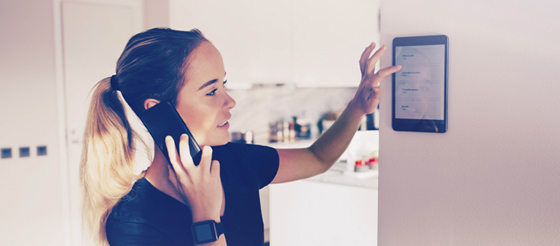
With Smart Home product sales set to boom over the coming years now is the time to get in on the action and here, Rupert Cook, Sales and Marketing Director at Gekko, looks at how this can be done.
Here at Gekko we’ve been talking about the Smart Home for over four years now. Back in 2014, we commissioned research into ‘the connected home’ and asked consumers what they thought of having digitally connected devices in their homes. The vibe coming back from the 2,000 respondents wasn’t exactly positive. When asked about what kind of product they would consider, smart thermostats came top of the list with 44% expressing an interest. Over a quarter said they wouldn’t be interested in any form of smart device. The principal concerns cited were expense and the technology being deemed as not necessary.
Thankfully for us all, things have moved on from then and the numbers speak for themselves. Analysis by PWC The global market for smart home is expected to be worth $50bn by 2022. Around 30% of people are planning to purchase a smart home device for the home in the next two years and looking at just one product category in the smart home arena, Smart Speakers, further illustrates the potential. In 2017 Amazon sold 33m Echo devices whilst Google dominated selling more than one Home device per second from its launch in October 2017 to mid-2018.
Consumers aren’t only purchasing smart home products; they’re also discussing the merits online. A study by Crimson Hexagon indicates that positive sentiment is growing from 60% to 80% in the last year, another sign that smart home technology sales are poised for blockbuster growth.
So what will 2019 bring for the smart home. Well CES, the annual consumer electronics trade show in Las Vegas, is only just around the corner and a quick search for the subject on their website schedule brings up roughly 100 talks, seminars and events on the topic. Smart home is without a doubt going to be one of the lead stories for many journalists and the category will become more diverse, with new innovations and services coming to the mainstream. Looking beyond just the smart home, it’s worth noting that 5G technology is on it’s way in 2019 as it’s rolled out to certain cities in across the UK. With speeds 20 times faster than 4G, the advance is only going to hasten the Internet of Things and connectivity in general and will in future open up new possibilities for consumers. Everything from refrigerators and window shades to your family car will be linked, while housekeeping robots and next generation digital assistants facilitate day to day activities.
The potential is there for CE retailers to capitalise on the opportunities and as indicated by the ERT Turning Point survey back in October, 45% of respondents have been looking at the Smart Home as a new area for their businesses. There are however challenges that have meant slow consumer adoption. To be successful at selling smart home solutions, retailers need to acknowledge and overcome these barriers.
The perceived complexity of systems is one of the principal hurdles for consumers, so it’s essential that the sales approach simplifies the options available and doesn’t overwhelm the shopper. It’s easy to get carried away and attempt to impress by reeling off the endless possibilities of what can be done; ‘if you buy this, install these, connect it to that, then you’ll be able to get Alexa to run the household…’ The chances are that you’re going to elicit the response ‘Great but I’m never going to do that’.
Our Smart Shopper research from earlier in the year showed that 21% of people love the idea of the smart home tech but were intimidated by the complexities. Look to address this and you can have these types of customer eating from the palm of your hand.
The idea of complexity isn’t helped by the challenges of market fragmentation. On a typical shop floor, product groups tend to be disconnected – smart lighting, smart speakers, thermostats, security, home appliances etc. all displayed in separate areas. This makes it hard for consumer picture the totality of what’s actually possible within their home. All the shopper can see is competing brands, competing products and competing technologies. There is a general fear that if you buy into a particular brand then you’re on a committed pathway as there is no guarantee you’ll be able to integrate with other devices or solutions.
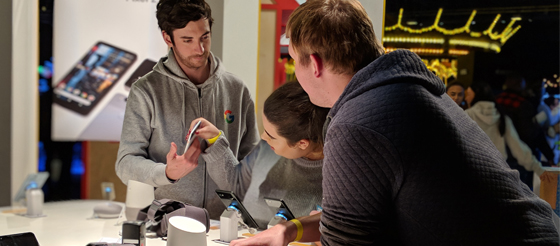
Retailers must plan, order and merchandise to overcome these inconsistencies and create a conducive sales experience. As an example, the Google Smart Tables in some multiple retailers bring together their devices with compatible third party products such a Philips Hue and in doing so bring the category to life.
Intrinsically linked to the above points is the need for the human touch. For all the great interactive displays that can be installed to bring the concept and possibilities alive in-store, there needs to and effective sales person on hand to guide and advise the customer. Otherwise, what will happen? The shopper will do their own research from the comfort of home before making an online purchase.
In creating effective sales people, the approach to training is obviously fundamental. For retailers, sales teams should be able to present an agnostic solution, understanding the bigger smart home picture rather than focusing on specific product types. Retailers should also tap into the product training on offer from suppliers and take up any offers of seeded or loaned kit, creating users and thus advocates of the products.
Consumer education is the key to expanding the use of smart technology into the modern home and retailers sit on the front lines of that effort. For all the pessimistic talk surrounding physical retailing it should be remembered that it still accounts for 80% of consumer sales in the UK. There’s an opportunity for bricks and mortar retailers to demystify the smart home and become the shop of choice for consumers looking to invest in the tech. And our recently published study shows how shoppers desire great retail experiences, with 81% claiming the personal touch has disappeared from customer service in modern British retailing. Moreover, a third said that the personal touch is more likely to make a repeat purchase, with a fifth saying it would make them spend more. By offering up a great experience, education, advice, opinions and added value services such as installation, the smart home is certainly a category where you can battle against online retailers.
To read the full article please visit ERT
For more information on our research please visit Gekko.