Author Archives: Gekko Marketing

Balancing technology with the human touch

Image

With shoppers increasingly relying on their smartphones and tablets to research, compare and buy goods online, all sectors need to be considering their ecommerce strategies. The DIY sector is no exception and the traditional ‘out of town’ retailers are having to adapt their strategies in order to succeed in the marketplace. It would in fact appear that the era of big box retail dominance is coming to an end. Over the past 12 months there has been considerable comment on how major DIY brands including Wickes, Homebase and B&Q, which traditionally operate massive 100,000 sq ft stores, have or are at least considering the downsizing of their physical properties and moving  towards smaller, more interactive spaces. In light of these developments, it seems an opportune moment to explore the possibilities for retailers in the DIY sector looking to shake up their spaces and create truly effective in-store experiences.

The DIY sector is undergoing seismic changes, with everything from the economy to the weather being highlighted as the reason for the downturn in sales. However, while it’s fair to say that big box DIY retailers are finding trading tough, they’re certainly not about to disappear. They are simply moving towards smaller formats and investing more heavily in their online retail presence. In order to thrive in this changed landscape, DIY brands need to ask themselves; what can be done in order to optimise the entire purchase journey for customers?

One of the biggest challenges facing big box retailers is the increasing desire to purchase away from the traditional point of sale. With more and more consumers choosing to buy online, the trick here for DIY brands is to integrate their brick-and-mortar spaces with their online stores. Omnichannel retail models are the order of the day for DIY brands attempting to integrate digital and offline sales channels.

Another major factor in the changing DIY marketplace is the rapid proliferation of smartphones and tablets. Consumers are now armed with technology ready to price-compare every product, and are visiting stores looking for deals rather than making one-stop, fill-the-trolley trips. B&Q has been doing particularly well in this area with both its creative mobile app and in-store wi-fi playing key roles in its omnichannel strategy.  Apps are effective tools to utilise online and mobile techniques to drive people in-store, and the customer interaction works well to create a wholly rounded customer journey. However, there is a lot more scope for B&Q and other DIY brands to be doing more in this arena in order to underline the integral part played by in-store communication during the purchase journey. It would be refreshing to see these retailers embracing technology more wholly and implementing regular technology-fuelled in-store activity into their marketing strategies.

Using technology to connect with customers in stores is hugely important, but human interaction and face-to-face communication with a knowledgeable product specialist continues to trump even the most advanced mobile and digital strategies. In other words, while sophisticated online strategies can certainly work hard to increase footfall in DIY stores, positive human interaction on the shop floor is ultimately the most important part of the customer journey. Both the retailers and the owners of the brands sold in-store should therefore be considering their approach to providing product training and brand ambassadors to help drive sales. Although the internet offers unlimited scope for shoppers to research and compare prices, the average shopper will be looking for advice, inspiration and guidance in-store. Using specially trained brand ambassadors who are briefed on your target audience and the brand messages to interact with people in a knowledgeable and engaging way can be an invaluable way of getting customers to consider products they may otherwise have overlooked.

With DIY stores’ footfall in decline, the opportunities for brands to connect with consumers on a personal level within their retail spaces are becoming fewer and farther between. It’s clear that interactive and engaging marketing strategies along with downsized physical stores will be key for DIY brands looking to prosper in 2014.

London’s Wearable Tech Show 2014

Image

Last week saw London’s Olympia host the UK’s first ever Wearable Technology Conference and Expo dedicated to showcasing the latest developments in smartwatches, wristbands and other wearable devices. With speakers from Microsoft, Google, Samsung and Intel, the show promised a lot, but did it live up to the hype?

The show floor at Olympia reflected an industry that is still in its early days with a clear split between sport and leisure wearable gadgets. The most commercially successful wearable tech category so far is that of sports-focused devices, and the plethora of health and fitness-trackers on display at the show underlined the consumer demand for these products. Wearable tech innovations are helping athletes – both amateur and professional – to improve their performances by creating data while they train, allowing the user to identify areas that require improvement and extra focus. The recent Winter Olympics highlighted these developments as we saw athletes from around the globe trying out a variety of devices in an attempt to gain an edge over the competition. Users of sport-based gadgets certainly know what they want from their devices.

On the other side of the coin, the majority of leisure-focused wearable gadgets like Google Glass and vrAse have not yet hit the open market. This category of devices needs to be refined and defined for the consumer before it penetrates the market, a point which was very evident at the show. The battle for domination in the wearable tech industry is heating up with the major announcement from Google last week about its plans to establish a bigger presence in the industry. The search giant announced Android Wear, a version of its operating system designed specifically for wearable devices. The effects of this move by Google will be felt across the sector by chip makers, electronics firms and fashion labels working on wearable gadgets this year.

All of this is taking place against a backdrop of privacy and security concerns among UK consumers. The market share remains firmly up for grabs and the next twelve months will tell an interesting tale.

In order to thrive in the wearable tech industry brands need to place more emphasis on the quality of the design of the products, with much more input from the creative and design side required. Brands will also need to explore more effective ways for users to interact with the devices. Whether this will be achieved by taking voice activation or recognition to the next level, or through an entirely different approach remains to be seen. We can expect a different state of affairs at London’s Wearable Tech Show 2015. Watch this space.

Read the full article at http://www.techbubbles.co.uk/blog/londons-wearable-tech-show-2014/#more-5405

Ethical Bargains: Do They Exist?

Image

How do brands respond to “shopper tribes” research to drive sales? A recent study commissioned by Gekko Group showed that only 15 per cent of shoppers are influenced by Ethical Issues, however, many companies try hard to distance their brands from any ethically negative press. Could consumers who are not flouting ethical issues be telling brands through this statistic that they expect them to be ethical? The recession has fueled the priority of bargains for many consumers, as they seek cheaper deals; however, consumers simultaneously wish that brands remain ethical.

Can brands do both?

Take companies like Innocent, Green & Blacks, Body Shop. Ethical, fair trade, cruelty-free are your immediate assumptions, but they are all owned by conglomerates who you would not immediately associate with ethics: Coca-Cola, Kraft and L’Oreal. What these brands have done through acquisition is target Millennials who are all about niche brands, small start-ups and companies that they relate to. They want to support brands they like – those brands that reflect their values. However, shouldn’t we expect ethics from all brands regardless? Shouldn’t it be built into the essence of every brand to ensure they care about the planet, humanity and cultures without question?

The small percentage of consumers that consider ethics as key in their shopping activity indicates the trust they place in brands to already be ethical in their product. As with the great sugar/obesity debate, we make our own choices. This choice extends to the brands we use every day and how we choose to identify with them. Can an airline ever be truly environmentally friendly? And the same goes for cosmetics, processed foods, electronics and, in fact, everything we buy. Every brand tries to do their bit, but it should be done without question, as a matter of course and continuously challenged internally.

Packaging of these brands will happily shout out “Natural”, “Organic” and “Sustainable”, and are usually emblazoned across the majority of the packaging to strengthen brands’ credentials and continually build that perceived trust we have in them that they are doing the right thing. Look closer and those tiny ingredients don’t look as natural, organic or sustainable as they could be. This could certainly turn us off those brands little by little until we eventually stop recommending or, worse still, stop buying the products. It’s up to the brand to do the right thing or be honest and give consumers the choice.

The ethics debate is a debate that will never go away and one that will forever be relevant to every generation. However, whilst only 15 per cent consider it in the mix, we must remember that for the 85 per cent that don’t, it’s not that they don’t care, but that they trust every brand to act responsibly in all that they do – just like most people, I suspect, choose to do in their everyday lives.


Read the full article at http://www.brandingmagazine.com/2014/03/25/ethical-bargains-do-they-exist/

Did the Wearable Tech Expo deliver the goods?

Image

Last week saw London’s Olympia host the UK’s first ever Wearable Technology Conference and Expo, dedicated to showcasing the latest developments in smartwatches, wristbands and other wearable devices. With speakers from Microsoft, Google, Samsung and Intel, the show promised a lot, but did it live up to the hype?

The show floor at Olympia reflected an industry that is still in its infancy with a clear split between sport and leisure wearable gadgets. The most commercially successful wearable tech category so far is that of sports-focused devices, and the plethora of health and fitness-trackers on display at the show underlined the consumer demand for these products.

Wearable tech innovations are helping athletes – both amateur and professional – to improve their performances by creating data while they train, allowing the user to identify areas that require improvement and extra focus. The recent Winter Olympics highlighted these developments as we saw athletes from around the globe trying out a variety of devices in an attempt to gain an edge over the competition. Users of sport-based gadgets certainly know what they want from their devices.

On the other side of the coin, the majority of leisure-focused wearable gadgets like Google Glass and Vrase have not yet hit the open market. This category of devices needs to be refined and defined for the consumer before it penetrates the market, a point which was very evident at the show. The battle for domination in the wearable tech industry is heating up with the major announcement from Google last week about its plans to establish a bigger presence in the industry. The search giant announced Android Wear, a version of its operating system designed specifically for wearable devices. The effects of this move by Google will be felt across the sector by chip makers, electronics firms and fashion labels working on wearable gadgets this year.

All of this is taking place against a backdrop of privacy and security concerns among UK consumers. The market share remains firmly up for grabs and the next twelve months will tell an interesting tale.

In order to thrive in the wearable tech industry brands need to place more emphasis on the quality of the design of the products, with much more input from the creative and design side required. Brands will also need to explore more effective ways for users to interact with the devices. Whether this will be achieved by taking voice activation or recognition to the next level, or through an entirely different approach remains to be seen. We can expect a different state of affairs at London’s Wearable Tech Show 2015. Watch this space.

Rupert Cook is business development director at field marketing agency Gekko
Read more: http://wallblog.co.uk/2014/03/25/did-the-wearable-tech-expo-deliver-the-goods/#ixzz2wzshjKXd

Tagged , , , , , , , , ,

What product demonstrations can do for brands

Image

Field and experiential marketing can be costly but if a brand gets it right, it can reap the rewards.

Marketers often speak of starting ‘conversations’ with customers and prospects but, in reality, very few campaigns ever lead to a face to face chat.

Yet, despite the digital age, the saying that people buy from people still stands – and they are more likely to do so if they have an opportunity to try before they buy. In fact, TGI figures suggest that 41 per cent of shoppers who see a demonstration of a product go on to buy it from the store.

That is why experiential marketing and in-store demonstrating are growing industries in the UK. They now form a major part of field marketing which, in total is estimated to be worth £230m a year by the Institute of Promotional Marketing.

The latest branch of field marketing is a world away from brands having people dress up in outfits and hand out flyers at busy spots. A whole new industry has sprung up to line up prime in-store locations, train brand ambassadors and provide the latest technology so immersive experiences can be shared through social media.

For longer established brands, awareness and advocacy are still important goals of in-store demonstrations but, in most cases, sales will be higher up the list of priorities.

That is certainly the case for Gekko Client, Epson. Like other brands which regularly commit to using brand ambassadors, the company has a detailed message it needs to get over which is best conveyed face to face where a trained representative can show the benefits of its ‘premium ink’ packages.

Hence its sales manager Tim Bedward believes the key to its annual in-store demonstration programmes, across the peak Christmas and January shopping months, is in the training its brand ambassadors receive through in-store marketing agency Gekko.

“Everyone on the programme spends a day at Epson being trained on the products and shown how we’re all about ink quality,” he explains.

“The crucial part is we not only get this message across but we can also spot if we don’t think somebody is going to work out as a brand ambassador. It’s not common but we do fail people. We also finish off the training by showing people how to ‘close’.

“It’s key for our brand that shoppers don’t feel pressured and so it’s fine if we don’t sell a printer or ink so long as we leave the customer with a good experience.”

Field marketing: The big threee challenges

Budget and time

Very few brands carry out their own experiential marketing efforts because of the sheer time and effort required to coordinate booking the right positions in the best venues, training up temporary staff and putting together the equipment and technology required for an effective campaign.

For this reason the biggest challenge is finding the budget and coordinating at least one or two agencies, sometimes three, to ensure a campaign delivers on its objectives.

The right people

Once a marketing team has decided to run an in-store demonstration or experiential campaign, the most important aspect is to find the right people to represent a brand effectively.

Brand ambassadors must know the companies and brands they are representing and understands their key values. Only then can the required product knowledge, where applicable, be learned.

Top priority is to never be pushy but rather always give an enjoyable experience that may lead to an immediate or future sale.

In-store relations

Brand ambassadors need to work well with permanent in-store staff, and realise they are there to convey a brand’s messages and showcase products, without denigrating rivals, and then pass on a sale to a permanent member of store staff to process at a till.

Get this right and the brand will not only be welcomed back by the retailer but the positive impact should remain with the permanent staff too.


read the full article at http://www.marketingweek.co.uk/analysis/marketing-tactics/promotional-marketing/what-product-demonstrations-can-do-for-brands/4009770.article

Mobile World Congress Plays Backdrop to the Telecoms’ Brand Fight

Image

As the great and good of the mobile world gather in Barcelona for this year’s GSMA Mobile World Congress, an event attended by none other than Mark Zuckerberg fresh on the back of his WhatsApp purchase, what will a crowded category of brands announce next?

Samsung, Apple, LG, Blackberry, Sony, Nokia, Huawei, Motorola and the list goes on. The number of mobile brands out there is large, so how does this mass of brands gain affection? Samsung has just launched a brand marketing platform in a bid to become the ‘most loved brand,’ while this year we’ve seen Huawei ink a partnership with Arsenal. The opportunities for these brands to overstep each other are limitless, so who will win this aggressive marketing match?

You don’t have to look far to see evidence that the world of successful, high-end smartphone makers is shrinking to a few major contenders dominated by Apple and Samsung – while other important brands, like BlackBerry, LG and Motorola, fade in prominence or struggle to compete. Still, lesser known brands have a chance to grow, even thrive, in emerging markets. Lenovo is picking up steam in China, the most important growth market there is; and, even though they’re on the brink of extinction, BlackBerry phones are still selling throughout Africa, South America and the Middle East. ABI Research says that smartphone penetration is at 20 percent out of a global population of 7.2 billion people. Looking at it another way, smartphones accounted for a little over half of all mobile handset sales in 2013. That means there are a lot of people who will be shopping for their first-ever smartphones, people who perhaps aren’t as focused on brand loyalty as they are on value.

So what are these brands doing to gain market share? Sponsorship is a core strategy for many of these brands. Huawei hopes its tie-up with Arsenal will boost awareness of the brand in the UK. It had a 0.9 per cent share of the UK smartphone market in November, according to comScore, putting it 9th in the rankings behind brands including Samsung, Apple and BlackBerry. That is also well behind its global share, which Strategy Analytics estimates at 5 per cent in the third quarter.

Then, there are the beloved celebrity endorsements that catch many an eye. However, it remains unclear whether they have helped some of these ailing tech businesses. HTC had been struggling, but hoped that its signing of Iron Man star, Robert Downey, Jr., last year for a two-year deal could turn things around. In picking a big-name actor to not only front its campaign, but also help shape it, HTC is following a well-trodden path; however, the endorsement has failed to attract at a high level as its net income fell by more than 90 per cent last quarter.

The problem is that there are so many brands out there and the ones that are winning the match are those that have strong brand identities. Whilst Apple focuses on experiences for customers rather than sponsorship and celebrity, the brand keeps consumers at the heart of everything it does, allowing it to anticipate what they want next, breaking new ground in design and performance. Samsung’s products are equally as good (just look at the recently launched S5) and the brand’s marketing approach, a large investment set to drive brand loyalty, is as scientific as its nearest rival. A “brand dependence” index revealed at CES suggested that more people are dependent on the Samsung brand than any other in consumer electronics. As part of its brand strategy, it has invested heavily in social engagement and that too is paying off as it clearly knows its audience and how to target it. With EE in the UK announcing a 68% increase in 4G customers, consumers want a handset which not only compliments the network, but also meets their needs – whether this be functionality, speed or style.

For brands on the periphery to succeed, there needs to be some deep-seated consideration taken in what the brand stands for and what its target audiences are. The brands out there at the moment seem to be clambering after everyone rather than taking a step back and establishing a concrete outlook into the future and where they want to be. Nokia, which – we don’t need to be reminded – is now owned by Microsoft and oddly launching an Android device, is a great example. As with any demographic, brand is everything. For a category that we cannot live without in this connected world (where our smartphones get thinner, get larger in screen size and become not only phones, but also cameras and media devices), these brands could possibly transform their businesses by holding back on the random star endorsements and sponsorships until they know who they’re targeting.

The land grab opportunity is huge and everyone attending MWC this week knows the value of a 1% global decline in emerging markets as predicted by GfK, but who will dominate and buck this predicted trend in our brand-fickle world?

Written by Daniel Todaro

Read the full article at http://www.brandingmagazine.com/2014/02/25/mobile-world-congress-2014/

Tagged , , , , , , , , , , , , , , , , ,

The top 5 wearable technology gadgets in 2014

Image

Wearable tech is already one of this year’s hottest trends. Are you dressed to thrill?

If the headlines dominated by the latest and greatest smart watches and activity trackers following last month’s Consumer Electronics Show in Vegas are anything to go by, 2014 is set to be the year of wearable tech. Wearable technology is changing the way we communicate, exercise, socialise; and in many ways is enhancing the way our society operates. From fitness-tracking bracelets to smart ski goggles, Daniel Todaro, MD at field marketing agency Gekko, writes for us about the five wearable tech gadgets of this year that you would be happy to wear and use…

1.Fitbit Force

Image

Fitbit Force, the latest standout offering from Fitbit, is a hyper designed and developed wearable fitness tracker. The subtle wristband displays daily stats, steps taken, calories burned, distance travelled as well as allowing the users to easily log food intake, sleep patterns, and even health information like glucose levels and blood pressure. The device can also easily be synced with a smartphone app or through a wireless dongle for PCs.

Expected to go on sale in the UK in the spring, we can expect the Fitbit Force to fly off the shelves.

2.Pebble Watch & Steel
Image
Launched towards the end of last year in the UK, the Pebble has gained a large following in a relatively short space of time.

This waterproof smartwatch is designed to display messages from an iOS or Android smartphone and can send users notifications when they receive an email. Simple and stylish, the Pebble can be purchased in red, orange, black or grey, and comes with a removable 22mm watch strap. Alternatively the Steel is a great-looking wristwatch with top-end construction.

With an impressively long battery life and easy-to-use buttons, I suspect both Pebble variants will be huge in 2014.

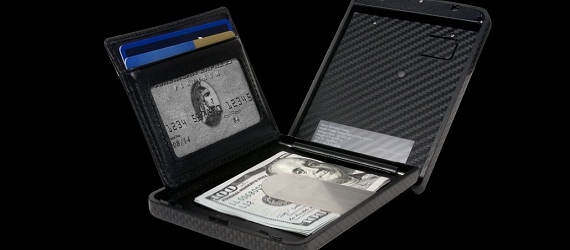
3.iWallet
Image
Perhaps one for the most security conscious out there, iWallet is a revolutionary biometric locking wallet that protects personal information, cash and cards using the latest cutting edge technology.

What’s the standout feature? If the user’s iWallet and smartphone are more than 10 -15 feet apart, the phone will sound. Pickpockets beware.

4.Epson Moverio BT-100 smart glasses
Image
Another potential game-changer on the market, with transparent lenses and Wi-Fi connectivity, these smart glasses allow you to update your social network accounts, catch up on the latest news and watch videos online while still being able to see your surroundings. With the Android™ 2.2 platform and a 4GB SD memory card, you can choose from a whole host of viewing options, such as MPEG 4 and H.264 videos, to watch content wherever you want.

The smart glasses offer a big-screen experience equivalent to a 320-inch display viewed from 20 metres away. The ‘control-at-your-fingertips’ touch-sensitive track pad means you can effortlessly navigate between menus and find exactly what you’re looking for.

This is the perfect hands-free alternative to small smartphone and tablet PC screens.

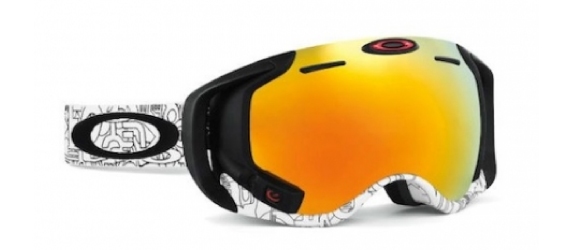
5. Oakley Airwave Ski Goggles
Image
These ski goggles allow gadget-obsessed skiers and competitive adrenaline junkies to stay connected on the slopes. Sitting at the bottom of the left goggle lens, the technology senses and shows a range of speed and distance metric notifications, including buddy tracking, navigation, music and iOS/Android smartphone synching so you can view incoming calls and text messages with low energy Bluetooth connectivity.

Packaged with everything you expect from Oakley, the goggles include anti-fog technology, dual-vented lens designed to keep vision clear, 100 percent UV filters and Iridium lens coatings to to balance light transmission.

Daniel Todaro, MD at field marketing agency Gekko

Read the full article at http://www.londonlovesbusiness.com/business-news/tech/the-top-10-wearable-technology-gadgets-in-2014/7519.article

Tagged , , , , , , , , , , , , , , , , , , , , , , , , , , ,

Sport sponsorship: the good, the bad and the politics

Image

Sponsoring major sporting events on an international playing field can bring rewards to brands. It’s any marketer’s dream and brings boundless opportunities for brands. There is return, beyond the cache of being associated with such high profile events. After all, there is the index-linked effect on sales, which can’t be ignored, as well as the value of a brand’s stock and overall stature in today’s economic climate.

You only have to tot up the figures to see how lucrative this market is. Adidas claims that the London 2012 Olympics boosted its sales, while Kantar reports that from 2004 through 2013, the Super Bowl game has generated $2 billion of network advertising sales from more than 130 marketers.

However, while sponsorship can give brands a chance to promote themselves on a global stage, as well as enter new markets, they must be prepared for the politics too. The 2008 Beijing Olympics saw sponsors targeted for their association with the event, with protesters putting pressure on them over China’s human rights record. There was also much scrutiny spotlighted on the London 2012 over brands that were not aligned with the Olympic values. Heineken and Cadbury, McDonalds and Coca-Cola bore the brunt of the negativity in light of not being wholly associated with good health. When people took to the streets in Rio over the Brazilian Governments preparations for the 2014 World Cup, the media turned to the sponsors for their response.

Now, it’s Sochi where some sponsors have found themselves having to handle difficult political questions over human rights and the government’s controversial law banning so-called gay ‘propaganda’. These are brands that simply signed up to sponsor one of the biggest events in the world, and presumably support the ethics of the Olympics movement. When McDonald’s started using #CheersToSochi on Twitter to cheer on athletes, protestors hijacked the hashtag.

Now when you search for the hashtag you’ll see reams of fiery messages directed at sponsors. Commentators have used the same McDonald’s branded Twitter feed to attack Visa, Procter & Gamble and other long-time Olympic sponsors that have issued statements backing a non-discriminatory games — but stopped short of condemning Russia’s “homosexual propaganda” laws. AT&T, a Team USA sponsor but not a global Olympics backer, has been the only brand with official Olympic ties to publicly condemn Russia’s laws.

Many brands take a ‘politics-neutral’ approach, avoiding taking sides on controversial or political issues. Silence can often be golden if a brand doesn’t have anything relevant to say or the credibility to say it. However, when they’re involved in massive sponsorships, it becomes very difficult for brands to maintain this position. And when they don’t respond they’re deemed as complicit anyhow. Or they could be like Google and change their Doodle to the colours of the rainbow.  

But regardless of whether a brand decides to jump headfirst into the political ring or stay well clear, if they do so they must be prepared for the consequences.  The reality is that we need these global brands to support the global events they sponsor. They serve to inspire us, our children, our nations and create a bubble where for several weeks of the year, the world unites around one event together in the name of sport. We should never ignore the issues but for the sake of the athletes, perhaps put the politics to one side and get on with the games and applaud human endeavour made possible with the support of brand sponsorship.

By Dan Todaro, MD, Gekko

Read the full article at http://www.utalkmarketing.com/Pages/Article.aspx?ArticleID=23636&Title=Sport_sponsorship:_the_good,_the_bad_and_the_politics

Tagged , , , , , , , , ,

Wearable tech could be very lucrative with the right execution

Image

Britain is a country with a passion for the latest technology. Consumption figures are huge with Britons spending £9billion on new tech devices. Clearly, this underlines just how present gizmos and gadgets are in our daily lives. What this figure also represents is a healthy sector that is ripe for the picking and one that technology and electronic retailers operate in. However, with the dawn of another year new tech trends are making themselves known and retailers must be abreast of them in order to get a slice of a lucrative market.

At the International Consumer Electronics Show in Las Vegas many new devices made an appearance. One of this year’s stars looks to be a Bluetooth-enabled toothbrush from Kolibree, which will tell your phone how “efficiently” you’ve been brushing your teeth, and for how long.

Technology by its very nature is an ever evolving sector, with the new quickly replacing the old and all but the most tech-adverse consumers wanting to keep abreast of what is coming on to the market. This desire to have what’s hot and new is one of the reasons why 2014 looks like it will be the year of wearable technology products. Beyond the constraints of the typical mobile phone or tablet, wearable tech means products that are not only portable, but are hands-free. Think of Google’s Glass or Samsung’s smartwatch. Much more than a straightforward time keeping device, the smartwatch is a transportable tech hub giving users access to all their data points, conveniently located on their wrist. In essence, its convenient aspect complements the general rhythm of the wearer’s everyday life.

This lifestyle-based approach is often targeted towards the health conscious. Personal health and wellbeing will be important factors in all wearable devices as consumers try to rationalise buying ‘gadget bling’ under the pretext of it improving their health and fitness. Take the Fitbit Force, a newly released wristband that learns your daily activity, calories burned, your sleeping patterns and weight. The brand understands that to be successful, wearable tech must not only chime with consumers’ lifestyle needs but also present a level of desirability. The consumer must genuinely want to buy the product and that usually means presenting it more as a lifestyle item and less like a complicated piece of technological innovation. CES has also shown that wearable technology and the connected health category now even extends to your pets, with US tech firm Voyce announcing a smart collar for dogs.

There is also a significant trend to manufacture tech with a more obvious focus on fashion and style. There were clear examples at CES to demonstrate that tech companies are starting to think about fashion and design. The Netatmo June bracelet is made with Louis Vuitton and Camille Toupet-designed jewels that track your sun exposure. There was also the MetaWatch, designed by ex-Fossil engineers and made with expensive metals and classic leather wristbands. However, the most noteworthy wearable at CES was the Pebble Steel smartwatch. It’s designed to be worn with either a stainless steel band or a genuine leather strap, forgoing the ostentatious sportiness of the original for a modern, sleek look – essentially embedding a level of customisability to match its style nous. Its designer Steve Johns said that the new design was influenced by both traditional watches and modern technology like mobile phones. This is a balancing act that may prove difficult, but will ultimately be what the consumer is looking for.

But what does this mean for the retailer? Clearly the fashion-focused watches represent the apogee of interactive but stylish consumer technology. However, it also represents that the more accessible, wearable tech items are of primary interest to the retailer. These devices that have a strong consumer lifestyle element mean that retailers are in the privileged position of being able to sell big-ticket items that have an inherent level of desirability. This means that these products are relatively simple to sell; retailers just need a structured through-the-line approach with multiple touchpoints in order to exploit them. Get the execution right and this new trend could turn out to be very lucrative indeed.

read the full article at http://www.pcr-online.biz/news/read/opinion-wearable-tech-could-be-very-lucrative-with-the-right-execution/033011

Tagged , , , ,

IPA Bellwether Q4 2013: Industry reaction

bellwether

The Q4 2013 IPA Bellwether Report, published on Thursday, reveals a strong upwards revision to marketing budgets, marking the fifth quarter of consecutive growth and the second-highest rate of growth in the survey’s history.

The latest report also indicates that companies are “loosening their purse strings” as worries about the wider UK economy subside.

Here, Newsline presents industry reaction and analysis to the findings from Daniel Todaro of Gekko:

This is another remarkably encouraging report that highlights wider industry confidence in the British economy and its future prospects. Although the report is broadly positive, there is a clear split in where marketers’ money is going.

Once again, digital spending takes the lead as more and more people consume through smartphones and tablets, while sales promotion is also up, which suggests that attracting shoppers through neat tactics in-store and through mobile is paying off.

However, with marketing budgets on the up there will be increasing pressure on brands to deliver. As the consumer landscape broadens, with more and more comprehensive pictures being built up through the combination of data analytics, strategic thinking and predictive modelling, new consumer profiles are coming to the fore.

Marketers need to be aware of these in order to operate effectively. With increased budgets there is more opportunity to build long lasting relationships with consumers. Brands just need to be aware of increased expectations.

Read the full article at http://mediatel.co.uk/newsline/2014/01/16/ipa-bellwether-q4-2013-industry-reaction/