Tag Archives: retail

Has Black Friday lost its gloss?

When Black Friday first emerged onto the scene just over a decade ago, retailers could expect queues out the doors, and on some occasions even fighting in the aisles as consumers sought bargain deals. When Cyber Monday entered the fray, retailers’ websites regularly crashed under the strain of excited bargain hunters.

While these events used to provide a boost across the board, there are now clear winners and losers as Black Friday discounting loses its shape and starts to merge into the Christmas shopping. With marketing and sales events starting earlier each year, is now the time for a re-think?

Pressure on retailers

It has been a tough year for retailers. Again, we have seen big names disappear from the high street, and for those that remain the environment is challenging. Increases in production and supply chain costs muddled with competition from big online retailers are reducing profit margins, leaving leaders with tough decisions to make.

Many larger retailers can afford to discount their products as brands support margins and economies of scale apply. However, it is not the case for smaller independents who have to take the hit. They feel they need to take part in Black Friday to compete, and unfortunately, this is adding to the strain they face in keeping their doors open.

Poor deals result in underwhelming sales

Those retailers who can afford to offer site or store-wide discounts are still doing well, but the deals available on Black Friday are not what they once were. Many offers are only applied to end-of-line items or overstock that were heading to the sales anyway.

As a result, many consumers are left underwhelmed. With the cost-of-living crisis, consumers have been spending more carefully than before too. While Nationwide announced a 2 per cent increase in transactions, Barclaycard transactions were down 0.6 per cent year-on-year, suggesting that consumers were happy to spend, but less comfortable with borrowing than they have been in previous years. This hesitation to spend means that consumers are often only prepared to spend on items they were already planning to buy.

The offers created are typically determined by scale and buying power of the retailer, so while large retailers can offer bigger discounts on more products, small retailers are forced to be more selective, leaving them with a smaller piece of the pie, or with severely cannibalised margins.

Lack of differentiation makes Black Friday pointless

We started out with just Black Friday – just one day of epic discounting – and over the years this has expanded to include the weekend, and the following Monday (which is, of course, now known as Cyber Monday), then the weeks before and after, and now the entirety of November, it seems.

Not only has the Black Friday discounting period expanded, but Christmas promotions, supported by seasonal adverts, also seem to start earlier and earlier. It is tough to see any differentiation or even a gap between when one event ends and another begins. Diluting Black Friday only serves to make it disappear into the ether.

The expansion of the sales window means retailers can take a chunk of the seasonal revenue in November as there’s no longer the frenzied buying for Christmas in December. And for consumers, there’s no panic to buy over black Friday weekend as they know there will be other sales, which is understandable and makes commercial sense.

Do consumers care if Black Friday dies?

Recent research from PwC reveals that online interest in Black Friday has dropped from 61 per cent in 2022 to 44 per cent this year. This is mirrored by Google Trends data, which reveals that ‘Black Friday’ as a search is less than half as popular as it was four years ago. With waning consumer interest, it’s clear that Black Friday just doesn’t hold the same intrigue it used to.

Rather than thinking about what we could do to rejuvenate Black Friday, perhaps it’s time to think about whether we should. Black Friday certainly isn’t working for all retailers, in particular independent retail, and it is starting to lose consumers too. It no longer delivers the same benefits for consumers: excitement, buzz and big bargains, or the same, sizeable sales uplift for brands. In some cases, it is coming at the expense of the customer experience, which threatens the long-term performance of brands.

Is it actually worth retailers’ time and effort? My hunch is that it has detracted from the millions invested in Christmas advertising campaigns that now seem almost irrelevant, and blend in as white noise as we skip through the ads to go make a brew.

To read the published article written by Dan Todaro, Managing Director please visit BDaily

Tagged , , , , ,

IFA 2023 – A Core Ingredient in the Evolution of CE

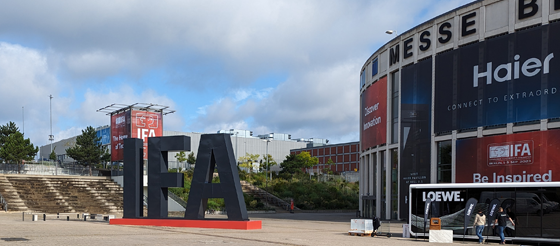
Once again IFA 2023 was the place to be seen for all technology brands and not just those from the CE category. With the show sold out across 26 halls covering 130,000 sqm of exhibition space, filled by 2059 brands from 48 countries, there is no other show that competes. IFA 2023 affirmed its position as the de facto CE showcase, forecasted to host 180,000 visitors from 144 countries over 5 days.

The fact that we have witnessed all markets contract in every category, shrinking by an average of 7% and in particular CE which is down 12.4% globally. The EU market outlook is looking increasingly positive at a more palatable contraction of 4.5% year on year. No doubt this is making the rest of the world a bigger problem for those whose presence is not as prevalent in the EU market, compared to other brands. The economic reality is that the globe is in a  Polycrises, a simultaneous occurrence of several negative global events such as war, extreme weather events, food and energy Inflation which is compounded by increased Interest rates and social unease, unsurprisingly stops people from spending. Therefore the need for a brand to increase its voice rather than remain silent is critical and to do this with a new perspective. Doing so through a new lens that better understands the pain points consumers are experiencing and appeals to the user’s pleasure points. Perhaps achieved through ethical practices, practical time and cost-saving innovations that help ease the pain on a macro level, rather than add to the global situation. That’s why IFA as a cultural hub, is so much more than an exhibition, its place is essential to the industry as the centre stage for the globe’s CE brands not just to brag but to demonstrate how to solve the problems we share as we coexist on this planet. Making IFA a core ingredient in the evolution of the consumer electronics industry.

All brands, big and small, were in attendance with 350 of those 3059 brands being CE startups from across the globe. These included all manner of concepts and categories and there were several robotic floor care startups displaying and showcasing, however, one that caught my imagination was Dreame’s Revolutionary Flagship Robotic Vacuum L20 Ultra with Industry First AI-Driven Mop Extend™. Which is definitely worth a look. However one of my most memorable chats was with the haircare brand SharkNinja and its ultra compact SpeedStyle hairdryer. The irony is, as a follically challenged man, I’ve not owned a hairdryer for 30 years yet I was enthralled by its functionality, design and huge potential consumer appeal, it’s going to be a Christmas wish list essential item.

The themes were consistent across every manufacturer and focussed on Sustainability – Renewables – Connected by AI and  Premium. Let’s start with the latter as while aspiring to be a premium brand is admirable there, in relative terms, there can only ever be a few brands who genuinely sit in the category otherwise it defeats the terminology of ‘premium’. It’s down to the consumer’s perception of what constitutes premium based on how much they are prepared to pay for your products and brand. What you and I may think of as being premium may well not be the view of others and is likely to vary greatly, depending on whether you’re Gen Z or Gen X.

These generations and to be fair, everyone now, wants quality as standard and brought to them at a reasonable price, as well as being produced ethically in all aspects including the manner in which those products are brought to market. Whilst GfK expects the global CE market to still be in the red by the end of this year, the trend is for consumers to replace appliances, as home tech becomes increasingly more innovative, making even those devices and appliances of five years ago look exceptionally dated in look and functionality. Today many want technology which most now consider commonplace in the home, not luxury or the unattainable.

Almost all appliance brands included smart connectivity in their product line-ups presented at IFA 2023, which enables you at a basic level of connectivity, to control your appliance from your phone, hub or television. Personalisation is the next step in the development of your smart home where you can not only change the panels and the lighting of your cooling appliances such as the LG MoodUP Instaview Freezer but also create your own wash program and save it as your personal wash cycle as LG have also done as part of their wider LG THINQ UP 2.0 concept. Taking cooking to new levels of perfection as Haier has done with the ID series featuring a unique style and the exclusive Bionicook technology. With the ID Series, you can not only view what’s cooking in your oven with its built-in camera but also see it on your phone or TV and the built-in screen on the oven’s facia. It’s opening up the options for personalisation in your home tech to meet the needs of the household to a unique level of personal satisfaction.

Combine this with AI, assisting in noting your trends on laundry, cooking and cleaning, which enables it to update the software on your connected appliances as you would update the apps on your phone or tablet. The AI functionality improves the efficiency of, for example, a more effective wash cycle so that it uses less energy while still giving you a great wash thanks to the connectivity and the hOn app which allows users to get the most out of their Candy Machine. Increasing innovation and enhancing sustainability credentials which for many brands also extends throughout the entire product, and not just its materials. With almost all brands now adopting a policy where a percentage of all products are made utilising recycled materials and not just its packaging. At the forefront of this message was both LG and Samsung who were championing this throughout their product categories. Taking the initiative a step further, linking these credentials into the aspirational brand qualities, which many consumers are now looking for in a true premium brand.

So what’s different this year is that people are asking more questions and drilling down on the specifics. While 74% said they will search online before buying, search data also shows sustained growth in terms containing questions — up 25% compared to the past three years during the same period — and searches for “which is best” and “where to buy” continue to garner momentum in the shopping category on Google Trends. Those searching online, we know like to shop in-store when it is a considered purchase. So make sure you feature on that where to buy ist.

Whilst the wealth of bands at IFA 2023 were vast, you could not miss one brand in particular whose branding adorned the neck of almost everyone with its very clever lanyard sponsorship. That brand was Hisense who was this year, IFA’s headline sponsor and gave the opening keynote delivered by its Global President,  Fisher Yu whom also announced the brand’s sponsorship of the Euro 2024 Football tournament due to be held in Germany. When you are a brand that not only makes TV but also appliances and applications, it’s easier to integrate your devices and with VIDAA at the heart of the ecosystem, Hisense products and its fellow brand stable mates can integrate via the VIDAA interface making the TV in your home, the hub of the household that connects your smart home ecosystem. Making the screen the focus of your living space where you control your appliances around the house via your Smart TV. With ViDAA now in 180 countries and connected to 22 million devices, the task for Hisense is perhaps slightly easier than it may be for other brands in the CE sector. Coupled with the shift from content to services the next step is how to monetize this conversion and its integration with responsive and predictive AI, to further enhance the user’s experience and lifestyle. Easier done when you own the platform and make the devices it connects to.

It’s fair to say that the outlook for retailers is exciting with increasingly more innovation in all categories and an enhanced social responsibility tone that now takes on many more subject matters. These include AI and sustainability which are now common parlance in the sales approach by brands to their target consumers, old and new. For those amongst us who ignore the trends that come out of IFA, do so at some risk, as these trends will inevitably become standard messaging across every category and brand within the year, not the distant future. It’s crucial for the success of all within the industry to embrace, understand and develop these trends to create meaningful consumer conversations.

To read the published article written by Dan Todaro, Managing Director please visit ERT

Tagged , , , , , , , , ,

Are pop-up shops marketing gold or is it time to fold?

Pop-up shops are literally popping up everywhere and they’ve been hugely popular with consumers, but can you have too much of a good thing?

And does it still work as a good use of marketing spend or is consumer fatigue setting in?

The Guardian today reported that pop-up shops have increased by 18% this year, no doubt fuelled by the plethora of empty shops around the UK and available at accessible rates.

But are they still working for brands? When there’s so many, do they drive intrigue, awareness or bring in incremental revenue, or have we reached a point of consumer fatigue?

Pop-ups require significant investment, so it’s crucial to think about the objectives you need it to deliver. If it’s purely an exercise in increasing sales, you may be sorely disappointed.

If your pop-up is in a high footfall area, it’s more likely to increase brand awareness and if your business doesn’t ordinarily have a high street presence, it can elicit valuable feedback on your product or brand.

And of course, pop-up shops are also a great way to create talkability and shareability on social media, offering consumers and influencers the ability to create eye-catching content that will see your brand splashed across their channels.

But to achieve this and avoid consumer fatigue, your pop-up needs to be more than just a shop. It needs to be creative and novel, relevant and aligned with popular culture, and add value to the everyday customer experience.

Inspired creativity

Think about how to pack a punch for your brand with collaborations that are creative, add that novelty factor and give customers an experience they can’t get elsewhere.

We saw this in the Summer with Anya Hindmarch’s The Ice Cream Project. Instead of hosting a pop-up shop to sell handbags, Anya Hindmarch came up with the idea of creating exclusive ice creams using her favourite cult food brands including Heinz Tomato Ketchup, Lea & Perrins and Coca-Cola.

Linking back to her village and café, it was clever, novel and had people queuing round the street. It had that all-important talkability and shareability, which raised awareness of the Anya Hindmarsh brand in general and the creativity at its heart.

Link to popular culture

In June we worked with sports lifestyle brand ’47 on a pop-up in Soho, just in time for two Major League Baseball (MLB) games coming to town.

With the increased awareness of the MLB, ’47 was perfectly primed to welcome fans of the US sport, giving them another way to soak up celebrations beyond the ballpark.

With no UK store, it was timely, relevant, and it fulfilled the unmet appetites of US fans living in the UK as well as Londoners intrigued by the spectacle coming to their city.

Plus, with the start of the NFL season in September the ‘47 pop-up is getting a fresh surge in custom.

Be timely

Ensuring that there is appetite for the type of pop-up shop you have in mind is essential. Do you have customers who will come out specifically for your pop-up?

Does the trend or pop-culture moment you are linking with have enough fans? If your audience will not be excited by your pop-up, it’s time to think again.

Recently, we saw SHEIN, the global fashion brand, opening a pop-up shop in Birmingham with queues weaving around the Bull Ring.

The brand has exploded in popularity, and it was the first time that consumers had been able to physically engage with the brand in the UK, offering them something new, and the added awareness and talkability created demand from new customers – the hype was immense.

It is particularly sad to see an empty pop-up shop – and if you don’t have the audience or creative for the experience to go viral, then you need to invest in creating the demand yourself with additional marketing.

This adds to the cost, so it is important to understand what you are trying to achieve and what success would look like in terms of ROI before you commit.

To read the published article written by Dan Todaro, Managing Director please visit MediaShotz

Tagged , , , , , ,

The collaboration advantage: A new frontier for competitive businesses

When the going gets tough, the tough get going and businesses are having to dig deep right now. Whether it’s big businesses like FANGs (Facebook, Amazon, Netflix, Google) or start-ups – we’re seeing the business economic model in full swing. Lay people off, put more pressure on those staff that remain because of squeezed costs and paddle as hard as you can to keep your head above water.

As the saying goes, a problem shared is a problem halved, so why aren’t we tackling more of these challenges collaboratively? Collaboration is nothing new, but when we think about it within a business context, it’s often talked about as a people strategy – how do we get people to work better together to improve our outcomes?

So how can we work better together as businesses to do the same, especially within SMEs? If we look at this cross-sector – retail, FMCG, technology etc – there will be thousands of businesses investing money in the same things, whether it’s R&D, resource, product innovation, supply chain, marketing, national/international expansion, or business process.

Change the narrative

We need to encourage collaborative discussions to happen and change our language. Often when businesses meet, it’s one selling to the other, rather than enhancing the narrative of how can we help and elevate each other.

If we look at the way we physically work these days, with so many more shared offices, there’s never been more of an opportunity to collaborate. According to Statista, the volume of flexible office workspace in the United Kingdom is expected to have nearly doubled between 2019 and 2023, reaching 167 million square feet in 2023.

However, if you walk into a WeWork, TOG or similar managed building, I wonder how many businesses are collaborating rather than just sharing a physical space? We need to be bold and brave – if you don’t ask, you don’t create opportunities and facilitate a group culture that goes out and gets.

Never rely on Government

We’ve seen how ineffectual the Government really is at supporting businesses to flourish, particularly SMEs, including the hike in corporation taxes, failure to reduce business rates or even introduce an online sales tax to level the playing field with the likes of those registered offshore.

So where do we look and how do we take the initiative? Perhaps industry trade bodies can do more to support and, let’s be honest, almost every sector has one. Many are great at celebrating success, offering training courses and providing a forum for solving industry problems but they could play a far greater role in bringing organisations together in a commercial, rather than a ‘club’, approach to help solve their individual problems.

Ask your trade body to create a collaboration work stream and be the one to set it up. You may only need to ask one question and there might be someone right there, right now, that could save you a lot of money. It’s a way of moving from a competitive advantage to a collaborative advantage. We can all learn and win that way.

Start simply with finance and marketing

Sharing just one thing could make a big difference so start simply. Sharing financial and admin resources is an easy route into collaboration. But I really think SMEs are missing a trick when it comes to sharing marketing costs. Marketing is the budget that SMEs always wish they had more of – more visibility often means more sales – yet it’s the one that gets squeezed the most in turbulent times. I think there are so many ways for businesses to do this.

Social media brand collaborations on platforms like Instagram have opened new audiences for SMEs. Think about how you could partner up with a like-minded brand for a ‘real-world’ marketing campaign. It will make media far more accessible if you share the cost, for example, of an out-of-home campaign.

An SME doing this really well is the cereal brand Surreal. The brand is looking to disrupt the cereal space and recently partnered with like-minded businesses Numan, Cheesegeek and Gymbox for a throwback to Daft Punk in an online mock-up ad. Four simultaneous ads read ‘Harder, Feta, Faster, Stronger’ for those in the market for erection medication, online cheese, high-protein cereal, and an unconventional gym brand. It was super fun, and engaging, created a huge amount of talkability and was cost effective too!

If you’re purely an online brand, think about creating a collaborative pop-up shop that will drive in-person trials for your brand and product. Do it collaboratively with complementary brands that alone could never afford to be on Oxford Street. Yes, the busiest shopping street in the UK, is achievable.

If you’re on the high street, why not create a marketing committee that maybe works alongside your local Business Improvement District (BID) and challenge them to do more than just turn on the Christmas lights? Retail is 365, not just for the holidays. Get everyone to work together to fund a local marketing campaign, it could be a discount Wednesday or a 10% off day every month at every door irrespective of the retailer, independent or multiple.

There’s no doubt that collaboration comes with challenges but, if you pick partners wisely, with the same goals, culture, and values, it could be just what you need to develop and thrive in today’s tough economic climate.

To read the published article written by Dan Todaro, Managing Director please visit Business Leader

Tagged , , , , , , ,

‘Inevitable’ fall of Wilko explained – ‘atrocious’ online to ‘ghost ship’ stores

“They were occupying an ex-Woolworth’s size store with 2,500 square feet, if not bigger, and paying excessive amounts of rent, excessive amounts of rates, with very little support from the government,” Daniel said. “The average basket value was low and they were never going to make a huge amount of money as margin, when you consider all of their overheads including salaries.

“But they didn’t appeal to a mass audience and they didn’t make themselves known to a younger audience, who ultimately probably would have enjoyed shopping there on the basis that it would have fitted in with their budget, but it just did not appeal to them in that way. It puts shoppers off to walk into a giant store that is half empty. They could have sectioned off 500 square foot of the store and put everything in there to create a more appealing shopping environment rather than feeling like you were in a ghost ship.”

But it was ultimately their failure to have a strong online presence that left Wilko ultimately vulnerable, Daniel added: “Their online offering was atrocious, it was appalling,” Daniel said. “In the space of nine months, they borrowed 105 million pounds. Was there no consideration of that money that they borrowed to help develop that online proposition and create a new audience. You have to question where did this money go?

“As an organisation, they were struggling to appeal to a certain demographic, couldn’t sell enough of their low-end products to make enough margin to keep these stores going – so did no one think about investing part of that to just develop some kind of online proposition?

The general demise of the high street also played a big part in Wilkos downfall with the loss of big high-street stores such as Debenhams, which entered administration twice throughout its 242 years but finally collapsed for the final time in 2020. Other big high street losses included Sir Philip Green’s retail empire, Arcadia Group, which included brands such as Topshop, Topman, Burton, Dorothy Perkins, Miss Selfridge and Evans. It fell into the hands of administrators in 2020, under the weight of a £750million debt pile. Another brand previously owned by Sir Philip Green and one of the most famous on the street, BHS, had fallen into administration a few years before in April 2016.

“Once one starts to fall, it’s a domino effect for town centres because if they’re not drawing that portfolio, then it’s very difficult to draw somebody to the town, park up and wander through,” Rick said. “Then there’s the demise of the town where a lot of people were saying that it’s dirty and people were generally being put off because the shutters were up, the wrong people were in the towns, and its demise was setting in from the big boys leaving those locations. It’s just generally been a slow strangulation of the High Street and when one goes its a domino effect.”

Daniel agreed, adding: “Wilko was never a destination store – you didn’t come into town to shop at Wilko, you wandered into Wilco after visiting the bank or going to M&S or the post office. Debenhams’ loss decimated certain towns where it was literally the anchor store in the most prominent position in the high street. Part of their downfall was that there wasn’t the footfall. The high street needs help, not just from the government and local council, but from responsible retailers too.”

When the pandemic hit in 2020, people were forced to use online to order shopping and deliveries, only hammering home Wilko’s failure to make it online. “Places like Wilko had the benefit of a broad offering of toothpaste, pet food and everything, but their model is where the problem lies and instead people went to places like Asda online and got there, instead of the high street,” Rick said. “Wilkos didn’t have its foot in the market early enough for it to capitalise on it when things started to go wrong.”

Even when the cost-of-living crisis hit, Wilko, as a budget high-street store, may have been expected to survive – but there were other competitors out there. Rick explained: “Places like The Ranch have sprung up over the years and been able to give Wilko clients an offering not only just in store but online.

“In these times, it’s about sifting the wheat from the chaff and inevitably those that are strong, and have good contingencies and can weather the storms will always prosper out of this. But unfortunately Wilkos from one reason to another reason, to another reason just couldn’t weather this type of storm.”

For Wilkos’ former employers, Daniel said he hopes they are redeployed into other stores, but in reality, fears they will “fade into the rest of the unemployment figures”. This, he says, is only more reason why the government needs to get involved in saving the high street.

“Do you really want another lead wave of redundancies happening on your High Street, which is then going to further impact your entire local economy and what it costs the taxpayer to then support them?” Daniel said. “This is a very short sighted view that this government is taking that will actually cost more in the long run than if you had done something to support the High Street and to help the high street thrive and survive, as opposed to letting it die.”

To read the published article written by Dan Todaro, Managing Director please visit Mirror

Tagged , , , , , , , ,

Display Systems

Over the years, retail display systems have undergone significant transformations, driven by advancements in technology, evolving consumer preferences, and the need for retailers to create immersive shopping experiences. In the past, retail display systems primarily consisted of basic shelves and counters where products were neatly stacked or arranged, but lacked the ability to capture consumers’ attention. In today’s world, retail displays aren’t just about enticing shoppers to come in-store. Instead, they’re about drawing attention, displaying information, and setting products apart from the competition. With fewer people watching traditional TV, in-store displays also need to do the extra work of informing and selling to potential customers.

Retailers can integrate digital displays, interactive screens, and even augmented reality (AR) elements into their fixtures, which allow for dynamic content presentation, enabling retailers to communicate the unique features and benefits of a new product or brand in a more engaging manner. They can showcase product videos, customer reviews, and engaging content, fostering a deeper connection with consumers.

In the world of considered purchases, using tech well can add to the experiential and immersive experience that shoppers increasingly expect from their high street visits, helping to engage and excite consumers. Retailers such as John Lewis are striving to meet this need, with new concepts presented at their Horsham store earlier this year, including a “wonder trial” interactive treasure hunt and a Clarins express skin service, to provide a ‘multi-sensory one-stop destination for fashion, beauty, tech and home design’. Visually appealing and shareable displays are also highly effective for generating ‘hype’, allowing retailers to capitalise on social media and influencer marketing to amplify the excitement around a new product or brand. Shoppers are more likely to capture and share their experiences on social platforms, effectively spreading the word and generating organic buzz.

To read the full article by Rupert Cook, Business Development Director please visit A1 Retail

Tagged , , , , , , , ,

Smarten up!

When the CEO of BT’s Consumer Division, Marc Allera, announces that the average UK household will contain 50 connected devices by 2023, it’s a sure-fire signal that the smart home sub-sector will continue its growth trajectory and still has some boom opportunities for retail.

In the context of the ever-increasing cost of living, Energy Savings Products within the smart home category are pivotal to many, especially when lots of consumers are looking for ways to save money. Features from timed switch-on to smarter regulating, whether this is for water or heating, are amongst the many features devices such as these offer a cost-conscious consumer.

So, with an estimated 57 per cent of Britain’s homes having a smart device, it makes the UK smart home industry worth approximately £7 billion per annum. Revenue is expected to show an annual growth rate of 12.08 per cent, resulting in a projected market volume of £13.05bn by 2027.

So, this category is definitely one worth considering! For those who know, Matter-enabled products are the future and will enable increased growth across the smart home category. With the Matter initiative and its implementation across future smart tech, it will allow users to unify with one app their product from brands with unique ecosystems, which could result in more than one purchase in-store as the consumer is not tied down to a single ecosystem, thus able to shop around to meet their budget. So, for example, if a customer wants smart lighting, they could choose a brand like Philips alongside a more budget-friendly option to save money.

This development in the evolution of smart products is revolutionary, if you take the example of Security Products to which a consumer will usually connect multiple devices, e.g. a doorbell cam, a camera or security lighting for your back garden and decide to get a smart a door lock, you are no longer tied down to get this and other products from the same brand. In general, not all smart security devices aren’t part of the initial roll-out of the Matter protocol, however, the products will still likely benefit from an uplift in interest thanks to greater interoperability.

As a category, smart security revenue is expected to show an average growth of 11.83 per cent, resulting in a projected market volume from £900 million to £1.41 billion by 2027.

GfK recently commented: “Smart devices generally have benefited from consumers’ drive to create simplicity in their home lives. Intruder security devices, sales of which have grown strongly since the start of the pandemic, now increasingly offer smart connectivity with smartphones and the home ecosystem, enabling users to detect whether or not they have a window open, for example, and then adjust the heating accordingly.”

With the ease of use and flexibility of installation becoming easier, it’s no wonder its popularity is increasing. The convenience factor offered is a huge draw, as well as the peace of mind such devices can give. A doorbell camera for example can give a new perspective to your front door area while also showing some great comedic moments from guests. Most new build homes are smart and therefore when upgrading your current property, smart devices are now a normal feature in the wish list and it is obvious to see why, when we as a nation use smart speakers and smart heating devices as the most popular devices in our homes, with 79 per cent of owners of smart home tech having one or both of these.

When training retail staff and creating messaging around the smart category, it’s important to address consumers’ concerns as speculation or hearsay may deter some shoppers who are keen but reticent.

As identified by YouGov, when it comes to the reasons that non-owners have not considered buying any smart home devices it’s due to security fears. About 39 per cent of respondents stated that security fears are their biggest concern, representing the greatest barrier to a consumer’s entry into the category. The second barrier is cost with 36 per cent that they do not have any smart devices for this reason, a reason that any retailer with the right display and knowledgeable staff can overcome at the point of purchase.

To read the full article by Dan Todaro, Managing Director please visit ERT Online

Photo by John Tekeridis on Pexels

Tagged , , , , ,

The Power of Influencer Marketing in Retail: Reaching and Engaging Target Audiences

In today’s digital age, where social media has become an integral part of our lives, influencer marketing has emerged as a powerful tool for businesses to reach and engage their target audiences. The retail industry, in particular, has embraced this strategy to harness the power of influencers and leverage their influence over consumers. In this blog post, we will explore the remarkable impact of influencer marketing in retail, focusing on how it helps brands effectively connect with their target audiences.

Building Authenticity and Trust:

One of the key advantages of influencer marketing is its ability to establish authenticity and trust. Consumers today are more likely to trust recommendations from individuals they admire and follow on social media than traditional advertising. Influencers, with their dedicated followers, have cultivated a sense of authenticity and credibility, making their endorsements more genuine. By partnering with influencers, retail brands can tap into this trust and leverage it to engage their target audiences effectively.

Expanding Reach and Visibility:

Influencers have built a loyal fan base, often consisting of thousands or even millions of followers across various social media platforms. Collaborating with influencers allows retail brands to tap into their extensive reach and gain exposure to a broader audience. By featuring products or promoting campaigns through influencers, brands can rapidly expand their visibility and brand awareness, ultimately reaching a larger pool of potential customers.

Targeting Niche Audiences:

Influencers come in various niches, catering to specific interests, demographics, or industries. This diversity allows retail brands to pinpoint and engage their exact target audiences effectively. For instance, a fashion brand can collaborate with a fashion influencer whose content aligns with their brand values and appeals to their target customer base. By leveraging influencers’ expertise in niche markets, retail brands can strategically tailor their messaging and product promotion to resonate with their intended audience.

Driving Sales and Conversions:

Influencer marketing has proven to be a potent driver of sales and conversions for retail brands. When an influencer recommends or endorses a product, their followers are more inclined to consider purchasing it. Influencers often share unique discount codes or exclusive offers, creating a sense of urgency and incentivising their followers to make a purchase. Moreover, influencers’ engaging content, such as unboxing videos, product reviews, or style guides, can inspire and convince potential customers to convert, leading to increased sales for retail brands.

Creating Engaging Content:

Influencers are masters at creating captivating and engaging content. Their ability to tell stories, produce high-quality visuals, and connect with their audience on a personal level makes their content immensely appealing. By collaborating with influencers, retail brands can leverage their creativity and expertise to develop compelling and authentic content that resonates with their target audiences. This content not only boosts brand awareness but also encourages engagement and fosters a sense of community among followers.

Influencer marketing has transformed the way retail brands connect with their target audiences, offering a powerful tool to reach and engage potential customers. By harnessing the authenticity, reach, and creativity of influencers, retailers can establish trust, expand their visibility, target niche audiences, drive sales, and create engaging content. As the digital landscape continues to evolve, influencer marketing is expected to play an even more significant role in the retail industry, shaping consumer behaviour and driving brand success. To stay competitive in the market, retail brands must recognize the power of influencer marketing and harness its potential to connect with their target audiences effectively.

Tagged , ,

An Experience Worth the Effort?

For consumers, a trip to your store has to be worth the effort, time and expenditure, offering an experience that surpasses the convenience of simply buying online from the comfort of home. As a retailer how far do you go and how much do you invest to meet these needs, especially considering the current economic conditions.

It’s worth noting that from a macro perspective, things are not all doom and gloom. People are shopping and spending. The latest ONS data showed positive results for retail with a surprisingly large rise in retail sales for the month of February, the result marking the second consecutive month of industry growth. Volume sales were up by 1.2% against forecasts of 0.2% and once again shows the resilience of the UK consumers against an unrelenting cost of living crisis.

Hopefully this positivity isn’t just a blip, but even so, it’s fortunate that in the ERT world of ‘considered purchases’ – purchases made with significant financial or emotional thought – there is simply no match for the timeless ability of an in-store experience to engage all the senses and stimulate sales. This is particularly the case for consumer electronics and home appliances – categories with products that often require a high spend and technical questions that need to be answered as well as having to fit in with our homes and lifestyles.

True experiential retail as a strategy goes further than this though and could be defined as an approach where physical retail spaces offer additional experiences beyond browsing or buying products. It directly engages customers, inviting them to experience your brand live and in-person. Pop-up events, masterclasses, brand takeovers and hosting community events are all examples of experiential retail that may or may not work for you.

What is undeniable though is that customers now expect more. Research in the US  found that 91% of consumers would be more inclined to purchase a brand’s product or service after participating in a brand activation or experience, and 40% felt they become more loyal to the brand.

Retailers and brands have gone to great lengths to meet these expectations. Blowing the budget earlier in the year was luxury brand Louis Vuitton who transformed stores across the world for the launch of its collection with artist Yayoi Kusama. Stores such as Harrods were redecorated with Kusama’s signature polka-dots and life-like animatronics of Kusama painting in the windows of the stores!

On a slightly less grand scale, ERT has reported several times on how John Lewis has refurbished several stores to create “inspiring spaces to showcase products, experiences and services”. And this year they plan to trial a multi-sensory experience at its Horsham store. This is all great and hopefully it helps strengthen their position on the high street. However, what, in my opinion, can potentially detract from the desired effect is that it is often difficult finding a member of staff to talk to, something made all the more challenging with the no uniform policy.

People really do count when it comes to the overall retail experience. After all, this is a trump card that physical retail has over online channels. Indeed, Gekko’s latest research shows that 42% want to be able to engage with knowledgeable shop staff. It’s therefore surprising to see great looking and no doubt expensive Meta Quest virtual reality demo gaming areas in stores that are cordoned off from shoppers because there is no staff presence. If ever there was a category that needs to be experienced by shoppers before they buy into it, it’s VR.

So how can all this be applied to independent retailers selling consumer electronics and domestic appliances? Unforgettable, mind-blowing experiences that go viral on TikTok are generally going to be the preserve of big city flagship stores like Harrods. What is a realistic expectation is to play to your strengths both as an individual business and a physical retailer. As highlighted above, your staff are vital. Good old fashioned customer service is still fundamental to the retail experience. The research also showed that for 60% of shoppers cite a pleasant retail environment is an important factor to a great retail experience.  For 47% of those surveyed, the top reason for in person shopping versus online is the ability to try before you buy.

Most of you will already be offering this kind of experience for your customers but take the time to regularly reassess how you’re meeting these shopper desires. Moving with the times is essential though. What has worked in the past with your older customers won’t necessarily appeal to younger generations who have different expectations. But whoever the customer, the experience they receive in your store must be worth their while.

To read the full article by Rupert Cook, Marketing Director please visit ERT Online

Tagged , , , , , , , ,

How Luxury Retailers Can Boost In-Store Sales This Spring

Despite ongoing inflation, the retail sector in the UK is showing improvement, with like-for-like sales rising 4.9% in March, according to BRC/KPMG. With this extended bank holiday season upon us, there is more of a spring in the step for retailers. A recent survey we commissioned of 2,000 consumers found that 13%, equating to 9 million adults, are definitely planning to hit the physical shops, presenting luxury retailers with a meaningful opportunity for sales uplift

To take advantage of this opportunity, retailers need to create a shopping experience that is truly focused on the customer. 60% of respondents in the survey cited a pleasant environment as an important factor in a great retail experience. Luxury retailers should, therefore, ensure that they offer a pleasant in-store experience, starting from the moment the shopper walks in. 

This can be done by creating an immersive journey towards the checkout with creative displays and merchandising. All of this should be backed by product availability, highlighted promotions, and all-around first-class customer service. Staff should be readily available on the shop floor, and queues at the till should be kept to a minimum.

To combat inflation, promotions are vital, with 59% of respondents in the survey agreeing. Luxury retailers should ensure that they are competitive with online channels and have promotions visible and clearly marked up to entice hard-pressed consumers to open their purses and wallets.

In our survey, 42% of respondents cited engaging with knowledgeable shop staff as a key reason for their visit. Luxury retailers should, therefore, ensure that staff is well-trained and ready to answer questions. A well-trained expert can be worth their weight in gold, particularly with considered purchases. This will leave a positive imprint encoded on the memory of customers.

One of the top reasons given for in-person shopping versus online is to try before you buy (47%). Luxury retailers can play to their strengths here by effectively merchandising their products and encouraging customers to engage in a tactile journey of discovery. It is crucial to have the right expert on hand to assist the process, with all the senses of the shopper engaged in a truly immersive physical experience that will lead them towards the checkout.

The modern retail experience is underpinned by sociability, combining a trip with meeting friends and dining. Retailers and brands need to complement this by providing an environment that is sociable and luxurious, offering dining experiences, and other events that are relevant to their luxury brand. 

By creating a luxury experience that extends beyond the purchase, retailers can build customer loyalty and enhance the overall shopping experience for the customer.

To read the full article by Dan Todaro, Managing Director please visit Luxury Advisor

Tagged , , , , , , , ,