Tag Archives: Gekko

The do’s and don’ts of a second interview

interview banner

Second interviews are not always essential – I have made successful hires from first interviews, having identified and assessed the key traits and experience I wanted the candidate to demonstrate at the first stage.

However this is often not the case; despite utilising experienced interviewers who probe in all the right places, second interviews are an ideal opportunity to ensure you are hiring the right candidate to fulfil your role by assessing them further. There is also the added advantage of being able to set tasks to challenge the candidate, such as presentations or case studies if appropriate.

The opportunity of a second interview is one most candidates are delighted to have. At this stage, you believe you have a selection of the highest calibre of candidates in the market to choose from. Do not then make the mistake of forgetting you are there to impress too.

Ensure you are fully prepared by taking note of the following do’s and don’ts of a second-stage interview:

  • Do set expectations. Candidates should be made aware that they are not the only individual selected to attend this stage (if this is indeed the case). Some candidates wrongly assume they have made a sufficient impression and that they are a shoe in for the job. They need to be aware that there is competition, and will then try even harder to impress rather than acting overly confident.
  • Don’t have the second interview at the same time of day as the first. On occasions this may not be possible if a candidate is meeting you on their lunch break. However it is an ideal way of assessing the candidate’s behaviour at different times of the day.  If your second interview is at 9am, is the candidate as prepared as they were if the first interview was at 2pm?  Were they on time or stressed by the traffic or their commute? In addition, holding interviews at this time as well as a 4.30pm interview will allow the candidate to see what the commute will be like to and from work on a daily basis – is it as they thought it would be?
  • Do invite different interviewers to attend. These different people do not have to be a manager or a senior appointment, but colleagues in a similar role as you are interviewing for as they can give great insight, views and opinions. They can sometimes offer more accurate answer to questions the candidate may ask about the day-to-day duties of the role. It will also give the candidate the opportunity to see who they will be working with as part of the wider team.
  • Don’t forget it’s your turn to shine. Do not leave all the impressing to the candidate. At this stage, candidates are making their decision too, such as  ‘will I get on with this person as my line manager?’ and ‘is this role and this company where I see my next career move?’. You must pre-empt questions that the candidate may not address with you. Make sure you have discussed every necessary detail of the role as well as promoting yourself and the company.
  • Do repeat some questions. You don’t want to be sitting in front of the same candidate repeating yourself, yet if you ask the question at the beginning of the first interview, ‘why are you leaving your current role?’, and then ask the same question more casually at the end of the second interview, chances are there will be a different answer. At this stage you will have built a relationship with the candidate; they are more at ease and willing to share more with you than they did when you first met as strangers.
  • Don’t leave any stone unturned. Some of the most valuable time spent in a second interview is addressing any concerns you had after the first stage. Have your questions prepared to address these; if you are not in attendance yourself, share these reservations with colleagues who are. Each interviewer must have their own personal opinion of the candidate, however it is essential that they are aware of your feedback – be honest. If you don’t highlight a concern now at interview stage, three months later you may be re-recruiting.
  • Do show the candidate around the office if possible. Introducing them to the team is not always appropriate, but allowing them to see any facilities in the building that may be attractive or particularly beneficial to them (e.g. parking, canteen, games room) and a brief tour of the office they may be working in will help them feel more comfortable about deciding whether your company is right for them.

It’s decision time – don’t get to this point without being able to make one. Preparation, effective questioning, along with self and company promotion are key to a successful second interview and an accepted offer of employment.


Read more at: http://www.hrzone.com/feature/recruitment/dos-and-donts-second-interview/144077

Tagged ,

How to write a great job advert

Real-Business copy

A job advertisement, unless it’s for a well-known brand, is the first impression that candidates will get of your business. It is therefore crucial that your company’s advert makes a good impression at the start of the candidate journey.

The advert must attract quality talent and to do so it must paint an accurate picture of the role, specify the experience and traits you require from your future employee and entice the reader to apply by highlighting what sets your role apart from similar roles at other companies, in order to encourage candidates to make the next step.

The headline

When advertising a job online, consider the job title or simple headline that your intended candidate is likely to search for. This will maximise the chance of candidates finding your advert and attract higher levels of traffic.

The job title being used internally in your business might differ from how candidates would refer to it, or not commonly used in the wider industry. Without a relevant job title, your position might not be found by prospective candidates, or in the event that it is found, confused candidates may click away from the page. Ensure your advert can be found and will attract attention from the people you want.

Don’t recycle

If your recruitment campaign is based on an existing role the easy option is to re-use the last advert which may well have proven successful. Although tempting, the chances are the job and the industry will have evolved considerably. Instead, start from scratch to create a brand new job advertisement that is fresh and contemporary.

Who is writing the job advert?

Do not fully rely on your HR/Recruitment department to create a job advert. Although they can offer valuable guidance on what content will attract candidates, if they are not working in the role you are recruiting for they are only basing the core content on what they believe the role involves.

The prospective line manager should be involved in the creation of the advert, and any input from an employee currently in a similar role will be extremely valuable. This added input will ensure that the advert accurately describes what the role involves.

Build interest

Before you finalise your job advert, consider the reader experience. Your advert should not be an exhaustive list of tasks the role involves; instead, make it an overview of the role itself. It is important to avoid listing too many requirements as candidates who may not tick everything on that list may not apply, meaning you may lose an otherwise perfect candidate.

The advert must engage and excite candidates whilst reflecting company and brand values – ask a number of different people in the business to read it and gather opinions and feedback.

Detail the salary and package

Include a salary bracket in order to attract the right level of candidate for your business. By not specifying salary, you are potentially wasting time reviewing applications from candidates of all levels. Save your time – and theirs – by setting the expectation at this stage.

Don’t forget to detail added benefits that may entice candidates to apply: is there a bonus, car allowance, gym membership, or free parking? Let the reader know by detailing added extras – each candidate is motivated by different benefits.

This is the start of the recruitment lifecycle; getting the initial job advert wrong will prevent a successful and smooth running recruitment process. Follow these steps to create the best possible job advertisement to represent the role and your business.


Read more at: http://realbusiness.co.uk/article/27426-how-to-write-a-great-job-advert

Tagged ,

How to make the most of the induction process for new employees

growth business banner

Sarah Mandeville, recruitment manager at Gekko, gives her tips on what must be done early on to ensure new staff are welcomed and then retained.

The induction process is the first step in the right direction to staff retention. Your recruitment team and hiring managers are likely to have invested much time, effort and cost to ensure a talented individual has been selected to join the company, and it is therefore imperative that the initial welcome and induction is productive to ensure a successful hire.

Each new employee should be treated as an individual, not a number: create a detailed, tailored induction plan and make your new starter feels welcome and part of the team from day one.

 
Planning
Dedicated time should be spent in planning an induction in advance of an individual starting. When planning, involve anyone who may have had a relationship with this person at interview stage, as well as colleagues they will be working with long term.

Identify what needs to be covered, prioritise, and ensure anyone taking part knows what they need to discuss so as not to repeat information. Create an introduction folder or something similar containing any essential documentation they are likely to need, not only in the first few weeks but on an on-going basis.

 
First impressions count
Yes, this person has accepted an offer to join your company, however mistakes in the early days could prevent them from staying. Go back to the very basics from how to answer the phone and transfer a call, to where to find the toilets and water coolers.

These minor details often get forgotten; make people feel comfortable in the building so they don’t just feel like a visitor. Ensure their desks and equipment have all been set up, and if being re-used are they in good working order and most importantly clean?

 
Adapt your plan along the way if required
Having spent time with a new employee, you will get to understand their learning styles. After the first couple of days, review the induction to see if any changes need to be made and if so perhaps moretailored to their needs.

Something you may have planned to take three hours may only take half that time if the person picks it up quicker. Likewise they may need to focus more attention on other areas, and therefore you must adapt as necessary.

 
Prepare existing staff
Inform colleagues (not just the immediate team they are working in) that there is a new starter so they can all make them feel welcome. Give existing employees an introduction to the new team member before they start, helping relationships develop more quickly. Ensure colleagues who are inducting have dedicated the time to do so in their current work schedules and are able give the new starter their undivided attention.

 
Don’t overwhelm
Aspects of the role or company that are essential for the employee to know may not be necessary to discuss in the first couple of weeks; can it wait until a person is settled? Sitting through presentations with departments they won’t have any involvement in for a few months are not necessary in the initial induction period and may well be forgotten by the time it is relevant.  Reschedule for a later date when the employee is settled.

 
Allow for reflection time and review
An induction can consist of so much information meaning it can be counterproductive if there is no time to allow the person to take it all in. Allow some time every day for them to review what they have been taught, and inform them of what they can do in any other spare time as and when the opportunity presents itself.

Introduce documents they can revise in this down time, show them where they can look on the intranet or how to find and review case studies etc. At the end of the induction programme invite the employee to review the induction with their line manager. Allow this to be in an informal setting so the employee can feel comfortable in being honest, and so any concerns or plans for action can be addressed from either side.

A new starter satisfied with their first few weeks in the role will lead to a long term employer/employee relationship. This all starts with the induction: it is important that the new recruit does not get lost in the business of our day today roles – give them your full attention and make them a success.

Tagged , , ,

How London businesses can hang on to their world class workforce

london skyline banner

As someone who runs my own business, there are two bits of research that have caught my eye in the past few weeks. Individually, neither is particularly dramatic, but when combined they represent a real challenge for London businesses.

 
The first is the latest report from High Fliers confirming that the median starting salary for top graduates has stuck at the same level since 2010. From 2004 until then, it grew roughly in proportion to the growing cost-of-living. Yet owing to the downturn the figure has stagnated four years in a row.

The second stat – which should make some businesses nervous – is that rental prices in London have increased to such an extent that the average London rent (£1,348/month) is now more than twice the average rent in the North East (£520/month). It’s a worrying situation when the brightest young talent are being offered a diminishing quality of life if they choose to work in London.

It only takes a quick check of any jobsite to see that there are some great companies offering competitive salaries for jobs in the North East. It isn’t sustainable for businesses to continue to assume the brightest young grads will keep throwing away so much of their income on London rent, when they could be living the high life away from the capital. Businesses need to give their employees the confidence and security they need to stay.

One of the many reasons some of the brightest workers are attracted to London is because of its innovation and creativity. Yet employers need to ensure they’re applying this innovation and creativity to how they motivate and retain their staff. It’s great to offer pension schemes, life insurance and gym membership as enticements to your staff where many other businesses still don’t.

However, to attract the best workers, businesses need to make it feasible for their employees to remain in London and not lose them to more affordable areas. Living in London is a delicate balance, and there are two main ways that businesses can help their employees

 
1. Lend employees their rental deposits

Even the cheapest shared accommodation in London can reach £650-700/month, and landlords often demand a deposit of six to eight weeks rent. This means that companies hoping to hire the brightest and best graduates fresh out of university are expecting them to have nearly £1,500 in the bank. Companies should therefore soften the blow of their employees moving to the city by loaning them their deposit, to be repaid over the course of their first two years. There’s little risk to the company, as the amount would be roughly a month’s salary, which can be withheld if anything goes wrong and the employment is terminated. Such an offer would help to entice the best candidates to apply, and demonstrate the value you place in supporting your workforce. Companies who can’t afford to pay all the deposit up front for their employees can still make a loan contribution. With London prices so high, every little helps.

 
2. Subsidise their ‘me’ time

It isn’t just having somewhere to live that’s so expensive in London, day-to-day living adds up too. With a strong work-hard play-hard ethic, many Londoners need to find the time to relax, or risk burning out. It’s in everyone’s interests for employers to get involved in this. Many firms already subsidise or pay for gym membership. Yet to go one step further, it’s crucial that employees take time out to recover, reset and recharge. Companies who contribute to their employees wellbeing with a leisure allowance – a contribution that might go towards tickets for the theatre, football or a new art exhibition – can reap the rewards of a de-stressed and re-motivated staff whose minds are open to new forms of creativity. Immersing staff into the wealth of cultural activities the greatest city in the world has to offer enriches your workforce and its ideas: that’s the creative spirit that makes London great.

If the cost of living in London continues its rise, there’s no doubt that salary is going to become an increasingly vital criteria for job applicants. Companies who can’t compete with larger companies on salary have to be inventive and stand out with what they can offer employees. There aren’t metrics to gauge the benefits to a company of having motivated staff, but it should be high on the priority list for any business. If businesses can offer prospective employees the benefits of London life without the drawbacks, London should retain and continue to attract its world class talent.


Read more at: http://realbusiness.co.uk/article/27200-how-london-businesses-can-hang-on-to-their-world-class-workforce

Tagged ,

How to give the perfect interview – and bag the perfect candidate

londonlovesbusinessSourcing the right people and attracting talent to roles is a major challenge for any recruitment department. Here’s how to do it

Making your opportunity stand out among the thousands out there is vital. And once that CV reaches you – revealing the ‘perfect’ candidate on paper – it’s down to he or she only to deliver at interview, do the research, dress to impress and nail that presentation, right?

Wrong. You should be fully prepared to judge how this individual is right for your team, business and clients – and make the right decision to hire.

1. It’s in the meet and greet

First impressions count. The handshake, the smile and the overall presence – but remember to pay attention to the less obvious details too, what people say about shoes is true!  Candidates are given the chance to prove themselves throughout the time you spend with them, but ultimately it comes down to whether you would put that person in front of your MD, clients and customers presented as they are at their best – the interview.
2. Stop when you’ve seen enough

A short interview isn’t always a bad interview. Interviewers often make the mistake of clock watching, trying to make sure they fill that one hour session. Don’t do it, just stop when you’ve seen enough! Don’t waste your time or theirs if you’ve made the decision and it’s not going to work. And if they demonstrate the skills you’re looking for in a short space of time, be careful not to fill time by asking irrelevant questions and going off track as this could put candidates off.
3. Address the clichés, numbers, hobbies and interests

That opening paragraph on a CV can read like a long list of carefully selected adjectives, while the key achievements sound incredible. Break those words and numbers down: “UK’s top sales professional”, out of how many people? “Grown sales 51% since last quarter”, how exactly has this been done? More specifics please. Hobbies and interests are important to the cultural fit, but remember to explore them further, ensure the candidate hasn’t exaggerated by going into the finer detail.  If they “love playing golf”, what is their handicap? And if they haven’t put any interests down, ask. You’ll appeal on a more personal level that way, which is particularly important when remembering the below…
4. You are there to impress too

Don’t let your hiring manager run to an interview, grabbing a CV off the printer on the way, not briefed by the person who selected the candidate to interview. You need to sell not only the company, role and work culture, but also sell yourself as their line manager or direct report. Inform them of your background and let them know what they can learn from you personally. What can you offer them that other employers can’t? Tell them about the workplace culture and practices whether – it be complementary breakfast, flexi time, monthly company days out or free parking.  Share, you’ll be surprised what motivates people when it comes down to deciding what opportunity is best for them to take.
5. Does your interviewer know what they are doing?

When you’ve recruited a new manager or promoted within, training on interview skills are often forgotten. It may not be a priority at the time, but within days of requesting to recruit, your hiring manager could be sitting across the table from a potential future employee with no idea where to start. Introduce recruitment training sessions as an ongoing programme – don’t lose that great hire through a poor interview and lack of preparation on your part.


Read more at: http://www.londonlovesbusiness.com/business-news/business/how-to-give-the-perfect-interview-and-bag-the-perfect-candidate-/8482.article

Tagged , , ,

The Brands Losing Their Cool Factor for the Sake of Profit


viv bannerRecently Apple has been widely scrutinised in the media, with many pundits accusing the tech giant of having lost its ‘cool factor,’ and hailing its recent acquisition of Beats as an attempt by the brand to get its mojo back. This couldn’t be further from the truth. It’s a cheap headlining trick that the media knows will grab attention. Sitting on top of Interbrand’s list of the world’s most valuable brands, Apple has managed to maintain its position as an aspirational brand without ever losing its cool factor. The brand is, and will continue to be cool; what other brand or retailer would inspire consumers to queue overnight in their masses for the launch of a new product? The Beats acquisition is a good fit for Apple; the two brands complement each other and, with Apple’s assistance, Beats will also continue to reign supreme.

However, for some brands the pursuit of global domination can come at a major cost:  The loss of their cool factor and aspirational quality. It’s interesting to note how far some brands will go to increase their profits at the expense of this intangible asset and how many have forfeited their coolness in the name of commercial success.

Take for example Innocent which started out as a small ethical start-up with an innovative idea:  Get your five a day in a tasty bottled smoothie. For years, the founders waxed lyrical about the importance of getting natural, healthy foods to more people; however, as soon as a conglomerate came along with an attractive offer, they were happy to sell out in a highly-publicised deal worth an estimated £100 million. The brand charged handsomely for what consumers essentially viewed as a fashionable and strangely aspirational fruit juice. Innocent’s association with Coca-Cola, and the subsequent dilution of its signature entrepreneurial spirit, has dented the brand’s cool reputation. The acquisition swiftly led to consumer concerns about the effect of Coca-Cola’s involvement in the business and the impact it would have on the brand’s values and personality. All of this has resulted in a dilution of brand identity and raised questions about the ethical values of Innocent. The launch of a new range of smoothies from Innocent coincidently will now showcase the effect the products have on drinkers rather than just highlighting their ingredients. However, what Innocent has perhaps missed is that consumers now choose alternate, less expensive fruit-based drinks in a declining market. The take-home smoothie sector decreased in value by 2.7 per cent year on year in 2012 and it has also suffered the loss of something less tangible:  It’s cool factor.

On another note, what we wear to some people is an extension of their personality and, in the case of the luxury market, fulfills aspiration. A brand currently losing in the cool stakes of the fashion sector is American footwear brand New Balance. Once worn almost exclusively by hipsters in Shoreditch and Bushwick alike, the appeal of New Balance has now expanded to a huge new mass market audience, most of whom would never previously have considered wearing the brand. New Balance trainers are no longer regarded as a trendy item and, with every celebrity from Heidi Klum to Rihanna spotted wearing them, the brand’s signature strapline, ‘Endorsed by No One’ is certainly no longer a reflection of reality. In fact, it was reported earlier this year that New Balance is now the second most popular footwear brand on Asos.com, just behind Nike. This loss of exclusivity only serves to switch off millennials who bought the brand for niche values. While New Balance couldn’t control the rapid increase in its appeal to a much larger audience, by entering, the brand has effectively lost its niche cool factor and joins the likes of Adidas and Puma in the mainstream fashion trainers category.

Finally, who is Vivienne Westwood’s customer? Westwood, once regarded as the enfant terrible of the fashion industry, managed to create something truly unique that didn’t appeal to a mainstream audience. Westwood is rightly recognised as a bastion of fashion and a UK icon. However, by over-licensing her products, her famous orb logo is now visible on garments throughout the country and has, as a result, lost some of its uniqueness. Furthermore, her new partnership with Virgin Atlantic which sees the Westwood brand designing the airline’s new uniform, should also be called into question. How can a luxury brand retain its appeal when your first class passengers, who may aspire to wearing Westwood, are wearing the same biased cut skirt as the air hostess serving them? While some brand partnerships, like that of Apple and Beats, seem to naturally complement one another, it’s fair to say that Vivienne Westwood and Virgin Atlantic is a stranger partnership. When you consider Westwood’s stance on the environment and her work as an ambassador for Greenpeace, is Virgin Atlantic really a good fit?

When approaching a new partnership or considering a different strategic direction, it’s important to take into account the impact it will have on your brand and its reputation. Follow Apple’s lead and strive for global domination, but make sure to stay true to the values that made your brand cool or aspirational in the first place and never forget the demographic who made you great. Yes, generations choose different brands as we evolve through life; however, a brand’s target demographic, whilst perhaps getting richer, never radically changes, but rather evolves.


Read more at: http://www.brandingmagazine.com/2014/07/04/the-brands-losing-their-cool-factor-for-the-sake-of-profit/

Tagged , ,

A view from Google Glass base camp

glass banner

After much speculation and hype, Google Glass has finally landed in the UK. Many have asked why, citing that it’s pointless and you won’t buy it. You will.

The ‘base camp’ event was held on the 27 and 28 June by Google in Kings Cross. I was reliably informed it was staffed by not only event staff but also Google employees working on Glass; which probably explained hearing “welcome to the future” one too many times. For those less gregarious amongst us, it was perhaps a bit intimidating, especially when you get to the photo demo and are asked to strike four poses wearing the Glass while they take photos. Many seemed keen, I wasn’t.

glass dan display

Following a brief tutorial wearing the new enhanced Glass with a flexible titanium frame, you get to learn the gestures whilst practicing not to squint, a natural reaction to something so alien but not necessary. Despite this, I couldn’t imagine wearing the Glass for a prolonged period.

Music, translation, star gazing were all on demo as were the different styles on display, which if I’m honest, whichever way you cut it, don’t look like normal glasses. I have no doubt however that these will change and get smaller, stylish and almost invisible like contact lenses.

What’s stunning about the device is its ease of use, clarity of vision, speed and endless possibilities. We’ve all read the scaremongering articles regarding the security or privacy aspects but putting that aside, this really is cutting edge technology that will change lives. Look at a sign in Italian and see it in English, look up at the sky and see the solar system geographically correct. I’m guessing we only experienced a minutia of what this product can really do but what we were allowed to try was impressive.

So will people buy and wear it? Are Brits going to shun this innovation as many have said? In my opinion, no, and avoiding any clichés, it is the future which will set the tech industry alive and move it to the next level.  This is a new category that changes everything, it’s the next step beyond your smartphone. Google the unassuming innovator has done it again.

Tagged , , ,

2014’s most successful World Cup campaigns

Risk everything blog copy

The Fifa World Cup has begun. Brands around the globe are in guerrilla marketing mode. Here are more highlights of the best unofficial campaigns from this year’s World Cup – with one exception perhaps.

Beats: #TheGameBeforeTheGame

‘The Game Before The Game’ is a beautifully executed campaign starring Luis Suarez, Robin Van Persie and an impressive roll call of other international footballers. Each of the athletes is shown during their pre-game rituals, with music revealed as a common theme. The viral advert has clearly touched a chord with a younger demographic who are responding positively on social media. Having hit the right tone for its target audience, this campaign will go a long way to reigniting the desire for Beats products that has perhaps waned in recent months. We can expect to see a global spike in sales for Beats in the coming weeks, just what the brand needs under new ownership.

Nike: ‘Winner Stays – Risk Everything’

Nike’s unofficial World Cup advert has had more than 70 million views on YouTube and includes cameos from a whole host of prominent footballers including Cristiano Ronaldo, Neymar Jr, Wayne Rooney and Thiago Silva. The campaign coincides with the release of the brand’s latest football boot which features prominently throughout the advert. The activity cleverly combines a human touch of ‘backyard’ football with high-profile global superstars, without ever explicitly mentioning the World Cup. The campaign is proving to be significantly more prominent than ‘The Dream: all in or nothing’ advert from Adidas, an official sponsor of the World Cup. This effectively confirms Nike’s position as king of guerrilla ATL and the brand has once again scored big with high profile sportspeople and impressive levels of public engagement.

Carlsberg: ‘Fan Squad’

Another unofficial advert stealing the spotlight this year is Carlsberg’s ‘Fan Squad’ campaign. The spot portrays the perfect World Cup viewing conditions based on market research which asked fans what could ruin their experience while watching football at their local pub (e.g. size of the screen, queuing for drinks). Starring high-profile figures including Ian Wright, Paddy McGuinness and Jeff Stelling, the campaign focuses on their personalities and charisma rather than their star power. And by putting the match in the background and focusing on the collective experience in the pub, Carlsberg has successfully tapped into the shared experience quality of the World Cup. The advert is designed to position Carlsberg as the ‘beer of choice’ for England fans during the World Cup in a clear attempt to undercut Budweiser as the official beer of the tournament.

Visa: ‘Jamaica to Brazil: from athlete to footballer’

However, not all of this year’s official sponsors are being overlooked by their unofficial counterparts. Visa’s ‘Jamaica to Brazil from athlete to footballer’ campaign featuring global sprint legend Usain Bolt is possibly the most memorable piece of activity overall. The entertaining advert shows Bolt making his way from a Jamaican athletic track to the Maracana stadium in Brazil where he sneaks onto the pitch at the start of a match. Along the way the icon becomes immersed in Brazilian football, transforming from an athlete to a footballer with every online, contactless, and mobile purchase. The campaign is simple, clever, effective and memorable with huge brand recall; absolutely pitch perfect from the official World Cup sponsor.

Guerrilla marketing is becoming more and more sophisticated across all media, but now those official brands that have paid handsomely to be at the forefront of people’s minds will get four weeks of uninterrupted promotion. Their logos and messaging will be displayed across the electronic hoardings and on our screens during every match broadcast to a global audience of millions. That exposure, reinforced by any supporting ATL activity, will achieve the high brand recall desired by the sponsors; converting this into sales is the tricky part that brands must get right at the point of purchase to avoid guerrilla brands stealing too much of the market share.

Read more: http://wallblog.co.uk/2014/06/12/2014s-most-successful-world-cup-campaigns

Tagged , , ,

Will Google Glass arrive at retail or is it just a beautiful PR stunt?

Image

We simply cannot escape talk around Google Glass. It’s as ubiquitous as the Beckham’s and their PR allure. Ever since Google Glass hit the media, I feel like it’s an established and viable product as modelled by the curly-haired model in the original promotional photo, which the media are still using.

But despite years of buzz, the consumer is still no closer to adding the glasses to their ever-expanding tech kit. So is Google Glass just a clever PR stunt that refuses to give up, or are we set to see the product reach the hands of those who matter, the consumer?

Google Glass seems to have been everywhere but the shop shelves. Diane von Furstenberg used the product on the catwalk at New York Fashion Week, while Virgin Atlantic has tied up with the brand for flight crew to check in passengers on selected trans-Atlantic flights.

Brands want to build partnerships with this newsworthy, futuristic piece of innovation and why wouldn’t they when Google Glass is experiencing a media frenzy? It’s exposure on a scale any business desires, singling out its brand through association as the future now.

But no one has had more positive brand awareness than Google itself, which is why this could all be a bubble about to burst. There are many barriers the brand has to overcome before it’s ready for public consumption.

It is heavily tested and commented on by the BBC’s Technology Correspondent Rory Cellan-Jones, who states: “So far, I’m intrigued by the possibilities that Glass offers, but not convinced that the user interface is up to scratch.”

Doubt clouds Glass sceptics as to the viability of the product in the face of increasing privacy rules and pressure on Google to respect these rules. Even in preliminary testing phases, Google Glass has opened a Pandora’s Box of legal concerns. If it does become the next big thing in wearable technology, what are the ramifications for intellectual property and personal privacy when somebody can secretly film or take a picture of you with, literally, the wink of an eye?

It’s now standard practice to see all manner of things documented online by people when using one hand with a mobile phone; what will happen when they are given glasses that make it possible for them to be recorded with two hands? Google responded by making modifications that would make this harder to do, but hackers will be only too happy to quickly find ways around those measures.

A report out highlights the fears consumers have over privacy issues pertaining to the product. It was found that 72 per cent of Americans cited privacy concerns as the biggest reason for not wanting to wear Glass. Those polled were especially concerned about the possibility of hackers accessing personal data and revealing personal information, including location information, Adweek reported.

That’s not to say I don’t applaud Google for this extravagant teaser campaign. It’s been executed extraordinarily well and it has built up a buzz and anticipation that may explode into fireworks or a flame, leaving us wanting more, but when’s the launch date?

If it does indeed arrive into the retail space, I can only imagine it will be a watered down variant of the present. But the fact that Ray-Ban sunglasses maker Luxottica announced last month that it has sealed a strategic partnership with Google over its Glass eyewear surely only adds fuel to the fire of concerns over privacy intrusion.

Imagine sitting on a train opposite someone who appears to be wearing a regular pair of Ray Bans, when really they’re analysing your data – it’s just not acceptable in a democratic society. Or has democracy gone full circle where the insistence on knowing everything has now come to threaten our right to privacy?

Nonetheless, this innovation, in which ever form it manifests itself, will eventually land in a retailer near you (I hope) and it will need investment in dedicated, knowledgeable brand representatives who can create the right consumer engagement with those cost conscious shopper tribes. This must be a priority if they are to make a connection with consumers and help them understand how this innovation works to enhance their day-to-day lives, to leave them with a memorable impression of both the product that will lead to a sale.

Whether Google Glass comes into the retail space or not, one thing is for sure: this has been an unstoppable PR masterpiece.

Read the full article at http://www.pcr-online.biz/news/read/blog-will-google-glass-arrive-at-retail-or-is-it-just-a-beautiful-pr-stunt/033797

Tagged , , , ,

The top 5 wearable technology gadgets in 2014

Image

Wearable tech is already one of this year’s hottest trends. Are you dressed to thrill?

If the headlines dominated by the latest and greatest smart watches and activity trackers following last month’s Consumer Electronics Show in Vegas are anything to go by, 2014 is set to be the year of wearable tech. Wearable technology is changing the way we communicate, exercise, socialise; and in many ways is enhancing the way our society operates. From fitness-tracking bracelets to smart ski goggles, Daniel Todaro, MD at field marketing agency Gekko, writes for us about the five wearable tech gadgets of this year that you would be happy to wear and use…

1.Fitbit Force

Image

Fitbit Force, the latest standout offering from Fitbit, is a hyper designed and developed wearable fitness tracker. The subtle wristband displays daily stats, steps taken, calories burned, distance travelled as well as allowing the users to easily log food intake, sleep patterns, and even health information like glucose levels and blood pressure. The device can also easily be synced with a smartphone app or through a wireless dongle for PCs.

Expected to go on sale in the UK in the spring, we can expect the Fitbit Force to fly off the shelves.

2.Pebble Watch & Steel
Image
Launched towards the end of last year in the UK, the Pebble has gained a large following in a relatively short space of time.

This waterproof smartwatch is designed to display messages from an iOS or Android smartphone and can send users notifications when they receive an email. Simple and stylish, the Pebble can be purchased in red, orange, black or grey, and comes with a removable 22mm watch strap. Alternatively the Steel is a great-looking wristwatch with top-end construction.

With an impressively long battery life and easy-to-use buttons, I suspect both Pebble variants will be huge in 2014.

3.iWallet
Image
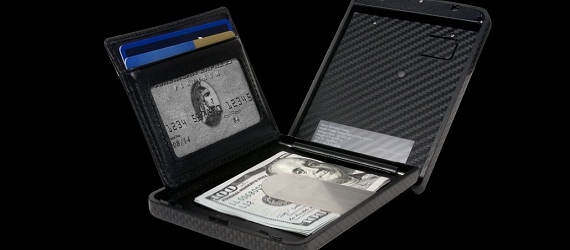
Perhaps one for the most security conscious out there, iWallet is a revolutionary biometric locking wallet that protects personal information, cash and cards using the latest cutting edge technology.

What’s the standout feature? If the user’s iWallet and smartphone are more than 10 -15 feet apart, the phone will sound. Pickpockets beware.

4.Epson Moverio BT-100 smart glasses
Image
Another potential game-changer on the market, with transparent lenses and Wi-Fi connectivity, these smart glasses allow you to update your social network accounts, catch up on the latest news and watch videos online while still being able to see your surroundings. With the Android™ 2.2 platform and a 4GB SD memory card, you can choose from a whole host of viewing options, such as MPEG 4 and H.264 videos, to watch content wherever you want.

The smart glasses offer a big-screen experience equivalent to a 320-inch display viewed from 20 metres away. The ‘control-at-your-fingertips’ touch-sensitive track pad means you can effortlessly navigate between menus and find exactly what you’re looking for.

This is the perfect hands-free alternative to small smartphone and tablet PC screens.

5. Oakley Airwave Ski Goggles
Image
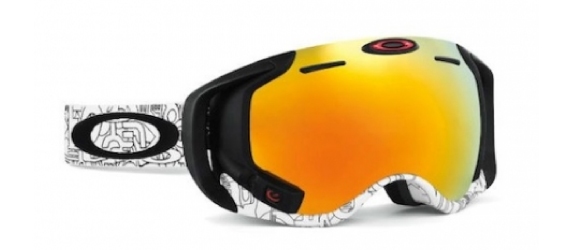
These ski goggles allow gadget-obsessed skiers and competitive adrenaline junkies to stay connected on the slopes. Sitting at the bottom of the left goggle lens, the technology senses and shows a range of speed and distance metric notifications, including buddy tracking, navigation, music and iOS/Android smartphone synching so you can view incoming calls and text messages with low energy Bluetooth connectivity.

Packaged with everything you expect from Oakley, the goggles include anti-fog technology, dual-vented lens designed to keep vision clear, 100 percent UV filters and Iridium lens coatings to to balance light transmission.

Daniel Todaro, MD at field marketing agency Gekko

Read the full article at http://www.londonlovesbusiness.com/business-news/tech/the-top-10-wearable-technology-gadgets-in-2014/7519.article

Tagged , , , , , , , , , , , , , , , , , , , , , , , , , , ,