Tag Archives: Field Marketing

Why millennials are ignoring the environmental impact of online shopping

The Drum Blog

As high street retail continues to deplete and more people shop online, increasing to 19% of all retail sales in December 2019, a new report by retail marketing experts Gekko shows there’s increasing consumer concern about the environmental and societal impact of this transition and a marked difference in attitude depending on age.

The younger generation may tout their eco credentials but they are more easily lured into wasteful spending and shopping online with over half (53%) of 18-24 and 46% of 25-34 year olds admitting to being tempted into buying things they don’t need online, with just 19% of canny 55+ year olds saying the same.

More than five times as many 18-24 as 55+ year olds admitted to regularly buying goods online that they regret, so return them – 17% versus just 3%. And 45% of 18-24 and 42% of 25-34 year olds also admitted to being wasteful buying items they didn’t want and failing to return them, compared to only 17% of older consumers.

Surprisingly and despite the high profile of Extinction Rebellion and Greta Thunberg, younger shoppers make less conscious choices than some may think about the environmental impact of online shopping versus older consumers. In general, 73% of consumers are concerned about excess packaging associated with online purchase and deliveries and 74% are worried about the amount of single use plastic in packaging.

However, just over a third (38%) of 18-24 and 33% of 24-35 year olds are unconcerned about the use of excessive packaging. This compares to 19% of over 55 year olds. And despite it being such a huge national issue and talking point over the last year, 34% of 18-24 year olds and 31% of 24-35 year olds aren’t concerned about single use plastic, versus 19% of over 55 year olds.

Even the gig economy does not seem to be a problem for the generation arguably most likely to be more exploited by it, with 50% of 18 to 24 years olds unconcerned about online shopping increasing it versus 33% of 55+ year olds. And 44% of 18-24 year olds don’t fret about the impact on the High Street and local economy of online shopping, versus 23% of 55+ year olds.

According to Daniel Todaro, MD of Gekko: “Younger generations spend more time online and are therefore less inclined to resist that impulse buy. They are far more likely to buy things they regret, order more than one size, items they never intend to keep and send the goods back, but this convenience has an environmental impact.

“The future of the High Street is a vital societal component and offers a more ethical approach to shopping. If you can try before you buy there’s less transport, packaging and waste without the need to order multiple sizes or colours of the same item. The High Street sustains the heart of a community, no shops means no point heading to the High Street – there’s only so much coffee a community can afford or want to drink.”

Please visit The Drum to read the full article.

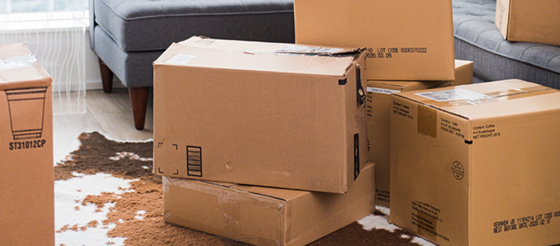
The photo that accompanies this article is by Mister Mister from Pexels

Tagged , , , , , , , , , , , , , ,

Do millennials ignore the environmental impact of online shopping?

gekko-retail-marketing-new-gekko-survey-finds-the-majority-of-shoppers-have-returned-to-stores

As high street retail continues to deplete and more people shop online, increasing to 19% of all retail sales in December 2019*, a new report by retail marketing experts Gekko shows there’s increasing consumer concern about the environmental and societal impact of this transition and a marked difference in attitude depending on age.

The younger generation may tout their eco credentials but they are more easily lured into wasteful spending and shopping online with over half (53%) of 18-24 and 46% of 25-34 year olds admitting to being tempted into buying things they don’t need online, with just 19% of canny 55+ year olds saying the same.

More than five times as many 18-24 as 55+ year olds admitted to regularly buying goods online that they regret, so return them – 17% versus just 3%. And 45% of 18-24 and 42% of 25-34 year olds also admitted to being wasteful buying items they didn’t want and failing to return them, compared to only 17% of older consumers.

Surprisingly and despite the high profile of Extinction Rebellion and Greta Thunberg, younger shoppers make less conscious choices than some may think about the environmental impact of online shopping versus older consumers. In general, 73% of consumers are concerned about excess packaging associated with online purchase and deliveries and 74% are worried about the amount of single use plastic in packaging.

However, just over a third (38%) of 18-24 and 33% of 24-35 year olds are unconcerned about the use of excessive packaging. This compares to 19% of over 55 year olds. And despite it being such a huge national issue and talking point over the last year, 34% of 18-24 year olds and 31% of 24-35 year olds aren’t concerned about single use plastic, versus 19% of over 55 year olds.

Even the gig economy does not seem to be a problem for the generation arguably most likely to be more exploited by it, with 50% of 18 to 24 years olds unconcerned about online shopping increasing it versus 33% of 55+ year olds. And 44% of 18-24 year olds don’t fret about the impact on the High Street and local economy of online shopping, versus 23% of 55+ year olds.

According to Daniel Todaro, MD of Gekko: “Younger generations spend more time online and are therefore less inclined to resist that impulse buy. They are far more likely to buy things they regret, order more than one size, items they never intend to keep and send the goods back, but this convenience has an environmental impact.

“The future of the High Street is a vital societal component and offers a more ethical approach to shopping. If you can try before you buy there’s less transport, packaging and waste without the need to order multiple sizes or colours of the same item. The High Street sustains the heart of a community, no shops means no point heading to the High Street – there’s only so much coffee a community can afford or want to drink.”

To read the full article please visit BDaily.

Tagged , , , , , , , , , , , , , , , , , , , , , , , ,

Independent retailers: It’s tough at the top

Gekko Retail Marketing Female Tablet

As all retailers know, seeing in a new year is not the time to put your feet up and relax, it’s a time to reflect on what’s worked, how to survive the January sales without giving stuff away and think about how to keep winning in 2020. There’s a whole heap of independent retailers thriving so let’s take a few moments to sprinkle a little new year magic and hopefully inspire even more to success.

When independent retailers are thinking about customers, store, product and marketing it can be overwhelming, let alone trying to apply innovative thinking to tried and tested strategies. I’ve consciously taken price out of the equation – we all know it’s impossible for independent retailers to compete on price with the behemoths like Amazon – so value for money, reflected in customers, store, product and marketing – not the cheapest should be the mantra of independent retailers. So how do independent retailers do this?

Let’s start with customers. Independent retailers should know their customers better than any multiple retailer ever can. Do you know what they are buying and when and if not, you should be seriously asking yourself why? And if you do know, are you fleet of foot enough to be agile with your merchandising strategy in order to stock the goods that your customers want?

Advanced technology solutions aren’t what’s needed here, your POS will be able to provide basic information about your customers and all you need to do is let your team do the talking and stalking.

Listen, talk to and watch your customers and learn from their behaviour. When was the last time you asked your customers what type of products they’d like to see in the shop? How would they improve the shop? Making the customer feel like it’s their shop is something the larger brands can never do – and use that to increase product sale through. And think about whether your customer service is worth bragging about! Remembering what your customers bought is the start of a rewarding relationship.

Do everything you can to turn your shop into a destination and take inspiration from what the larger brands are doing, especially in their concept stores. Your shop needs to be an enjoyable experience with an element of discovery every time your customers go there. You wouldn’t eat at the same restaurant multiple times if the menu never changed. If you are selling electrical goods, people want your expertise and experience to buy products they know will be fit for purpose.

Sell the solution and impart practical advice rather than just selling products in isolation. Obvious, but something an online experience can’t replicate. Make sure you know your products and the market and that you communicate this intimate knowledge to potential customers – they don’t know what they aren’t told – and provide an environment in which they feel welcome. Even if it’s a small shop, there’s still no reason why you can’t provide two chairs and a coffee machine to encourage people to sit down and discuss with you their needs – again, increasing sale through and customer loyalty.

And then there’s the marketing strategy, and I don’t just mean ‘brand’ – you all know that a consistent brand experience is important for brand re-call. This is where I think independent retailers have an opportunity to think bigger.

We asked 2,000 UK adults if they thought independent retailers should collaborate to come up with innovate ideas like sharing shop space and marketing costs to cut down on their individual overheads and 73 per cent thought it was a great idea. Every shop on the high street is in the same position, yet despite the current challenges each is still operating in silo.

Get to know your neighbours, seek collective advice and behave like a group rather than individual businesses. Collaborate to organise customer events as well as on marketing drives to reach a wider audience. Joint special events, discount schemes and offering a local delivery service and recycling throughout the year, not only at key times, will all help in developing your customer base.

Independent retailers are the beating heart of our communities and have a huge amount to offer. Collectively helping each other to apply some innovative techniques will hopefully improve the fortunes of many.

To read the full article please visit ERT.

Tagged , , , , , , , , ,

Live the Experience and Feel the Brand

gekko-retail-marketing-smart-home-tablet-phone

Henry Matisse once said “creativity takes courage” and we’ve certainly seen a lot of creative bravery from brands that now have an incredible marketing canvas on which to paint. It’s a great time to be a marketer, leveraging opportunity and enabling people to immerse and engage in what a brand has to offer. And this has seen some incredible business transformations, with brands rising out of the ashes to new-found fame whilst others find themselves, sadly, unable to capitalize.

Let’s take Gucci, for example, and think about where it would be without social media. Partnerships with the upper echelon of society and celebrities were no longer cutting it – Gucci is a beautiful, classic, heritage brand that had lost its relevance. But wait a few years, bring in the influencers, and Gucci is massively cool again. If Billie Eilish wears it, then who am I to judge?! And, of course, this is all backed up by expensive, gorgeous, and glamorous ATL activations.

However, one thing that these currently successful brands all appear to have invested in is the ‘brand experience store’ — and bringing marketing to life on the shop floor. If you’re going to buy a Gucci handbag that you see on Instagram, Facebook or TV, you’re certainly going to want to touch and feel it before you buy it. For some people, it may be like buying a high-street bag but for others this purchase will be a naughty bit of extravagance or a once-in-a-blue-moon treat.

Creative brand artistry needs to live in the ‘real world’ for consumers and to maintain longevity for a brand. Consumers need to be able to feel, see, touch, and engage with a brand and its products to truly buy into it, not just for one purchase. So, with brick and mortar retail struggling globally, it’s important that we hero its role for brands, consumers, the community, and society in general. In the UK, 78% of purchases are still made in physical retail — a figure that astonishes most people.

Retailers may have axed 85,000 UK jobs in the last year, according to the British Retail Consortium, and yes, it’s tragic, but a lot of the blame lies with those brands that didn’t have the agility to reimagine their business models quick enough, with too many stores and not enough experience. But juxtaposed against this — and interestingly alongside fashion and beauty brands which you’d expect — it’s the ‘technology super brands’ doing brand experience really well. The exact brands you think would shy away from a traditional retail presence are sharing their creative artistry and putting the customer experience at the core of their strategy.

Brands like Samsung, Microsoft, and Apple have invested heavily in their experience stores in prime retail sites. These stores are cool and innovative — mixing retail and leisure — showcasing full product suites, curating ambiance with luxury lounges, and most importantly ‘talent’. Those people who work on the shop floor, greet your customers, represent your brand and product portfolio every day and who drive sale through your product by creating interactions that are rewarding for everyone.

It was recently reported in The Times that Amazon, once deemed as fully responsible for the demise of the high street, is discreetly building a team of British property experts amid speculation that it will expand its physical presence. So, if the most successful online business, whose Amazon Go and Whole Foods brands are examples of physical retail, believes in bricks and mortar as part of their commercial strategy, then surely everyone else must?

It becomes too easy to believe the self-fulfilling prophecy that online shopping is perfect, and the high street is a busted flush. So, the moral of this story? Brands can spend as much money as they like creating extraordinary marketing artistry, but at some point this has to live in the real world, with real brand advocates in-store, selling your products, making the tills ring, and giving the customer an experience worth coming back for and spreading the word. People are never going to stop shopping on the high street; It’s just the way and where they are doing it that has changed. Retail, as an industry, is vital to the global economy, so as we enter a new era of brick and mortar retailing, my advice to brands is: Always let consumers ‘live’ the experience and feel your brand.

To read the full article please visit Branding Mag.

Tagged , , , , , , , , , , , , , , , ,

Can collaborative retail save our high streets? Consumers urge independent retailers to merge to survive

Gekko Retail Marketing Tech Wearable

New research from Gekko has revealed that 73% of UK consumers think independent retailers should collaborate.

The ‘Collaborative Retail’ report features comments from over 2,000 UK adults, and has found that many believe independent retailers should “think creatively and work together” to avoid going to the wall and revitalise beleaguered high streets.

In the report, nearly three quarters said they think independent retailers should collaborate to come up with innovate ideas like sharing shop space and marketing costs, cutting down on their individual overheads. Most popular ideas for shop collaborations included independent shoe and clothing retailers, favoured by 71% of consumers, followed by book shops and cafes 68% and bakeries and greengrocers 65%.

Top reasons given by consumers for suggesting collaborations are supporting the high street (64%), supporting local businesses (63%), choice (56%), convenience (52%) and an enhanced shopping experience (48%).

Alongside collaborations, nearly 90% of consumers thought it was important large national retail brands roll out their new store designs and concepts to regions other than just the major high street destinations. Over 50% said they would visit their local high street more if brands did this.

Nearly three quarters (70%) of consumers said they were concerned about the impact of online sales on the high street and the local economy, but felt that the high street still had a major role to play with benefits such as ‘try before you buy’ (62%), browsing and leisure (55%), buy and takeaway (51%) and the opportunity to visit multiple shops (40%).

“We cannot just sit back and watch our high streets continue to degrade. Our research clearly shows that UK consumers are worried about the future of the high street and the impact its demise will have on their communities. They would love to see more independent retail collaborations and believe this is a very exciting way to inject life back into the high street and it does make sense,” commented Daniel Todaro, MD of Gekko.

“However, this approach to retail requires new and imaginative ideas from Government that support the legal and financial infrastructure of such initiatives. Our high streets do have a lot to offer so Government and retailers need to work together to make it an enticing proposition and lure people back.”

To read the full article please visit PCR.

Tagged , , , , , , , , ,

Does black Friday give consumers a real bargain?

Blog

When Black Friday began to be embraced by marketers in 2013, initial efforts focused on instore, one-day only events. Since then, there are far fewer reports of hordes of shoppers breaking down doors and a greater effort to create multi-day, omnichannel campaigns.

This year was predicted to have a strong showing. The CBI reported that sales volume is expected to increase and the Centre for Retail Research expected UK shoppers to increase their spend by 3.4% compared to last year, up to £2.53bn. Initial data shows that those expectations are being met: at its busiest, Barclaycard reported seeing 1,184 transactions per second during Black Friday itself.

As part of our work at Gekko, we monitor how retailers approach and execute promotions like this to better understand and advise on the market. Ahead of Black Friday 2019 we saw that far from being a single day event almost everyone started their campaigns at the start of the week, and peaked with a push over the Black Friday weekend with limited additional discounts and promotions.

We closely monitored the Black Friday pricing strategies across eight different retailers in the UK and Ireland, recording the items and prices offered over the week before Black Friday. Across those retailers, we saw a big launch at the start of the week, an increasing number of items being put on offer as the week progressed, then a drop in availability as particular deals went out of stock.

Tracked Black Friday discounted products 2019

Blog 1

Discounting on the day itself didn’t prove to be particularly significant. Of the 2909 items we tracked that were available to purchase on Tuesday 26th and still available at the end of the week, just 321 – 11% – were cheaper on Black Friday. 10% were cheaper than on the Wednesday, and just 6% were cheaper than on the night before. In the main, shoppers looking for a bargain could have purchased at any time during the week and would have been unlikely to see their purchases cheaper later on regardless of the store.

Of those 321 tracked discounts, TVs, laptops, and mobile phones made up almost half of the additional discounting, with scattered flash pricing on hot items like AirPods making up much of the rest.

Product categories of items cheaper on Black Friday than earlier in the week, 2019

Blog 2

But don’t be fooled by the data here. Although 23% of the extra discounts were on TVs, only 16% of all TVs we tracked were cheapest on Black Friday itself. For everything else, the Black Friday price was the same price as the rest of the week. And though we saw some variation on prices for specific items from retailer to retailer throughout the week, Black Friday is so sensitive that prices were very similar if not identical as retailers ramped up their price matching.

Although we expect data released and compiled over the next week to show that online took a bigger proportion of the Black Friday and Cyber Monday spend this year, a battle on price isn’t the only option open to brands and retailers. This year we saw an increased push of AR product viewing by both Amazon and Currys PC World, and our online analysis showed brands partnering with retailers so that consumers could talk to a brand ambassador remotely. This is an attempt to mimic the experiential marketing that we have seen work so well in-store, and it’ll be fascinating to see how this develops in future.

The photo that accompanies this article is by Artem Beliaikin from Pexels

Tagged , , , , , , , , , , ,

Will collaborative retail save our high streets?

Gekko Retail Marketing Female Health and Fitness

Independent retailers should think creatively and work together to avoid going to the wall and revitalise beleaguered high streets, according to a new report ‘Collaborative Retail’ commissioned by retail marketing experts, Gekko.

In the report, which interviewed 2,000 UK adults*, nearly three quarters (73%) said they think independent retailers should collaborate to come up with innovate ideas like sharing shop space and marketing costs, cutting down on their individual overheads. Most popular ideas for shop collaborations included independent shoe and clothing retailers, favoured by 71% of consumers, followed by book shops and cafes 68% and bakeries and greengrocers 65%.

Top reasons given by consumers for suggesting collaborations are supporting the High Street 64%, supporting local businesses 63%, choice 56%, convenience 52% and an enhanced shopping experience 48%.

Alongside collaborations nearly 90% of consumers thought it was important large national retail brands roll out their new store designs and concepts to regions other than just the major high street destinations. Over fifty per cent (56%) said they would visit their local high street more if brands did this.

Nearly three quarters (70%) of consumers said they were concerned about the impact of online sales on the High Street and the local economy, but felt that the high street still had a major role to play with benefits such as ‘try before you buy’ 62%, browsing and leisure 55%, buy and takeaway 51% and the opportunity to visit multiple shops 40%.

Daniel Todaro, Managing Director of Gekko, comments: “We cannot just sit back and watch our high streets continue to degrade. Our research clearly shows that UK consumers are worried about the future of the high street and the impact its demise will have on their communities. They would love to see more independent retail collaborations and believe this is a very exciting way to inject life back into the high street and it does make sense.  However, this approach to retail requires new and imaginative ideas from Government that support the legal and financial infrastructure of such initiatives. Our high streets do have a lot to offer so Government and retailers need to work together to make it an enticing proposition and lure people back.”

To read the full article please visit IPM Bitesize.

Tagged , , , , , , , , ,

Could collaborative retail save our high streets? Independent retailers should merge to avoid closure

Gekko Retail Marketing Coffee Shop Male Phone

The Collaborative Retail report from Gekko looks at how independent retailers can think more innovately to avoid struggling on the high street.

The survey has revealed that independent retailers should think more creatively and work together to avoid going bust.

The report interviewed 2,000 UK adults, with nearly three quarters (73%) admitting that they thought independent retailers should collaborate to come up with innovate ideas like sharing shop space and marketing costs ad cutting down on their individual overheads.

Independent shoe and clothing retailers were among the most popular types of shops for collaborations (favoured by 71% of consumers), followed by book shops and cafes (68%) and bakeries and greengrocers (65%).

Reasons for these collaborations included consumers wanting to support the high street (64%), wanting to support local businesses (63%), by choice (56%), convenience (52%) and an enhanced shopping experience (48%).

Alongside these collaborations, nearly 90% of consumers thought it was important that large national retail brands renovated their store designs and opened up concepts in new regions rather than just in major high street destinations. Over fifty per cent (56%) said they would visit their local high street more if brands did this.

Nearly three quarters (70%) of consumers said they were concerned about the impact of online sales on the high street and the local economy, but felt that the high street still had a major role to play such as it meant consumers could try items before they buy (62%), browse leisurely (55%), buy an item and take it home immediately (51%) and visit multiple shops in one go (40%).

Daniel Todaro, MD at Gekko, said: “We cannot just sit back and watch our high streets continue to degrade. Our research clearly shows that UK consumers are worried about the future of the high street and the impact its demise will have on their communities.

“They would love to see more independent retail collaborations and believe this is a very exciting way to inject life back into the high street and it does make sense. However, this approach to retail requires new and imaginative ideas from Government that support the legal and financial infrastructure of such initiatives. Our high streets do have a lot to offer so Government and retailers need to work together to make it an enticing proposition and lure people back.”

To read the full article please visit The Drum.

Tagged , , , , , , , , , , , ,

Click and regret: Brits wasting over half a billion pounds every year online on unwanted goods

gekko-retail-marketing-how-to-benefit-from-the-forthcoming-massive-wave-of-ad-spend-tom-data-and-insight

A new report – Click and Regret – from marketing agency Gekko has revealed the shocking waste now involved with online shopping. According to the survey, £641m is the astonishing figure consumers are wasting online every year buying goods they don’t want and failing to return them.

The survey of 2,000 UK adults conducted by One Poll on behalf of Gekko reveals that 27% of respondents (equating to 12.4m UK adults) order goods online they regret buying but fail to return.

The average amount wasted every year is £51.90 per person equating to £641m overall. Nearly a third of UK adults 31% also confess to being lured into buying items they don’t want or need and 70% regularly regret buying things online so send them back.

Despite people seemingly unable to resist the temptation of spending money online, nearly half felt that the ease of shopping online fuels extensive shopping habits and 43% said they also spend more money online than they originally intended.

Although internet shopping is meant to be time efficient, a whopping 65% said they spent more time shopping online than they expected because there’s too much choice 69%, they want to hunt for the best prices 54% and they feel compelled to shop around 34%.

However, respondents also claim to be concerned about the environmental impact of online shopping with 75% worried about the excessive use of packaging and single use plastics. Meanwhile 70% said they were concerned about the societal impact on the high street and local economy of increasing online shopping.

Daniel Todaro, MD, Gekko comments: “It’s clear from this research that online shopping can be a false economy.  Although in theory we can return the goods we buy, many of us are too busy to bother, so what starts as convenient soon becomes costly and inconvenient. This results in unwanted goods cluttering cupboards, gathering dust in wardrobes or heading for landfill at an alarming rate.  With our high street suffering and many people still enjoying its benefits such as try before you buy, excellent customer service and immediate purchasing experience, people should be more mindful before they click and get out and support their local businesses, help the environment and their pockets.”

To read the full article please visit Lovely Mobile News.

Tagged , , , , , , , , , , , ,

Tapping into the booming esports market

Gekko Retail Marketing Group Selfie

In July 2019, spanning three days, the largest gathering of gamers from around the world – 40 million – took part in the Fortnite World Cup tournament. Hailed as a monumental moment for esports, the winner, a 16-year-old, took home £2.42 million. The prize sum overshadowed the £1.6 million Shane Lowry won at this year’s Golf Open Championship in Portrush. The esports industry is becoming increasingly popular, rivalling many traditional sporting events with the Fortnite tournament watched by 23,000 people in a sold out New York stadium and millions more through live streams.

This highlights how the gaming industry and its place in culture has evolved, with gamers stepping away from their own consoles to watch others play their favourite games. And not surprisingly, this is reflected in the size of the gaming market which continues to grow rapidly. According to Newzoo, there are reportedly 2.3 billion active gamers globally and 46% of those (1.1 billion) spending, the financial impact to the establishment is significant. More so with the forecasted growth of gaming from $137.9 billion in 2018 to more than $180.1 billion by 2021. Looking just at the UK, the gaming market is now worth a record £5.7 billion thanks in part to the strong foundations in place for innovative games and entrepreneurial developers.

The next 12-18 months looks set to be a very interesting for the sector with some of the big names in gaming hardware expected to reveal their next generation platforms. Expectation is that Sony, who have sold 525 million consoles since launching PlayStation in 1994, will start to ship their latest console in the second half of 2020. And of course both Nintendo and Microsoft will be in the mix too. Microsoft officially announced its next generation hardware, codenamed Project Scarlett, during its E3 2019 conference and it’s due for release in time for “Holiday 2020”.

Before that is the exciting debut of Stadia in Q4 this year which may be a potential fly in the ointment for the established gaming brands. Google’s launch of Stadia is a game-changer, and a move that will have Nintendo, Microsoft and Sony quite concerned. No downloads, no patches and no console makes this the cloud gamers dream, and Google is delivering this incredible service without compromising on graphics quality.

As Phil Harrison VP and general manager at Google stated when launching Stadia: “It’s a new generation platform, rather than a next generation platform”. In evolving the concept of platforms, rather than recreating them, Stadia will be a tough act to follow, with sharing options via YouTube, which has 63 million daily viewers worldwide, Google Assistant built in, 4K resolution games at 60 frames per second with HDR (High Dynamic Range), and a plan to support 8K resolution in the future.

The excellent features are great news to those who have grown up used to on-demand web-based entertainment, app-based games and instant updates to technology, but for generations who are familiar with buying physical consoles and games, this could be a transition they may not make because nostalgia can come into play. Owning a console and saving up to buy the latest must have game and completing it before trading it in to buy the next release, has been a pleasure to many.

The generational changes in consumers has seen Millennials identify with nostalgia and they recapture their youth through console gaming just as they have been doing for over 20 years. There is a shared enjoyment amongst social groups in getting together and playing a multiplayer game on Mario Kart on the original Wii. It’s also interesting to see how the retro gaming sector tapping into this and making headlines. Available to buy this Christmas will be a reimagined full-sized reissue of the Commodore 64.

Giving this generation a chance to either buy or play the consoles and games of their youth could open up a new opportunity for gaming retailers, because a streaming service is not great news for those retailing the hardware to eager gamers needing to upgrade to access the dream being sold by the platforms. Indeed, GAME has been battling tough high street conditions and has seen in the past three months a successful take over by Sports Direct. The British sports gear retailer said it did not believe that, as a standalone business, GAME was “able to weather the pressures that it is facing”.

Furthermore, the introduction of streaming could see the resale market suffer too, again a blow to high street stores such as GAME and CEX.

This is an evolving and exciting market with opportunities and pitfalls for the whole supply chain. I started this piece discussing the phenomenon that was the Fortnite World Cup and for retailers, this presents a huge opportunity to tap into this ‘experience’ economy and revive their fortunes by using empty high street spaces to create purpose-built gaming arenas for live gaming where the community can come together. But there’s no doubt that we’re going to see a ferocious battle between Stadia and the console manufacturers – so let the games begin.

Tagged , , , , , , , , , , , , , , , , , ,