Tag Archives: Digital Marketing

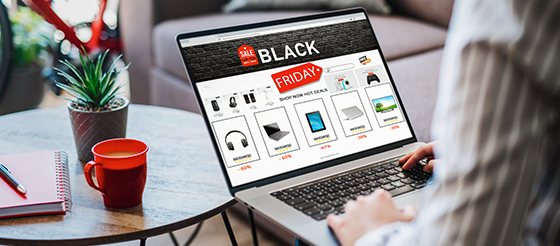
Why digital shelf analysis is the key to Black Friday success

After another year of squeezed personal finances and lacklustre sales, retailers and brands are hoping for the biggest Black Friday ever to boost sales and profitability.

Last year, consumers spent £3.45bn over the Black Friday weekend, with 66% of purchases estimated to have taken place online. With fierce competition for a share of the Black Friday pie, brands need to ensure that their digital footprint is shipshape before the frenzy begins.

Getting your house in order

While pricing is important, it is not the only thing that brands need to consider – particularly if they have big-ticket items on offer. For brands that work with multiple third-party retailers, the chaos surrounding Black Friday means that ideal positioning, product descriptions and images can fall by the wayside – but this can lead to a disjointed experience for consumers.

When consumers are faced with multiple deals and a wide range of product options across multiple retailers, consistent presentation in digital merchandising is critical for avoiding confusion. Trying to compare different but similar products – or the same products across different websites – becomes much more challenging when descriptions, specifications and images are inconsistent, potentially losing sales to brands or products which are better aligned across platforms.

Certain elements, particularly description and images, are also critical for search, so it is important to ensure that your digital merchandising is on point so that potential customers find your product in the first place.

But, for brands working with multiple retailers, reviewing and tracking how products are presented manually can be a huge – arguably impossible – undertaking, so finding a digital shelf analysis or web-scraping service that can automate part of the process can significantly help when it comes to getting your house in order.

By tracking, collating and analysing data on your products, brands can identify where standards may have slipped or information vital for consistency and searchability is missing, and approach their account managers in good time – before the Black Friday chaos begins in earnest.

Thinking beyond the self to the wider shelf

During this discounting period, competition is fierce. When it comes to analysing your brand’s digital merchandising performance, it is critical that you think beyond consistency, stock levels and presentation, and consider the whole shelf.

If you are already undertaking analysis of your brand’s positioning, consider the value of analysing the whole shelf. How do your products stack up against your competitors? Maintaining your own marketing strategy is critical, but at a time when prices are constantly changing, it is important to know where you stand.

This is where digital shelf analysis that tracks not only your own products, but the competitors can really come into its own, helping you to create a real-time competitor strategy. Combining data from web-scraping with retail expertise will enable you to respond to competitors’ activity with your own at the right time and across the right platforms.

Staying one step ahead

Third-party retailers are juggling data from all their brands, and relying on their feedback could leave you behind the pack. Everyone wants a piece of the Black Friday pie and when the chaos hits, you’ll want to be armed with real-time and past data that can help you stay consistent and searchable and reactive to competitors.

Based on an analysis of data from GWS, our proprietary analysis tool, retailers started discounting from mid-November last year – and some of the biggest deals for consumers hit before the Black Friday weekend started. Equipping yourself with actionable information will allow you to be competitive when it counts, allowing you to cut through in an increasingly fragmented and challenging environment. 

To read the published article by Toby Stupples, Client Delivery Director please visit PMW

Tagged , , , , , , , , , , , , ,

Digital shelf analysis: The secret weapon for brands this golden quarter

In Britain, 67% of consumers plan to spend the same or more than last year during the 2024 golden quarter1 so brands will need to pull out all the stops to get their slice of the pie, particularly when it comes to sales and marketing strategies.

With huge retail events like Black Friday and Cyber Monday on the horizon, plus the flurry of activity surrounding Christmas gifting, having clear visibility of online activities and transaction success has never been more crucial for brands and retailers.

Smart shelf analysis with Gekko’s GWS

Maintaining a clear overview of inventory online has become harder due to capacity and sheer volume of points of sale. Online, data analytics is transforming the ways brands monitor data about both their own products and the others on the shelf, providing insights that help improve performance and the overall customer experience.

Digital shelf analysis is a secret weapon in helping brands understand what’s working, and what’s not. New tools and enhancements like GWS from retail experts Gekko provides brands with clearer visibility of metrics from retailers such as share of voice, pricing, stock availability plus ratings and reviews, providing visual and actionable insights to enable brands to maintain market share and execute strategic marketing objectives.

GWS helps brands to monitor, manage and review e-commerce performance across selected retail platforms, gathering digital shelf data from specific retailers and presenting it back in an easy to digest dashboard. In turn, this data helps brands to understand their performance against the competition, including monitoring and reporting on sponsored positions to understand which brands are investing with which retail partners, providing crucial information to better manage strategies, partners and product listings.

By monitoring how products are presented, these tools also help to enhance the customer purchasing experience online, as it allows brands to ensure that descriptions, images and positioning is consistent across third-party retail sites. Additionally, with customer reviews and star ratings of products being some of the biggest factors in converting sales online, web-scraping assists in constantly checking and maintaining the display of this information to enhance the purchase experience, and ultimately help to gain market share over competitors.

Maintaining the competitive edge

Despite Black Friday maintaining its position as the most anticipated retail event of the year, it is becoming more diluted than ever before. Coupled with high inflation and the continuing cost-of-living crisis, brands need to secure a competitive edge.

As many consumers are now making split-second purchasing decisions based on price rather than brand preference, retailers also need to consider how they respond. Unlike other web-scraping tools, GWS offers analysis of the full digital shelf, allowing brands to track real-time competitor activity and establish a strategy to maintain competitiveness, particularly at this time of year, when costs fluctuate so frequently.

Price monitoring via e-commerce platforms can provide last minute insights for brands to track prices and share of shelf against competitors to ensure they are offering the most compelling deals and packages; a clear advantage amid the deals battles of Black Friday and Cyber Monday, and across the omnichannel strategy.

Analysing the full spectrum of shelf availability provides a great overview of stock requirements in line with demand. Additionally, it provides clear and precise predictions many months in advance of seasonal discount days, like Amazon Prime Days, Black Friday, Cyber Monday and the Christmas gifting season.

Stamping out the competition for success

With this in mind, the best way to get ahead is to plan ahead. Having a full view of a product’s retail landscape and that of its competition provides brands with the information needed to negotiate with retailers for better pricing and placement throughout the year – but it is vital during the golden quarter.

Competition from other retailers and brands limits how successful traditional calendar events like Black Friday can be. So, brands need to get a leg up on the competition by taking a holistic view of the entire shelf, and adjusting their activity and pricing accordingly. This way, they can secure a higher return on investment, along with a wider understanding of consumer behaviours and the ever-changing market.

To read the published article by Toby Stupples, Client Delivery Director please visit Retail Sector

Tagged , , , , , , , , ,

Reaching the Peak

The Golden Quarter for retail is upon us and hopefully, by the end of the year, the figures will be reporting a successful Christmas period for retailers and pointing towards an even rosier outlook for 2025. Since the last retail peak season we have had a change in government and there is noise that the intention is to introduce economic policies designed to boost disposable income, including raising the minimum wage and public sector salaries. The potential increase in spending power for some is offset by the worry for many that increased taxation will mean the cost of living crisis will continue to leave its unwelcome mark.

Alongside this Labour has also pledged to reform the business rates system, which is a major burden for physical retailers. Their proposed new system of business property taxation aims to reduce costs for high-street shops, levelling the playing field between brick-and-mortar stores and online retailers. This is expected to reduce operational costs, allowing businesses to invest more in customer experience and competitive pricing.​

Focus on revitalising the High Streets will be very much welcomed, whether through the aforementioned reduced taxation for brick-and-mortar stores or measures like introducing banking hubs and cracking down on shoplifting by increasing police presence. These efforts are designed to create safer, more vibrant shopping environments, which could attract more foot traffic and increase sales for local businesses​.

The reality though is that it’s too early to say what impact the new government will have on the fortunes of the retail sector in the UK, so retailers need to focus on maximising the opportunities that the peak season presents, seeking wherever possible to boost sales and leave a positive lasting impression with customers. The challenge is tough. While high inflation is perhaps not the worry of 12 months ago, rising living costs are still very much having an impact and then there are factors such as staffing challenges and store closures. To ensure a successful golden quarter, retailers must take a strategic approach. By prioritising adaptability, customer engagement and operational efficiency, retailers can stand out and remain competitive, even as consumers potentially cut back on spending.

Success during this time also demands careful planning, strategic insight, and perfect execution. Without proper preparation, retailers risk missed opportunities and unhappy customers. To make the most of the peak season, it’s essential to start planning early. This involves setting pricing strategies, organising promotions, staffing, launching marketing campaigns, and making any necessary operational adjustments, such as embracing digital transformations or strengthening supply chain resilience.

First and foremost, adopting an omni-channel approach that seamlessly blends online and offline shopping experiences is essential. Offering customers the flexibility to research, purchase and receive products across multiple channels ensures a smooth and convenient shopping experience. This should be viewed as a long-term strategy, not a short-term solution, as it creates a strong foundation for attracting, converting, and retaining customers. 

Another overlooked strategy which has caused a lot of customer irritation for many retailers and online stores during a Black Friday or an event is website load capacity. We’ve seen it countless times where websites have crashed on the customer due to an overwhelming amount of traffic to the site, this in turn can cause a spiral of negatives, ranging from loss of sales, loss of customers and negative reviews. It’s 2024, there shouldn’t be a situation where the website is overloaded and subsequently crashes due to traffic load, this is a recurring theme for many businesses and sites and needs to be taken seriously in the planning stage. 

Investing in technology is key to enhancing the online shopping experience for your customers and it can also provide a significant advantage for retailers. Improved website functionality and optimised mobile responsiveness can help create the seamless omni-channel experience retailers aim for. This combined with the website reliability/stability that comes from investment, will set your website apart from the crowd. Additionally, emerging technologies like AI-powered assistance, virtual try-ons, and AR options can further elevate the experience by allowing consumers to visualise products in their own homes.

Offering targeted promotions and discounts to drive sales during the golden quarter is a proven strategy, but it’s crucial to know when and when not to discount. Retailers might consider bundling products, offering exclusive deals, and leveraging loyalty programmes to encourage repeat business, these promotions are by far the most common ones implemented, however, there’s been a rise in alternative promotional discount incentives such as tiered discounts, which are seen more and more with the basic concept being progressive discounts to entice customers to spend more, e.g. 10% off for £50 spent, 20% off for £100 spent. Another seemingly popular promotion is the flash sale. These limited-time discounts create a sense of urgency, which can generate excitement and increase traffic. You’ll see a lot of these flash sales with Amazon and their Prime Day, where offers can last up to an hour or until stock runs out. However, as much as these promotions can boost demand, it is essential to plan ahead and ensure a strong, stable supply chain to avoid disruptions. Building supply chain resilience is key to meeting customer demand, so where possible, consider diversifying suppliers to safeguard product availability.

Retailers offering online sales will have already put careful thought into their delivery and returns policies. However, as peak season approaches, it may be time to reassess. Were there any lessons from last year? Free returns are highly valued by many shoppers and could give you an edge over competitors. As we’ve seen recently, there are countless businesses that are charging for returns now, usually in the form of passing the postage cost over to the customer, which re-emphasises how much customers value free returns and the edge it can give you over your competitors. However, managing the increase in orders can strain customer service teams. Whatever approach you take, it must be clearly communicated to customers and streamlined to ensure a smooth, integrated returns process.

Effective customer service is essential, and it’s crucial to equip staff with the skills needed to deliver outstanding service both in-store and online. Well-trained employees can significantly improve the shopping experience and foster lasting customer relationships. In the world of the internet where all information is at your fingertips many shoppers will have already researched before entering stores, so simply repeating what’s on the display POS won’t be enough. Empower sales advisors to impress customers with their expertise, advice, and recommendations, making the customer feel like they’ve made the correct decision in coming into the store. Moreover, taking care of your team and ensuring they feel valued at work will not only improve retention but also lead to more positive customer interactions, enhancing the overall shopping journey and encouraging repeat business.

Finally, retailers should explore the support their suppliers can offer. Many brands are keen to assist with a range of activities such as product training, promotional efforts, or additional brand ambassador staffing, in-turn it not only boosts sales of their products but also benefits your business in the process.

As we know, consumers will have no shortage of options for where to spend their money, so it is pivotal that retailers go the extra mile to stand out. Whether this is through engaging marketing— through store representatives, training, or merchandising— all of which can help ensure customers know who you are and why they should choose your products. Once you’ve captured their attention, loyalty and long-term success will follow, extending well beyond the holiday season.

To read the published article by Dan Todaro, Gekko Group CEO please visit ERT

Tagged , , , , , , , , , , , ,

Retail Reboot: Transforming Likes into Sales with Digital Marketing

Callum Puffett, Digital Marketing Manager at Gekko looks at some of the tools that can be utilised to help retailers of all sizes get a foothold on the Digital Marketing ladder to help improve their brand visibility and most importantly drive traffic. 

The Importance of Social Media

Today, digital retail marketing is crucial for brands to connect with customers. It means creating attractive online experiences that show products, build trust, and boost sales. It can encompass social media, search engines, emails, and online stores to, most importantly, help brands reach customers where they spend their time. In short, it’s an unavoidable tool for retailers looking to broaden their reach and communicate more effectively with their target audience, and crucially can greatly increase a retailer’s visibility and revenues.

Furthermore, a well-considered Digital marketing strategy allows small and medium-sized retailers to take on much larger competitors, even with limited resources. Small-budget retail marketers can conveniently promote their brand globally and reach consumers across the nation with ease.

Talking of small budgets, one of the easiest and cheapest gateways into digital marketing is social media. Social media channels can and should be used by almost every business, especially by ones wishing to talk to consumers, but their effectiveness varies depending on how they are utilised. Research conducted by LOCALiQ surveyed more than 500 businesses on the importance of certain tools; for Social Media Marketing the survey stated that 40.3% of businesses find it somewhat important with 46.6% indicating it is very important, indicating that the vast majority of businesses find it to be a very pivotal tool. This is also shown in their spending, as 31.3% of businesses will spend between £1,000 and £5,000 on social media advertising, with another 22% spending more​. These social media advocates appear to be most heavily invested in Facebook, allocating 24.4% of their budget to the platform, followed by X(16.4%) and Google (13.8%)​​.

In terms of the Return on Investment, when effectively utilising the tool it was shown that 73% of marketers find social media marketing to be cost-effective with the average ROI for social media ad campaigns being 250%​ according to (The Goat Agency)​​ (MarketingScoop)​.

Content is King

Most readers will no doubt be using social media as part of their marketing strategies and I’m not going to run through a list of the platforms available and their merits. But whatever opinions, statistics and case studies there are on social media marketing working for other businesses, these don’t help you make content that will sell your products or engage with your audience. Content is king and whether you choose to create it in-house, rely on the hopefully professional output of the brands you stock or a mix of both, making it appealing, engaging, effective and consistent is fundamental. Employing someone to manage this for you will make a real difference but that will come with a cost. Moreover, will they have all the creative and technical skills to create this content from scratch?

Rewind 5 years and the task could be overwhelmingly challenging. Fast forward back to the present and we now have a potential ally in the form of AI. You can now generate an idea into a finished product in 15 minutes with the help of AI. Businesses can now implement AI to assist them with their social media marketing, from creating content to writing copy to even analysing statistics. Need an Instagram post that talks to Gen Z or a LinkedIn post that is more B2B focussed? AI can very easily and rapidly adapt the approach and tone.

It can be a real lifeline for these smaller retailers that don’t have the budget of these bigger businesses. There’s a whole plethora of AI tools out there that will assist your business in the Social Media Marketing world and these can be cost-effective with many charging a reasonable monthly subscription. You will no doubt have heard of ChatGPT but there is a new kid on the block in the form of Gemini from Google that is currently being marketed on TV by the brand. 

Gemini in itself is very similar to ChatGPT but offers better integration with the whole Google Ecosystem, whether that’s their online office suite or on the latest Pixel phone, you’ll have your own AI assistant everywhere you go meaning there’s no reason not to be able to generate engaging captions or product descriptions for your business. But AI doesn’t stop there, there are all sorts of AI tools and assistants ranging from ones that will create professional quality videos from a few words such as Lumen5. This AI tool will also provide voice-over for your content to provide that extra impact. Want to appeal to your Welsh-speaking customers? How about using Sonix AI to translate all your content in a flash? No longer is it an arduous task to translate and produce content in multiple languages. 

The beauty of all of these tools is that they can be used in harmony, whether that’s using Google’s Gemini to come up with a script for a video, then using Lumen5 to create the video with a voice-over, and if you want to go that extra step further you could even use more AI tools to translate the video to another language to further your reach via Sonix. Then to finish it up you could even use the AI tool Pixlr to help create images to accompany your social media post. The possibilities are endless. 

Helping your content be found

One of the most overlooked tools at the disposal of digital marketers is SEO (Search Engine Optimisation), something most will have heard of but not necessarily fully understand.  SEO can be the difference between having a steady flow of traffic to your website or being a non-entity when it comes to internet search engines, relegating your business down from the all-important first page on the likes of Google or Bing. 

SEO in simple terms is the practice of enhancing a website so it ranks higher in search engine results. This involves using relevant keywords, creating quality content, improving site speed, and ensuring a good user experience. The goal is to increase organic (non-paid) traffic to the site by making it more visible to people searching for related information or services. The importance of SEO speaks for itself when compared to PPC (pay per-click) as SEO delivers a higher conversion rate (2.4%) compared to PPC ads (1.3%)​ (WPBeginner)​. 

Most SEO implementations can be free to do, making it the most cost-effective tool. The simplest way to begin this process is to ensure keywords for each page on the website are appropriate. E.g. if you’re selling televisions or laptops use these as keywords. This way when anyone searches online and uses one or more of the keywords you have attached to your website page the chances of your website appearing on the first page of results is significantly higher than without SEO Keywords.

From AI to SEO, retailers have a whole plethora of tools at their disposal to assist with a multitude of tasks whether that is generating content to appeal to your target audience with the help of AI tools or even helping your brand get discovered more easily through SEO. By harnessing the power of social media, AI and SEO, retailers can significantly enhance their digital presence and achieve substantial growth.

To read the published article written by Callum Puffett, Digital Marketing Manager please visit ERT Online

Photo from ERT Online

Tagged , , , , , , , , , , ,

How data underpins e-commerce effectiveness

During the pandemic, the volume of online shopping doubled due to necessity. According to the Office of National Statistics (ONS), e-commerce represented 38% of all retail sales in January 2021, in comparison to 19% in February 2020. This sudden shift forced brands to think about their omnichannel customer journey, particularly when it came to considering purchase items.

This was already the direction of travel, and while online sales proportions have dropped back to the mid-twenties (hitting 26%in January 2023), the acceleration of brands’ e-commerce plans has started a race to enhance operational agility to remain competitive and appealing.

The size of the drop indicates the ongoing power of in-store shopping and the importance of the omnichannel experience. However, we can expect the online share to return to a stable growth in the months to come.

It is not enough to present consumers with a transactional website, a well-considered data stack is needed to provide the customer experience they expect. The right set-up will help to identify consumers’ needs at each touchpoint, which is where performance marketing comes in.

Understanding the customer journey

As Google has now started the process of third-party cookie deprecation, brands are less able to track a user’s activity across multiple websites. This impacts business’ ability to recognise the full extent of the customer journey, and personalise and deliver targeted ads to support a better experience.

We can predict how certain factors will play a role in changing consumer behaviours through different kinds of tracking and experience. For example, we know that the consideration phase is likely to lengthen due to squeezed budgets as people take more care over how they spend their money. We can also expect that as the volume of retailers doing business online grows, the consideration phase will extend further as consumers look at their options across multiple touchpoints.

Trends like these need to be considered at every point of the journey, both online and in-store. Identifying changes like these is not always easy, and data should be at the heart of your strategy for enhancing audience engagement and discoverability, giving your brand the operational agility to succeed amid uncertain market factors.

Harnessing the potential of dashboarding

Without cookies, brands are working to optimise their consented first-party data, and work more closely with third-party sites and stores, so that they can gain an in-depth understanding of their customers that can shape their marketing activity accordingly. The current reality is that there is low metric transparency from third-party websites to the brands, as they, in turn, seek to monetise their proposition.

As many brands find themselves working with more third-party retailers, data and insight models become more important if they want to better serve their customers in a trustworthy way. Rather than relying on shared data, an end-to-end web scraping solution could help to marry e-commerce intelligence with insights from bricks-and-mortar retailing to provide visual and actionable trends.

This type of service provides a dashboard that consolidates insights from different websites, allowing brands to track other measurables, like share of voice, availability, pricing, promotion and reviews, and use the data to build more informed strategies.

Unlocking retail media potential

Retail media is a rapidly growing form of advertising, with global revenue from retailer e-commerce sites expected to exceed television revenue by 2028. For brands, the potential boon of reaching target consumers while they are already browsing or shopping in the category cannot be ignored.

Combining this type of digital advertising with physical shopping environments ensures that brands are showing up in the right places and times across relevant channels. When this is done well, relying on insights from data and human expertise ensures continuity within the purchase journey alongside consistent brand messaging, which will ultimately bring the consumer closer to making a purchase.

However, brands should be careful that they do not de-prioritise data and insight in their rush to play in the retail media space. As retail media supply increases, brands will have to manage campaigns across multiple networks, and it will be those with campaign control and strong insight reporting that will unlock the potential of the data to truly drive innovation in the space.

Building data into the digital shelf

Using data to understand consumers’ needs is the first step, but brands still need to think about what their insights mean for the digital shelf. Browsing the digital shelf is the equivalent of exploring products in-store, but they need to be discoverable quickly on listing pages and under relevant search terms.

Benchmarking against competitors for pricing, promotions and presence is critical and this data, along with on-site performance metrics, are incredibly valuable to brands. This can be a time-consuming process, but with an automated solution like web scraping, brands gain the same knowledge that can be used to form campaigns, and free up time for sales and marketing teams to focus on other priorities.

So, with the deprecation of cookies and the continued evolution of how we track and manage consumer data, brands should be prepared to optimise their own tracking data and work more closely with third-party retailers.

As retail media grows in years to come, keeping track of metrics across the board will become vital for brands if they are to maintain consistency, manage campaigns and influence presence and performance on e-commerce partner sites.

To read the published article written by Dan Todaro, Managing Director please visit Performance Marketing World

Photo by Negative Space

Tagged , , , ,

Gekko launches new retail web-scraping solution GWS

Today customer experience agency Gekko has launched a new retail web scraping solution, GWS, enabling sales and marketing teams to better understand their brand’s e-commerce performance. GWS is an end-to-end solution for brands which integrates real-time e-commerce data and Gekko’s own brick-and-mortar intelligence to boost effectiveness and identify sales opportunities.

With in-house developer capabilities and Gekko’s market knowledge of brands, categories, retail and consumers it’s developed a powerful, cost-effective tool. Providing brands with visual and actionable e-commerce trends that marries e-commerce intelligence with that from bricks and mortar retailing giving a whole market view.

This is an end-to-end service with Gekko consulting, building and managing this customisable and flexible service and providing brands with the data and insight outputs via an intuitive dashboard. GWS is capable of extracting hundreds of thousands of data points across multiple retailers in a matter of minutes each day, allowing unrivalled up-to-date information and insight. The service enables brands to track share of voice, availability, pricing and promotion, ratings as well as shopper reviews. Brands can consolidate their online product space into one insightful clear and concise dashboard that will enable them to make more effective data-driven commercial and marketing decisions.

Daniel Todaro, Gekko MD comments: “The GWS solution enables us to combine real-time performance data with our in-depth understanding of shopping and shoppers, to help brands enhance product performance. It’s a very competitive landscape and intuitive brands often succeed using as much insight as possible to fuel their decision making. GWS from Gekko enables a brand’s sales and go-to-market teams to look at a myriad of layered scenarios, from how competitor products and new launches may have affected a brand’s market share to showing the relationship between promotions and Share of Voice (Share of Shelf).”

Tagged , , , , , , ,

Keeping Pace with the Evolving Consumer

Shopping online became the de facto route to market for consumers in 2020 driven by necessity due to store closures. The ONS reported the proportion of online retail sales peaked at 38% in January 2021 vs 20% the year previous. While the average sales split has returned to 26% since this peak, the manner that both experienced and less experienced online consumers engage with brands and retailers, across multiple channels, has rapidly evolved. With considered purchases, in particular technology but not limited to this, it has sparked a greater importance for a brand’s omni-channel customer journey. This in turn has encouraged a race for retailers to enhance their operational agility in e-commerce to remain competitive and appealing. To play in the e-commerce space is not to simply offer a transactional site online but a well-considered data stack that ultimately understands the customers’ needs at each touchpoint and marries them up to the retailer’s unique proposition.

Further market uncertainty in 2023 continued to drive evolving consumer behaviour. This will continue in 2024 as retailers brands adapt their strategies to convert on the now normal, lengthening online consideration phase due to squeezed budgets. Retail website traffic is increasing year on year, and mobile as a share of that is also increasing. The purchase cycle is likely to lengthen, becoming normal, as consumers sit in the consideration stage for longer across multiple touch points. This is likely to increase as we shop on mobile devices cluttered  with a multitude of content at their fingertips, from social media, bloggers and reviews.

Offsite and onsite content needs to meet the demands of the consumer, wherever they are on their route to purchase. Here we have highlighted three key elements brands can focus on to drive audience engagement and discoverability on partner retail e-commerce, increasing operational agility to succeed amid uncertain market factors.

The potential of data in e-commerce

As known, Google will in a bid to make the web more private, phase out all third-party cookies by the end of 2024, currently deprecated for 1% of Chrome users as of January 2023, which represents approximately 30 million users. This move restricts the ability to track a user’s activity across multiple websites and in turn, the major resource for marketing and sales teams to personalise and deliver targeted ads. The implication for retailers and advertisers alike that rely on paid media via 3rd party cookies to target consumers and measure brand and sales impact, is about to reshape how marketing and advertising works online.

Retailers are looking to harness and better optimise their consented 1st party data to offer better solutions. The potential is positive due to the relevance of data and the control retailers will have to improve the quality of ads and personalised experiences. To realise the full potential, retailers using data as a platform to form stronger partnerships with brands and suppliers will likely uncover a better understanding of their customers and shape the narrative.

Whether it be brand-building initiatives or first-party cookies direct from transactional sites, retailers will be mindful to sensitively use the data they have on their customer’s behaviour. The current reality is low metric transparency from retail websites to the brands as retailers increasingly look to monetise their online store to brands. This highlights the importance of growing data and insight models in synergy with a brands growing media portfolio, to ensure brands see their platform as a viable solution to learn from the consumer, in a trustworthy way, to better serve their customers.

Data unlocking Retail media potential

Retail media is a rapidly growing medium of advertising on retailer e-commerce sites. Global advertising revenue is forecast to exceed television revenue by 2028 and account for 15.4% of total ad revenue. Brands are following the consumer shift to digital commerce with the added appeal of reaching consumers with personalised advertising within the category. Retailers enable varied promotional formats and tools on their owned channels and sell inventory to brands and in turn boost profitability. The benefit to brands is to show up across multiple touchpoints in both physical and digital shopping environments. The ever important omni channel journey demands content that strikes the right chord, wherever the brand is consumed. Continuity of the consumer’s purchase journey with consistent brand messaging, is proven to likely lead to increased trust and confidence to bring the consumer closer to a purchase.

Retail media networks sit in the transactional channel and so appeal to bring brand messaging closer to the point of sale. An ideal touchpoint for brands to engage with their prospective customers and brand awareness amongst the target audience since visits to a retailer’s website or store is not solely to purchase but also to research the products available to them. Tech stack will drive improved accessibility and likely standardise as the shift to retail media grows. Unlike traditional TV, which retail media is set to surpass, the measures and ROI reporting available from purchase behaviour and browsing trends will in turn elevate the brands demands for transparency in metrics and insight.

The race to play in the retail media network space and maximise inventory can potentially de-prioritise the partnership of data and insight to brands. This should be guarded with caution, as retail media supply increases so will the standardised retail media and brands expectation to manage campaigns across multiple networks. Retailers with considered campaign control and insight reporting will unlock the potential of the data to truly drive innovation in the space and grow brand partnerships.

Digital shelf analytics to track e-commerce on site performance

Understanding the full potential of data and highlighting channels in e-commerce to understand consumer needs and trends only stand up with considerable thought into the digital shelf. Brands need to be discoverable quickly on listing pages and relevant search terms, showing up with accurate and consistent content across multiple retailers, customer reviews and how their pricing and promotion strategy stacks up against competitors.

While physical retail has evolved into finely tuned budgets to drive in-store presence, in-store advocacy and inventory management, e-commerce is a lesser-known channel. The digital shelf is the equivalent of someone exploring products in a physical store, the digital experience on a retail site in which consumers discover, learn, compare and purchase products. By first identifying the elements of the consumer experience available with physical retail that e-commerce is unable to match, for example, trained sales colleagues to assist the customer’s purchase decision, we can then identify digital shelf assets to compliment the omni-channel journey. Ratings and reviews from like-minded consumers as well as engaging, informative ‘top features’ videos on product pages will all help close down the sale successfully and are elements that consumers expect to see on e-commerce platforms.

On-site performance metrics are key to measuring impact and shaping activity in the future of marketing campaigns and content to name a few. Along with benchmarking vs competitors on pricing and presence on product listing pages. The valuable source of data on retail sites is a vital cog to brands. Brands should consider investing in a web scraping solution to automate this process and enable their sales and marketing teams to better understand their e-commerce performance both in isolation and against the competition. Like media channels, clear insight reporting of the digital shelf drives understanding of a customer’s interactions and partner retail opportunities. 

So as 2024 begins to take shape, brands should be prepared to work closely with 3rd-party retail partners to adapt to the changes coming to cookies and shopper data, as well as exploring retail media opportunities. Keeping track of on-site metrics is also vital, keeping e-commerce managers informed and enabling them to influence their brands’ presence and performance on partner sites.

To read the published article written by Dan Todaro, Managing Director please visit PCR Magazine

Photo from PCR Magazine

Tagged , , , , , , ,

Time to get to grips with social media

Blog Image

As I write this article, Amazon Prime Day, which ran for 36 hours across July 16-17, has been and gone. But it wasn’t free from issues, with reported instances of links not functioning and pricing on some items not the lowest available.

This resulted in some abandoned baskets and frustration for consumers who had deliberately postponed their purchases until Prime Day, which had been heavily advertised in advance.

An omni-channel approach to retail, while not necessarily essential, is advisable if retailers are to compete effectively against strong online competition. But you have to get it right, as Amazon inadvertently demonstrated.

So why should independent retailers make the most of digital marketing and in particular social media?

Retail giants such as Amazon and Currys PC World have huge budgets to spend on marketing, but that doesn’t mean independent retailers can’t expand their reach beyond their local community or stand out. By better understanding your market and tailoring content, a digital strategy can increase footfall in-store and sales off- and online.

The new 2018 Global Digital suite of reports reveals that there are now more than four billion people around the world using the internet. Independents have an equal chance to capture the attention of new and existing customers.

Don’t be put off by how many online shoppers there are. In the considered purchases category, consumers still want to go to stores for the experience – if you give them a reason to.

Gekko’s recent OnePoll ‘influencer’ research has conclusively proved that ‘over 50 per cent off’ shoppers still want to head to a store to see, touch and experience a product in person. An effective digital strategy can help attract these customers in-store.

Be social

Twitter, Facebook, YouTube and Instagram can all help grow customer relationships and drive sales online and off-line. The trick is to listen, respond and promote in line with the customer profile you are selling to. Be creative, be professional and be engaging.

Many independent retailers don’t have an army of social media experts behind them. But it is still possible to leverage topical news and mentions of related products and conversations that can attract attention to specific products or brands you are ranging. A good example is the potential increase in SDA sales linked to news around broadcasts of Great British Bake Off (GBBO).

Don’t be afraid to use any opportunity to jump on the bandwagon. Get involved in the conversations across all social media channels to raise your profile.

Listen to your customers. If you are being messaged online, respond to and actually log what they are saying. The better you understand customers’ needs, the easier it is to sell to them and others.

If you build brand loyalty online, you can then direct the shopper in-store. It’s the perfect opportunity to build a fan base.

Responding to customer feedback online, good or bad, is vital to ensuring your profile and standing are heightened. Don’t ignore negative comments, these must be addressed and used to direct the customer to the store for more help or the chance to try another product – take the conversation off-line, but resolve it and then drive them to the store.

Ultimately, the main aim is to get people in-store. Social media is the ideal platform for retailers to post promotions, new products, launches and in-store events so that customers that wouldn’t normally see them are engaged and inspired to walk in. Promote ‘shares’ from other people and encourage a social culture among your staff. By doing so, it can only help to attract new customers to your store and more importantly your ‘high street’, with your store supporting a vibrant shopping environment for the community.

When considering promotions, the key to the right promotion is tailored communications. Experiment with Facebook advertising to target people near the store and send them an offer that they can’t refuse or a message that piques their curiosity.

Independent retailers have the opportunity to stand out from the crowd and be different from the generic multiples – customers appreciate this in a saturated marketplace where a ‘one-size-fits-all’ approach is all too common.

Keeping track
It’s vital to track any online campaigns that you run – big or small. Measure the number of customers that have gone into store as a result of seeing an online advert or post by using promotional codes and training your staff to ask how they found you. This heightens the personal nature of in-store shopping, while telling you more about their customer.

Once it’s clear what works best and how to communicate with the right customers, those that will purchase, a digital strategy offers a world of opportunities.

Those of you who firmly believe it’s ‘not for you’ are increasingly alienating yourselves from a target audience. If you use social media in your personal life, then so do your current and future customers.

Read the full article on ERT Online.

Tagged , , , , ,