Tag Archives: Gekko

SMART HOME: SEE THE LIGHT

The smart home is an area where indies can excel with their knowledge and service. Daniel Todaro, MD of field marketing agency Gekko, suggests how to move into this growing sector

Last year ERT’s Turning Point survey  identified that 38 per cent of independent electrical retailers didn’t think the smart home was right for their customers. Can you honestly say that reflects consumer demand in 2018 and is a commercially sound position to take?

The positive news is that techUK has identified that 39 per cent of people agree that connected technologies offer an attractive proposition, up 10 per cent year on year. With the appetite for smart products on the increase, energy supplier E.ON UK has reported that 73 per cent of households have already invested in some form of smart technology.

This is a huge indicator that the ‘connected home’ is a category with opportunity for all – and if you’re still in doubt, take advice from management consultancy Accenture. Its research shows that the connected home offers energy suppliers a potential £2 billion in revenue by 2020, driven mostly by adjacent smart markets, from connected kitchenware to smart sensors, and clearly defines the smart home to be a lucrative market.

It was also no surprise that the smart home really dominated CES, in particular smart speakers and voice control, which at present are gaining ground in the UK, where the market is expected to grow threefold from its recorded three per cent penetration. This UK growth will contribute to an industry with an estimated global worth of £225bn by 2020. That’s only two years into the very imminent future and to gain from this multibillion-pound category, ranging for any CE retailer should be a serious consideration.The breadth of current and potential future smart appliances that retailers will all be ranging, and the scale of business opportunity to package services from third parties around them, suggests smart homes will need to be a significant category in any independent’s range planning.

Following some extensive web ‘scraping’ by the Gekko team, the appeal of smart home is obvious, with retailers such as John Lewis, Currys and even Very.com ranging more connected-home products across all category segments. This includes home monitoring, home heating and smart speakers – all increasing average prices 47 per cent year on year.

So how do you tap into this market?

Relevant

It’s up to retailers to bridge this gap between desire and knowledge, offering consumers a choice complemented by a personalised service. This is an area where independent retailers can excel.

For those that are still sceptical, why not start small, ranging products that require limited investment, but can have a huge lifestyle impact for consumers. Smart plugs, such as those from Hive and TP-Link, allow users to control their appliances from any smart device. From turning on a lamp to making sure your hair straighteners are turned off, smart plugs are an inexpensive and easy to install smart home solution, and a great way to introduce customers to the category.

Likewise, ranging at around £70, smart light bulbs such as Philips Hue, Hive or LIFX are a great smart-home product, allowing consumers to switch on their lights or change the colour depending on their mood, occasion or décor. In addition, these products link to a device such as Google Home and Amazon Alexa.

If you want to impress shoppers, this functionality can easily be set up in your store to provide a live demo and experience to your customers, but make sure you have a strong wi-fi connection to avoid disappointment. Awareness of connected home innovations is in the top three of current technology trends as published by techUK, which established that 77 per cent of those surveyed had some knowledge, but only one in 10 ‘know a lot’ about it.

Once you’ve established the category, move on to other areas, such as thermostats from the likes of Hive and Nest, which have seen ownership increase to eight per cent since 2016 and are set to grow with a recorded 32 per cent who say that they are interested in buying in the near future.

Consider the opportunity for independents to fill this gap in the category by offering customers solutions, such as professional installation or even additional training in-store from a staff member. Become a solution provider and make your store the destination for smart-home shoppers.Smart security products, such as the Ring Video Doorbell, Nest Cam and Hive View are also on the increase, up four per cent, and with the range of these devices from many brands at appealing price points, it’s becoming affordable. These products are the next step for those delving deeper into the connected home, with an average basket value of £173. However, the lifestyle benefits of these smart-home solutions will appeal to consumers, who are estimated to be activating an average of 8.7 connected home devices in any one household.

With all smart products, a general description of how they work may not suffice for customers. Before buying, many need to see it working just as it would in their own home, and experience the potential benefits to their lifestyle.

Aim to have a demo-ready model of each product to demonstrate their functionality to shoppers. Equip staff with a wi-fi-connected tablet. Even turning a lamp on and off remotely, will bring the product to life.

Don’t confuse shoppers with technical jargon. Make sure your staff are communicating what the smart home offers each individual, be it peace of mind when leaving their home for a long period, the money-saving benefits of a smart thermostat, or even the convenience of a smart assistant.

Equally, make sure that, when demoing a smart home product, your staff have been thoroughly trained how to do so effectively and are able to answer any questions posed.

This is where your staff training is really key. Give your customers that experience of the smart home and inspire them to upgrade all their appliances to create a smart home for themselves.

And with the prospect for additional or repeat purchases, if you get your range right and your staff trained to create a connected-home experience, the smart-home category can become a cornerstone of a CE retailer’s business.

Read at ERTOnline

Tagged , , , ,

Are retailers providing an experience that’s worth the trip?

Save the shops! A mantra I’ve heard numerous times having worked in retail for the last 20 years. Yes, consumers love shopping online, but there’s no doubt they want to preserve the ‘real’ shopping experience especially for high-value tech/electrical products.

Whether they are looking to upgrade an existing device, buy into a new product category such as the smart home, or make a distress purchase to replace a product that has failed, consumers are looking for a solution to a lifestyle problem. As a retailer, it’s within your power to provide this solution, offering consumers the right product for their needs and, in doing so, reinforcing why traditional retail is still the best platform to buy technology products.

I think there’s a big disconnect between what consumers need from retailers and the experience they get. We’ve recently seen the news that Maplin has collapsed into administration, yet the sale of tech/electrical goods is on the increase – one of the fastest growing categories. Consumer electronics retailing lends itself like no other as a tool for retailers to be more dynamic in showcasing solutions and brands to lure consumers.

The information gap

Let’s look for example at the popularity of streaming and how it’s driving the sale of hardware. Streaming is becoming increasingly the norm for many, curating the music, TV and media that’s preferred at a time that suits consumers’ lifestyle. Netflix revenues have increased 36% year-over-year and Apple’s purchase of Shazam for $400m shows the market is continuing to evolve.

These brands are the new media giants, beating down the once dominant studios who are now consolidating to survive. But without hardware and devices, none of this is possible. I’m ensconced in this world and most of the consumers we speak to have very little understanding of what hardware to purchase and want help and advice.

This is where retailers can win, but they are not making the most of their assets – the team on the ground. These people are the face of a retail brand, interacting with the customer, the first port of call, the golden ticket to success, the ones that can transform your business but only if appropriately trained – and therein lies the problem.

Make the most of being face-to-face

That first face to face interaction is critical; sales staff should be asking key questions of consumers to discover why they are in the store and their needs, budget and motivations.

Are they looking to buy new, upgrade a device or has something broken down and needs replacing? What do they currently have? What specific features do they require? Where will it be used? How often? Is it a primary or secondary device? What is their preferred price range? A customer wants reassurance that the product will meet their needs and solve their ‘problem’.

It is important to ensure your staff can demonstrate the product, are trained on core ranges and brands so that they can explain the benefits to shoppers and don’t make the mistake of ignoring what the shopper has told them so that the features link naturally to the customer’s lifestyle or specific needs. This could make all the difference to their decision to purchase, helping to close the sale.

Shoppers need to know how the product will solve their unique ‘problem’ so that they walk away satisfied and hopefully come back for more. Online will never be able to provide this level of service so retailers need to take control of their destiny and provide consumers with an experience that was worth the trip.

Click here to read the article on The Drum

Tagged , , , , ,

THE CASE FOR SMART TECH

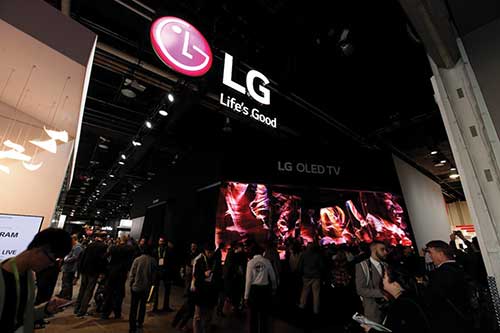
Smart tech was everywhere at CES with the latest OLED TVs, an 8K debut from LG and a suitcase that follows its owner around, Gekko managing director Daniel Todaro looks at the latest innovations from the show

CES in Vegas is where the globe’s technology brands for the past 51 years have converged to brag, showcasing what they are doing in advancing technology.

This year, an estimated 3,900 exhibitors from 150 nations will have done so to over 180,000 forecast visitors and a global media audience. An impromptu power cut only added to its media appeal, gaining it more mainstream coverage than ever before.

No surprise was that the smart home dominated, with Google announcing that its Assistant had sold more than six million units – that’s one every second – and also now runs on 400m devices globally. Unfortunately, there are no statistics from Amazon, but with more than 1,500 smart-home devices from more than 225 brands, all supporting Google Assistant, the winner may have been identified.

A lot of third-party brands are choosing to support multiple AI platforms, not wanting to gamble on a specific one. As a result, there are many now supporting multiple AI platforms in particular Alexa and Google Assistant integration, which dominated CES.

Not Samsung, though, whose Bixby assistant was integrated into a smart fridge with AKG speakers, making it a multimedia centre for your kitchen. Its only real game-changing feature is the ability to create smart notes sent remotely by users via text message to inform those in the home of messages like ‘buy more toilet rolls’.

What these innovations offer brands and retailers are alternative methods to engage passively with users, introducing new, intuitive technology into the home. Ordering shampoo or switching to another ‘recommended’ brand, while in the shower, further enables new advertising opportunities and gives retailers different purchasing channels perhaps never before considered.

LG OLED
LG OLED

Despite changing viewing habits influenced by ‘streaming’, TV remained a headline-grabber at CES. In particular for LG, whose dominance in the category is propelling the brand into pole position.

Firstly, it introduced us to the rather neat 65in LG roll-up TV – a 4K panel that curls up like a blind and unfolds into a 65in panel. Quite how the OLED screen is able to completely roll away, while still remaining rigid, is a secret that LG isn’t willing to share.

The display doesn’t have to be completely retracted. You can lower it only part-way, allowing you to change its aspect ratio from 16:9 to the cinematic 21:9, meaning you can enjoy your ultra-wide movies without those black bars.

With another press of the remote, the panel retracts to a wide strip at the top that can be used to show smart-home information, music controls, or whatever other updates you want to see. As it’s still a prototype, don’t expect availability or pricing any time soon.

OLED, launched at CES 10 years ago, is now the lead form factor in TV, and with an estimated 2.35m units predicted in 2018, up 1.4m on 2017. It’s now 25 per cent of the premium [over £1,000] TV market. Other notable brands launching new OLED ranges were Sony and Panasonic.

LG, not content with one a show-stopper, also launched its 88in 8K OLED screen, offering 33m pixels and it may be here sooner than you think. While the feature film Marvel’s Guardians of the Galaxy Vol 2 was shot in 8K, there is virtually no 8K content available. There are plans to roll out full 8K services by 2018, with Japan once again leading the way. The plan is to air the Tokyo 2020 Olympics in 8K through broadcaster NHK, so TVs may well begin to go on sale in time for the 2020 summer Olympics.

Among all the connected home fever at CES were two of my favourite innovations. The first was the ForwardX CX-1 smart suitcase, which knows its owner using face-recognition to follow you through the airport concourse. It also comes with a smart wristband, just in case it loses you.

The second was the L’Oréal UV Sense. I think it’s perhaps the biggest game-changer and possibly the one that will become mainstream sooner. It’s a battery-free adhesive disc that measures UV exposure for the wearer. It’s relatively unobtrusive and uses NFC to let you retrieve your data with your mobile device. Its applications are infinite.

L’Oreal’s presence at CES demonstrates how technology can become mainstream through the most passive of devices and categories, creating a challenge for all marketers and retailers.


To read the article at ERT click here

Tagged , , , ,

Gekko creates Client Services Director role to accelerate growth

Gekko are delighted to announce the appointment of Hannah Snoeck to the role of Client Services Director.

Hannah will lead the client services team to optimise the strategic delivery of Field Marketing solutions to Gekko’s portfolio of clients.

Snoeck joins from Gilroy where she was an Account Director leading key accounts including Vodafone and S&P Global Platts.  Previous to that she worked in communications for brands and agencies.

Daniel Todaro, MD Gekko commented: “Hannah has a proven track record in client services.   Her experience across both agency and brand offer Gekko the opportunity to continue to realise its growth through new services and improved delivery”.

Tagged , ,

VOICE CONTROL: THE SOUND OF 2018

Smart home sales will dominate 2018, driven by voice control, and wireless headphones still present a huge opportunity, claims Gekko managing director Daniel Todaro

What does 2018 have in store for consumer electronics? The trends all seem to be pointing in the same direction and I have been saying throughout 2017 that it’s no secret – the smart home is set to dominate 2018.

With a sharp increase in products available in mass distribution in 2017, increasing 14.5 per cent year on year and gaining popularity among consumers, including technophobes, the smart-home category is going to grow, with more choice and greater integration to establish AI interfaces as the norm for many.

The smart home is the connected home and includes smart speakers, such as Amazon’s Alexa and Google Home, which is estimated to be a $13 billion business by 2024, fuelled by the increase in network connectivity and a rise in demand for connected-home devices, such as thermostats.

The home automation element of smart living is expected to grow – especially when you consider that it’s not just thermostats that you can manage from your smart speaker, but also lighting, security cameras and door bells to name a few. This creates an increased opportunity in a category that’s still growing and definitely not stagnating. In fact, it’s estimated that consumer spending on smart-home technology is expected to grow 29 per cent year on year.

Evolving

The market is, of course, evolving and 2018 will be the year that the marketplace starts to get a lot more crowded, as the category develops from Amazon and Google offering their own range of speakers in a variety of form factors.

Google and Alexa Assistants are also being integrated into products from other hardware brands, such as Sonos, which has already released the Sonos One – with Alexa. It also hopes to integrate Siri and Google Assistant soon.

Apple’s HomePod will hit homes in 2018 and will, of course, garner attention, but its Siri solution offers some weak competition. Audio brands such as Yamaha, Libratone and Ultimate Ears all announced Alexa-driven smart speakers at IFA this year, with Sony, Philips and LG adding Google Assistant integration to their smart products.

So how do you choose between one solution and another? Well, research conducted by Stone Temple indicated that when 5,000 of the same questions were asked to Google Assistant, Microsoft’s Cortana, Siri and Alexa, it was Google Assistant that came out on top with 68 per cent of questions answered, compared with 21 per cent for Amazon’s Alexa.

In selling the smart home, we know that in many instances it will require an assisted sale to do the category justice. This is important to consider, as retail value is expected to reach €5.11 billion (£4.5bn) worldwide this year.

More importantly, the opportunity in 2018 is that 44 per cent of shoppers don’t know whom to trust to install their smart-home devices.

So, consider what has been discussed in ERT as part of the Turning Point debate, and look to exploit the trends and develop the opportunity into profitability by starting to focus on smart home installation. Products that come with installation, like Hive by a British Gas engineer, could gain an edge over products like Nest, where the homeowner would normally have to source their own installer.

Consumers welcome a full-service solution, and with 35 per cent of smart-home sales in 2018 expected to be for energy management and with 19 per cent for home-security, there’s plenty of opportunity for the switched-on retailers. So why not create a solution that assists in the install and integrates every smart-home device as and when a consumer adds to their connected-home environment?

Another major trend is the growth in wireless headphones. Although currently only accounting for less than 20 per cent of all headphones sales in the UK, a seismic change is expected over the next 12 to 24 months. By 2021, they will become standard, with worldwide sales projected to reach 206 million units, up 96 per cent on this year’s anticipated figures.

Phenomenal

This phenomenal upsurge is driven by the increasingly rare 3.5mm jack in premium smartphones. This growth will be reflected across a wide spectrum of price points and brands, meeting the needs and expectations of younger generations who demand no ‘wires’.

Retailers will need to be able to match this trend in their ranging and also consider compatibility for iOS or Android devices, as not all headphone products may work on every device.

Trends in retail execution are also set to change further in 2018, as identified by Barclaycard, whose research found that shoppers want new and engaging high-street experiences, such as in-store events, and are spending more when they find them. Those UK retailers who are tapping into this demand have seen annual turnover increase by an average of 14 per cent, according to Barclaycard research.

Retailers who are already investing in such events are now planning to double this investment over the next two years, as more than a third (36 per cent) now host events in-store, from classes and courses to exclusive sales previews. The research also showed that decision-makers are planning to increase investment for in-store theatre by a further 113 per cent over the next 24 months, suggesting that some retailers, maybe your competition, now view this kind of marketing as key to driving footfall and boosting sales.

With a lack of innovation from some CE categories, keep on top of those ‘growth’ categories and retail trends in 2018 to be top dog.

Read the article at ERT Online

Tagged , , , , , , ,

Don’t be a retail Dinosaur

Gekko Field Marketing - Retail Dinosaur

DON’T BE A RETAIL DINOSAUR

The best retailers are those that can adapt – that may include looking at rentals or creating a smart home experience in-store to appeal to a new generation of buyers, advises Gekko managing director Daniel Todaro

Having sat on the ERT Awards judging panel, selecting retailers who are the best in their chosen specialism has highlighted some high-flyers, but we all know that there are some real dinosaurs out there that need to change in order to survive.

Retail is one of the most dynamic of industries. At its best, it quietly adapts to the needs of shoppers to increase dwell time, convenience and average basket value. Multiple retailers follow this religiously to increase sales and margins – an approach independents should learn from.

With home ownership increasingly more difficult to achieve, ‘generation rent’ is becoming a significant demographic. This model may not appeal to all retailers, but as a generational change, for many it’s unthinkable to buy outright, repair or move MDAs and CE items. Offering some form of rental package is another consumer-driven solution that allows a retailer to drive sales.

Smart home

With the growth of various new categories, retailers have numerous opportunities – and the greatest of all is the smart home. This will influence all product areas over the next five years.

At the end of 2016, there were 8.5 million smart homes in Europe and the market is forecast to grow by 57 per cent a year to reach 80.6m by 2021. This equates to 36 per cent of all European households owning a smart-home product.

Although shoppers are beginning to see the benefits, it’s clear that they aren’t simply looking for a like-for-like replacement. The key is to display products in a connected manner as a consumer would do in their own home.

In emerging categories, such as smart speakers, the global market is expected to grow annually by 43.7 per cent up to 2022. Sales of 4K UHD TVs are set to grow by 38 per cent in 2017 and will account for more than a third of the worldwide TV market.

And with a quarter of consumers citing a ‘lack of knowledge’ as a reason for not purchasing a smart-home product, and a further 21 per cent worried about security, independents have an opportunity to showcase the technology and alleviate these concerns. If shoppers can see how these products will work in their home, it is much more likely to lead to a sale.

It’s up to retailers to create this environment. Make sure your store’s wi-fi will support multiple devices. Set up some wireless speakers so that shoppers can play songs via Bluetooth using their app. Most importantly, ensure that your staff are trained on each product.

Brands can only help so far in supporting you with training and point-of-sale to create in-store theatre – the rest is up to you.

Taking an omni-channel approach will also mean that although a customer may not leave with their desired purchase that day, they could order and collect next day, or have it installed – for a fee.

Manufacturers can help with creating experience zones in-store. While you are tied into that brand, it offers an opportunity to change perceptions and speak to a new audience.

The most successful retailers adapt to the needs of consumers, which are driven by trends. Don’t rely on brands and take control of your own destiny.

Dos and don’ts to increase sales

Take control of your destiny and give customers the best experience in-store so that they buy not just once, but again and again.

Here are my top 10 dos and don’ts…

DO use your window displays to attract customers.

DON’T leave your displays bland, old or irrelevant to what you sell.

DO echo a high-profile advertising campaign outdoor poster site near your store.

DON’T leave old p-o-s or product out for too long.

DO ensure your customer is greeted.

DON’T leave your customer to browse with no contact being made.

DO merchandise the store so it is uncluttered.

DON’T mix up categories even if space is limited. Microwaves don’t belong with laundry.

DO make ticketing accurate and visible

DON’T make the customer ask you the price or feel you are pressurising them to talk to you.

DO ask your customer questions to make relevant recommendations.

DON’T bulldoze your customer because you know best.

DO listen to your customer to meet their needs and budget.

DON’T sell them something they don’t need. Buyer’s remorse will increase returns and lose you a customer for life.

DO sell a backup item or offer an order service if it’s out of stock.

DON’T lose the sale to a competitor because you don’t have the product.

DO make a distress purchase a pleasure.

DON’T make it harder than it needs to be.

DO offer an after-sales service and make them remember you for positive reasons.

DON’T treat the customer with contempt – today’s small purchase could be tomorrow’s bigger one

Tagged , , , , , ,

Create a real experience to bring gamers back into store

Despite a mixed result for the physical entertainment market in the first half of 2017, with sales of music falling by 5% and video by 13%, gaming beat this trend, however, growing by 0.5% year on year.

These results are positive news for dedicated gaming retailers, but hardly reassuring for those who are fighting a tough battle against the increasingly dominate position of online retailers and online download platforms. These results are thanks in part to a strong set of new releases such as Zelda: Breath of the Wild and Horizon: Zero Dawn which have drawn consumers into store. However, if gaming retailers are to increase their level of growth and avoid results seen in other physical media categories, they must adapt to suit the ever changing needs of consumers and gaming fans.

At the moment, it is all too easy for consumers to download software via their consoles’ marketplace, or purchase a new console or piece of hardware from an online retailer for home delivery – and this isn’t going to change. If gaming retailers are going to compete against online retail, they need to offer a service that will bring consumers onto the high street and into store. Game’s recent demonstrations of PlayStation VR (however controversial) show exactly what retailers can offer – a real, unique and immersive gaming experience that consumers can’t download or stream.

Though space is limited in some stores, retailers need to offer demos of key new titles for consumers to try. Rather than just leave customers to their own devices, store staff need to be more active in-store, speaking to customers about their needs and offering advice on the best game or console for them. Most other categories in tech and consumer electronics make use of brand ambassadors and product demonstrations to great effect – 74% of consumers want to shop in store so that they can see, touch and experience the product before buying.

Likewise, offering exclusive deals or special offers that are only available in store is a great way to encourage footfall. Competing with online only retailers is easier said than done, but offering exclusive deals is a sure-fire way of convincing gaming fans to spend their money on the high street rather than for the basic package online.

If gaming retailers can make this effort and offer consumers a space where they can really experience a gaming system or piece of software before buying, they can bring consumers back into store who might previously have stayed at home.

Tagged , , , , , , , , ,

Connect with your customer

Once the stuff of science fiction, the connected home is now a reality, with smart technology now found in almost all categories across consumer electronics and domestic appliances.

Consumers are starting to take a real interest in the smart home. But it’s up to retailers to bridge the gap between desire and knowledge, offering consumers a personalised service. This is an area where independent retailers can excel over their multiple counterparts.

Although there is clearly demand among consumers for smart products, many retailers may still be sceptical that the smart home is the future. If you are a sceptic, take a look at your top-end TVs and MDAs – chances are they all include smart features that your customers aspire to have in their homes.

New smart MDA products, such as the LG InstaView fridge-freezer (pictured) and the Hoover Wizard smart oven, have additional features to complement your customers’ lifestyles. You can offer these smart MDA solutions as the top of your ranging. Soon all appliances and CE products will be smart. Customers who have bought that smart TV or washing machine are likely to come back in-store looking for the next appliance to complete their smart home.

If you are thinking about ranging smart-home products, but don’t know where to begin – start small. There are plenty of products that require only a small investment, but can have a huge lifestyle impact for consumers. Smart plugs, such as those from Hive and TP-Link, allow users to control their appliances from any smart device. From turning on a lamp, to making sure your hair straighteners are turned off, smart plugs are an inexpensive and easy to install and a great way to introduce customers to the category. Likewise, ranging at around £70, smart light bulbs, such as Philips Hue or Lifx, are a great smart-home product, allowing consumers to switch on their lights or change the colour, and can be linked to a device such as Google Home.

Excitement

Then you can move on to other key smart-home areas, such as thermostats from Hive and Nest, and smart security products, such as the Ring video doorbell. These products are more of an investment with an average basket value of £123, but the lifestyle benefits will appeal to interested consumers. Similarly, smart speakers are an up-and-coming category creating a lot of excitement.

As recently published in ERT, a survey by German electronics retailer Reichelt found that 56 per cent of Brits were already using, or would consider using, a voice-controlled connected device in the home. However, 55 per cent did not know how to install them or would need to seek professional help.

There is definitely an opportunity for independent retailers to fill this gap, offering customers professional installation or even training in-store from a member of staff. With some multiple retailers lacking the wi-fi connection needed to fully set up a smart speaker or security system in-store, set your shop apart by offering a full demo-ready model of all your smart-home products for shoppers to try out. This could make your store an obvious destination.

But it’s important that you don’t confuse shoppers with technical jargon. Make sure your staff are communicating what the smart home offers each customer, be it peace of mind when leaving their home for a long period, the money-saving benefits of a smart thermostat, or even the convenience of a smart assistant.

Equally, make sure that, when demoing a product, your staff have been thoroughly trained and are able to answer any questions. Shoppers will want to be reassured that the device is easy to install, unobtrusive and convenient for them.

This will help inspire customers to come to you to upgrade all their appliances to create a smart home for themselves. With the average basket value of a smart-home purchase trending at £105, the prospects are good.


Read more at http://ertonline.co.uk/opinion/connect-with-your-customer/

Tagged , , , , , ,

Positive news for UK retail

Recent yearly results published by Dixons Carphone are good news for all retailers, whether multiple or independent.

Despite price increases and decreasing consumer confidence following the Brexit vote, Dixons has been able to beat the downward trend, increasing pre-tax profits by 10 per cent and like-for-like sales by four per cent compared with 2016.

Looking at the whole of the UK, some key categories have seen lower sales. With TV, for example, seeing a 14.9 per cent unit sales decrease last year, it’s positive news for UK retail that the number-one consumer electronics retailer is proving that consumers are still heading to the high street to buy household tech.

As an agency that represents tech brands in UK retailers, including Dixons Carphone, Gekko’s results in-store agree with theirs, with sales having increased by 5.6 per cent relative to the same period in 2016.

One category that has been particularly significant in improving results for tech retail has been the smart home. Still a growing sector, expected to be worth $58.47 billion (£45.3bn) globally by 2020, the smart home is enthusing consumers to upgrade their appliances and home technology.

In a recent campaign for a smart-home brand, Gekko’s training team created a 68 per cent uplift in knowledge among store staff, which helped deliver a healthy 36 per cent sales uplift in the following weeks.

For independent retail, the strong results seen by Dixons Carphone set an optimistic tone. Gekko knows that 74 per cent of consumers prefer to shop in-store, because it allows them to see, touch and experience the product before buying. Dixons’s results show that consumers are still heading to the high street when looking to purchase a high-ticket item.

These ‘considered purchases’ – products that shoppers need time to think about before deciding it’s right for them – require that additional assistance only found in physical retail.

To match the large retailers in their success, independents need to create a welcoming, ‘showroom’-style atmosphere that will encourage shoppers to try out products before they buy.

A conversation with knowledgeable store staff can easily transform a browser into a customer. Developing categories, such as the smart home, are important areas for potential growth.

Set your store apart by offering shoppers an experience they can’t find in larger retailers, and you too can see these positive results.

Read more at: http://ertonline.co.uk/opinion/positive-new-for-uk-retail/

Tagged , , , , , , ,

Here comes the sun

It may seem a long way ahead, but that well-earned summer break is right around the corner for many, and they’ll be needing some accessories to make that holiday memorable, practical and relaxed.

Put yourself in the flip-flops of another and think about the gadgets you like to take away with you. Translate that into a range of products your customers may benefit from and avoid those pricey, last-minute airport purchases.

Portable speakers are a key area for the summer season and an opportunity to sell. Think beach holidays, parties or barbecues in the garden. Consumers will head outdoors when the weather warms up, and require some entertainment.

Portable speakers from brands such as Jabra and Libratone make a perfect accessory for outdoor living, with Bluetooth connectivity allowing anyone to connect their phone and play their music via Deezer, Spotify or Google Play. Use this feature as part of the demonstration by encouraging shoppers to connect their own device to hear the quality and see the ease of use. Make sure that your staff know how to connect to the speaker and can speak confidently about its features, such as battery life.

Staying with audio, headphones are another accessory many shoppers may be looking to upgrade at this time of the year. Whether purchasing some travel headphones to make flying more enjoyable, from the likes of Sennheiser, or perhaps some sports headphones from Monster or B&W for running in the sun, shoppers will want to see a good range with demo units that they can actually hear playing.

Set up a ‘play table’ in-store, allowing shoppers to try out a variety of headphones. Connect them to a music player to let shoppers hear the quality of the sound. Although not for audiophiles, consumers still want to know they’re getting a quality product before they decide to purchase.

Train your staff to use their questioning skills when speaking to customers looking to buy an audio product, especially headphones. What are they using them for? What type of music do they like? Do they want over-ear or in-ear? What device are they using to play music? All these questions can tailor the shopping experience and make sure each customer gets the right product for them.

With recent news suggesting tablets and laptops will need to be kept in your hold luggage this summer, shoppers will looking for something to protect their gadgets. Think about your range of laptop bags and tablet cases. Does your ranging include heavy-duty cases, from brands such as CAT and Griffin, that will survive a long-distance flight? Shoppers will be heading into store to find these products, so it’s up to you to offer them the advice they need.

When demonstrating a case, don’t drop a device on the floor, as that may lead to disaster. Instead, make sure your staff can communicate the benefits of a case to a customer, explaining the materials used and build quality, and how these will ensure the safety of the customer’s tablet, phone or laptop.

In addition, add other accessories to the conversation such as Tile – a tracker that allows your device to be found anywhere in the world if lost. Shoppers looking to take their devices abroad with them will want the peace of mind that they are safe and secure – offer your customers this solution with a conversation and demonstration.

Another area to consider is home security. Everyone fears leaving their house for weeks at a time, some more than others, and asking a neighbour to look after things while you are away may not be an option.

Now with innovations in the smart home, this fear can be reduced by keeping track of our homes from any smart device. Consider ranging smart security products such as the Ring video doorbell, which allows users to answer their door and speak to visitors from anywhere in the world through their smartphone.

Likewise, smart plugs from the likes of Hive and smart light bulbs like the Philips Hue can give consumers the peace of mind that their homes appear occupied. Both allow users to control their lighting and appliances from their mobile, giving them total control of their home from any location.

If you’re speaking to a customer who’s inquiring about the smart home, explain the benefits of controlling their home from their smart device. The added security benefits are a huge selling point, and are something you can easily demonstrate by installing some demo models on a lamp or similar appliance in-store. And make the point that these smart home innovations can save them money on heating and electricity bills all year long.

There are plenty of opportunities to take advantage of the holiday season. Shoppers will be looking for last-minute items before they travel. Make your store look the part with seasonal p-o-s and displays, encouraging shoppers to head inside to find that perfect, competitively-priced accessory, purchasing a well-chosen product from your store rather than hastily at the airport.


Read more at: http://www.ertonline.co.uk/opinion/here-comes-the-sun/

Tagged , , , , , , , , , ,