
Tag Archives: Consumer Electronics

TV Brand Building Through Sporting Sponsorship, is it a Golden Opportunity?

Brands are committing over £25.5 billion annually to European sports sponsorships as a strategic, long-term investment, which according to Nielsen, accounts for approximately 15% of a brand’s annual marketing budget. However, with an estimated 66% of consumers more likely to purchase from sponsoring companies Source, you can understand the reasoning behind such decisions and in particular for challenger brands looking to disrupt the market. 

For TV brands, major events like the Winter Olympics, which TCL is sponsoring through 2032 to gain ‘TOP’ tier prestige and challenge market leader Samsung, act as a catalyst for consumer electronics upgrades and bringing your brand into the consideration mix. Perhaps when your brand would have never registered with consumers without the mass exposure of say, the Winter Olympics, which is projected to have a global audience of 3 billion. 

Hisense, which has heavily invested in football sponsorships and in particular the FIFA World Cup, has seen itself rise to be the second-largest TV manufacturer by volume, yet its domestic market share recently dropped, highlighting the need for continuous activation and strategic evolution. 

Challenger brands such as Haier, who announced at IFA Berlin 25 their entry into the EU including the UK TV market, are positioning themselves with high-profile tennis sponsorships like the ATP Tour and Grand Slams such as the Australian and French Open. In doing so, they hope to target an affluent consumer electronics audience, as they aim to entice customers at the premium end of the TV market. Tennis sponsorship therefore suggests that a targeted, high end sports association is an effective strategy for Haier entering crowded premium markets such as the UK.

Why invest

It is estimated that the TV market in the UK was worth approximately £8bn in 2025 and forecasted to grow significantly to £20.8bn by 2035 – a 14% CAGR. This is clearly a robust growth forecast, which is driven in particular by technological advancements and changing consumer preferences. These include in the UK smart TV market, the premium TV segment, which continues to dominate sales and increases profitability for any brand. However the fastest-growing segment is the mid-range smart TVs, appealing to budget-conscious consumers, who, seeking advanced features, are more likely to invest in a challenger brand that’s new to the market. Integration with smart home devices helps sales further this is becoming increasingly popular with consumers as a way to enhance their in home user experience and connectivity – Source

Therefore the appeal for any challenger brand looking to establish itself in a new market is increasingly to align the brand with a major sporting event and that’s exactly what TCL and Hisense are doing as a way to take on the traditional brands such as LG, Samsung, Panasonic and Sony who have found value over volume a difficult challenge as their brands become for some, just more of the same at a higher price that they can’t justify any more.

While Samsung remained #1 (17% share) in the global market, TCL, the challenger brand you may have never heard of in the UK, up until now, reached a 16% share, placing it in a dead heat with the market leader. In contrast, Hisense’s share dropped to 10% in the same period, primarily due to a 24% decline in its Chinese home market shipments.

The Olympic pivot for TCL whilst Hisense owns the’”National Team Football’ space (FIFA and UEFA), has meant that TCL achieved a massive strategic move by becoming a Worldwide Olympic and Paralympic Partner through to 2032. This now propels TCL into the ‘TOP’ tier.  

Hisense has leaned heavily into the UK market, integrating the “Freely” IPTV service into its sets to win over local consumers but TCL owns its display panel manufacturing through CSOT. This allows TCL to protect its profit margins even when prices fall, whereas Hisense must negotiate for panels. This is further impacted by the clever move TCL recently made in taking control of Sony’s TV business operations in certain capacities, a move analysts believe will help TCL leapfrog Hisense in premium brand perception amongst both brands’ very similar target audience.

With both brands also aiming for Mini-LED dominance, they are now going head to head for the “Mini-LED” crown here in the UK and beyond. Hisense leads in ultra-large (100″+) sets with a 56.7% market share,however  TCL’s shipments of 75-inch and larger TVs surged by a whopping 138% in Europe during late 2025, this directly impacts Hisense’s most profitable segment which they rely on in the UK market.

TCL’s activation in Milano Cortina 2026 is moving beyond simple brand visibility to integrate its technology into the fan and athlete experience. Taking a leaf out of Samsung Mobile’s book with podium selfies, TCL are owning those precious ‘Athlete Moments’, providing connected stations at all competition venues, allowing athletes to share their experiences with family and friends. Combined with recruiting a roster of European ‘sporting ambassadors’ such as freestyle skier Eileen Gu as a Global Brand Ambassador, who appeal to younger, style-conscious audiences, athletic moments become more relevant through association with sporting heroes.

In addition to all this, TCL are also providing the digital displays for venues, technical support for the Olympic Broadcasting Services (OBS) centre, and equipping the Olympic Village with household appliances. TCL will play a key role in the IOC’s “Olympic AI Agenda,” supporting fan-facing AI experiences and real-time transcription and translation services for interviews. This partnership is clearly a move by the brand to challenge Samsung’s status as No.1. By securing the ‘Official Partner’ status that Samsung has now  held for 30 years, TCL is using the Olympics to close the remaining ‘prestige gap’ with its South Korean rivals. 

The customer journey

However, does any of it return an investment if you can’t find the product online or in-store and worse still, if those selling your devices aren’t able to pronounce or advocate for your brands as you’d like them to.

In the considered purchase space, creating credible messaging that translates easily and clearly to your target audience is a critical next step. More so when marketing a brand that perhaps isn’t completely familiar to all and remains a challenger in a very crowded and noisy market. Consideration from consumers includes justification in switching brands and even more so of a brand you may be buying into for the first time. Creating a customer journey that starts from a logo on a press wall, to a poster site campaign followed by TV and social engagement is costly to deliver and difficult to measure unless you have direct sales data that demonstrates the true impact and ROI of a brand’s investment.

Therefore, with the brand now front of mind cognitively and recognisable through Olympic association and complimentary advertising, how does a brand convert those shoppers, driven into store by your advertising efforts, into customers who buy into your brand at the point of purchase? With the brand recognition now established and the desire to buy into a new brand is greater than it may have been before amongst consumers, you’ve got the retailers ranging, the next stage is building a go to market marketing solution that builds on that awareness and plugs the sales gap. Without the knowledge on the shop floor, brand partnerships are never enough to bridge the knowledge gap and create significant change in sales out, not in. Investing in your retail partners through training and assisted sales is the next step on the brand’s journey and its future potential podium finish.

To read the published article by Daniel Todaro, Gekko Group CEO please visit ERT
Tagged , , , , , , , , , , , , , , , , , ,

New study by Gekko reveals that SMART HOME TECH IS LEAVING NOT SO SMART BRITS BAFFLED

The results from a recent study this week by field marketing agency Gekko entitledSmart Home Shopper’ reveals that more than half of Brits have purchased smart technology for their homes – but have no idea how to use it.  The survey by was conducted among 1000 UK consumers between that ages of 18 and 55+.

The study which investigated smart home purchasing behaviour found that 56 percent of adults have bought the latest must-have smart home tech, including WIFI controlled security cameras, heating systems and speakers – but have been left scratching their heads when they get them home.  In fact, three in ten consumers regretted buying at least one or more items of smart home technology because it proved so difficult to get up and running.

Nearly a third of adults say they never read instructions or manuals when they buy a new piece of kit, while 21 percent admit that although they have a love of tech, they are intimidated by the complexities of it.  Thirteen percent of consumers who have invested in smart home technology said they couldn’t get all their devices to connect – which is the whole point of having a ‘smart home.’  More than one in ten have used a piece of smart home tech once and never again.

The trickiest bit of kit to install was security equipment (45%), including app-controlled doorbells, motion sensors and CCTV, however 28 percent couldn’t get their smart lighting to work and 35 per cent came unstuck when installing their smart heating system. Twelve percent claimed poor WIFI connection made installation difficult and 15 percent confessed to lacking any technical ability.

Surprisingly and despite its current popularity, 30 per cent of adults that have purchased a smart speaker such as the Amazon Echo or Google Home don’t understand all its functionality.

Those people that bought their smart home tech from a bricks and mortar shop did so to play, touch and feel the product (40%), get advice from sales staff (30%) and a demonstration (30%).

Dan Todaro, MD, Gekko comments: “It’s clear from our study that smart home tech is popular, but people don’t know how to fully utilise smart home tech to meet their lifestyle needs – whether that’s convenience, money saving, leisure time or learning.

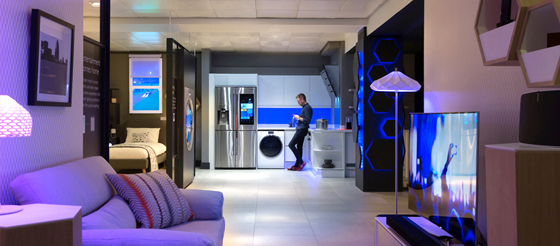
This is a great opportunity for retailers, especially bricks and mortar to improve the customer experience within the smart home tech category by having an environment where consumers can ‘play’ and a retail team that understand each product in detail and can match consumer need to product performance.    By solution selling it’s a win win for the customer and the retailer – the retailer can enrich the sale by demonstrating the whole product portfolio and functionality and the customer gets a product that’s fit for purpose.

Traditional retailers have never been under so much financial pressure to adapt to today’s market conditions, so they must use what they’ve got to make every customer visit worthwhile.”

Other key statistics:

Key Stats – Pain:

  • 50% of consumers invested in smart home tech purely because they like trying new gadgets and 30% to save money
  • 54% of consumers think smart home tech is too expensive
  • 17% of consumers get stressed out trying to operate their smart home tech

Key Stats – Passion:

  • Consumers tend to use their smart home speakers for playing music (56%), getting answers to questions (46%), getting news & weather updates (35%) and making notes (27%)

Key Stats – Purchasing:

Thirty Seven per cent of consumers went to bricks and mortar stores to by their smart home tech so that they could play, touch and feel the product (40%), get advice from sales staff (30%) and a demonstration (30%)


Read Gekko research here

Tagged , , , , ,

Counting the cost of Brexit

The ERT Turning point Summit held in February touched on the many opportunities that face independent retail.

Like it or not, I refer to these as opportunities, as challenges paints a negative picture rather than an optimistic future in the most dynamic of industries – technology.

One area that we must remain optimistic about, as it’s a certainty, is Brexit and the impact this is having on trading even before Brexit has happened. By the time you read this, the Government will have triggered Article 50, starting the process of extricating the UK from the EU.

When the vote happened, there was much debate regarding the immediate impact in trading. In August, I wrote: “Any price increases will certainly not be absorbed by resellers, and will instead be passed on to the end user”. With the significant fall in sterling against the dollar (10 per cent) and euro (seven per cent), many brands chose to use this as reason to make trading that little bit more difficult for retail, in particular technology.
First to raise the average price of every product by 10 per cent was Dell, later followed by Apple who chose to increase prices by around 25 per cent again across every product, with a MacBook Pro jumping from £999 to £1,249. It wasn’t just hardware, however, as apps all increased from 79p to 99p and £7.99 to £9.99, all on the back of the Brexit vote and currency fluctuations.

Microsoft followed with an 11 per cent increase, and more recently Sonos, with what are now ‘old’ products, increased their pricing by 25 per cent across the entire range which took effect on February 23, taking a Play:1 from £169 to £199 and Play:5 from £429 to £499.

In the MDA category, although not a blanket price increase, many European brands, including Siemens and Indesit, are demanding payment in euros from distributors, pushing up retail prices due to a ‘trickle-down’ effect resulting from the increasingly unpredictable and unfavourable exchange rate.
These brands have something in common: they are category leaders and, to a certain extent, dictate the development of their respective categories through a rigid pricing structure and go-to-market plan. What they perhaps do not appreciate is that consumers aren’t stupid and can choose to opt for other brands with more appealing price points – an opportunity for emerging and established brands and retailers to explore.

The challenge for retail is how to up-skill your work force to continue selling the same products they’ve always sold successfully, but now at a higher price point. Sales teams will have to work harder to close a sale, and perhaps longer, but for no incremental benefit to you. Retailers don’t benefit in the same manner from what some may consider an arbitrary price increase, with only a slight or no increase in margin.

While many who voted ‘out ‘may have never considered that the costs of goods we import would go up, the reality is that it becomes a convenient rationale for many brands to apply an increase, blaming Brexit, and passing the cost on to consumers rather than absorbing this themselves. This is likely to be applied across every category.

Away from tech, others brands, such as Tesla and Lego, have both applied a five per cent increase, stating that this action was taken as “direct result of the continuing devaluing of the UK pound”. We saw what happened when Unilever tried to increase the cost of products such as Marmite by 12.5 per cent – the public made it known that they have a choice and they would choose to abandon a brand for a similar product. You need to have rather good brand equity to successfully manage price increases that impact on your loyal customers’ pockets.

Call it a ‘Brexit levy’ if you like, but let’s be realistic: it’s not going away. With Article 50 triggered, currency fluctuations could prove to be more negative and incur further price hikes. On the other hand, they could become positive, but if so I suspect we won’t see brands roll back price increases, instead retaining their increased pricing model to establish range pricing.

Whatever the outcome, market economics means retailers of all types must remain optimistic and have a clear vision of hope as they navigate the future. This includes pushing back on brands that make it harder to sell. Perhaps by introducing into your categories new or up-and-coming brands that could offer you more margin and your customers a better product at a reasonable price they are happy to pay.


Read more at: http://ertonline.co.uk/opinion/counting-the-cost-of-brexit/

Tagged , , , , ,

A Major Opportunity

beko machine banner

Unlike the CE category, which for many independent retailers has seen a decline in market share of 10 per cent for the first time since measurements began, the market share in major domestic appliances is positively buoyant.

The MDA market has increased by seven per cent over the past year, boosting the independent retailer’s share to around 20 per cent. This is thought to be helped by the growing built-in market, with increasing amounts of new-builds. And let’s not forget home improvement projects, which are also fuelling sales in this category.

This growing demand is beginning to make an impact on independent retailers, with MDAs now making up around 62 per cent of sales in 2015, up from 57 per cent in 2014.

Yet, there are areas in major appliances where indies are struggling compared with the market as a whole. One of these areas is American-style fridge-freezers, where they have a share of only 12 per cent compared with their share of cooling as a whole (19 per cent). This is perhaps because of space limitations when displaying larger models, but it is not to be dismissed as a source of increased revenue and important margin. However, these appliances are not necessarily to everyone’s tastes and, with our ever-decreasing new-build house sizes, are a limited market.

Irrespective of the purchase reason, distress or upgrade, key to selling premium brands and models is the ability to sell both the benefits presented by unique features. But not every purchase need be premium. Consumers may be purchasing a range to furnish a new kitchen and mix and match from the same brand across appliances to increase average sale value. Demonstrate to your customers how you have enabled them to stick to their budget or, better still, achieved perceived savings by purchasing more products than intended with the inclusion of some premium models.

The difference between a retailer selling premium goods and one selling mid-range products is the staff – how they communicate with shoppers – and also how consumers view the retailer itself. Understand customers’ perceived needs irrespective of whether it’s a distress or a considered purchase and find the right product for them. Careful questioning should enable them to identify premium product features that will appeal, and help the customer decide what is right for them. More often than not, customers will go for a premium model if sold correctly.

Consider your sales environment and its suitability to display and promote premium models. Does your showroom allow these products displayed in a manner that does them justice and creates desire to buy? With analysts predicting the total UK market for major domestic appliances to be worth £4.4 billion for 2015/16 and estimated to grow by 1.5 per cent year-on-year through to 2020-21, there is still scope for growth and opportunity.

As a business that focuses exclusively on CE and tech brands, Gekko is able to review consumer spending habits. Those in their 30s and 40s are purchasing the bulk of MDA products, decreasing significantly among those in their 50s. The lowest demographic is those in their 20s, who account for six per cent of the market.

With the MDA market squeezed, especially in crowded categories, it’s interesting to note that the average MDA spend is £328, increasing to over £400 in cooling products. This is driven higher by closing the gap on the premium market, where a Good, Better, Best strategy is applied across a brand. In such instances, we recorded that 64 per cent of purchases were from females at the top end “Best”, 55 per cent in “Better” and 57 per cent in “Good”. Interestingly males were sitting on the fence, with a highest score of 45 per cent buying mid-range “Better” and were not necessarily the influencers when selling premium MDA products.

Mid-range appliances can be the norm, but upselling to premium products should be the aim. With the right store staff, trained to sell in the right way, and the correct environment that reflects a premium proposition, high-end products are within easy reach for many of your sales.

Tagged , , , , , , ,