Marketing key to capitalising on back to university rush

Image

Daniel Todaro, MD of field marketing agency Gekko, shares his views on what retailers and resellers can be doing to maximise their sales to students and universities.
 
The yearly appearance of autumn leaves signal two things for retailers: it marks the end of summer, but it also signals the annual back to school rush.
 
With children of all ages preparing for the new school or university year, thousands of parents will be charged with the task of effectively equipping their offspring with the equipment necessary to navigate the upcoming year. Recent research shows the back to school bill for the UK totals £1.3 billion alone, but to believe this investment is purely made in stationary and PE kit would be a grave mistake.
 
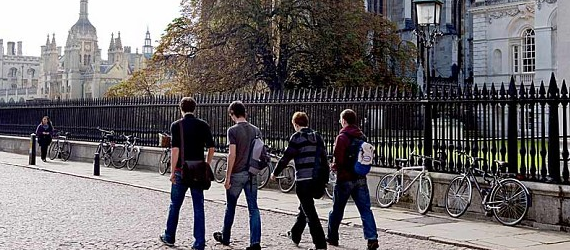
Following the school rush, thousands of teenagers will be making the pilgrimage back to university too; a journey that could not possibly be made without the latest technology. While the parents will be the ones inevitably opening their wallets, many are allowing their offspring to take increasing ownership over the purchase decision-making on high ticket electrical items. Now, more so than ever, it represents a significant opportunity for retailers and brands to drive sales.
 
This time of year is always accompanied by a surfeit of advertising targeting parents to make their purchases for the inevitable return to school. The effectiveness of this advertising is not in question but it cannot work in isolation. Advertising serves to drive customers through the door but it doesn’t necessarily guarantee that footfall will translate into much needed sales.
 
Without help, consumers will naturally gravitate towards value and promotions; which for brands can result little more than a sales roulette – particularly with frugal parents looking to limit their losses with their free-spending children.
 
The largest impact will inevitably be made at point of sale. However, like TV, this cannot act in isolation. What is crucial is a robust through-the-line marketing approach; a seamlessly joined up experience characterised by a strong narrative through the line, from the TV to the in store.
 
Having staff that are correctly trained to deliver the messages communicated in the advertising is pivotal. Staff should be able to communicate the messaging effectively and consistently; able to deal with any question. This human element is pivotal, and what many consumers visit the store for – the ability to have a real conversation with an expert and receive guidance in making a decision. After all, no one wants to speak to a robot(or buy the wrong product!).
 
Empathy is crucial, particularly in a category where consumers are not likely to be experts on the products and fearful of making the wrong choice and wasting money. However, compliance – which is often overlooked, is equally important. A brand may spend millions on artistic ATL, but this can be for nothing if the product and promotion is not displayed accurately in store.
 
Back to school is a gift to retailers, especially retailers specialising in technology. With a ready-made calendar hook to fuel footfall retail outlets need to put the work in only to convert this into sales. Retailers must ensure that they implement a through-the-line approach to convey a seamless message in-store where every available touch point is utilised to maintain the brand experience and drive sales with a higher average basket value.
 
Daniel Todaro is from field marketing agency Gekko

Read the full article at http://www.pcr-online.biz/news/read/opinion-marketing-key-to-capitalising-on-back-to-university-rush/032029

Tagged , , , , , , ,

Who Can Save Our Faltering High Streets? Why Not the Mega-Brands?

Image

The plight of the UK High Street is well-documented. With countless retailers closing and sales figures dwindling year on year, the High Street question is one that many are keen to answer before a great British institution disappears before our eyes. HMV and Jessops were given last-minute reprieves when faced with the gallows, but as we move forward it’s inevitable that more big names will fall upon the hardest of times, with fewer being granted a second chance.
 
There have been a number of solutions mooted as means for saving the High Street. A government minister has also suggested consolidating retail spaces within towns by converting empty units into affordable housing. What’s clear is that initiatives are sorely needed to truly bring life back to dead commercial business districts, so here’s an idea:  Why not ask major brands to sponsor the High Street? Many may feel that it’s perhaps about time corporations demonstrated a bit of social responsibility and gave back to the communities from which they profit so ostensibly.
 
With the point of purchase increasingly becoming ‘any place, any time,’ the emphasis shifts to experience – the need for brands to curate spaces dependent not entirely on sales, but immersive, engaging environments. Environments that consumers can spend time in without any obligation, experience the brand and perhaps become a long-term advocate tied-in on an emotional level.
 
With this in mind, why shouldn’t the biggest brands think bigger? Under the term umbrella branding, the P&Gs, GSKs and Unilevers of the world have all made moves in recent times to bring their masterbrands to the fore and develop a relationship with consumers for the first time in their histories. So why not think beyond single retail units and engage their wider portfolio to create a real immersive experience that also gives back to the community at the same time? Cellular carriers have done this to great effect, as have some CE brands. Of course, I can’t fail to mention Apple, the most profitable retailer by square footage, which Microsoft is presently trying to emulate in the US.
 
Take Unilever, a global masterbrand that has made a concerted effort to place social responsibility at the heart of its operations. Notably, its ‘Sustainable Living Plan’ sits front and centre within the organisation’s modern-day mission and is deemed a ‘strategic response to the challenges our world faces.’ Furthermore, it has partnered with D&AD to create a brand new award, the White Pencil, for the best example of design and creativity that has social good at its core and sets purpose above profit.
 
Unilever has a vast portfolio of brands, including Marmite, Walls, Lynx, Ben & Jerry’s, Dove and Persil to name just a few. According to the figures, it holds over 400 brands worldwide with over two billion consumers using them daily. So why couldn’t they utilize these brands and take over empty retail units? It would both promote the shared ideals and values of the Unilever proposition, but also deliver a unique experience that our towns desperately need.
 
Furthermore, in addition to retail units allocated to various brands within the portfolio, retail space could also be offered to small businesses and students, in order to showcase and sell their products and talents. The current environment makes it challenging for entrepreneurs to start up and an investment from a brand would provide both a valuable platform for budding business owners and also a little bit of hope, too. Plus, such an investment would be a very small price to pay for the opportunity to create a High-Street-wide brand experience.
 
Lastly, much debate has centred upon local communities becoming increasingly homogenized and such a move would go a long way to sparking some life back into our towns. The High Street is so much more than the point of purchase and it’s vital not just to our economy, but also to our society. What better way to engage a community than by injecting some belief, inspiration and positive energy into a struggling economy?
 
Although the burden of responsibility appears to be a hot potato at times, the seeds of social consciences are still sprouting and emerging. It requires bold thinking, indeed, but, in light of tax scandals and ethical controversies, it offers an opportunity for such brands to truly put their money where their mouths are, give back and perhaps change the shape of the High Street for new generations.

Read the full article at http://www.brandingmagazine.com/2013/09/20/mega-brands/

Tagged , , , ,

Training: Get in the groove and go with the data flow

Image

Omnichannel marketing means freeing up your data and schooling employees in the analytic tools necessary to sharing digital content with social networks.

Toshiba, a longstanding client of Gekko, share their views:

For Toshiba, training is all about engagement through interaction. We work with field marketing expert Gekko to ensure our retail field team are fully immersed in the brand through interactive training.

The level of data management with our training allows us to offer more information and knowledge because we are able to have a greater understanding of the hundreds of stores nationwide that carry Toshiba products and promotions.

Data collection, for example, enables us to monitor activity on a highly detailed level, which, in turn, positively affects the information we pass onto store staff. The training element evolves constantly.

We use our own Toshiba tablets to equip staff using information in real time to bring them up to speed on the latest developments and promotions. As more information becomes available, staff are able to learn how to respond to shopping trends and promotions immediately.

It’s essential that store staff are fully up to date with key features and the latest product developments. If staff can project Toshiba’s brand message seamlessly in their approach it will form an intuitive reputation among consumers to drive sales and loyalty.

Read more at: http://www.marketingweek.co.uk/trends/training-get-in-the-groove-and-go-with-the-data-flow/4007797.article

Tagged , , , ,

DIY and the Weather

Image

Daniel Todaro says DIY’s weather obsession needs to stop Adverse weather conditions often get the blame for retailers’ woes – and the fact that even in the middle of an heatwave we’re seeing many lament their bad luck demonstrates just how ingrained this mentality has become.

As I write this with temperatures sailing above 30C, Amazon reporting a 446% increase in paddling pool sales and Asda shifting BBQ sets at an increased rate of 204%, it seems strange to think it was barely a month ago that it was the rain causing all the problems for the sector. Headlines began with the same rhetoric: “wet weather hammers profits”, “coldest spring in 50 years prompts profit dive”.

Granted, these doom-laden headlines had something to do with our abysmally cold and wet spring but the message translates quite clearly; once again, sales drops were prefaced with the ready-made excuse of ‘bad weather. It’s repeated every year. Any fluctuation in the UK’s weather sees DIY retailers reach for the same tired excuses.  However, with the news emerging that spending on DIY fell for the fifth-successive year in 2012 to its lowest point since 2000, £5 billion less than the peak of £15.5 billion in 2004, DIY retailers need to look beyond the ‘seasonal’ approach they’ve taken in the past and endeavour to find innovative ways to being to drive their sales.

Good weather tends to go hand-in-hand with the desire to take to our gardens and the images foisted upon us by retailers in the summer tend to be rooted in aspiration and lifestyle – and indeed, lifestyle is the key word the DIY sector should be focusing on. In order to break-out of this industry-wide malaise, DIY retailers ought to look beyond the conventional approach and start to view themselves as lifestyle brands.

For even when these retailers are rejoicing at the sunshine, all we see is the same uninspiring campaigns, the same expected promotional offers we get every year, and the same wistful looks when the summer ends and autumn begins.  If they are able to position their offering as desirable and in synch with a certain sort of lifestyle, (in this case one that’s quite tropical), then the sector could see year round prosperity restored – and this is not as difficult as it sounds. Developments in technology mean brands can take advantage of outdoor advertising to create campaigns that adapt to real-time information.


Read the full article at http://www.diyretailer.co.uk/articles/item/407-the-last-word

Customer service SOS: How will John Lewis save the NHS?

Gekko Field Marketing
Faced with growing criticism of patient care and demand for better ‘customer’ experience, the NHS has turned to retailer John Lewis to help improve service in a move that has been both welcomed and scoffed at. As reported by the BBC, retail staff at the store made famous for its excellent customer service will be re-educating NHS doctors in Devon in a new bedside manner that focuses on the needs of the patients.

Daniel Todaro, MD at marketing agency Gekko, highlighted a key difference between the two: “The very fact that John Lewis is a retailer and the NHS is a service should be an immediate red flag,” he says. “If you shop in John Lewis, you are there by choice whereas if you’re in A&E it’s likely that you really didn’t have much of a choice in the matter; it’s a question of need.

“This is the crux of the issue; how do you translate the needs of a John Lewis shopper to that of a patient? It is true that John Lewis offer a best in class, successful retail experience with the human element at its core, but a health care provider and a retailer have zero points of synergy.”

“As good as the John Lewis model is, it applies to retail and not to an under-resourced not-for-profit public organisation.”

The proof of this unique collaboration between the public sector and retail’s golden child will essentially be in the eating – whilst it poses strong benefits in theory, only by putting the proposals into practice will the NHS understand if there are lessons to be learned from John Lewis.

Read the full article at: http://www.mycustomer.com/feature/experience/can-john-lewis-help-nhs-deliver-superior-customer-service/165386

What Have Brands Learned from the Olympics a Year Later?

Image

We’re all in agreement that what characterised the London Olympics was the way in which it brought the nation together; how it immediately created a spontaneous sense of community and altruism we never thought we had in us.  Likewise, we were also quick to agree that from a marketing perspective it had been a rousing success for the brands who had taken the leap by investing in sponsorship.

By aptly integrating into the wave of patriotic and social spirit, these brands found themselves quickly dispelling the previous conjecture ‘censorship’ and the ominous ‘brand police,’ and reaping the benefits throughout the Games and long after the final medal had been awarded. No fewer than half of the top 10 most improved in YouGov’s 2012 Brand Index were Games sponsors, whilst the likes of BA, Adidas, P&G and Sainsbury’s were among the many that revelled in the critical acclaim.

However, at the time I wondered how long this Olympic spirit would last, whether this upsurge in enthusiasm for altruism, community, volunteering and a sense of love for our fellow man would eventually peter out; the status quo soon restored.

A year on and we’re much better placed to answer that question. Is there evidence of an Olympic legacy within the marketing industry? Well, yes, very much so.
What we’re seeing is a clear shift in the way the world’s largest brands are conducting themselves, they’re acting more human (and perhaps, in turn we’re humanising such brands too). It’s difficult not to notice the pure and wholesome nature of the TV ads we see on the airwaves and the promotional activity we see in our towns. More so, it’s largely those who played a key role at the Olympic Games leading the charge.

Coca-Cola, for example, has eschewed its own branding in order to encourage us to share a coke among pals, as if it represents an age-old friend we’ve known since childhood. Adidas and GlaxoSmithKline have both been vocal in their opposition to steroid abusing athletes; a far cry from an era not so far behind us when sponsors would refuse to take a moral stance. Today, they seek to adopt an ethical code in line with their consumers.

The explosion of organisations on Twitter taking on a simple human guise (First Direct and Solihull Police provide two highly diverse, but excellent examples) further provides evidence of this move towards humanisation. The most successful view those online conversations much like a real-world one. They adopt the same rules of etiquette:  Much like you wouldn’t barge into a real-world conversation trying to sell a mobile phone contract, these brands are instead seeking permission to join the conversation by trying to demonstrate an effervescent (or at least useful) personality.

With more and more brands experimenting with this approach, the trajectory only appears upwards and I cannot help but feel that this trend was kickstarted by the Games. London 2012 showed us all the power of humans, ordinary humans that shattered the perception of a soulless, IOC machine we all believed would characterise the Summer. Instead, we found human beings we could relate to, ones that were more worried about contributing to our good times rather than nitpicking over red tape and fretting about the threat of ambush marketing.

The difference for these winning brands is that they’re moving on from simple traditional, broadcast communication; taking that ATL message and delivering it through the line. They’re walking the walk as well as talking it, and doing it at the local level to encourage real social cohesion, becoming the catalyst that brings entire communities together.

Through brands acting human and investing in people, the Olympic spirit may just become a genuine legacy after all.

Five brands taking a more human approach:
 
Visa
Visa signed Usain Bolt for its 2012 ‘flow faster’ Olympic campaign. The ad’s demonstrated the various payment technologies on offer from Visa, with the message that it made life quicker and easier.

That theme continues in Visa’s 2013 activity, but the influence of the Olympic legacy is clear. The focus shifts from Usain Bolt to an old man and while ‘speed’ and ease of convenience is still a key brand message, the story of the old man racing to the birth of his grandchild is a significant, family-orientated step-change from what had gone before that adds a new human dimension.
 
Coca-Cola
Coca-Cola went Hollywood with its all-singing, all-dancing activation at London 2012, enlisting Mark Ronson to create the brand’s own song for the Games; something quite introverted. While the brand did commendably look to find ways to connect with and inspire young people, the national TV campaign was typically weighty in both celebrity endorsement and investment.

It provides the platform for perhaps the most significant change of direction, with the incredibly successful ‘Share a Coke’ campaign. Simple, effective and very personal

P&G
P&G won the hearts of the nation in record time with its ‘Proud Sponsor of Mums’ ads; notable for being the first time the multi-global corporation had directly addressed its consumers under the P&G brand name.

Since then, new Global campaign ‘Everyday Effects’ has been launched with a significant human feel. Throughout the world, P&G are distributing ‘Blue Boxes’, making a not-so-subtle, but effective demonstration of all the products within the P&G family.

Carrying on the soft theme, P&G quickly signed up the highly-endearing Kirstie Allsopp to lead the campaign and the brand giveaway action, as it seeks to speak to customers on a one-to-one level and become a household name.
 
Adidas
Adidas implored Team GB to take the stage during the Olympics and in the process, became a legitimate part of the iconography of the Games that we hold in our memories.

Adidas have rarely looked back since, continuing to make the most of those British connections with the recent Andy Murray and British Lions successes. The brand also did not blink in its decision to drop star sprinters Tyson Gay and Asafa Powell following failed drugs tests. Would this decision have been so clear cut five years ago?
 
Sainsburys
As primary sponsor of the Paralympics, Sainsbury’s were a key driver in ensuring the Paralympic Games were elevated to a level of attention and status that was unprecedented. The retailer went to great lengths to both celebrate the athletes, but also emphasise the human qualities of its brand.

Such was the adulation Sainsbury’s received for its sponsorship, arguably they could have left it there and moved on – but a year on and they’re continuing with a push to promote sport in schools and investment in both disabled sport and British Athletics as a whole. The Sainsbury’s Anniversary Games left us in no doubt of a lasting commitment.

Perhaps the biggest winner of all, Sainsbury’s demonstrated a human aspect that is leaving rivals in its wake. It goes beyond tasting a difference; Sainsbury’s is genuinely making a difference .

By Daniel Todaro

Read the Full article at: http://www.brandingmagazine.com/2013/08/15/what-have-brands-learned-from-the-olympics-a-year-later/

Rajar Q2 2013: Industry reaction

Image

Last week Rajar announced that 91% of the UK population – 48.3 million people aged 15+ – tuned in to their selected radio stations in the second quarter of 2013, up by approximately 1.5 million adults on Q2 2012. The total average number of weekly hours listened to radio for this quarter is 1.03 billion.

Daniel Todaro of Field Marketing agency Gekko comments:

The latest Rajar figures are incredibly significant for we have reached a moment many never thought would arrive: the official ‘tipping point’ for digital radio. Moreso, we’ve reached it nearly 18 months earlier than Ofcom’s estimates which predicted November 2014 as the moment the UK would pass the 50% threshold.

With radio listening figures absolutely booming, no doubt this will prove the catalyst for the government to push ahead with the digital switchover – which this week also published a new report containing very strong hints the foundations are being laid for such a move already.

However, the steady upward trajectory of digital listening – or the consumption of radio via digital formats – should pique the interests of retailers, particularly with thoughts turning to the festive season in the not too distant future.

28 million people now listen to radio digitally – and increase of 16% YoY. If you couple that with the increase in listeners overall (91% of the population), we’re seeing not just a transition but an actual growth in popularity. Thus, particularly as consumers discover new stations through different mediums (TV, in-car, mobile, desktop), there’s a distinct opportunity for retailers to capitalise on this and drive product sales on the shop floor.

Read the full article at: http://mediatel.co.uk/newsline/2013/08/01/rajar-q2-2013-industry-reaction/

Freeview to unveil Great British Tea Party roadshow campaign with Gekko

Image

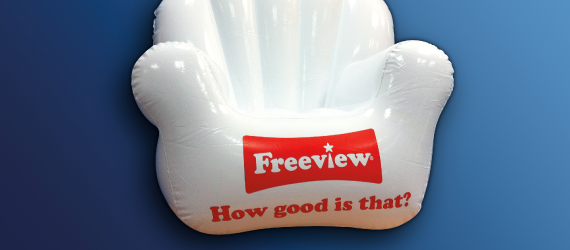
Freeview will be inviting shoppers to experience the Great British Tea Party this summer with its new roadshow campaign, which aims to promote the value of the service.
 
Freeview will look to celebrate the British summer in its roadshow, which has been conceived, designed and executed by Gekko, and is set to feature a green astro-turf area complete with deck chairs, picket fencing and a pop-up marquee serving refreshments.
 
Daniel Todaro, managing director of Gekko, said: “With the ‘empty’ summer of 2013 upon us, without Jubilee celebrations or Olympics Games to capture the excitement of the nation, we were keen to create a piece of experiential activity that really brought to life the best of British and what better way to celebrate the heat wave than with a proper British summer fete? We’re always delighted to work alongside Freeview and create something that will really surprise and delight consumers.”
 
There will also be Freeview ambassadors on hand to explain Freeview, as well as giving shoppers the chance to take part in a special prize draw to win a six month subscription to Netflix.
 
James Chambers, retail marketing manager for Freeview, added: “We are really looking forward to getting this show on the road this summer. With over 95 per cent of the most-watched TV programmes available subscription-free, we will be letting people know that they could be making considerable savings in the long-run by choosing an alternative to pay-TV. Value has always been really important to us and we have worked with Gekko to create a roadshow that excites, educates and engages the British public.”
 
The roadshow, which is set to take place throughout August, will be coupled with above the line activity.

Read more at http://www.thedrum.com/news/2013/07/26/freeview-unveil-great-british-tea-party-roadshow-campaign-gekko#LosTOrEgwOGVA24R.99

Freeview calls on Gekko for experiential roadshow

Image
Digital television provider Freeview has enlisted field marketing agency Gekko to produce its new Great British tea party-themed roadshow.

The team will recreate a summer fete at four UK shopping centres, comprising of a green Astro Turf area with deck chairs, picket fencing and a pop-up marquee serving refreshments.

The roadshow will include four-day stops at Westfield London Shepherds Bush (1-4 August); Birmingham Rotunda Bullring (8-11 August); Liverpool One E5 (15-18 August); and Brighton Jubilee Square (23-26 August).

Shoppers will be able to relax in the sun, enjoy a cup of tea and cake and watch some clips of the programmes on offer from Freeview on a giant screen.

Brand ambassadors will also be on hand to demonstrate Freeview, including its smart functionality.

James Chambers, retail marketing manager at Freeview, said: “We are really looking forward to getting this show on the road this summer. Value has always been really important to us and we have worked with Gekko to create a roadshow that excites, educates and engages the British public.”

Daniel Todaro, managing director of Gekko, added: “With the ‘empty’ summer of 2013 upon us, without Jubilee celebrations or Olympics Games to capture the excitement of the nation, we were keen to create a piece of experiential activity that really brought to life the best of British and what better way to celebrate the heat wave than with a proper British summer fete? We’re always delighted to work alongside Freeview and create something that will really surprise and delight consumers.”