
Monthly Archives: October 2024

Reaching the Peak

The Golden Quarter for retail is upon us and hopefully, by the end of the year, the figures will be reporting a successful Christmas period for retailers and pointing towards an even rosier outlook for 2025. Since the last retail peak season we have had a change in government and there is noise that the intention is to introduce economic policies designed to boost disposable income, including raising the minimum wage and public sector salaries. The potential increase in spending power for some is offset by the worry for many that increased taxation will mean the cost of living crisis will continue to leave its unwelcome mark.

Alongside this Labour has also pledged to reform the business rates system, which is a major burden for physical retailers. Their proposed new system of business property taxation aims to reduce costs for high-street shops, levelling the playing field between brick-and-mortar stores and online retailers. This is expected to reduce operational costs, allowing businesses to invest more in customer experience and competitive pricing.​

Focus on revitalising the High Streets will be very much welcomed, whether through the aforementioned reduced taxation for brick-and-mortar stores or measures like introducing banking hubs and cracking down on shoplifting by increasing police presence. These efforts are designed to create safer, more vibrant shopping environments, which could attract more foot traffic and increase sales for local businesses​.

The reality though is that it’s too early to say what impact the new government will have on the fortunes of the retail sector in the UK, so retailers need to focus on maximising the opportunities that the peak season presents, seeking wherever possible to boost sales and leave a positive lasting impression with customers. The challenge is tough. While high inflation is perhaps not the worry of 12 months ago, rising living costs are still very much having an impact and then there are factors such as staffing challenges and store closures. To ensure a successful golden quarter, retailers must take a strategic approach. By prioritising adaptability, customer engagement and operational efficiency, retailers can stand out and remain competitive, even as consumers potentially cut back on spending.

Success during this time also demands careful planning, strategic insight, and perfect execution. Without proper preparation, retailers risk missed opportunities and unhappy customers. To make the most of the peak season, it’s essential to start planning early. This involves setting pricing strategies, organising promotions, staffing, launching marketing campaigns, and making any necessary operational adjustments, such as embracing digital transformations or strengthening supply chain resilience.

First and foremost, adopting an omni-channel approach that seamlessly blends online and offline shopping experiences is essential. Offering customers the flexibility to research, purchase and receive products across multiple channels ensures a smooth and convenient shopping experience. This should be viewed as a long-term strategy, not a short-term solution, as it creates a strong foundation for attracting, converting, and retaining customers. 

Another overlooked strategy which has caused a lot of customer irritation for many retailers and online stores during a Black Friday or an event is website load capacity. We’ve seen it countless times where websites have crashed on the customer due to an overwhelming amount of traffic to the site, this in turn can cause a spiral of negatives, ranging from loss of sales, loss of customers and negative reviews. It’s 2024, there shouldn’t be a situation where the website is overloaded and subsequently crashes due to traffic load, this is a recurring theme for many businesses and sites and needs to be taken seriously in the planning stage. 

Investing in technology is key to enhancing the online shopping experience for your customers and it can also provide a significant advantage for retailers. Improved website functionality and optimised mobile responsiveness can help create the seamless omni-channel experience retailers aim for. This combined with the website reliability/stability that comes from investment, will set your website apart from the crowd. Additionally, emerging technologies like AI-powered assistance, virtual try-ons, and AR options can further elevate the experience by allowing consumers to visualise products in their own homes.

Offering targeted promotions and discounts to drive sales during the golden quarter is a proven strategy, but it’s crucial to know when and when not to discount. Retailers might consider bundling products, offering exclusive deals, and leveraging loyalty programmes to encourage repeat business, these promotions are by far the most common ones implemented, however, there’s been a rise in alternative promotional discount incentives such as tiered discounts, which are seen more and more with the basic concept being progressive discounts to entice customers to spend more, e.g. 10% off for £50 spent, 20% off for £100 spent. Another seemingly popular promotion is the flash sale. These limited-time discounts create a sense of urgency, which can generate excitement and increase traffic. You’ll see a lot of these flash sales with Amazon and their Prime Day, where offers can last up to an hour or until stock runs out. However, as much as these promotions can boost demand, it is essential to plan ahead and ensure a strong, stable supply chain to avoid disruptions. Building supply chain resilience is key to meeting customer demand, so where possible, consider diversifying suppliers to safeguard product availability.

Retailers offering online sales will have already put careful thought into their delivery and returns policies. However, as peak season approaches, it may be time to reassess. Were there any lessons from last year? Free returns are highly valued by many shoppers and could give you an edge over competitors. As we’ve seen recently, there are countless businesses that are charging for returns now, usually in the form of passing the postage cost over to the customer, which re-emphasises how much customers value free returns and the edge it can give you over your competitors. However, managing the increase in orders can strain customer service teams. Whatever approach you take, it must be clearly communicated to customers and streamlined to ensure a smooth, integrated returns process.

Effective customer service is essential, and it’s crucial to equip staff with the skills needed to deliver outstanding service both in-store and online. Well-trained employees can significantly improve the shopping experience and foster lasting customer relationships. In the world of the internet where all information is at your fingertips many shoppers will have already researched before entering stores, so simply repeating what’s on the display POS won’t be enough. Empower sales advisors to impress customers with their expertise, advice, and recommendations, making the customer feel like they’ve made the correct decision in coming into the store. Moreover, taking care of your team and ensuring they feel valued at work will not only improve retention but also lead to more positive customer interactions, enhancing the overall shopping journey and encouraging repeat business.

Finally, retailers should explore the support their suppliers can offer. Many brands are keen to assist with a range of activities such as product training, promotional efforts, or additional brand ambassador staffing, in-turn it not only boosts sales of their products but also benefits your business in the process.

As we know, consumers will have no shortage of options for where to spend their money, so it is pivotal that retailers go the extra mile to stand out. Whether this is through engaging marketing— through store representatives, training, or merchandising— all of which can help ensure customers know who you are and why they should choose your products. Once you’ve captured their attention, loyalty and long-term success will follow, extending well beyond the holiday season.

To read the published article by Dan Todaro, Gekko Group CEO please visit ERT
Tagged , , , , , , , , , , , ,

IFA 2024 – Business as Usual?

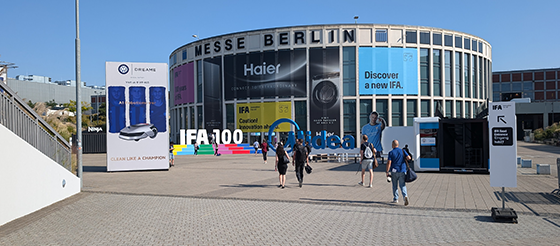
IFA Berlin 2024, Europe’s largest consumer electronics show, was as usual full of exciting product announcements showcasing key trends for all to look forward to in the months ahead and beyond. It was another sold-out show celebrating its Centenary with a new image and fresh approach paving the way for the next 100 years ahead. Recording 215,000+ visitors from 138 countries who came to Messe Berlin over the course of 5 days to witness innovation, experience inspiration, and discover the future of tech from over 1,800 exhibitors. Whilst IFA Berlin may have changed considerably since 1924, some may think that 2024 was a deja vu experience.

Ok, so there’s a lot of AI on offer from almost every brand stretching and relying on the most tenuous of references to AI in relation to their products. AI aside, it could be considered all a bit the same. Once you’ve seen one air fryer, you’ve seen them all and I suspect if you lined up all the air fryers on display in Berlin it would pave a crispy path all the way to London.

However, in all seriousness, IFA remains an essential part of the product life cycle, launching innovation that may have been talked about at CES in January but becomes reality by September for all to marvel and revel in at IFA.

The vast majority of innovation ranged from future tech to the present day and reflected various consumer trends, old and new. Naturally, AI was an important feature, with brands aware that consumers are expecting adoption and development. While AI was prevalent, it largely fed into the idea of user convenience with features that centre around making consumers lives easier. These innovations are present predominantly in products like AI-enhanced appliances, where automations are set to enhance efficiency.

The affordable premium trend also continued, with brands responding to people’s desire for maximum features and durability at a justifiable price. As the cost of living crisis effects continues, consumers are still looking for access to the best aspirational features from savvy brands. Categories delivering this ethos ranged from phones, foldables, smart home devices, laptops and drones, alongside AV and MDA categories, with consumer-centric innovations which are vital in driving the recovery and development of the consumer electronics industry.

The trends evident at IFA were AI, sustainability, and connectivity. All were linked back to AI, which creates convergent devices that save you time, energy, waste, and money as demonstrated fabulously by those geniuses at Samsung who presented the reality of family life in a real house, with kids, pets, clutter and reflective of how the vast majority of us truly live. Time strapped, cash conscious and tired, needing a little bit of help, whether through your Samsung Jet robotic vacuum that docks or Samsung’s Family Hub AI Vision fridge doors that open by voice command and also scan the dates on your produce to tell you what you need to eat quickly and wait for it, even suggests a recipe using those items on the turn that need to be consumed immediately – in my case usually spring onions. This is CE embracing AI to help consumers make decisions they’d rather not have to make, facilitating our choices and enabling consumers to spend their time and money more astutely.

The new Galaxy ring was particularly impressive and its ability to control your phone and other devices from it, as was the new Galaxy Notebooks and Frame Speaker which for me was the stand-out product. The Frame Speaker is quite simply a brilliant idea. Connect up to five in a room and immerse yourself in surround sound in a discreet and stylish manner. This 45x45x5 frame not only looks great on your wall as decorative art but also sounds truly amazing.

Amongst the noise, there was a lot of mediocre news with some new branding for legacy brands like Hoover & Candy, also this year’s on-trend colours for last year’s devices from many and even for some, the same stands. On the whole IFA 2024 was business as usual for many of the big brands and a game changer for others. Whilst many established brands did pull it out of the bag successfully, the innovation also came from those start-ups in IFA Next and from the ever-ambitious and increasingly more exciting challenger brands.

Of note is Hisense’s 8K Sonic Screen Laser TV which is a groundbreaking TV that combines 8K resolution with laser projection technology. Its standout feature is the “Sonic Screen,” where sound is emitted directly from the screen itself, creating an immersive audio-visual experience without external speakers. In the world of wearables and health tracking, RingConn Gen 2 was shown off. This is the world’s first ultra-thin smart ring designed with sleep apnea monitoring capabilities. It continuously tracks health metrics like heart rate and sleep patterns, offering advanced insights for sleep health and wellness and integrating with both Apple Health and Google Fit.

Moving into the world of Mobile’s Honor Magic V3 was showcased at IFA 2024, which is their latest foldable smartphone. The Magic V3 boasts the thinnest, sleekest design, top-tier performance, and a flexible display. Next up is Google’s Pixel 9 Pro which is Google’s latest and greatest flagship phone that has a big focus on AI, equipped with the latest AI-driven photography features and a sleek, user-friendly design. It continues Google’s legacy of delivering top-tier camera performance and seamless Android integration in three form factors. Moving into the laptop category Acer introduced two new laptops with AI at its core. These two laptops are the Swift 14 AI & Swift 16 AI which are both lightweight, powerful ultrabooks that integrate AI features for enhanced productivity. It’s designed for professionals who need a sleek, portable device that doesn’t compromise on performance, with AI tools embedded for tasks like smart photo editing.

Away from the standard everyday categories, IFA also enables and nurtures new categories to showcase products that initially may be considered niche but eventually become a competitive and growth category copied by many. One such item that may be the next growth category is the Outin Nano portable espresso from the brand Buydeem. It’s a hidden gem, with the ability to make coffee on the go with either your favourite ground coffee or the convenience of off-the-shelf pods. It certainly has the potential to be a stocking filler winner, especially for those who enjoy outdoor living and require decent coffee anytime and anywhere.

Another emerging brand with two notable devices that sit within the ‘care’ category is SKG. They offer products that I think could just be what some on the move or at home relaxing may include in their daily schedule. Their E3 Pro Eye Massager is small and whilst not discrete, gives the user full vision transparency enabling the user to see out while no one can see in. It is reasonably priced and offers a heated eye massage to help relax and de-stress. The other is the G7 Pro Fold neck massager which could appear to many to be headphones or a fan positioned around your neck. It actually provides a relaxing massage, with a heated option to soothe knots and muscle tension as you drive or read on the train or bus home after a stressful day at your desk or indeed as you are working from home. Both products sit within the CE category and can fit comfortably into any retailer’s product roadmap as self care becomes increasingly more popular across all age groups.

Innovation that was teased at IFA 2024 and will undoubtedly become standard in 2025 is Wireless Power which now rather impressively takes a leap from the smartphone to the smart home. The Wireless Power Consortium (WPC) announced its new Ki wireless power transfer standard. It offers a new era of wireless power for the kitchen, eliminating the need for power cords being able to transfer power through granite, quartz, marble and even wood. With manufacturers likely to introduce Ki-compatible wireless kitchen appliance ranges this year, it has the potential to change the way we cook and prepare food in the kitchen. Imagine what a game changer this will be in not only the appliances category but also kitchen design. Midea announced its first range at IFA 2024 and I’m confident many more will follow soon.

So could IFA 2024 signal something of a smart home renaissance? Well maybe. Matter, the smart home protocol aimed at unifying devices from multiple brands, was back in focus with multiple support announcements from key brands. There was also Samsung integrating its smart rings with SmartThings which enables the device to trigger smart home automations, and even robot vacuums that climb stairs. Everyday appliances are becoming more intelligent and increasingly better integrated.

The vast majority of what was on display at IFA 2024 is shipping today or landing very soon and retailers of all specialism will no doubt be ranging a significant proportion of them. So with this in mind, don’t take it as business as usual, wait and see approach. Be in the business of surprising and delighting your customers by showcasing new categories and the innovative and appealing new products on offer. Work with your chosen brands to create a customer journey which enhances the brand experience and enables it to pop, full of life and energy to develop categories and create sales.

Real world examples are the best way to sell what some think they may not need or dream about. We don’t all live with clean lines, no clutter, kids without toys or muddy pets. The reality is that we are tired, busy humans who occasionally just want to lounge in our homes and speak commands, set timers linked to programmes, be suggested recipes, sleep peacefully, launder at speed, save money and do our bit for the planet. Keep it aspirational but make it real. Put the product into real world scenarios, not merely a magazine dream that maybe doesn’t translate to the average consumer?

To read the published article by Dan Todaro, Gekko Group CEO, please visit ERT

Tagged , , , , , , , ,

Customer Loyalty

“Lasting loyalty is underpinned by the customer experience – so from start to finish, it is critical that brands meet consumers’ needs. But true loyalty needs to be earned, not forced and that is where many brands are currently at the top of a slippery slope. We are currently seeing a shift from a points-based reward system to membership offering reduced pricing at the point of purchase. This forces customers to join and become ‘loyal’ so that they can access products at promotional prices. It is becoming a necessity rather than a choice, which has a knock-on impact on the customer experience and scuppers the ability to build long-term, authentic, two-way relationships, relying merely on pricing to keep customers coming back. While it may be popular, moving to an app-only loyalty system could also be bad for business, as it alienates and excludes some customer groups. Those who do not have a smartphone or know how to use one – typically vulnerable consumers – are not able to access the same deals as smartphone savvy shoppers. This level of digital ageism and ableism is not inclusive or conducive to loyalty. In addition, the growing trend for ‘dumb devices’ amongst younger consumers who are avoiding digital noise is creating another new segment who would not be able to benefit from an apponly loyalty programme. Brands should offer everyone the same experience of loyalty, however they choose to engage. Giving customers options is crucial for building lasting customer loyalty, whether via a loyalty programme or through their browsing and purchasing interactions. Providing choices ensures that customers feel heard, seen and understood, building much stronger long-term relationships. Instead of forcing loyalty, give consumers a reason to keep coming back and avoid digital exclusion that will eventually see them abandon your brand in favour of others.”Daniel Todaro, CEO at Gekko Group

To read Daniel Todaro’s, CEO at Gekko Group Comment, please visit A1 Retail Magazine

Tagged , , , ,