Tag Archives: Innovation

CES 2024 – The Weird and Wonderful

Source: IGN

Each year, CES arrives to inaugurate the year with awe-inspiring technology that leaves us amazed. Yet, amidst the spotlight, there’s also the eccentric, under-the-radar technology that captures the hearts and minds of onlookers. This blog post aims to highlight some of the peculiar and fascinating technologies featured at CES 2024.

  1. Starting off, we have one of the more unique products unveiled at this year’s CES – ‘Flappie,’ designed to prevent cats from bringing unexpected “gifts” inside. Conceived by Swiss brothers, their innovative cat flap was inspired by their mother’s challenges in deterring family cats from bringing mice into the house. The flap includes a manual locking system with a chip detection feature, ensuring it opens only for the specific owner’s microchipped pet. Additionally, it boasts internet connectivity, enabling users to operate the door and review camera footage via a smartphone app. This device operates through AI, detecting when the cat is carrying something in its mouth and withholding unlocking the cat flap until the “gift” is dropped. This groundbreaking cat flap is set to retail for £310.
 Source: Flappie
  1. Introducing the Rabbit R1, a standout product from CES 2024 that has sold out twice within just 48 hours. The Rabbit R1, measuring half the size of an iPhone 15, boasts impressive features such as 4GB of memory, 128GB of storage, and a powerful 2.3GHz MediaTek processor. Unlike traditional devices, the Rabbit R1 does not host conventional apps; instead, it operates entirely on an AI platform, specifically the Large Action Model.

    This innovative device is designed to offer users a more focused and less intrusive digital experience. Responding to voice commands, the Rabbit R1 can perform a wide range of activities, including booking rides, managing household tasks, and providing answers to queries. As an AI-centric device, it has the capability to be trained and taught to execute specific commands.

    Currently priced at £159, the Rabbit R1 redefines the user experience by combining compact design, powerful performance, and AI-driven functionality.
Source: Rabbit R1
  1. Introducing the AX Visio by Swarovski Optik. While they may resemble ordinary binoculars, these boast sophisticated internal technology. Gone are the days of lugging around wildlife identification books during your wilderness adventures. These binoculars feature an ingenious capability that lets you identify up to 9,000 species by simply observing them through the lenses. Priced at £3,820, this product caters to a niche market, likely targeting professionals or passionate wildlife enthusiasts, given its premium cost.
Source: Swarovski Optik
  1. Now, let’s explore Visage, a contender in the realm of smart door locks. Departing from the conventional models that rely on Bluetooth or phone taps, Visage elevates the experience by introducing biometric authentication and secure access. Simply allow the built-in camera to scan your face for a hands-free unlocking process. This innovative door lock supports up to 100 profiles, enabling every family member to effortlessly access the front door using facial recognition. It’s especially convenient for moments like returning from a grocery run with hands full. Lockly’s Visage is slated to hit the market this summer with a retail price of around £275.
Source: Lockly
  1. Introducing the Vasco Translator E1 – an AI earpiece paired with a connected app, seamlessly translating 49 languages in real time. Say goodbye to the struggles of inaccurate translations and clunky language apps. This innovative device eradicates language barriers, facilitating fluid conversations in real time for up to 10 participants. As the icing on the cake, enjoy free lifetime connectivity for translations wherever you go. Anticipated to launch in Q2 2024, pricing details are currently unavailable. Get ready to experience a new era of effortless communication. 
Source: Vasco Translator

Concluding our showcase of 5 Weird and Wonderful gadgets emerging from CES 2024. This year once again brought forth astonishing technology, spanning from Transparent TVs to AI Cat Flaps. Until next year!
Tagged , , , , , , , , , , ,

IFA 2023 – A Core Ingredient in the Evolution of CE

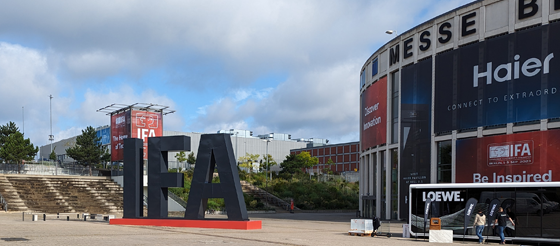
Once again IFA 2023 was the place to be seen for all technology brands and not just those from the CE category. With the show sold out across 26 halls covering 130,000 sqm of exhibition space, filled by 2059 brands from 48 countries, there is no other show that competes. IFA 2023 affirmed its position as the de facto CE showcase, forecasted to host 180,000 visitors from 144 countries over 5 days.

The fact that we have witnessed all markets contract in every category, shrinking by an average of 7% and in particular CE which is down 12.4% globally. The EU market outlook is looking increasingly positive at a more palatable contraction of 4.5% year on year. No doubt this is making the rest of the world a bigger problem for those whose presence is not as prevalent in the EU market, compared to other brands. The economic reality is that the globe is in a  Polycrises, a simultaneous occurrence of several negative global events such as war, extreme weather events, food and energy Inflation which is compounded by increased Interest rates and social unease, unsurprisingly stops people from spending. Therefore the need for a brand to increase its voice rather than remain silent is critical and to do this with a new perspective. Doing so through a new lens that better understands the pain points consumers are experiencing and appeals to the user’s pleasure points. Perhaps achieved through ethical practices, practical time and cost-saving innovations that help ease the pain on a macro level, rather than add to the global situation. That’s why IFA as a cultural hub, is so much more than an exhibition, its place is essential to the industry as the centre stage for the globe’s CE brands not just to brag but to demonstrate how to solve the problems we share as we coexist on this planet. Making IFA a core ingredient in the evolution of the consumer electronics industry.

All brands, big and small, were in attendance with 350 of those 3059 brands being CE startups from across the globe. These included all manner of concepts and categories and there were several robotic floor care startups displaying and showcasing, however, one that caught my imagination was Dreame’s Revolutionary Flagship Robotic Vacuum L20 Ultra with Industry First AI-Driven Mop Extend™. Which is definitely worth a look. However one of my most memorable chats was with the haircare brand SharkNinja and its ultra compact SpeedStyle hairdryer. The irony is, as a follically challenged man, I’ve not owned a hairdryer for 30 years yet I was enthralled by its functionality, design and huge potential consumer appeal, it’s going to be a Christmas wish list essential item.

The themes were consistent across every manufacturer and focussed on Sustainability – Renewables – Connected by AI and  Premium. Let’s start with the latter as while aspiring to be a premium brand is admirable there, in relative terms, there can only ever be a few brands who genuinely sit in the category otherwise it defeats the terminology of ‘premium’. It’s down to the consumer’s perception of what constitutes premium based on how much they are prepared to pay for your products and brand. What you and I may think of as being premium may well not be the view of others and is likely to vary greatly, depending on whether you’re Gen Z or Gen X.

These generations and to be fair, everyone now, wants quality as standard and brought to them at a reasonable price, as well as being produced ethically in all aspects including the manner in which those products are brought to market. Whilst GfK expects the global CE market to still be in the red by the end of this year, the trend is for consumers to replace appliances, as home tech becomes increasingly more innovative, making even those devices and appliances of five years ago look exceptionally dated in look and functionality. Today many want technology which most now consider commonplace in the home, not luxury or the unattainable.

Almost all appliance brands included smart connectivity in their product line-ups presented at IFA 2023, which enables you at a basic level of connectivity, to control your appliance from your phone, hub or television. Personalisation is the next step in the development of your smart home where you can not only change the panels and the lighting of your cooling appliances such as the LG MoodUP Instaview Freezer but also create your own wash program and save it as your personal wash cycle as LG have also done as part of their wider LG THINQ UP 2.0 concept. Taking cooking to new levels of perfection as Haier has done with the ID series featuring a unique style and the exclusive Bionicook technology. With the ID Series, you can not only view what’s cooking in your oven with its built-in camera but also see it on your phone or TV and the built-in screen on the oven’s facia. It’s opening up the options for personalisation in your home tech to meet the needs of the household to a unique level of personal satisfaction.

Combine this with AI, assisting in noting your trends on laundry, cooking and cleaning, which enables it to update the software on your connected appliances as you would update the apps on your phone or tablet. The AI functionality improves the efficiency of, for example, a more effective wash cycle so that it uses less energy while still giving you a great wash thanks to the connectivity and the hOn app which allows users to get the most out of their Candy Machine. Increasing innovation and enhancing sustainability credentials which for many brands also extends throughout the entire product, and not just its materials. With almost all brands now adopting a policy where a percentage of all products are made utilising recycled materials and not just its packaging. At the forefront of this message was both LG and Samsung who were championing this throughout their product categories. Taking the initiative a step further, linking these credentials into the aspirational brand qualities, which many consumers are now looking for in a true premium brand.

So what’s different this year is that people are asking more questions and drilling down on the specifics. While 74% said they will search online before buying, search data also shows sustained growth in terms containing questions — up 25% compared to the past three years during the same period — and searches for “which is best” and “where to buy” continue to garner momentum in the shopping category on Google Trends. Those searching online, we know like to shop in-store when it is a considered purchase. So make sure you feature on that where to buy ist.

Whilst the wealth of bands at IFA 2023 were vast, you could not miss one brand in particular whose branding adorned the neck of almost everyone with its very clever lanyard sponsorship. That brand was Hisense who was this year, IFA’s headline sponsor and gave the opening keynote delivered by its Global President,  Fisher Yu whom also announced the brand’s sponsorship of the Euro 2024 Football tournament due to be held in Germany. When you are a brand that not only makes TV but also appliances and applications, it’s easier to integrate your devices and with VIDAA at the heart of the ecosystem, Hisense products and its fellow brand stable mates can integrate via the VIDAA interface making the TV in your home, the hub of the household that connects your smart home ecosystem. Making the screen the focus of your living space where you control your appliances around the house via your Smart TV. With ViDAA now in 180 countries and connected to 22 million devices, the task for Hisense is perhaps slightly easier than it may be for other brands in the CE sector. Coupled with the shift from content to services the next step is how to monetize this conversion and its integration with responsive and predictive AI, to further enhance the user’s experience and lifestyle. Easier done when you own the platform and make the devices it connects to.

It’s fair to say that the outlook for retailers is exciting with increasingly more innovation in all categories and an enhanced social responsibility tone that now takes on many more subject matters. These include AI and sustainability which are now common parlance in the sales approach by brands to their target consumers, old and new. For those amongst us who ignore the trends that come out of IFA, do so at some risk, as these trends will inevitably become standard messaging across every category and brand within the year, not the distant future. It’s crucial for the success of all within the industry to embrace, understand and develop these trends to create meaningful consumer conversations.

To read the published article written by Dan Todaro, Managing Director please visit ERT

Tagged , , , , , , , , ,

The collaboration advantage: A new frontier for competitive businesses

When the going gets tough, the tough get going and businesses are having to dig deep right now. Whether it’s big businesses like FANGs (Facebook, Amazon, Netflix, Google) or start-ups – we’re seeing the business economic model in full swing. Lay people off, put more pressure on those staff that remain because of squeezed costs and paddle as hard as you can to keep your head above water.

As the saying goes, a problem shared is a problem halved, so why aren’t we tackling more of these challenges collaboratively? Collaboration is nothing new, but when we think about it within a business context, it’s often talked about as a people strategy – how do we get people to work better together to improve our outcomes?

So how can we work better together as businesses to do the same, especially within SMEs? If we look at this cross-sector – retail, FMCG, technology etc – there will be thousands of businesses investing money in the same things, whether it’s R&D, resource, product innovation, supply chain, marketing, national/international expansion, or business process.

Change the narrative

We need to encourage collaborative discussions to happen and change our language. Often when businesses meet, it’s one selling to the other, rather than enhancing the narrative of how can we help and elevate each other.

If we look at the way we physically work these days, with so many more shared offices, there’s never been more of an opportunity to collaborate. According to Statista, the volume of flexible office workspace in the United Kingdom is expected to have nearly doubled between 2019 and 2023, reaching 167 million square feet in 2023.

However, if you walk into a WeWork, TOG or similar managed building, I wonder how many businesses are collaborating rather than just sharing a physical space? We need to be bold and brave – if you don’t ask, you don’t create opportunities and facilitate a group culture that goes out and gets.

Never rely on Government

We’ve seen how ineffectual the Government really is at supporting businesses to flourish, particularly SMEs, including the hike in corporation taxes, failure to reduce business rates or even introduce an online sales tax to level the playing field with the likes of those registered offshore.

So where do we look and how do we take the initiative? Perhaps industry trade bodies can do more to support and, let’s be honest, almost every sector has one. Many are great at celebrating success, offering training courses and providing a forum for solving industry problems but they could play a far greater role in bringing organisations together in a commercial, rather than a ‘club’, approach to help solve their individual problems.

Ask your trade body to create a collaboration work stream and be the one to set it up. You may only need to ask one question and there might be someone right there, right now, that could save you a lot of money. It’s a way of moving from a competitive advantage to a collaborative advantage. We can all learn and win that way.

Start simply with finance and marketing

Sharing just one thing could make a big difference so start simply. Sharing financial and admin resources is an easy route into collaboration. But I really think SMEs are missing a trick when it comes to sharing marketing costs. Marketing is the budget that SMEs always wish they had more of – more visibility often means more sales – yet it’s the one that gets squeezed the most in turbulent times. I think there are so many ways for businesses to do this.

Social media brand collaborations on platforms like Instagram have opened new audiences for SMEs. Think about how you could partner up with a like-minded brand for a ‘real-world’ marketing campaign. It will make media far more accessible if you share the cost, for example, of an out-of-home campaign.

An SME doing this really well is the cereal brand Surreal. The brand is looking to disrupt the cereal space and recently partnered with like-minded businesses Numan, Cheesegeek and Gymbox for a throwback to Daft Punk in an online mock-up ad. Four simultaneous ads read ‘Harder, Feta, Faster, Stronger’ for those in the market for erection medication, online cheese, high-protein cereal, and an unconventional gym brand. It was super fun, and engaging, created a huge amount of talkability and was cost effective too!

If you’re purely an online brand, think about creating a collaborative pop-up shop that will drive in-person trials for your brand and product. Do it collaboratively with complementary brands that alone could never afford to be on Oxford Street. Yes, the busiest shopping street in the UK, is achievable.

If you’re on the high street, why not create a marketing committee that maybe works alongside your local Business Improvement District (BID) and challenge them to do more than just turn on the Christmas lights? Retail is 365, not just for the holidays. Get everyone to work together to fund a local marketing campaign, it could be a discount Wednesday or a 10% off day every month at every door irrespective of the retailer, independent or multiple.

There’s no doubt that collaboration comes with challenges but, if you pick partners wisely, with the same goals, culture, and values, it could be just what you need to develop and thrive in today’s tough economic climate.

To read the published article written by Dan Todaro, Managing Director please visit Business Leader

Tagged , , , , , , ,

‘Inevitable’ fall of Wilko explained – ‘atrocious’ online to ‘ghost ship’ stores

“They were occupying an ex-Woolworth’s size store with 2,500 square feet, if not bigger, and paying excessive amounts of rent, excessive amounts of rates, with very little support from the government,” Daniel said. “The average basket value was low and they were never going to make a huge amount of money as margin, when you consider all of their overheads including salaries.

“But they didn’t appeal to a mass audience and they didn’t make themselves known to a younger audience, who ultimately probably would have enjoyed shopping there on the basis that it would have fitted in with their budget, but it just did not appeal to them in that way. It puts shoppers off to walk into a giant store that is half empty. They could have sectioned off 500 square foot of the store and put everything in there to create a more appealing shopping environment rather than feeling like you were in a ghost ship.”

But it was ultimately their failure to have a strong online presence that left Wilko ultimately vulnerable, Daniel added: “Their online offering was atrocious, it was appalling,” Daniel said. “In the space of nine months, they borrowed 105 million pounds. Was there no consideration of that money that they borrowed to help develop that online proposition and create a new audience. You have to question where did this money go?

“As an organisation, they were struggling to appeal to a certain demographic, couldn’t sell enough of their low-end products to make enough margin to keep these stores going – so did no one think about investing part of that to just develop some kind of online proposition?

The general demise of the high street also played a big part in Wilkos downfall with the loss of big high-street stores such as Debenhams, which entered administration twice throughout its 242 years but finally collapsed for the final time in 2020. Other big high street losses included Sir Philip Green’s retail empire, Arcadia Group, which included brands such as Topshop, Topman, Burton, Dorothy Perkins, Miss Selfridge and Evans. It fell into the hands of administrators in 2020, under the weight of a £750million debt pile. Another brand previously owned by Sir Philip Green and one of the most famous on the street, BHS, had fallen into administration a few years before in April 2016.

“Once one starts to fall, it’s a domino effect for town centres because if they’re not drawing that portfolio, then it’s very difficult to draw somebody to the town, park up and wander through,” Rick said. “Then there’s the demise of the town where a lot of people were saying that it’s dirty and people were generally being put off because the shutters were up, the wrong people were in the towns, and its demise was setting in from the big boys leaving those locations. It’s just generally been a slow strangulation of the High Street and when one goes its a domino effect.”

Daniel agreed, adding: “Wilko was never a destination store – you didn’t come into town to shop at Wilko, you wandered into Wilco after visiting the bank or going to M&S or the post office. Debenhams’ loss decimated certain towns where it was literally the anchor store in the most prominent position in the high street. Part of their downfall was that there wasn’t the footfall. The high street needs help, not just from the government and local council, but from responsible retailers too.”

When the pandemic hit in 2020, people were forced to use online to order shopping and deliveries, only hammering home Wilko’s failure to make it online. “Places like Wilko had the benefit of a broad offering of toothpaste, pet food and everything, but their model is where the problem lies and instead people went to places like Asda online and got there, instead of the high street,” Rick said. “Wilkos didn’t have its foot in the market early enough for it to capitalise on it when things started to go wrong.”

Even when the cost-of-living crisis hit, Wilko, as a budget high-street store, may have been expected to survive – but there were other competitors out there. Rick explained: “Places like The Ranch have sprung up over the years and been able to give Wilko clients an offering not only just in store but online.

“In these times, it’s about sifting the wheat from the chaff and inevitably those that are strong, and have good contingencies and can weather the storms will always prosper out of this. But unfortunately Wilkos from one reason to another reason, to another reason just couldn’t weather this type of storm.”

For Wilkos’ former employers, Daniel said he hopes they are redeployed into other stores, but in reality, fears they will “fade into the rest of the unemployment figures”. This, he says, is only more reason why the government needs to get involved in saving the high street.

“Do you really want another lead wave of redundancies happening on your High Street, which is then going to further impact your entire local economy and what it costs the taxpayer to then support them?” Daniel said. “This is a very short sighted view that this government is taking that will actually cost more in the long run than if you had done something to support the High Street and to help the high street thrive and survive, as opposed to letting it die.”

To read the published article written by Dan Todaro, Managing Director please visit Mirror

Tagged , , , , , , , ,

Display Systems

Over the years, retail display systems have undergone significant transformations, driven by advancements in technology, evolving consumer preferences, and the need for retailers to create immersive shopping experiences. In the past, retail display systems primarily consisted of basic shelves and counters where products were neatly stacked or arranged, but lacked the ability to capture consumers’ attention. In today’s world, retail displays aren’t just about enticing shoppers to come in-store. Instead, they’re about drawing attention, displaying information, and setting products apart from the competition. With fewer people watching traditional TV, in-store displays also need to do the extra work of informing and selling to potential customers.

Retailers can integrate digital displays, interactive screens, and even augmented reality (AR) elements into their fixtures, which allow for dynamic content presentation, enabling retailers to communicate the unique features and benefits of a new product or brand in a more engaging manner. They can showcase product videos, customer reviews, and engaging content, fostering a deeper connection with consumers.

In the world of considered purchases, using tech well can add to the experiential and immersive experience that shoppers increasingly expect from their high street visits, helping to engage and excite consumers. Retailers such as John Lewis are striving to meet this need, with new concepts presented at their Horsham store earlier this year, including a “wonder trial” interactive treasure hunt and a Clarins express skin service, to provide a ‘multi-sensory one-stop destination for fashion, beauty, tech and home design’. Visually appealing and shareable displays are also highly effective for generating ‘hype’, allowing retailers to capitalise on social media and influencer marketing to amplify the excitement around a new product or brand. Shoppers are more likely to capture and share their experiences on social platforms, effectively spreading the word and generating organic buzz.

To read the full article by Rupert Cook, Business Development Director please visit A1 Retail

Tagged , , , , , , , ,

Curating the Customer Journey Through Training

When independent stores raise the issue of needing more support from brands to compete against multiple and online retail to remain competitive, there’s no support more valuable than training. Without the sales skills to confidently identify the customer’s needs to sell the benefits of a product that is right for them, you can’t really blame the brand if you aren’t selling more products than forecasted.

Most brands will offer training to your staff and this is free, so if you aren’t taking advantage of it, why not and if you are, do so some more as it’s there to help you and the brand in equal measure.

Allowing your salespeople access to brand ambassadors or training representatives is a positive start to your team’s training journey. Put personalities aside, they aren’t there to be your friend, let them do their job and train your team to develop their core competencies to improve the process of selling consumer electronics. Too often I hear criticism of training teams even before they’ve been allowed to do what they are skilled at doing; training your sales team.

On the whole, every brand will have created modules to be delivered in person or online that are specifically designed to engage with your staff and help them better understand not only the differences in technology options across a range but also the approach, many of which will be incorporating soft skills, how to sell.

Those of you who appreciate the value of training and see the benefits it drives to the store’s bottom line should take what the brand has to offer, perhaps even developing this further by incorporating it into your own training program.

Think about what’s important to you and your customers, be it high-end, entry-level, ease of use or bells and whistles, curate journeys your staff can communicate effectively during the sales process, that embraces the free training your brands have on offer to you. Work with your supplier to develop training that meets the needs of your business, take it beyond generic and make it bespoke to you and your challenges based on your customer profile.  By working with the brand ambassador they will be happy to adapt to make it relevant to you and your needs, after all, they will be rewarded for helping you develop sales.

I am a true advocate of training as an essential part of great retail experiences because it’s what my organisation does and research like our Mind the Knowledge Gap Research helps us understand better. Did you know that:

  • 1 in 10 shoppers have cancelled a planned, considered purchase due to poor in-store advice, This equates to some £15bn in revenue overall over the past year.
    • Gen Z [those now in their 20’s] are most likely to seek out experts
    •  37% of shoppers in the consumer electronics category revealed they would be prepared to spend more if they received excellent and knowledgeable in-store advice
    • 1 in 4 DIY shoppers (25%) were so disappointed by the advice they were put off making an expensive purchase altogether, with 11% pulling the plug on the purchase and walking out of the store.

Unsurprisingly, staff training is not only good for your profits but also morale and the increased motivation of staff enables them to want to learn and do better in their roles especially if it’s linked to personal and career development. It is proven to improve Productivity, Efficiency and Accountability.

Now more than ever, enhancing the customer experience is critical to create theatre in order to take the consumer through the varied steps of the journey from demo to sale. To do this, retailers need to develop the staff’s skill set to be the very best they can be – and this all starts with training.

A key element of success in store, especially in the considered purchase sector,  is the engagement of shoppers with any retail sales advisor. Therefore for a retailer, the need to have proactive, helpful, skilful, knowledgeable staff, capable of providing a personalised experience is key in the battle to convert shoppers into customers in your store.

Curating the customer journey through training enables you to enhance the overall in-store experience, complementing your displays and in-store environment to bring it to life as an experience. Tailored alongside offers and promotions it can be the difference between a sale or not.

If there is one key driver that should be running through a retailer’s training approach, like a stick of rock, is that the experience you offer in-store with fully trained and engaged staff is something the online experience can’t ever replicate.

To read the full article by Dan Todaro, Managing Director please visit ERT Online

Tagged , , , , , ,

An Experience Worth the Effort?

For consumers, a trip to your store has to be worth the effort, time and expenditure, offering an experience that surpasses the convenience of simply buying online from the comfort of home. As a retailer how far do you go and how much do you invest to meet these needs, especially considering the current economic conditions.

It’s worth noting that from a macro perspective, things are not all doom and gloom. People are shopping and spending. The latest ONS data showed positive results for retail with a surprisingly large rise in retail sales for the month of February, the result marking the second consecutive month of industry growth. Volume sales were up by 1.2% against forecasts of 0.2% and once again shows the resilience of the UK consumers against an unrelenting cost of living crisis.

Hopefully this positivity isn’t just a blip, but even so, it’s fortunate that in the ERT world of ‘considered purchases’ – purchases made with significant financial or emotional thought – there is simply no match for the timeless ability of an in-store experience to engage all the senses and stimulate sales. This is particularly the case for consumer electronics and home appliances – categories with products that often require a high spend and technical questions that need to be answered as well as having to fit in with our homes and lifestyles.

True experiential retail as a strategy goes further than this though and could be defined as an approach where physical retail spaces offer additional experiences beyond browsing or buying products. It directly engages customers, inviting them to experience your brand live and in-person. Pop-up events, masterclasses, brand takeovers and hosting community events are all examples of experiential retail that may or may not work for you.

What is undeniable though is that customers now expect more. Research in the US  found that 91% of consumers would be more inclined to purchase a brand’s product or service after participating in a brand activation or experience, and 40% felt they become more loyal to the brand.

Retailers and brands have gone to great lengths to meet these expectations. Blowing the budget earlier in the year was luxury brand Louis Vuitton who transformed stores across the world for the launch of its collection with artist Yayoi Kusama. Stores such as Harrods were redecorated with Kusama’s signature polka-dots and life-like animatronics of Kusama painting in the windows of the stores!

On a slightly less grand scale, ERT has reported several times on how John Lewis has refurbished several stores to create “inspiring spaces to showcase products, experiences and services”. And this year they plan to trial a multi-sensory experience at its Horsham store. This is all great and hopefully it helps strengthen their position on the high street. However, what, in my opinion, can potentially detract from the desired effect is that it is often difficult finding a member of staff to talk to, something made all the more challenging with the no uniform policy.

People really do count when it comes to the overall retail experience. After all, this is a trump card that physical retail has over online channels. Indeed, Gekko’s latest research shows that 42% want to be able to engage with knowledgeable shop staff. It’s therefore surprising to see great looking and no doubt expensive Meta Quest virtual reality demo gaming areas in stores that are cordoned off from shoppers because there is no staff presence. If ever there was a category that needs to be experienced by shoppers before they buy into it, it’s VR.

So how can all this be applied to independent retailers selling consumer electronics and domestic appliances? Unforgettable, mind-blowing experiences that go viral on TikTok are generally going to be the preserve of big city flagship stores like Harrods. What is a realistic expectation is to play to your strengths both as an individual business and a physical retailer. As highlighted above, your staff are vital. Good old fashioned customer service is still fundamental to the retail experience. The research also showed that for 60% of shoppers cite a pleasant retail environment is an important factor to a great retail experience.  For 47% of those surveyed, the top reason for in person shopping versus online is the ability to try before you buy.

Most of you will already be offering this kind of experience for your customers but take the time to regularly reassess how you’re meeting these shopper desires. Moving with the times is essential though. What has worked in the past with your older customers won’t necessarily appeal to younger generations who have different expectations. But whoever the customer, the experience they receive in your store must be worth their while.

To read the full article by Rupert Cook, Marketing Director please visit ERT Online

Tagged , , , , , , , ,

How Luxury Retailers Can Boost In-Store Sales This Spring

Despite ongoing inflation, the retail sector in the UK is showing improvement, with like-for-like sales rising 4.9% in March, according to BRC/KPMG. With this extended bank holiday season upon us, there is more of a spring in the step for retailers. A recent survey we commissioned of 2,000 consumers found that 13%, equating to 9 million adults, are definitely planning to hit the physical shops, presenting luxury retailers with a meaningful opportunity for sales uplift

To take advantage of this opportunity, retailers need to create a shopping experience that is truly focused on the customer. 60% of respondents in the survey cited a pleasant environment as an important factor in a great retail experience. Luxury retailers should, therefore, ensure that they offer a pleasant in-store experience, starting from the moment the shopper walks in. 

This can be done by creating an immersive journey towards the checkout with creative displays and merchandising. All of this should be backed by product availability, highlighted promotions, and all-around first-class customer service. Staff should be readily available on the shop floor, and queues at the till should be kept to a minimum.

To combat inflation, promotions are vital, with 59% of respondents in the survey agreeing. Luxury retailers should ensure that they are competitive with online channels and have promotions visible and clearly marked up to entice hard-pressed consumers to open their purses and wallets.

In our survey, 42% of respondents cited engaging with knowledgeable shop staff as a key reason for their visit. Luxury retailers should, therefore, ensure that staff is well-trained and ready to answer questions. A well-trained expert can be worth their weight in gold, particularly with considered purchases. This will leave a positive imprint encoded on the memory of customers.

One of the top reasons given for in-person shopping versus online is to try before you buy (47%). Luxury retailers can play to their strengths here by effectively merchandising their products and encouraging customers to engage in a tactile journey of discovery. It is crucial to have the right expert on hand to assist the process, with all the senses of the shopper engaged in a truly immersive physical experience that will lead them towards the checkout.

The modern retail experience is underpinned by sociability, combining a trip with meeting friends and dining. Retailers and brands need to complement this by providing an environment that is sociable and luxurious, offering dining experiences, and other events that are relevant to their luxury brand. 

By creating a luxury experience that extends beyond the purchase, retailers can build customer loyalty and enhance the overall shopping experience for the customer.

To read the full article by Dan Todaro, Managing Director please visit Luxury Advisor

Tagged , , , , , , , ,

The Power of Online

Creating an effective online presence is hard and maintaining it is harder still, so why do it? Well, it’s the virtual window to your store and even if it’s a non-transactional site, it’s as important as your store experience.

So when considering your website, always ask what do you want the site to achieve. If you want to drive sales, the site needs to be set up to have your consumers coming to it. You could make the best site in the world but if you don’t attract the right people to it, no one will know it exists, nor will you sell anything. 

If you have the luxury of a big budget to launch a major ATL campaign to drive awareness of the site, then great but if this isn’t an option, then you’ll need to get inventive and use your resources wisely. Therefore it is best that you spend as much time on planning the site as defining your consumer base, driving the customers with each click-through to your site. And don’t forget to make it mobile compatible as according to Statista, 59% of all worldwide website traffic is now on mobile devices. According to Hubspot, the industry benchmark for average dwell time is considered somewhere between 2-4 minutes. It usually takes around this time to explore a website and get a feel for the design and your offering.

You will soon know if you have the right audience coming to the site as they will purchase if it’s an e-commerce site or engage if not, the objective is to not let them drop off, never to be seen again. Play to the key strengths of online, with 85% of consumers researching online before a purchase in store, make sure you use the space at your disposal to portray all key bits of information surrounding the products. 

Consumers will often be coming to your site for information on pricing product details and reviews, so ensuring all this information is readily available and accurate is key and furthermore, this helps with SEO, helping to push your site up the search rankings.

Everything from pricing, through to more detailed specifications should be easily found and digestible and failing to do so will lead to customer drop-off. People will more often than not be looking for this info with a view to also then go and touch, feel, demo a product with a view to purchase in-store.

If you already have a physical store, make sure the site is aligned with your in-store messaging and values. Too often retailers aren’t aware of how messaging, promotions, experience and brand compliance should transcend from store to site and vice versa. Recent Gekko research found that 69% of people surveyed said that a well-synced online and offline experience would help drive a considered purchase.

The customer journey more often than not starts with a visit to your website. Gekko’s research has shown that 85% of shoppers looking to make a significant purchase will do their research online before actually buying. This shopper journey should be developed, keeping the consumer’s attention, rather than leaving them unmotivated to click beyond the landing page or walk through your physical door. Therefore with dwell times on a landing page recorded as up to 4 minutes, the importance of the look, feel and ease to digest information and navigate their way through your site is therefore the key to a successful site. It’s understood that 88% of online shoppers are more likely to continue shopping on a retailer website that offers a personalised experience, increasing to 96% of Gen Z and 97% of Millennials based on research conducted by Elastic.

It may seem an obvious thing to point out for those of you with a physical retail presence but be conscious of using changing seasons, events and promotions as a worthwhile excuse to update your site. Keeping your site fresh and relevant will make sure you are attracting traffic to the site and driving potential customers to shop with you for special seasonal deals. Ensure that any promotion or event you are running in-store is reflected on your site and perhaps create a call to action. By doing this you can get to understand your customer better so that you can proactively market out to them at a later date. Utilise site analytics to assist you in understanding who your consumers are and how they are using your website. Insights on where users are coming from, which pages shoppers look at the most, plus the effectiveness of any marketing campaigns you have running will all help understand key impacts and help in your long-term strategies for the brand and products.

If you create a site that has independent reviews and rating, which is considered standard, then be prepared not only for the positive feedback but also the less than glowing reviews. The reality is that all retailers will get these from time to time. It’s how you deal with this feedback that matters. According to Review Trackers, 94% of online customers have avoided a business due to a negative review. Therefore for over 9 out of 10 customers, online reviews have become essential to their decision-making online. Whilst 94% may avoid you, it’s claimed by Podium that 93% of customers say they’ve made purchasing decisions based on an online review. What’s more, most customers say they won’t engage with a product or business if they see too many negative reviews or a star rating of less than 3.3. Be mindful of how you position your feedback and its features in Google searches of your site.

It is estimated that  21% of UK retail purchases are expected to take place online in 2023. It’s therefore no surprise that your e-commerce strategy is important. With more customers shopping online, your business can sell more and earn more as a result if you’re running an effective e-commerce site. However, whether your goal via your website is to boost direct sales or only engagement, it’s important to create a strategy that encourages consumers to your site and increases dwell time that elevates the customer experience and begins their journey.

Keeping the site uncluttered is critical as is the need to have relevant imagery that truly represents your business, royalty-free stock photography can work but it needs to be true to your brand. Involving your staff can make it personal too. It makes you real and relevant to the consumer with the added bonus that they recognise a few faces when they drop into your store, increasing your credentials as a retailer that values a personal approach to the customer journey. 

To read the full article by Dan Todaro, Managing Director please visit ERT Online

Photo by Negative Space

Tagged , , , , , , , , ,

Five factors driving purchase behaviour in the current climate

The last few years have seen a series of unprecedented events that have created a new paradigm where consumer expectations and needs have been radically redefined. In this new world, retailers need to respond with a new approach in tune with our changed times. 

So how did we get here? Firstly, the pandemic’s cultural legacy has been a shift to a life where many of us continue to work from home, meaning retail businesses need to cater to a new stay-at-home existence. Meanwhile post-pandemic we have seen political instability and huge inflationary pressures impacting many. The climate crisis is also becoming more apparent on the back of record global temperatures and a series of catastrophic natural disasters. This is also feeding into permanently changed behaviour from millions, particularly younger consumers.

For every retail marketer, an evolving playbook is needed for this new age to respond to this evolution of behaviour. Both cultural, economic and environmental. Based on some recently commissioned research with YouGov, we identified five key factors driving behaviour at this time.

1) Affordability

This means something different to everyone, but in a recession or a flatlining economy, customers spend differently. So what does affordability mean for your consumer and how do brands accentuate this factor? I recently spoke alongside AMDEA who are the body that represents the white goods industry in the UK, who did some research in relation to the Eco buttons on washing machines and dishwashers.

They revealed it was saving consumers on average £90 a year. They now really highlight this fact to drive consumers to brands promoting this feature either in store or online. Knowing that affordability is a critical criteria for consumers, brands can smartly promote the long term savings they can offer. Perhaps paying back the cost of the appliance within five years. When you multiply this reduction in energy costs across several appliances in the home, you can see how the savings increase.

Furthermore the energy saving ‘eco’ modes can provide a win/ win of appealing to sustainability minded consumers.

2) Essential trumps desirable

We are seeing far more caution in the market for spending on big ticket items in particular.   Therefore positioning your products as ‘essential’ items in the psyche of your target audience is important as part of the marketing mix.

Perhaps the days of assuming there is an implied need for your brand are no longer present. Disposable income in all households, even middle earners, is becoming more scarce. They may want your product. That desire may be there. They may covet it. They may feel that they need it, but unless it’s absolutely essential and integral to their life, they are not going to buy it. 

Therefore highlighting why your products are ‘essential’ to their needs. It is not so much that it is on offer but more, how does it add genuine value to their lives? Why is this going to be a product they can’t live without? Tapping into the primal needs of the customer in more challenging times is a way retailers can craft their story and resonate honestly with their target audience.

3) Durability

As an extension to being essential, people will need to feel that the item that they are buying is built to last for more than the lifespan of your average reality star.  Low down on the list of drivers influencing behaviour in today’s climate are more ephemeral qualities like perceived ‘brand value’.

Rather than offering a lifestyle associated with a brand or product, retailers could focus on the quality of their products. This should be the starting place for a conversation about a brand and how it will last for someone whose budget is going to be squeezed for some time. The hardiness of your products, particularly for those more expensive items in your range, is crucial. No one likes being ripped off but people are far less willing to tolerate buyer’s remorse in a recession.

Indeed we are now in a new reality where brands have to accept quality and durability is delivered at a more affordable price point. Certainly if they want to maintain market share. Losing market share in a downturn can be very difficult to recover from, when times return to being good. Long term thinking needs to trump short-termism.

4) Sustainability

The longer something lasts, of course the more sustainable it is. Sustainability is a huge driver for younger generations. Far from moving away from this priority at a cash strapped time, consumers are in fact doubling down. Indeed research from SAP revealed that despite the cost of living, over half (52%) of UK consumers aged 18-34 were actively looking to shop more from retailers with strong sustainability credentials last Christmas. 

This is not greenwashing but also understanding this generation will do their research about the full life cycle of a product. The good news is the extent to which this isn’t something that needs to sit in isolation to your other brand positioning. If something can save money through assisting less energy use or being more durable it is therefore more sustainable and solves for a number of current consumer concerns.

Think through the life cycle of your products and make sure they stands up and are robust. It is not just a page on your website espousing your values, but should run though your whole business model like a stick of rock (made with ethically sourced sugar).

5) Innovation

Finally innovation remains of critical importance. To grow you have to be of relevance tomorrow as well as today. Particularly when there is a real need to stand out from competitors with people less willing to make multiple purchases. 

Indeed innovation plus value has also been a winning facet of the trend for air fryers. Indeed according to research by price comparison website PriceRunner, demand has soared by 3,000 per cent since 2021.

However critically the air fryer answers several other current consumer needs states. We, post-covid are eating at home more and it is a way of getting your family and your friends and getting your kids involved. It is also healthier. This addresses the growing trend for healthier versions of popular meals.

Most crucial to the surging trend though is the value proposition. The money that can be saved through cooking at a time of rising energy costs is significant and of course energy efficient.

In summary, retailers do need to recognise changed behaviour and a new paradigm on the back of a series of interconnected trends and crises. These centre on changed lifestyles that are more based in the home, a growing movement for sustainability and most crucially the need to save money.

Consumers quite simply won’t invest in the way they did before meaning retailers need a laser like focus on their new needs states. The values they need to highlight are: value for money, being essential, durability, sustainability and innovation. The more they can be all of the above, the more customers will respond.

To remain relevant as we face an economically challenging climate is tough.  For some, this will require a radical step change.

To read the full article by Daniel Todaro, Managing Director please visit Retail Sector

Tagged , , , , , , , ,