
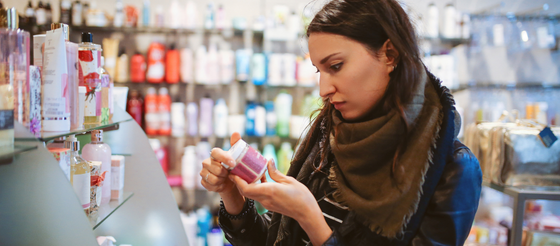
We’ve come a long way on the ‘eco friendly’ journey from appealing to early adopters, premium pricing and novelty through to it being given that any brand’s product is manufactured ethically and sustainably.But as we move through 2026, the landscape has shifted somewhat and sustainability is most certainly no longer a luxury add-on or a PR strategy; it has become a necessity for brands and a non-negotiable demand from the consumers.
This change has moved on and isn’t just about ‘saving the planet’ in an abstract sense. It is driven by a mix of stringent new laws and a very specific mindset: the Thrifty Eco consumer, which is quite common in the UK today. The Cost Per Use (CPU) is becoming increasingly important, purchase price divided by the number of uses, enabling consumers to measure the long-term value of their product and a higher quality item with a greater upfront cost, often lowers the average CPU meaning consumers can save money by spending more.
Built To Last
The cost-of-living crisis has, for many, changed how we shop and according to the KPMG UK Consumer Pulse 2026, a massive 58% of UK shoppers believe the economy is worsening. This financial anxiety has birthed a more cautious, “low-time-preference” consumer.
We aren’t buying eco-friendly products just to be noble; we are buying them because we cannot afford for things to break. In 2026, the takeaway for brands is clear which may are adopting, don’t just market ‘green’ market ‘longevity’. When budgets are tight, durability is the truest form of sustainability. The greatest environmental sin a product can commit is being disposable or having a short lifespan. Shoppers are now prioritising items that carry 10-year warranties or “designed for life” badges, shifting back to the traditional traditional ethos of “Buy once, buy well.”
The Death of the Vague Claim
If you feel cynical when you see a ‘natural’ logo, you aren’t alone. Research from the 42 Technology Consumer Sustainability Report 2025 shows that while 84% of us are trying to live greener lives, only 16% actually trust what brands tell us.
This fatigue has met its match in the law. Following the 2025 bans on misleading ads, the Competition and Markets Authority (CMA) has taken the gloves off. Under the Digital Markets, Competition and Consumers Act, brands now face fines of up to 10% of global turnover for misleading claims. We are moving from ‘Eco Friendly’ (vague) to ‘Carbon Neutral verified by [Standard X]’ (specific).
The Financial Cost of “Bad” Packaging
Sustainability is no longer just a moral choice; it is a balance sheet requirement. New Extended Producer Responsibility (EPR) rules mean retailers pay more for “red-rated” packaging (hard to recycle) and less for “green-rated” versions.
Packaging that uses multi-material laminates or virgin plastics now carries a heavy financial penalty for the brand. This is why you will see less bulky plastic in delivery boxes. Retailers literally cannot afford to send it to you anymore. For the consumer, this lifts the “recycling guilt” of a wheelie bin overflowing with plastic air pockets after a single online order.
ESG Compliance at the Shelf Edge
For homeware brands, the challenge is now about proving Environmental, Social, and Governance (ESG) compliance at the point of sale. You cannot hide a questionable supply chain behind a glossy advert anymore. Retailers are increasingly using “Repairability Scores” on price tags for Small Domestic Appliances (SDA).
If a toaster or a kettle is glued shut and impossible to fix, its score will be low, and consumers are voting with their wallets. Brands like Dualit have seen a surge in interest because they have long offered spare parts for every component. In 2026, the ability to buy a new heating element for £15 rather than a new toaster for £60 is the ultimate “green” feature.
Re-commerce and the Second Life
Despite tight budgets, the appetite for ethical shopping remains. Industry reports from GS1 UK show that 67% of consumers are willing to pay more for products with verified sustainability credentials. We are also seeing a boom in ‘Re-commerce’, with the pre-loved market growing five times faster than standard retail.
Rather than seeing the second-hand market as a threat, the most successful brands in 2026 are treating it as a “second bite at the cherry.” Retailers are now launching their own resale sections, offering store credit in exchange for old products. This keeps the customer in the ecosystem while providing a high-margin “pre-loved” item for the next buyer.
Digital Product Passports (DPP)
A major shift this year is the introduction of Digital Product Passports (DPP). Driven by EU regulations that UK brands have adopted to maintain trade fluidity, these QR codes turn a product into a transparent story.
Scanning a code on a wooden dining table now shows exactly which sustainably managed forest the oak came from and the carbon footprint of its journey. This is spearheaded by Gen Z and Millennials, who view “ownership” as a temporary state. They consider a product’s resale value before the first transaction is even complete. Brands that facilitate this through “buy back” schemes or DPPs that stay with the item through multiple owners are winning the loyalty of this digitally savvy demographic. This approach will inevitably trickle down to other categories including those daily essentials we use in the kitchen such as utensils and much more.
Case Studies
The brands winning in 2026 are those that replace vague adjectives with specific engineering achievements and “Closed Loop” manufacturing where factory waste is recycled back into the production line.
Miele has become a lead example of how to ensure ESG compliance at the shelf edge. Their 2026 marketing focuses on precision and waste reduction:
- Cooking: Ovens adjust to use only the exact heat needed, while hobs heat only the specific area a pan requires, reducing energy waste.
- Laundry: Their honeycomb drum technology is marketed as a garment preservation tool, ensuring clothes last longer and stay out of landfills.
- Dishwashing: Modern units now use as little as six litres of water and have reduced detergent consumption by 30%.
- Cooling: Advanced refrigeration tech now extends the shelf life of food by up to five times, directly tackling the UK’s food waste challenges.
Quality is the New Eco
For brands, the days of sticking a green mark on a box thinking ‘job done’ and hoping for the best are gone. By 2026, people have grown wise to the difference between a brand that cares and a brand that is managing consumer guilt. Sustainability is no longer a secondary consideration over design; it is the de facto starting point of making a well designed practical and truly sustainable decent product.
If a company cannot prove their appliance will last or provide proof behind their claims through a quick scan of a QR code, shoppers will always look elsewhere. We have moved away from the habit of buying products to merely throw them away, shifting instead towards buying items that we intend to keep and that they are worth investing based on its lifecycle. The brands that will inevitably come out on top are the ones that are being honest with consumers, focusing on quality that actually stands up to daily life and the test of time reducing the average cost per usage.
To read the published article by Rupert Cook, Marketing Director, please visit Housewares Magazine
 gekkofm