Monthly Archives: November 2023

Black Friday & Christmas – The Devil’s in the Details

The peak season is a pivotal time for retailers, offering a golden opportunity to maximise sales and create lasting customer impressions. However, success during this period requires meticulous planning, strategic foresight, and flawless execution. Being unprepared can lead to missed opportunities and dissatisfied customers. To ensure a successful peak season, retailers need to lay the groundwork well in advance.

With the rising cost of living, high inflation, closing stores and staffing difficulties creating a challenging time for all in the sector, retailers should adopt a strategic approach to ensure a successful golden quarter. By focusing on adaptability, customer engagement and operational efficiency, they will be able to generate cut-through and compete at a time when consumers are cutting back.

Retailers should start planning and preparing well in advance. This includes pricing, promotions, staffing, marketing campaigns, and any necessary operational adjustments, which could include digital transformations or building supply chain resilience.

First and foremost, embracing an omni-channel approach that seamlessly integrates online and offline shopping experiences is an important foundation. By providing customers with the flexibility to research, purchase, and receive products through various channels, helps ensure a cohesive and convenient shopping journey. This needs to be a long-term strategy rather than a quick fix but in doing so provides a platform for attracting, converting and retaining customers.

Investing in technology will, of course, play its part in enhancing the online shopping experience and could be a massive boon for retailers, especially if the improved website functionality or optimised mobile responsiveness can be used to create that seamless omni-channel experience that we’re seeking – and new tech can expand this even further by providing AI-powered assistance, virtual try-on functionality or even AR options to help consumers visualise products in their own home.

Offering targeted promotions and discounts to incentivise purchases during the golden quarter is a tried and tested way to bring in business, but it is important to know when and when not to embark on discounting. Retailers could consider bundling products, providing exclusive deals, and utilising loyalty programs to encourage repeat business instead. However these deals could increase demand, so it is important to plan and have a strong, stable supply chain in place to mitigate disruptions. Supply chain resilience is vital in ensuring retailers have the products to sell and meet customer demands, so where possible, consider diversifying your suppliers.

For retailers offering online sales, much consideration will have gone into their delivery and returns policy. But as we head towards peak, does it need to adapt? Were there any lessons from last year? Offering free returns is important for many shoppers, so could give you the edge over your competitors but dealing with the rise in orders presents many challenges, putting a strain on customer service teams. Whatever the approach, it needs to be clear to customers and streamlined to provide a smooth and integrated returns process.

When it comes to customer service, it is critical to equip staff with the necessary skills to provide excellent service, whether in-store or online. Well-trained employees can enhance the overall shopping experience and build lasting customer relationships. Many shoppers will have already done their research before coming into stores, so just running through the details on the shelf edge label isn’t going to cut it. Empower sales advisors to impress shoppers with their knowledge, advice and recommendations. Indeed, looking after your team and ensuring that staff feel fulfilled at work will not only help with retention but assist in making their interactions with shoppers all the more positive, enhancing the customer journey and hopefully encouraging repeat business.

Finally, retailers should also look to see what support is on offer from their suppliers. Brands are often eager to assist with product training, promotions or supplementary brand ambassador staffing knowing it will help drive sales of their products but also helping you in the process. 

Consumers are certainly going to have plenty of choice as to where to spend their cash, and retailers will have to do all they can to make sure they stand out from the crowd. Engaging marketing, whether it be store representatives, training or merchandising activities, can ensure that the consumer knows who you are and why they should be choosing your products. Once that is achieved then loyalty and success will follow, and not just for Christmas.

To read the published article by Rupert Cook, Business Development Director please visit ERT

Photo by Max Fischer from Pexels

Concerns grow about apprenticeship levy 

The number of apprentices starting in small businesses has plummeted 49% since the introduction of the apprenticeship levy in 2017.

That stark figure from the Chartered Institute of Personnel and Development was included in a new report that also revealed a fall in employer investment in training and apprenticeships, despite labour shortages in many UK industries.

The apprenticeship levy requires employers with an annual wage bill of more than £3m to allocate 0.5% of their monthly payroll to a pool that is used to fund apprenticeship and training initiatives.

However, businesses have criticised the scheme for being too restrictive and limited

Daniel Todaro, managing director at marketing agency Gekko Group, said: “The system is vocational and focused on hard skills. We do not manufacture or sell physical things, which is representative of much of the UK’s output. How does a scheme that supports SMEs bypass so many firms, with no relevant apprenticeships on offer for more service-orientated businesses?” 

The CIPD has implored the government to offer greater financial support for SMEs and to provide advisory services to help them navigate the system. This is a view shared by Russell Dowers, the head of client solutions at MetaGedu Apprenticeships. “According to the CIPD report there has been a decline in training and investment in the UK workforce over the past 20 years, which has created a downward spiral that requires immediate attention,” he says.

Confusion around the levy may have bled into the employment market in another way. Recent data from Indeed reveals that UK apprenticeship job postings are down 6% over the past five years. Jack Kennedy, an economist at the jobs site, said: “Skills and labour shortages continue to be a challenge across a number of sectors in the UK, and boosting the number of apprenticeships available to jobseekers is one way to tackle this.” 

Lizzie Crowley, senior skills policy advisor at the CIPD, said the apprenticeship levy puts SMEs on the backfoot compared to large organisations: “It’s a struggle in many cases for SMEs to even source a training provider. A lot of the training provider market is focused on delivering bulk apprenticeship places to large levy-paying employers,” she said.

One large business looking to help is Deliveroo, the food delivery app, which has announced that it has gifted over £200,000 of its unspent apprenticeship levy to organisations looking to upskill their staff. Deliveroo has partnered with tech start-up Multiverse to allocate funds to more than ten small businesses, ranging from fintechs to consulting start-ups.  

Capita, the outsourcing group, has also distributed £1m of its funding. Over the past three years the company has gifted funding to UK charities, including NSPCC, Hospice UK and NHS Charities Together, through its partnership with strategic workplace training company Corndel.  

This could be a strategy that other large businesses look to follow.

To read the published article written by Dan Todaro, Managing Director please visit Business Leader

Photo from Business Leader

IFA 2023 – A Core Ingredient in the Evolution of CE

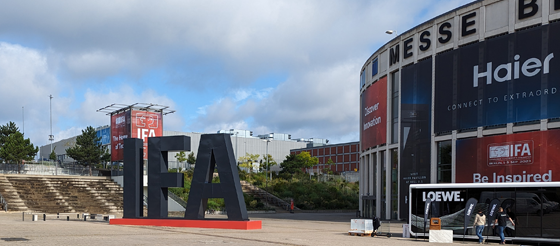
Once again IFA 2023 was the place to be seen for all technology brands and not just those from the CE category. With the show sold out across 26 halls covering 130,000 sqm of exhibition space, filled by 2059 brands from 48 countries, there is no other show that competes. IFA 2023 affirmed its position as the de facto CE showcase, forecasted to host 180,000 visitors from 144 countries over 5 days.

The fact that we have witnessed all markets contract in every category, shrinking by an average of 7% and in particular CE which is down 12.4% globally. The EU market outlook is looking increasingly positive at a more palatable contraction of 4.5% year on year. No doubt this is making the rest of the world a bigger problem for those whose presence is not as prevalent in the EU market, compared to other brands. The economic reality is that the globe is in a  Polycrises, a simultaneous occurrence of several negative global events such as war, extreme weather events, food and energy Inflation which is compounded by increased Interest rates and social unease, unsurprisingly stops people from spending. Therefore the need for a brand to increase its voice rather than remain silent is critical and to do this with a new perspective. Doing so through a new lens that better understands the pain points consumers are experiencing and appeals to the user’s pleasure points. Perhaps achieved through ethical practices, practical time and cost-saving innovations that help ease the pain on a macro level, rather than add to the global situation. That’s why IFA as a cultural hub, is so much more than an exhibition, its place is essential to the industry as the centre stage for the globe’s CE brands not just to brag but to demonstrate how to solve the problems we share as we coexist on this planet. Making IFA a core ingredient in the evolution of the consumer electronics industry.

All brands, big and small, were in attendance with 350 of those 3059 brands being CE startups from across the globe. These included all manner of concepts and categories and there were several robotic floor care startups displaying and showcasing, however, one that caught my imagination was Dreame’s Revolutionary Flagship Robotic Vacuum L20 Ultra with Industry First AI-Driven Mop Extend™. Which is definitely worth a look. However one of my most memorable chats was with the haircare brand SharkNinja and its ultra compact SpeedStyle hairdryer. The irony is, as a follically challenged man, I’ve not owned a hairdryer for 30 years yet I was enthralled by its functionality, design and huge potential consumer appeal, it’s going to be a Christmas wish list essential item.

The themes were consistent across every manufacturer and focussed on Sustainability – Renewables – Connected by AI and  Premium. Let’s start with the latter as while aspiring to be a premium brand is admirable there, in relative terms, there can only ever be a few brands who genuinely sit in the category otherwise it defeats the terminology of ‘premium’. It’s down to the consumer’s perception of what constitutes premium based on how much they are prepared to pay for your products and brand. What you and I may think of as being premium may well not be the view of others and is likely to vary greatly, depending on whether you’re Gen Z or Gen X.

These generations and to be fair, everyone now, wants quality as standard and brought to them at a reasonable price, as well as being produced ethically in all aspects including the manner in which those products are brought to market. Whilst GfK expects the global CE market to still be in the red by the end of this year, the trend is for consumers to replace appliances, as home tech becomes increasingly more innovative, making even those devices and appliances of five years ago look exceptionally dated in look and functionality. Today many want technology which most now consider commonplace in the home, not luxury or the unattainable.

Almost all appliance brands included smart connectivity in their product line-ups presented at IFA 2023, which enables you at a basic level of connectivity, to control your appliance from your phone, hub or television. Personalisation is the next step in the development of your smart home where you can not only change the panels and the lighting of your cooling appliances such as the LG MoodUP Instaview Freezer but also create your own wash program and save it as your personal wash cycle as LG have also done as part of their wider LG THINQ UP 2.0 concept. Taking cooking to new levels of perfection as Haier has done with the ID series featuring a unique style and the exclusive Bionicook technology. With the ID Series, you can not only view what’s cooking in your oven with its built-in camera but also see it on your phone or TV and the built-in screen on the oven’s facia. It’s opening up the options for personalisation in your home tech to meet the needs of the household to a unique level of personal satisfaction.

Combine this with AI, assisting in noting your trends on laundry, cooking and cleaning, which enables it to update the software on your connected appliances as you would update the apps on your phone or tablet. The AI functionality improves the efficiency of, for example, a more effective wash cycle so that it uses less energy while still giving you a great wash thanks to the connectivity and the hOn app which allows users to get the most out of their Candy Machine. Increasing innovation and enhancing sustainability credentials which for many brands also extends throughout the entire product, and not just its materials. With almost all brands now adopting a policy where a percentage of all products are made utilising recycled materials and not just its packaging. At the forefront of this message was both LG and Samsung who were championing this throughout their product categories. Taking the initiative a step further, linking these credentials into the aspirational brand qualities, which many consumers are now looking for in a true premium brand.

So what’s different this year is that people are asking more questions and drilling down on the specifics. While 74% said they will search online before buying, search data also shows sustained growth in terms containing questions — up 25% compared to the past three years during the same period — and searches for “which is best” and “where to buy” continue to garner momentum in the shopping category on Google Trends. Those searching online, we know like to shop in-store when it is a considered purchase. So make sure you feature on that where to buy ist.

Whilst the wealth of bands at IFA 2023 were vast, you could not miss one brand in particular whose branding adorned the neck of almost everyone with its very clever lanyard sponsorship. That brand was Hisense who was this year, IFA’s headline sponsor and gave the opening keynote delivered by its Global President,  Fisher Yu whom also announced the brand’s sponsorship of the Euro 2024 Football tournament due to be held in Germany. When you are a brand that not only makes TV but also appliances and applications, it’s easier to integrate your devices and with VIDAA at the heart of the ecosystem, Hisense products and its fellow brand stable mates can integrate via the VIDAA interface making the TV in your home, the hub of the household that connects your smart home ecosystem. Making the screen the focus of your living space where you control your appliances around the house via your Smart TV. With ViDAA now in 180 countries and connected to 22 million devices, the task for Hisense is perhaps slightly easier than it may be for other brands in the CE sector. Coupled with the shift from content to services the next step is how to monetize this conversion and its integration with responsive and predictive AI, to further enhance the user’s experience and lifestyle. Easier done when you own the platform and make the devices it connects to.

It’s fair to say that the outlook for retailers is exciting with increasingly more innovation in all categories and an enhanced social responsibility tone that now takes on many more subject matters. These include AI and sustainability which are now common parlance in the sales approach by brands to their target consumers, old and new. For those amongst us who ignore the trends that come out of IFA, do so at some risk, as these trends will inevitably become standard messaging across every category and brand within the year, not the distant future. It’s crucial for the success of all within the industry to embrace, understand and develop these trends to create meaningful consumer conversations.

To read the published article written by Dan Todaro, Managing Director please visit ERT

Tagged , , , , , , , , ,

Are pop-up shops marketing gold or is it time to fold?

Pop-up shops are literally popping up everywhere and they’ve been hugely popular with consumers, but can you have too much of a good thing?

And does it still work as a good use of marketing spend or is consumer fatigue setting in?

The Guardian today reported that pop-up shops have increased by 18% this year, no doubt fuelled by the plethora of empty shops around the UK and available at accessible rates.

But are they still working for brands? When there’s so many, do they drive intrigue, awareness or bring in incremental revenue, or have we reached a point of consumer fatigue?

Pop-ups require significant investment, so it’s crucial to think about the objectives you need it to deliver. If it’s purely an exercise in increasing sales, you may be sorely disappointed.

If your pop-up is in a high footfall area, it’s more likely to increase brand awareness and if your business doesn’t ordinarily have a high street presence, it can elicit valuable feedback on your product or brand.

And of course, pop-up shops are also a great way to create talkability and shareability on social media, offering consumers and influencers the ability to create eye-catching content that will see your brand splashed across their channels.

But to achieve this and avoid consumer fatigue, your pop-up needs to be more than just a shop. It needs to be creative and novel, relevant and aligned with popular culture, and add value to the everyday customer experience.

Inspired creativity

Think about how to pack a punch for your brand with collaborations that are creative, add that novelty factor and give customers an experience they can’t get elsewhere.

We saw this in the Summer with Anya Hindmarch’s The Ice Cream Project. Instead of hosting a pop-up shop to sell handbags, Anya Hindmarch came up with the idea of creating exclusive ice creams using her favourite cult food brands including Heinz Tomato Ketchup, Lea & Perrins and Coca-Cola.

Linking back to her village and café, it was clever, novel and had people queuing round the street. It had that all-important talkability and shareability, which raised awareness of the Anya Hindmarsh brand in general and the creativity at its heart.

Link to popular culture

In June we worked with sports lifestyle brand ’47 on a pop-up in Soho, just in time for two Major League Baseball (MLB) games coming to town.

With the increased awareness of the MLB, ’47 was perfectly primed to welcome fans of the US sport, giving them another way to soak up celebrations beyond the ballpark.

With no UK store, it was timely, relevant, and it fulfilled the unmet appetites of US fans living in the UK as well as Londoners intrigued by the spectacle coming to their city.

Plus, with the start of the NFL season in September the ‘47 pop-up is getting a fresh surge in custom.

Be timely

Ensuring that there is appetite for the type of pop-up shop you have in mind is essential. Do you have customers who will come out specifically for your pop-up?

Does the trend or pop-culture moment you are linking with have enough fans? If your audience will not be excited by your pop-up, it’s time to think again.

Recently, we saw SHEIN, the global fashion brand, opening a pop-up shop in Birmingham with queues weaving around the Bull Ring.

The brand has exploded in popularity, and it was the first time that consumers had been able to physically engage with the brand in the UK, offering them something new, and the added awareness and talkability created demand from new customers – the hype was immense.

It is particularly sad to see an empty pop-up shop – and if you don’t have the audience or creative for the experience to go viral, then you need to invest in creating the demand yourself with additional marketing.

This adds to the cost, so it is important to understand what you are trying to achieve and what success would look like in terms of ROI before you commit.

To read the published article written by Dan Todaro, Managing Director please visit MediaShotz

Tagged , , , , , ,