Tag Archives: Gekko

Staff key to a successful peak period

hanger banner

With last year’s Black Friday generating a 10 per cent increase in footfall compared to previous years, research from Gekko highlights the need to recruit and train in-store brand ambassadors to maximise in-store opportunities for the 2015 peak festive period.

A staggering 50 per cent of shoppers said that there is often not enough staff on the shop floor to help them when making a purchase decision. There is also concern over the manner of in-store staff, with over half (52%) of shoppers complaining that they are too pushy about making a sale.

Despite the growth of online sales, nearly three quarters (74.2%) of shoppers benefit from the touch, feel and physical comparison of products when making purchase decisions. A quarter (26.35%) of shoppers buy in-store when they are purchasing items they need to think about and choose carefully and over half (56.8%) head in-store for advice when making a considered purchase.

Sarah Mandeville, recruitment manager at Gekko believes that staff hold the key to converting sales during the peak-time rush:

“Whether they are full-time or temporary over the peak period, retail staff must demonstrate passion for the product and the ability to make a positive impression on shoppers. In-store is a vital touch-point for consumers, and retailers need to ensure that their staff are trained to maximise every opportunity. In a competitive landscape, which is heightened during peak, a retailer will only get one chance with the consumer.”

To manage the peak-period, here are five important action points for retailers to get the most out of their staff:

1. Allow time for training – Speed is often important when training temporary staff in the run-up to Christmas. However, staff will be more motivated and likely to convert more sales if they are immersed in the role. Take time to build your team’s knowledge and understanding of the brand, company background and product range. In an omnichannel environment, where shoppers can obtain product information using their smartphone, your brand ambassadors must know more than just the product they are selling.

2. Ongoing support – Training shouldn’t just be delivered at the beginning of the peak-period. Once the staff are in place, ongoing revision, recaps and coaching should be continued to keep the team sharp on sales messaging and promotions.

3. Create a team environment – staff may not all work on the same days or in the same locations. Using group chat or social tools such as Facebook or Google Hangouts can help to communicate simultaneously and build communities. To lead the team environment, allocate a mentor as a point of contact to motivate and be contacted at any time.

4. Don’t just motivate with money – Monetary incentives can be short-lived. To motivate the team, it’s worth creating friendly competition with leader boards and prizes. This can be a fun way to build a positive attitude among the workforce.

5. Treat everyone the same – To make employees feel part of the team, employers need to treat temporary staff as though they are full-time employees. Putting effort into training and making temporary staff feel part of a larger team can be a motivating factor for staff in itself.

Read more at: http://digitalmarketingmagazine.co.uk/digital-marketing-news/research-shows-retailers-could-suffer-over-peak-period-with-lack-of-in-store-staff/2622

Tagged , , , , , , , ,

Gekko website voted ‘Site of the Week’

gekko mediums banner

Gekko’s new look website has been voted as ‘Site of the Week’ by ProcessWire Weekly.

Here’s the site’s glowing review:

Gekko Field Marketing is a UK-based field marketing company. In their own words, they offer a full range of services, helping to create more opportunities to connect consumers with brands.

999 Design Group Ltd is responsible for the new site of Gekko Field Marketing, not to mention their brand communication and visual identity altogether. They’ve done a pretty awesome job too: the visual identity feels refreshing, and the site has a very nice and modern feel to it. Both are simple yet effective, just the way we like it.

Some of the highlights of the site include a responsive mobile-first design, the neat expertise wheel feature, a well functioning prev/next navigation for various content types, and a nice touch of custom styling for the embedded Google Maps views. It’s the little details that make the site feel so alive and compelling – definitely a job well done!

A big thanks to ProcessWire for the review, and 999 Design for producing a fantastic site that complements our brand and our message: we bring your brand to the right people, and the right people to your brand.

Read more at http://weekly.pw/issue/70/

Tagged , , , , ,

SDAs: Are they really worth it?

tefal fry sda

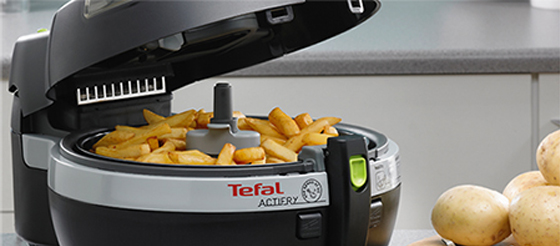
Small appliances attract footfall in-store, encourage impulse purchases and can help make your store look more attractive to customers, says Daniel Todaro, managing director of field marketing agency Gekko

The short answer to that question is yes, and they will always be worth ranging for two good reasons.

Firstly, they attract customers into your store, which is valuable to increase traffic and change perceptions. You don’t want to be perceived as only ranging high-ticket, one-off purchases.

The second is that we are becoming a little more adept in the kitchen, partly driven by celebrity chefs, Great British Bake-Off and MasterChef.

The growing SDA market creates an opportunity for many consumers to replace their old, outdated items and do so guilt-free as the initial outlay is considerably less than some other gadgets and the long-term gain and use are easily justified.

According to researcher GfK, the UK SDA market grew nine per cent in 2014 to surpass £779 million. The research also highlights the growing demand for liquidisers, which grew by 144 per cent with an average price tag rising from £36 to £42, and also a 95 per cent increase in the juicer market.

Our interest in healthy eating is demonstrated by the 48 per cent increase in 2013 of low-fat/no-oil deep fryers. However, do be wary of fads, as low-fat/no-oil SDAs dropped in value by £2m in 2014, losing popularity by becoming mainstream products. I suspect the same will happen to juicers as the market becomes saturated.

The SDA category, which also includes hot beverage makers, kettles, toasters, food preparation, sandwich toasters, health grills and deep fryers, is a staple category that offers consumers convenience and choice at various price points. The UK is one of the most diverse markets for SDAs in the world, with more than 700 new SDA products introduced into the market in 2014 alone, offering retailers an opportunity to refresh seasonal ranges with limited risk.

Although electrical retailers will always thrive on the MDA staples, diversifying your product range to include SDA will make your store more attractive to a broader spectrum of shoppers. Many small appliances are stylish, well designed, and will make your store look better.

With the in-store customer journey becoming increasingly more important in retail, correctly merchandising your store, coupled with training your staff to communicate the benefits of your products, will transform interested shoppers into customers, and will ultimately improve sales.

Gekko suggests that sales staff quickly identify the individual customer’s motivation to buy, whether it is driven by value, style with colour coordinated bundled solutions, or practical features aimed at making life easier.

Remember value is in the eye of the spender, the role of sales staff is to demonstrate that value in each and every conversation.

Tagged , , , , ,

Gekko reveal new brand identity and website

gekko reveal banner

Gekko are delighted to reveal our new brand identity and website, that gives a fresh look to the UK’s number one tech-focused Field Marketing agency.

Daniel Todaro, MD, Gekko said “Complementing the recent brand refresh, Gekko continue creating rewarding connections with our new website. Over the past 13 years, Gekko has maintained its ability to adapt in retail, the most dynamic of industries, to bring your brand to the right people and the right people to your brand. Gekko Field Marketing helps complete your customer journey and brand experience with measurable ROI and insight complementing your brand’s ATL.”

Tagged , , , , , , ,

Electrical retailers can’t afford to ignore wearable tech

wearable retailer banner

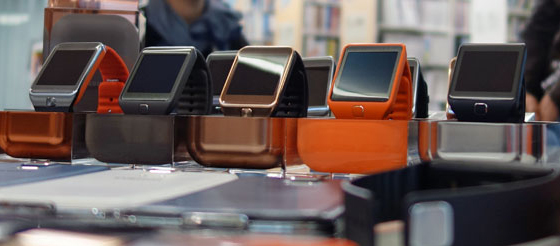
Let’s talk about wearables and how retailers can capitalise on a category that, contrary to some people’s opinions, will in 2015 continue to grow in sales and value.

It’s becoming clear that wearables are not a fad. As more brands and products enter the market, some may disappear – Google Glass for one – but those that have demonstrated their credentials in 2014 will remain a fixture in 2015 and possibly beyond.

As the hype around a particular brand of watch spirals ever more out of control, the benefits of heightened exposure for the category is naturally index-linked for retailers, so now is the time to ride that wave and ignore the sceptics.

As of the end of 2014, three million Brits owned a wearable device, with Dixons Carphone reporting a 710 per cent increase in wearables sales over the year.

The UK wearables market value was predicted to have hit £313.6 million by the end of 2014 and many shoppers had wearable devices at the top of their lists for Christmas 2014.

The same research conducted by Dixons Carphone confirmed that Sony’s Smartwatch, Fitbit’s Flex and Samsung’s Gear Fit were the top-selling wearables during the Christmas period. It’s clear they are growing in popularity among consumers, with research from Samsung suggesting that sales during Christmas 2014 were 182 per cent higher than the same period in 2013. One can only assume that again this will increase in 2015.

With growth in mind, ranging of core lines is essential to appeal to a wide demographic, coupled with a greater in-store experience.

Staff need not only to understand the products well enough to sell them as standalone or add-on sales, but also become advocates themselves.

Think about giving your staff devices to use and live with for a sustained period. This could be done in partnership with a specific market leader like Fitbit or a relative newcomer like Epson Sensing to immerse them in the wearables experience and improve their sales technique – as they do when training to sell other CE products in your store. It may also make your staff healthier, happier and more productive – a win-win for all.

But seriously, with almost a quarter (23 per cent) of wearables  purchased as gifts, the person buying may not know anything about the product and store staff therefore need good product knowledge to help seal the deal. Also, with two-thirds of consumers citing ease of use as an important factor when selecting a wearable product, a demonstration becomes crucial.

Shoppers need reassurance that products are easy to use and include useful functions. Effective staff training for product knowledge and demonstrations reassures shoppers and potentially increases not only unit sales, but also the value of each sale.

Displays are also important. Think about the location in-store and connectivity to other devices you may range. The customer journey should be one that enables the customer to see how wearables work with the phone in their pocket, TV or even a washing machine.

With an estimated 17 million Brits set to own a wearable in 2015, creating a potential UK market worth £1.7 billion, the opportunity is clear for all.

Don’t just think traditional wearables – the market will grow through innovation. Soon you’ll see a number of wearable devices for pets, including a smart dog collar from Motorola, which includes a remote 720p camera, GPS connectivity and speakers to communicate with your dog via your smartphone, accompanying the various GPS tracker collars already on the market.

Also expect connected clothing and jewellery – wearables developed more as fashion accessories – beginning to emerge, making tech more mainstream and commonplace among customers.

Tagged , , ,

Luxury Brands Launch Wearable Tech as Fashion at CES2015

fashion wearables banner

You may have noticed that last week the world’s largest Consumer Electronics Show was in full swing in Vegas and whilst most mainstream technologies were announced, in and around these announcements were many new wearable tech ideas flirted by many brands that will undoubtedly come to market within the decade and change the way we view our coveted fashion brands as wearable technology. The advancement of wearables at CES 2015 as a fashion statement is potentially huge, not to be ignored and begins the brand debate.

At this year’s CES we began to see the second generation of many wearable devices, including updated reveals from traditional tech brands: Epson, Sony, LGGarmin and Fitbit to name a few. With the looming release of the unmistakably fashionable Apple Watch, many wearable makers are following suit by consciously developing fashion that conceals our technology as clothing, watches and jewellery.

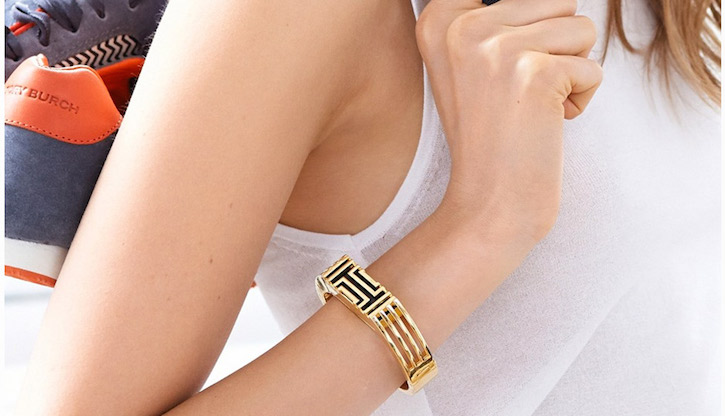
For example, take a look at the Tory Burch range for Fitbit which turns your wearable fitness technology into high-end fashion jewellery. None of your friends or colleagues would know you’re counting calories or you’re on a detox. It would appear that fashion brands have realised a new category of consumers. If you like high-end watches, then why would you swap your favourite brand(s) for a rubber smart device that looks, in some instances, ugly and conspicuous.

ces2015-fitbit-1

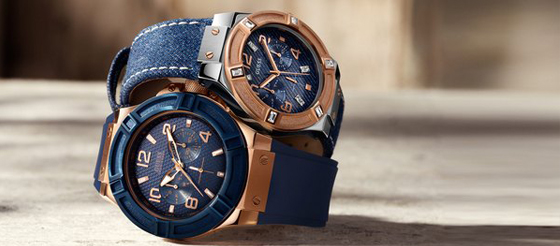
Wearable maker Misfit has teamed up with Swarovski to produce the “Shine,” a customisable series of fitness trackers disguised as jewellery. Hidden beneath Swarovski crystals, the Shine tracks activity such as steps, swimming strokes, and sleep via an accompanying app. It is also the first solar-charging wearable, reflecting sunlight through its crystals. The Martian developed “Guess Connect,” a Guess watch that looks like normal, but has the addition of small screen which displays caller ID and other alerts, Bluetooth connectivity, and can interact with Siri or Google Voice commands via an inbuilt microphone. Other offerings from watchmakers intending to join the wearable revolution are Tag Heuer and Mont Blanc

I suspect many more to follow once they’ve seen how it works for other luxury brands and how it fits within their own strategy, portfolio, and demographic. Rolex, Cartier, and Jaeger-LeCoultre may not be jumping on the bandwagon just yet and why should they if it doesn’t meet the brand’s ethos and heritage. Is there a need to adapt, dilute, or license the precious brand just to be in the wearable tech game? Is this another advancement the luxury watch makers & brands can’t ignore? 

As predicted, these innovations suggest just how wearables will begin to blend into existing fashion, becoming easily mistakable for a normal watch or piece of jewellery. These new wearables will suit any situation, not just the gym. Smart devices that are office-appropriate will increase the popularity of wearables for health, communication, and productivity use. Interestingly, take a look at CES winner in the “Best Offbeat Product” category, a new brand called Belty. Like Nike with its power laces, Belty is a motorised belt buckle –yes you read that correctly. It slackens and tightens to make you more comfortable, for example if you’ve eaten too much. More seriously, it has the tracking capabilities to aid diet and body shape. CES believes it’s a fun, quirky, and potentially viral product.

Belty

Consumers will ultimately decide the limits of wearable tech and for brands this is a risk. Do luxury heritage brands risk potential ridicule or failure for the sake of changing demographics and technology or do they focus on what they do best? There’s a consumer for every heritage brand and, with the exception of some gradual, natural, and subtle advancements in technology, we should keep brands focused on their authenticity. 

Tagged , , ,

The end of Google Glass?

google glass banner 2

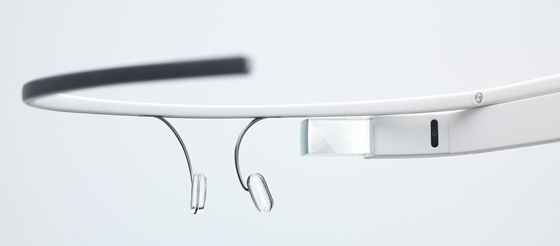
The end of Google Glass, in its current incarnation – yes. As a future viable, perhaps watered down, consumer based product – I doubt it.

It was ugly, you looked silly in them, and the health and social responsibility factors were questionable. Google Glass’s move back into a research project rather than a viable consumer product is indicative of the social stigma associated with this wearable technology.

It gained many column inches, which made it worthy of its impressive abilities. It also ignited the imaginations of programmers, who developed applications that enabled you to look up and see the solar system above your head, read signs in foreign languages and translate these signs in front of your eyes into your chosen language.

Even the beleaguered Tesco announced this week a Glass app for your online grocery shop. But with very few users purchasing and wearing, today’s was an unsurprising announcement from Google in response to poor consumer demand.

As seen at this year’s CES, wearable’s and VR have developed rather differently than expected giving Google, I suspect, an opportunity to exit with its head held high. It will review, redevelop, configure and improve what was a very clever innovation, but which unfortunately had significant flaws.

Google glass is not dead. It will I’m sure evolve and become something new, creating the same hype and publicity as Glass achieved, but come to market in a more viable form and function and perhaps a new name.

Tagged , ,

Three massive trends that came out the world’s biggest tech fair

misfit shine banner
Daniel Todaro, MD of technology field marketing agency Gekko, reviews his highlights of CES2015

You may have noticed that last week the world’s largest consumer electronics show was in full swing in Vegas: CES 2015.

While most mainstream technologies were announced, many other new technologies were flirted with in and around these announcements – technologies that will undoubtedly come to market within the decade that could change the way we live, commute and wear our technology.

The three big stories were the Internet of Things (IoT), which includes the connected home. Also announced were advances around in-car tech, with innovation nearer than you think, and also the advancement of wearables as fashion statements.

Big commitment to Internet of Things

A large proportion of Samsung’s keynote address at CES was devoted to the Internet of Things. Samsung pledged that by 2020 all of their devices would be IoT compatible, a huge step in the right direction for tech integration. Expect other brands to make this same pledge.

As we move forward, the smart home category will continue to grow, with domestic appliances, TVs and mobile devices playing a big part in connecting devices together. Brands will need to connect their devices to one another to stay relevant enabling us to connect our entire home from one human interface.

Take a look at Hive, the UK’s connected thermostat, controlling your heating and water remotely. It’s available now and an early innovator in this category.

With all this tech, you need power. Enter centre stage the Energous WattUp, winner of the Best Connected Home Product at CES, a wireless power solution that can charge wirelessly our wearables, phones and any other battery powered device in your home. Energous believe it will have the first wave of this product available by the end of the year.

Samsung’s pledge was also important because it promised ‘open’ connectivity. By opening up its devices to other brands, Samsung is leading the way in a true Internet of Things, where all devices communicate with each other, not just those of the same brands.

If other brands take up this pledge, the Internet of Things will make much more of an impact on our everyday lives by potentially connecting all devices together.

In-car tech

Automotive tech once again made headlines at CES, especially with the Audi self-driving car’s two-day, 550 mile journey from San Francisco to Las Vegas turning heads early in the week.

Self-driving innovations took centre stage for many motor brands, with self-parking cars from Hyundai and Volkswagen demonstrating how far self-driving tech has developed in the past year. Mercedes, winner in the Best Automotive Technology category at CES, showed off the F015 Luxury in Motion concept, which the company believe is possible by 2030 – in Mercedes’ words, “our vision is the car as a salon, a lounge you drift from destination to destination in like an extension of your home.”

Undoubtedly parts of this innovation will become reality soon.

The motor category is also another battleground for Apple and Google, here with their respective CarPlay and Android Auto platforms.

Both allow car users to mirror their mobile Operating Systems in their cars, giving access to GPS maps, hands-free calls, music and other apps through the car’s existing screen. Integration opens up many avenues, for example activating car features using Siri.

Whilst some believe these innovations are a further distraction to drivers diminishing passenger/pedestrian safety, cars, like our homes are inevitably becoming smarter.

Fashionable wearables

At this year’s CES we began to see the second generation of many wearable devices, including updated reveals from Sony, LG, Garmin and Fitbit. With the looming release of the unmistakably fashionable Apple Watch, many wearable makers are following suit by developing their own fashion conscious watches and trackers.

Take a look at the Tori Birch range for Fitbit which turns your wearable fitness technology into high end fashion jewellery.

Wearable maker Misfit has teamed up with Swarovski to produce the Shine, a customisable series of fitness trackers disguised at jewellery. Hidden beneath Swarovski crystals, the Shine tracks activity such as steps, swimming strokes and sleep via an accompanying app, and is also the first solar-charging wearable, reflecting sunlight through the crystals.

The Martian-developed Guess Connect looks like a normal Guess watch, but has the addition of small screen which displays caller ID and other alerts, has Bluetooth connectivity, and can interact with Siri or Google Voice commands via an inbuilt microphone in the watch.

Other offerings from watchmakers intending to join the wearable revolution are Tag Heuer and Fossil.

As predicted, these innovations suggest just how wearables will begin to blend into existing fashion becoming easily mistakable for a normal watch or piece of jewellery. These new wearables will suit any situation, not just the gym.

Smart devices that are both useful for productivity and office-appropriate will only increase the popularity of wearables for health, communication and productivity use.

Interestingly, take a look at CES winner in the Best Offbeat Product category, Belty. Like Nike with its power laces, Belty is a motorised belt buckle – yes, you read that correctly. It slackens and tightens to make you more comfortable, if for example you’ve eaten too much. More seriously, it has tracking capabilities to aid diet and body shape. CES believes it’s a fun, quirky and potentially viral product.

Consumers will ultimately decide the limit to wearable tech and how it intrudes on our lives.


Read more at: http://www.londonlovesbusiness.com/business-news/tech/three-massive-trends-that-came-out-the-worlds-biggest-tech-fair/9567.article

Tagged , , ,

The shape of things to come

ces banner

With the great and the good of the CE world having converged on CES at Las Vegas, what was announced that would or could enhance our lives?

Perhaps the biggest indicator of how we will be encouraged to live sooner rather than later was Samsung, which pledged that all its devices will be Internet of Things-compliant in five years’ time – in other words, products in many rooms of your home that will be controlled from one human interface.

With the UK officially building the smallest new-build homes in Europe, a gargantuan TV may not be on most wish lists, but there were plenty on show. Take LG’s OLED range, with sizes between 55in and 77in with both flat and curved designs. Also revealed was its 77in flexible curved flagship model, which can automatically adjust the curve of the screen to suit any viewing angle, perhaps creating space to let you stand in the room. Seriously though, brands like Samsung, LG and Sharp have created amazing TVs with depth, speed and smart functionality that enable us as consumers to enjoy TV the way we want to – not how broadcasters would like.

Samsung also revealed a number of SUHD TVs, representing its range of Quantum Dot LED TVs. QD technology delivers “the highest colour purity and light efficiency available today”. Benefits include near 100 per cent compliance with DCI (Digital Cinema Initiatives) colour range requirements, with very good quality images, similar to OLED. All the TVs shown come with 4K as standard, 48in being the smallest size.

2014 was only the start for the wearables market. Brands tested the water last year to gain valuable insight into what consumers want, how it should look and how we use it and have now created some amazing second-gen products, such as Garmin’s Fenix 3, Fitbit Surge and Sony Smartwatch 3 Steel.

The connected home in 2015 is going to be big. Nest and Hive have developed propositions that make the concept of the connected home more real to many homeowners. We are on an upward trajectory that will see the CE landscape change in retail, at home and in functionality.

Nest made waves at CES when it revealed its partnership with 15 brands under the ‘works with Nest’ moniker. Further integration of smart-home systems and Apple’s HomeKit integrated connected-home devices were revealed, such as the iDevices smart plug system that can control multiple devices, via Siri, by plugging existing appliances into the mains. There are definitely signs of competition heating up between Apple and Google for smart-home dominance.

Wearables are no longer for the early adopters or niche retailers, it’s a category that will continue to grow and by default we will all be wearing a piece a tech that moulds seamlessly into our lives.

At CES 2014, the Oculus Rift made its debut and stimulated the sector’s interest in VR/wearables. Since then, Samsung, Sony and Google have all made leaps in producing their own VR experiences, which will come to market in 2015. If wearables were last year’s breakout category, will 2015 be remembered at CES as the year Virtual Reality leapt to prominence?

Back to TV and how we stream and consume what we watch when we want and in UHD, which perhaps will be more mainstream on digital platforms. Whether subscription services or free-to-air, the significant change in CE is how we consume our entertainment on a quad-play platform.

Samsung, LG, Sony, Sharp, and Panasonic have announced a partnership with Netflix, Disney, Warner Bros and 20th Century Fox to form the UHD Alliance – a group tasked with setting the standards for UHD content, outlining plans to increase availability of 4K content in coming months, perhaps a good sign of more 4K content to come.

Samsung revealed more details of its improved Tizen smart TV operating system that will power all of its new smart TVs in 2015. The new OS improves on the previous iteration’s features, as well as improving connectivity with devices over wi-fi and Bluetooth. This innovation follows a trend among manufacturers for developing more user-friendly interfaces (UIs), also seen at CES with LG’s WebOS 2.0.

Guy North, managing director of Freeview, agrees: “In general, UIs are evolving and getting simpler and more user-friendly, making it easier for viewers to navigate around the different services, which is a good thing.”

Samsung announced a partnership with Sony to have PlayStation Now games streaming through selected Samsung TVs in early 2015, bringing limited gaming content to homes without PlayStation consoles.
There were scares in 2014 about cloud sharing and the privacy issues surrounding exactly where those personal photos get stored and who has access apart from you and those hackers. Fear no more, because having your own cloud and uploading to your data storage device is now possible and these are peripherals I guarantee we will all own, either as new or to replace an ageing device.

There are lots of products coming to market and some to meet the needs of the style-conscious among you – from LaCie’s 1TB in Gorilla Glass designed by Pauline Deltour, and Seagate, which has released two wi-fi-enabled portable hard drives that act as personal cloud storage devices.

Toshiba announced its simple Canvio Basics drives and sharing-friendly Canvio Connect II model – a 3TB drive that lets you access files from anywhere via the internet, but there’s no wi-fi connection, so you can’t share files independent of a PC. Samsung also announced a new SSD [sold state] portable hard drive, the T1 with very quick data-writing speeds, available in 250GB, 500GB, and 1TB models, but unfortunately this does not include a cloud storage option.

Streaming is mainstream now, but for those who don’t want a subscription, there is Sling TV (not to be confused with Sling Box) that enables you to stream on multiple platforms, including mobile devices with no contract, instead using a pay-per-view model. Currently only available in the States, will a similar service soon enter the UK market?

When it comes to the brains that make our mobile devices work, Nvidia announced its new Tegra X1 ‘super chip’ for mobile devices, powerful and energy-efficient enough to bring PC-grade graphics to handheld devices, challenging Qualcomm’s Snapdragon, where we’re seeing a battle between these and Intel to dominate the smartphone chipset market.

In summary, smart-home innovations sat front and centre at CES 2015. While prominent at CES 2014, in 2015 the category was given a dedicated exhibition space – a good indicator of how far the smart home category has come in the past year.


Read more at: http://www.ertonline.co.uk/Default.aspx.LocID-05nnew3md.RefLocID-05n03s004.Lang-EN.htm

Tagged , ,

At 20 Years Old, PlayStation Continues to Capture the Market

playstation 20th banner

For those of you that can remember, or have grown up alongside it, you might be aware that PlayStation celebrated its 20th anniversary last week, and how it’s flown by. Gaming as a category has evolved decade on decade, and is forecast to continue growing. Yet some brands have died before they even started: remember Gizmondo and its flagship store with no stock on Regent Street?

Gaming, like no other category, must work hand in hand with 3rd parties to survive and innovate. While you could argue that TV needs content and cinemas need film, together the gaming industry innovates by collaborative choices. At the heart of this is the consumer.

Fads come and go as dictated by the users, just look at those Wii Balance Boards cluttering up garages and car boot sales. If it’s not generational, it doesn’t work. Above the age of 12, who wants to play games with Mum and Dad? Yet for how many years have you and your friends played Grand Theft Auto and Call of Duty, and above all honed your skills to better your peers?

Console manufacturers try to push some innovations. Look at Microsoft’s Kinect – while the innovation itself is impressive, the system is largely ignored by developers. With the release of the Xbox One, Microsoft tried to make Kinect an integral part of their console experience, but failed to engage users and developers alike. Motion tracking and voice control are yet more fads – what the gamers want is genuine innovation.

20 years in, creating a category is amazing in technology terms. VCR, Walkman and the like are all categories that have died and were replaced by more sophisticated technology which met consumer demands and changing lifestyles. Developers know this, console manufacturers are painfully aware of this, and when you’re products are reliant on one another, which innovation drives the other?

The Wii worked because it brought something entirely new to the scene and opened up a new generation to console gaming. This whirlwind success will not be replicated until manufacturers develop truly innovative ideas that revolutionise the console market.

VR could be the next revolutionary innovation that will take the console market by storm. It has the potential, but will it capture the imagination of consumers? As we can see from Nintendo’s falling profits in recent years, the gaming market is fickle and even whirlwind success will eventually die down.

Sky have just announced a number of Virtual Reality trials on up to fifteen shows in 2015. Perhaps a vested interest is at play here, but is VR where gaming and entertainment collide? We can already see evidence of games consoles developing into multimedia centres in the PS4 and Xbox One. Will VR be the next step in this development?

I suspect that in 20 years’ time PlayStation as a brand will still be going strong, perhaps as a console linked to a VR device. But at this point, who’ll be creating the content: gaming developers or actors and producers? With Remedy Entertainment’s upcoming title Quantum Break, which promises to blur the lines between television and gaming by allowing gamers to shape a personalised version of a linked television show. Could this represent the future of the entertainment industry?


Read more at: http://www.brandingmagazine.com/2014/12/16/at-20-years-old-playstation-continues-to-capture-the-market/

Tagged ,