Take a trip out with Brad, one of our Acer Training Executives, showing what it takes to be part of the 2012 ‘Field Marketing Team of the Year’.

Take a trip out with Brad, one of our Acer Training Executives, showing what it takes to be part of the 2012 ‘Field Marketing Team of the Year’.

Marketing’s ‘Agency of the Year’ publication, now in it’s 12th year, saw more than 80 agencies battle it out across 13 categories. Judged by an independent panel of experts, they are heavily skewed towards effectiveness. In the field marketing category, Gekko is very pleased to have been classed as one of two ‘Best of the rest’ agencies:
Another strong performer was Gekko, shortlisted last year, which increased its turnover by 26%.
This growth in turnover was attributed to the retention of existing client accounts including Epson, Freeview and Samsung, and new business wins, such as John Lewis and YouView. The agency delivered training for John Lewis’ broadband proposition in its stores and provided product training and merchandising within the retail channel to support the launch of YouView, the digital television platform.
Notable campaigns in 2012 for existing clients included an awareness-raising drive for Freeview, based on its high-definition (HD) proposition. ‘The Summer of Sport’ roadshow gained significant cut-through for the brand.
Gekko commissioned the build, booked the venues, and managed staff and logistics for the roadshow. A survey showed a 25% increase in spontaneous awareness of Freeview HD, with 89.1% of respondents saying they are much more favourable toward the product and 73% agreeing Freeview offered value for money.
The agency also supported IT and communications provider Acer at the Olympic Park, co-managing its Experience Centre, with a dedicated team. This year it has placed significant emphasis on and made investment in the personal and professional development of its staff.
Its ‘Fit for Gekko’ programme is a training initiative aimed at enhancing staff skills and developing talent, with topics including account management and delivering effective presentations.
For more information visit: http://www.marketingmagazine.co.uk/news/1163331/aoty12-Field-Marketing-Agency-Year—Best-Rest/

Field Marketing agency Gekko has once again excelled at the annual Field Marketing & Brand Experience Awards held at the Marriott, Grosvenor Square on 22nd November. Having been nominated in six categories Gekko were very happy to walk away with 4 awards at the ceremony compared by TV and radio personality George Lamb. Gekko’s tally of Gold, Silver and two Bronzes came in the following categories:
Gold – Team of the Year
Gekko, Acer
Silver – Business partner award
Gekko, Digital UK
Bronze – Most effective sales demonstration or sampling activity
Gekko, Epson
Bronze – Field Marketing Agency of the Year
Gekko
This year each category has been more hotly contested than ever and in winning these awards, Gekko has demonstrated just adept it is at delivering campaigns of the highest quality for our clients. The Gold award in the Team of the Year category is a first for Gekko and recognises the effectiveness and exceptional dedication of the Acer Training Team. As a Worldwide Olympic Partner, 2012 has been an especially important year for Acer and the field team have found themselves at the forefront of the brand’s Olympic activity.
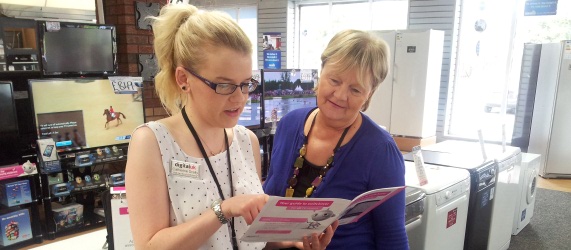
Digital TV switchover in the UK has completed, bringing to an end more than 70 years of analogue broadcasting. ERT reports on how it went.
Back in 1999, the then Secretary of State for Culture, Media and Sport, Chris Smith, announced the government’s intention to replace the decades-old analogue terrestrial TV signal with all-digital services – the digital TV switchover. In 2005 Tessa Jowell unveiled the timetable for the digital rollout across the UK, and last month saw the final area turn off analogue signals; the completion of switchover in Northern Ireland brought to a close a five-year programme that touched 26 million homes with around 60 million televisions.
The scale of the task faced by Digital UK, the independent, not-for-profit organisation set up to manage the switchover was tremendous – a billion-pound project to bring the biggest change to TV in a generation. It was clear that education would have to lie at the heart of the campaign, with a high percentage of viewers uncertain of the benefits of receiving more than the standard four or five channels they already had.
Part of this challenge would be providing support to the thousands of electrical retailers across the UK. Consumer research indicated that when contemplating options for the switchover, around one in four people would look to retailers for expertise, guidance and information on the programme.
Mark Nicholson, Trade Marketing Manager at Digital UK joined in November 2007, during the first Border region switchover around Whitehaven in Cumbria.
“The retailers in Whitehaven and Workington did a great job working alongside Digital UK to support their customers,” says Nicholson. “While we could make good predictions about likely questions and issues, at this stage there was no empirical data regarding switching over 25,000 households. Against this backdrop, Brooks, McCulloughs and the Whitehaven High Street Currys branch all stood out in terms of quality of service.”
At this stage though, Digital UK was completely focused on a relatively small area. Retail support would need to be scaled up to prepare for much larger switchovers. Two years later, three million households were scheduled to switch over at the same time in the Granada region.
Benefits
“With no specific products to sell, we were genuinely offering retailers support”, continues Nicholson. “But some owners had to be persuaded of the benefits first. We were able to do this quite easily once we had an idea of the sales uplifts from switchover, but it was always important that we repaid their time investment by making the support relevant and accessible.”
With no internal training function, Digital UK appointed leading technology retail experts Gekko to provide an outsourced solution.
“Digital UK was unique in many ways,” explains Daniel Todaro, MD at Gekko, “as there was no direct sales element to the strategy, and no traditional pre-existing supplier/retailer relationship. Switchover was a change that touched practically every household in the UK over a strategic period of time, and it all had to be timed perfectly too.”
Before the full package of retail support could be implemented, a comprehensive list of shops had to be compiled to cover all relevant categories of retailers: electrical multiples, independent electrical stores, department stores, catalogue stores, supermarkets, DIY outlets and national rental organisations. Support could then be offered: information, point of sale materials and staff training. Evaluation was carried out through mystery shopping research and a field team presence in each region.
Central to the campaign would be support developed around the ‘digital tick’ Certification Mark, created to provide two-way information between Digital UK and retailers. The Mark itself was registered by the Government to provide an easily-recognised signpost to viewers requiring assistance with advice, equipment or suppliers. As well as giving customers confidence in any switchover information provided in stores, the support defined standards to ensure retailers had sufficient information and that consumer-facing staff were adequately trained.
Through the scheme, registered retailers received a host of benefits, beginning with permission to use switchover brand assets in publicity materials. These included the ‘digital tick’ logo and the switchover robot, Digit Al, both of which featured in the nationwide communications campaign, giving each consumer 100 ‘opportunities to see’. Digital UK then provided free point of sale materials, free staff training, information about sales patterns, face-to-face briefings and visits from a Digital UK Retail Support Executive (RSE). In return for signing up, Digital UK also created an approved list of reliable retailers for each region, made available to consumers through its website.
“While the large retailers were naturally well-known and were organised through head offices, a large challenge was not only to find all the independent retailers, but efficiently to encourage them to sign up to the scheme,” says Nicholson. “Thus we partnered with retra, Euronics and trade magazines such as ERT to reach out and promote the benefits.”
Staff training formed the most crucial aspect of the operation, and it was essential it was carried out in a fashion that ensured it was understood by the people that would serve the public. That meant calling on every single outlet selling TV equipment, tailoring the training to suit each business model and level of knowledge. This was largely delivered through the RSEs, recruited, deployed and managed by Gekko – with a heavy emphasis on face-to-face interaction.
“Encouraging direct, face-to-face training meant we could make the process both interactive and memorable,” explains Todaro. “It also tackled the issue of staff attrition, picking up new starters and testing the longer-term knowledge retention of other members of staff. This created a new skill and subsequent qualification too, that of Approved Digital Adviser – another incentive for shop staff.”
Training was staggered to fit in with regional rollouts, and was flexible enough to meet a variety of requirements. Groups could vary from one person to fifty, be carried out on the shop floor or in a training room, and range from informal discussions to formal presentations.
The team of RSEs expanded and contracted in size to meet the needs of each region, and included an online specialist to provide bespoke website support. At its peak, in the middle of 2011, there were 26 RSEs covering regions from Meridian to STV Central.
Upon completion last month, Digital UK had successfully trained 74,000 retail staff and signed up 7,000 retail outlets for the Digital Tick Logo Scheme.
“The grass roots engagement carried out by Digital UK and our retail partners really helped to ensure that a national campaign resonated at a local level,” says Nicholson. ”The UK now has a fully modernised terrestrial television service, bringing more channels and more choice to virtually every home across the country while freeing up valuable spectrum for new technologies such as mobile broadband.
“Switchover has been delivered on time and under budget.”
Testimonials
Robert Chapman, Director, Chapmans Electrical
“We were looking to switchover with some trepidation, having both large commercial aerial systems and a domestic base, but need not have done. The way the rollout happened with the road shows, dealer packs, shop calls and help lines everybody felt included. It operated like a well-oiled machine (but I guess the feet where going fast under the surface).
The proof was when the day arrived we all had a chance to sell new product, but we also had a smooth switchover. I believe the time and effort invested in the dealers by Digital UK created this.
Whether it was ‘one to one’ or ‘group’ sessions the Digital UK team, headed by Mark [Nicholson] and David [Harby], was always there wanting to be proactive and engage, passing knowledge to our staff with tips that had been learnt from other dealers etc. Giving encouragement to embrace switchover, but still spotting the areas where additional help was required and giving it. They backed this up with point of sale materials and leaflets so we never felt alone and without support. The online training process allowed us to get all our sales and office staff up to speed where we could not have afforded to lose them away from the store.”
Steven Hadley, Technology Product Marketing Manager, Argos Ltd
“I think it’s fair to say that Digital UK has played a key part in making our switchover programme a success. We have collaborated and shared plans for each phase of the programme, building strong relationships with their team. The training and retail support team were warmly welcomed into our stores, providing a service which gave our store colleagues confidence and authority to talk about the switchover with their customers.
Having sound advice and a helping hand at the other end of the phone when things got a little confusing has been a great help! All in all, they are a superb team and we will be sorry when the switch is over and we go our separate ways.”
http://www.gekko-uk.com/field_marketing_agency/press/Press-ERTDigitalUK.pdf

Sales teams handled by Gekko on behalf of Epson visit PC World, Staples and other retailers to merchandise stock, train sales assistants and collect data. This information is uploaded at the end of each day and used by Epson to check stock levels and product availability, and ensure that stores are compliant with promotional activity.
To ensure that only relevant data is collected, Gekko invested in Opus, a comprehensive multi-platform data-collection tool accessed via iPads.
Gekko staff also work in designated stores at peak shopping periods to demonstrate and sell Epson hardware, collecting data in the process.
This is used to check that the promotion is being communicated in-store and that the corresponding point-of-sale material is being displayed. The marketing team will assess the take-up rates and use of promotional material when creating future campaigns.
Epson’s consumer sales manager, Tim Bedward, says: ‘We place great value on field-marketing data, which is used both by our sales and marketing teams. Effective data management enables us to monitor stock levels, promotions and merchandising compliance nationwide, and optimise sales accordingly.
‘However, it’s important to keep a strong focus with regards to what you want to achieve, and work backward,’ he adds. ‘Great emphasis can be put on data collection and reporting systems both by agencies and clients, but unless the output is used effectively, then the effort and investment often goes to waste. Opus helps us meet that challenge.’
Read the full article at http://www.brandrepublic.com/features/1159231/Field-marketing-coping-data-deluge/?DCMP=ILC-SEARCH
 Keep it simple, stupid – it’s something I’ve heard far too many times to count, but rarely is it an easy ideal to keep to, writes Daniel Todaro, managing director, Gekko. It seems only yesterday that we were applauding the remarkable spirit of the purple people who made the Olympic Games so memorable for all of us who were lucky enough to attend.
Amid the hysteria and jubilation, we asked the question of whether the enthusiasm for volunteering would see a positive knock-on effect and spark an upsurge in people willing to donate free time for anything and everything – charity, good causes, and local initiatives.
To an extent, it did actually happen with reports emerging of uplifts in participation, but whether this will stand the test of time still remains to be seen.
However, with Christmas fast approaching, it seems many brands have all too quickly had their heads turned by the latest in-vogue channel – this year being mobile.
With all this new technology emerging and evolving, us marketers watch on with curiosity and intrigue as we try to discern whether it’s something that could positively affect profit margins – and therefore worthwhile investing in.
I’m by no means a technophobe, in fact we pride ourselves at Gekko on being at the forefront when it comes to successfully integrating technology in order to drive effectiveness and enhance our services. But as it’s been preached time and time again, technology shouldn’t be the starting point; new channels should be investigated and researched in order to discern its merits.
How do we, as marketers, successfully make the most of this channel? Or perhaps, more cynically, how do we ensure our brand isn’t missing a trick and losing a step to our rivals?
Mobile is no doubt an incredibly important channel with the prevalence of tablets, but to elevate it above all others is to forget the crucial lesson, one that’s repeatedly stood the test of time and one that we should have learned from the Olympics: there’s no substitute for the human element.
It’s natural in the marketing environment to cast sideways glances at what competitors are doing, but these factors only amount to distractions that take you away from the real questions brands should asking themselves – how they can gain consumer trust and instil brand values that resonate beyond a single transaction?
An app may be highly useful in creating a positive reaction from a consumer, but compare that to a positive in-store experience from floor staff who have successfully give that consumer the confidence to make a purchasing decision, as well as the personal engagement we all cherish as social beings, whether we like to admit it or not.
The Olympic Games were a brilliant success, due in no small part to the years of planning and design that went into putting an infrastructure in place that ensured nothing impeded the positive sentiment.
The trains ran on time, the queues were negligible and the park was fabulous. But what we all remember was how that was brought to life by the sheer enthusiasm of the people staffing the Games. We remember how they made us feel, how they brought happiness where we did not expect to find it.
The Games Makers could have been merely the human embodiment of the draconian, unemotional, profit-driven Olympic movement that was portrayed so frequently in the media prior to the Games – telling us what we couldn’t do and ‘towing the corporate line’.
Instead, we found human beings we could relate to, ones that were more worried about contributing to our good times rather than nitpicking over red tape and fretting about the threat of ambush marketing.
That’s the real lesson brands should be learning as Christmas approaches. By no means am I saying disregard other channels in favour of experiential or field marketing, just as I believe both shouldn’t be marginalised by an infatuation with what’s new.
Simply put, invest in your people and make sure you provide that wonderful, unexpected experience to your customers that they will remember long after the festive period is over for another year.
Links:
http://www.brandrepublic.com/opinion/1157889/Think-BR-forgotten-Olympic-legacy-already http://www.campaignlive.co.uk/news/1157889/Think-BR-forgotten-Olympic-legacy-already http://www.marketingmagazine.co.uk/news/1157889/Think-BR-forgotten-Olympic-legacy-already http://www.prweek.com/uk/news/1157889/Think-BR-forgotten-Olympic-legacy-already

With Christmas (almost) around the corner and high streets already adorning their displays with festive lights and over sized pine trees, brands are busy making sure their marketing and sales plans are firmly in place. With high profile launches from Apple, Samsung and Microsoft among others, the tech sector is yet again set to be firmly in the limelight as festive shoppers rush to get their hands on the latest gadgets. Despite economic worries, Christmas often tempts people to buy big ticket tech items, but as ever, brands need to use all the tools in their arsenal to ensure people part with their money and get the tills ringing.
So what marketing activity should brands be prioritising over the next few weeks to guarantee that their products are front of mind for consumers? Last week’s Bellwether report from the IPA showed a decrease in spending across most marketing channels, with the perhaps obvious exception of online and digital, which has increased over the last quarter. It seems that most brands see the continual rise of online activity and use of social networks as a sign that marketing spend must be placed in these areas to secure sales.
In spite of overall decreases, it seems unlikely that TV advertising won’t play a huge part in brands’ Christmas strategies, and the familiar jingle bell music will surely start to ring out from our screens before November is in full flow. Hasbro, the toy manufacturer, has announced a 40 per cent increase in TV, social and online advertising budgets, due to a 12 per cent drop in boys’ toys sales. Hasbro are putting this down to a lack of screen time promotion, with no film or TV tie ups to boost merchandise sales.
However, brands should not be so quick to assume the reasons why sales may have dropped, or indeed that the solution is to increase investment in ATL and online channels. With the stress, indecision and impulsiveness that often accompanies Christmas shopping, surely brands should also be thinking about what activity they’ll be undertaking in store, in order to convert last minute buyers and assure people that their purchases are worth the money. In terms of tech products in particular, that last minute reassurance from a trained professional can be just what unsure customers need to push them from browsing to buying.
Recent Gekko research shows that almost a quarter (23 per cent) of people say they would be very unlikely to purchase gadgets and tech items such as TVs, phones or games consoles without having some kind of in store interaction or demonstration beforehand. What’s more, 44 per cent of respondents said they would like more interaction with brands in store and that it would tempt them to buy more products. In such a tumultuous economic environment, brands would be foolish to ignore such obvious cries for attention from consumers. Properly trained, dynamic brand ambassadors, who can demystify complex gadgets and point out their capabilities and features, are vital when the consumer reaches that point where they decide either to buy or to walk away.
An additional investment in this sort of field marketing activity can be hugely impactful for brands, and if done correctly, can reap massive rewards without putting a big dent in marketing budgets. The investment does not and should not be done in an isolated manner either. A strong creative strategy and theme can be woven expertly across channels, and if this is also echoed by in store and experiential activity, there’s a greater chance that the theme will resonate deeper with consumers and drive them towards the tills.
There is no doubt that other marketing channels have a huge role to play throughout the festive period, and it’s no surprise that Hasbro is investing money in TV, social and online. However, although toys may have a different target audience to tech brands, the principle remains the same. Investment in dedicated, knowledgeable brand representatives, who can make a connection with consumers and leave them with a memorable impression of both the product and the brand, is sure to leave both customers and marketers with a smile on their face this Christmas.
Daniel Todaro, Gekko.
http://www.retailgazette.co.uk/articles/22313-comment-whats-in-store-for-brands-this-christmas

The analogue TV signal in Northern Ireland will be turned off permanently on Tuesday night (23rd October 2012), completing the final stage of the UK digital switchover.
The final stage of the digital switchover will be completed at 11.30pm, when viewers in Northern Ireland will lose their analogue signal. It is the last part of the UK to switch off the signal, which has been in use for more than 70 years. Households across the rest of the UK have already switched to digital over the course of the last four years.
Field Marketing agency Gekko has been instrumental in the switchover programme, working with Digital UK to support the retail channel. Teams of Digital UK Retail Support Executives, recruited and managed by Gekko Field Marketing, have been delivering training and support to retailers across the UK since 2008. The work of the RSEs has been praised by many in the industry who recognise that the face-to-face support has been invaluable in preparing retailers and their staff for the switchover process.
In that time some 34,000 store visits have been completed by the RSE team and nearly 75,000 retail staff have benefitted from the training on offer. In 2009 the quality of the training provided was recognised at the Field Marketing & Brand Experience awards where the programme won the ‘Best Retail Training’ award.

The latest IPA Bellwether report has seen marketing budgets, outwith online budgets, forecast down for the second consecutive quarter as a result of continued global economic uncertainly. The Drum approached some of those involved in the marketing industry for their reaction to the latest figures. Among those commenting is Dan Todaro, MD of Gekko.
“Today’s findings don’t come as a massive surprise – we are, after all, in tight times financially and the gut reaction for many brands is to focus spend on rapidly developing areas such as online and search. However, recent Gekko research shows that despite the decrease in spend shown here in the Bellwether, FM in particular still has huge value, and indeed can boost and increase sales for brands if executed correctly, even with limited budgets in place.”
“The survey revealed that 44% of consumers would be more likely to buy tech products and gadgets if they’d had a product demonstration or other brand interaction in-store, and a third (32%) said that this activity would tempt them to spend an additional 20% on products and accessories. Surely this is an argument for brands to re-think their spending strategy and reap the clear rewards that FM activity has to offer? It’s true that marketing budgets will continue to be squeezed, but listening to what consumers want and what makes them buy is ultimately the best way to predict and achieve success.”
Full article at http://www.thedrum.com/news/2012/10/18/reaction-roundup-ipa-bellwether-report-q4-2012#QTHrOAIor4PY2EuC.99
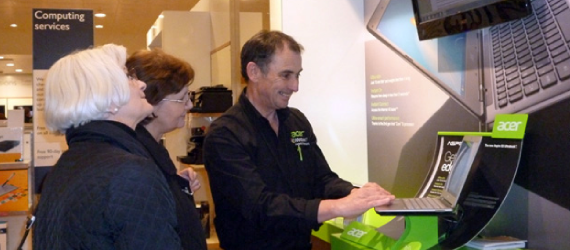
As the UK’s leading technology focused field marketing agency, Gekko has always been confident in the benefits that this marketing discipline delivers for brands in the retail channel.
To support our claims that field marketing can make a real difference, we commissioned independent research looking at how marketing activity at the point of purchase impacts on consumers buying or thinking about buying technology products (TV, Smart Phone, Tablet device, Digital Camera etc.) The findings from 2,000 respondents revealed some interesting consumer attitudes.
The survey began by asking consumers whether they would purchase a technology product on the basis of only having seen a TV advert, with 23% responding that they would be very unlikely to do so. When asked whether their buying decisions would be influenced by some form of interaction with the product, such as a demonstration within the retailer, 44% indicated that it would. With over two fifths of respondents saying they would welcome extra interaction, the case for brand led activity within retailers is certainly strengthened. Despite the prevalence of online shopping, the opportunities for high street retailers are still very much there for the taking. Interestingly this desire for brand interaction is not just limited to older age groups as 52% of 18 to 24 year olds expressed a preference for a product demonstration before purchasing.
The argument for deploying brand ambassadors in to retail is bolstered further by the fact that 44% of consumers would be more likely to spend more on their purchases having been subjected to a product demonstration. In other words the opportunity for increasing the average basket value of each transaction is greatly enhanced through effective selling up through product ranges and of accessories and consumables. Three quarters of those surveyed said they would be prepared to spend up to 30% more on technology following such a brand interaction.
What is clear from this research is that whilst online research may well feature in many people’s purchasing process for tech gadgets, there is nothing quite like effective face to face contact on the shop floor to clinch the sale. Employing skilled brand advocates in retail will help in steering consumers to your product line-up. Evidence for this can been seen in recent campaigns conducted by Gekko. One client campaign, which ran over Christmas 2011, saw 61% of people who received a product demonstration going on to purchase that particular brand. Of these buyers, 62% also bought branded attachments, and in doing so increased the average value of each transaction, benefiting both brand and retailer alike.
About Gekko
Field Marketing Agency Gekko is a highly effective award winning agency providing imaginative and results-driven solutions to the technology sector throughout the UK and Ireland. At Gekko we have a proven track record in the supply of field marketing services including merchandising, product demonstration, mystery shopping, training, events and compliance auditing as well as longer term strategic teams.
Research conducted by OnePoll. Sample size – 2,000.
 gekkofm