Category Archives: Posts

Does the Bond franchise really make brands more desirable?

bond001

James Bond is amongst the most successful and well-known film franchises in cinematic history. Spanning over half a century, and featuring some of the most iconic and budget-busting special effects, car chases, fight scenes and soft romantic encounters, 007 provides a backdrop for brands to timelessly associate themselves with the premium image that is Bond.

Whilst James Bond may be the coolest fictional character around; he’s a man who drinks, eats, drives, uses a mobile and always has to be on time. Therefore why shouldn’t he drink Heineken, drive a Ford by day and an Aston by night while interfacing with his Sony Mobile device, wearing an impeccable Tom Ford made-to-measure suit complemented by an Omega watch with the odd gadget combined?

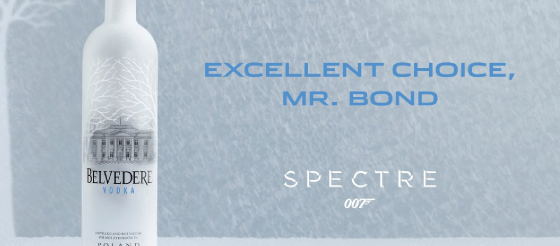
Brands have been central to the Bond script over the decades. Indeed, the official 007.com website had a section devoted to Skyfall’s 12 brand partners, which shows how integral brand involvement is. The latest instalment to the Bond Franchise, Spectre, with its reported budget of over $300m is no different. But it’s not all about the money.

For many of these brands the immediate gain is not necessarily purely sales. Take Tom Ford. Whilst it may increase cosmetic and accessory sales, the uplift in Tom Ford suiting, in a price range far removed from the average budget, is perhaps the benefit of the association with a seminal film that will live on beyond its theatre and Blu-ray release. What it offers Tom Ford is the long-term association with a franchise that will be seen over and over again, decade after decade, bringing in a new generation and establishing the brand as a classic. This allows Tom Ford to continue its premium brand and pricing that may at some time extend to a diffusion line.

The budgets agreed by brands for just a frame’s-worth of brand exposure is clearly phenomenal, but brands aren’t just buying a product placement slot that may or may not increase awareness of the product and an uplift in sales; they’re buying into the fabric of Bond and an unwavering association that effortlessly transcends the actors that play him.

Many brands have involved themselves with the Bond franchise and while not every single one of them will have that instantaneous recognition that the likes of Aston Martin and Omega watches might have, it provides those brands with a concrete platform to increase brand equity and establish itself as different to the crowd opening themselves up to new categories.

A brand’s desire to segway into a movie as if it was natural is important to any brand with values, as blatant placement is just tacky. However when you can have the main character drive your car when he could drive any, wear your watch, use your mobile and make it fit seamlessly into the plot is an art in itself complemented by the fact it’s not just any man but Bond, James Bond. What the 007 franchise enables brands to do is gain an element of ‘cool’, be part of film history and gain recall over and over again for years to come, spanning generations and demographic.

The opening shot of Daniel Craig drinking a Heineken in Skyfall is now cemented in cinematographic history and will be seen by others long after the film receives classic status. The likelihood that Heineken as a brand will disappear is slim so the long-term return on investment for the brand is potentially infinite and rewarding every time someone around the globe, whether it be dubbed in Cantonese or Portuguese, sees James take a sip of an ice cold Heineken.

A week from release, Spectre is, in numbers, likely to be the most successful Bond film in history and whilst not every brand will stand the test of time, with fondness, any brand is able to maintain equity and recall based on sentiment if associated with a Bond film, Pan Am did as Virgin Atlantic desires with its previous associations.

Read the full article at: http://www.thedrum.com/opinion/2015/11/07/does-bond-franchise-really-make-brands-more-desirable
The Microsoft Surface Book has broken the copycat mold

surface

Over the past decade, the importance of showcasing innovation in both product and design has become a pain point within the tech industry in which many have not alleviated. In a market where competition is high, but opportunities are slim, brands have struggled to break the copycat mold and come up with something different to set them apart from the rest. Brands are often keen in following the footsteps of Apple’s chief designer Jonathan Ive, such as Huawei’s iPhone 6 look-alike Honour 6 device which unashamedly has no original design features, however, it is refreshing to see Microsoft engage in an original industrial design philosophy with the recent launch of its Surface Book.

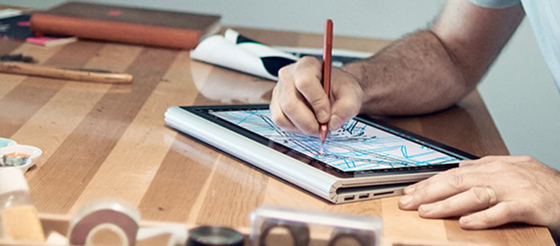
Understanding that design along with functionality drives desire, Microsoft has achieved the right equilibrium. The Surface Book’s sleek craftsmanship, accurate and responsive pen and touch support, as well as being twice as powerful as the Macbook Pro, has proved innovation in product and design is not just confined to only one brand. The laptop’s advanced display technology makes it not just attractive to look at, but natural and fluid to write on. Together, Surface’s creative director, Ralf Groene and Windows 10 devices head Panos Panay, have invented something new, desirable, and premium, giving the brand a new lease of life in the laptop category.

Other brands should take a leaf out of Microsoft’s book. Consumers are starting to see through the usual copycat formula as demonstrated when a new iPad launches, sending the rest of the tech world into tablet production overload. If brands want to establish themselves within a competitive market, it is about creating an identity that they can call their own, or risk being overshadowed by competing brands.

Whilst innovative design is always important, product functionality is also a game changer. Striking the right balance between the two, Microsoft’s new product launch has hit the ground running. Already running on 110 million devices worldwide and Windows 10 is off to the fastest start in history, could this be Microsoft’s time to shine and set the agenda for the next design-led tech trend? Maybe.


Read more at: http://www.brandingmagazine.com/2015/10/27/how-microsoft-has-broken-the-copycat-mold/

Tagged , , , , , , , , ,

Lifestyle benefits are key to selling the Connected Home

hive 2 banner

Recent research from McKinsey claims that the Internet of Things (IoT) offers a potential economic impact of $4 trillion to $11 trillion a year by 2025, equating to 11 per cent of the world’s economy. Now, that’s surely a reason to get involved?

Every technology brand is acutely aware of the need to create innovative connected products. Some are more aware than others, such as Hoover with Wizard, the UK’s first fully connected kitchen app that enables you to control and view the status of appliances on the go.

IoT devices, once thought of as the preserve of premium brands, are now becoming the norm in retail, with many shoppers expecting more connectivity in their appliances and devices. Hoover is not alone in giving consumers ultimate control at realistic prices. Look at the beautifully designed Hive Active Heating 2 with a range of new features and a family of complementary products.

The demand for connected products in the UK is growing. Research from the Joseph Rowntree Foundation identified that 59 per cent of people agreed or strongly agreed that it would be useful to control devices in the home when out and about. Consider the possibilities this offers your consumers and the connection sales IoT offers your store for those upgrading one or many devices. A massive 70 per cent would also value the safety and security features a smart home would offer, increasing the opportunity to range complementary products, offering a choice to consumers expecting more.

When selling connected devices, it’s easy to over-complicate the “how it works” element from a technical perspective. Too much focus on explaining the reliance on network connections and sharing data may confuse the customer and worry them unnecessarily. To sell smart-home solutions without over-complication, the focus should be kept on the practical benefits – namely being convenient, safe and fun.

The ways in which this technology should be introduced to customers is to focus on the lifestyle benefits offered by your new connected product.

All retailers must consider the 50 per cent of shoppers who would buy smart products for their home if cost weren’t an issue. Likewise, retailers need to consider that 39 per cent of shoppers are worried about the privacy issues associated with IoT. As a new category, shoppers need reassurance that the products they are considering will truly benefit their lifestyles and are worth the extra cost, and that they will not put their privacy at risk. This reassurance needs to be reinforced on the shopfloor by staff, making training on IoT products a priority when entering this new category. If your staff can talk with authority about connected products, you will see consumer knowledge, and ultimately sales, improve.

The IoT is about innovation. What better way to market your store’s expertise in IoT than through targeted digital campaigns to your customer base via smartphone and email. Continue the customer journey from online to in-store with working digital displays and staff on hand equipped with wi-fi-connected tablets to explain and demonstrate the benefits of IoT products. Consider also inviting consumers to try interacting with connected devices from their own smartphone, further enhancing the customer experience. It will also demonstrate the ease of use and spark their imagination to consider how they can immerse themselves and their home in the IoT.

Brands like Hoover and Hive demonstrate that innovation need not be at a premium when integrating IoT devices into your home. With a number of brands adding to the already growing category, ranging IoT products will put you ahead of the curve, perhaps enabling the IoT to become potentially more than 11 per cent (forecast) of your total revenue.

Importantly though, the IoT remains a new category that can overwhelm shoppers. Training staff to speak with authority and concentrate on the lifestyle benefits created by the products will transform an unknown category into a staple for your store.


Read more at: http://ertonline.co.uk/Opinion/Opinion-Daniel-Todaro231015.htm

Tagged , , , , ,

Why Shopping In-Store is in our DNA

fashion shopping banner

Whilst online shopping is big business for all brands, in today’s developed omni-channel world, the need to physically immerse ourselves into a brand is still really important.

When we go to a shop, we like to choose our fashion purchases carefully, weigh up our options and try them on, or at least appreciate that it may fit based on its cut and quality. Our research shows that around three-quarters of consumers say the ability to touch, feel, choose and compare products before they buy them is a key benefit of shopping in a physical store. More than a transactional experience, shopping is a social activity that we like to share with others. Over half (53.25%) of shoppers like to take their friends, partners, or family shopping – either as a social occasion or to help decide what to buy.

An open, sociable atmosphere can be harnessed by trained and amiable staff that consider the needs for shoppers that not only want to hang out with friends, but also want to discuss their ideas before making a purchase decision. Indeed, over a third (39.20%) of shoppers say they value advice from in-store staff whilst shopping. Brand staff need to be collaborative with shopping groups to not only help with purchase goals but also to create an environment that these social groups will want to return to.

To support the shopping process, brands need to offer an engaging in-store experience that accentuates the need for a social environment and immerses the shopper into the brand. When it comes to buying clothes that require a careful decision, almost three quarters (73%) are likely to go in-store. Fashion choices especially evoke discussion, debate and positive emotions amongst shoppers as they compare clothes and spend. The physical shop still provides that connection with your brand and instant association and buzz that people need to become a follower of your brand.

As shoppers we like, especially for those special luxury purchases, immerse ourselves in the total brand experience from the plush carpet to the lighting and customer service which add to the customer journey and make that product seem exceptionally good value in comparison to high street brands.

A lot has been said about the retail environment changing due to the influx of channels to engage with, but in many ways the deep rooted desire to shop for apparel is still the same. We still need the physical experience of shopping. More than a pastime for many – it’s an intrinsic part of life and brands become engrained in the fabric of our lives when it comes to what we choose to wear.


Read more at: http://digitalmarketingmagazine.co.uk/offline/why-shopping-in-store-is-in-our-dna

Tagged , , , ,

Brands should take an omnichannel approach this Black Friday

black friday banner

As we lead up to the festive peak season and retailers are once again preparing for this year’s Black Friday weekend, the omnichannel experience is still a fundamental part of retail strategy. There has already been a number of sources speculating that this year’s sales will break all the records set last year, including predictions that online sales will surpass the £1bn mark, up from £810m in 2014. Notably, the number of consumers shopping online for Black Friday deals is set to increase to 30%, up from 8% last year.

Clearly, we’re beginning to see the growing importance of online leading up to Christmas and Black Friday, itself made popular by Amazon, whose recent Prime event similarly guaranteed orders and revenue. Although last year’s peak season generated a 10% increase in high street footfall compared to previous years, consumers increasingly seem to be going online for their Black Friday deals.
However, despite the growth of online sales, recent research from Gekko shows that nearly three quarters (74.2%) of shoppers benefit from the touch, feel and physical comparison of products when making purchase decisions. This is especially the case with high ticket electrical items such as a smart TVs or washing machines, where 67% of shoppers are likely or very likely to buy in a physical store, compared with only 46% who would consider buying online. Moreover, more than half (56.8%) of consumers prefer to head onto the high street so that they can seek advice when making a considered purchase.

In an increasingly connected retail landscape, in-store retail sales are gradually feeling more of an impact from online, especially with smart phones offering shoppers a way to price check in their pocket. Barclays recently predicted that 42% of all retail sales will involve a mobile device in some way over the next ten years, clearly showing how brands will need to integrate their online and retail offerings to create consistent branding and the omnichannel experience we now expect.

This peak period, brands need to ensure that their sales and promotions take into account the omnichannel nature of retail today. While online sales will certainly be a focus this year in light of increasing numbers of dedicated online consumers, brands should not neglect the legions of shoppers that will descend on the high street, often using their smart phone to ensure that the deal their considering isn’t cheaper online.

Making sure that your branding in store matches that of your online offering will ensure that the 54% of shoppers that like to research products online before buying in store will continue their customer journey to buy your brand. Placing brand ambassadors in store to support your peak promotions are proven to assist customers looking to purchase considered items, supporting the majority of consumers who want to experience a product or ask advice before making a decision.

Whether buying online or in store, Black Friday is guaranteed to make the headlines this year, either for record sales or for more riots in supermarkets over discount appliances – perhaps it will be both. Black Friday is now a retail institution, which begins the Christmas peak shopping period for both retailers and brands.

Tagged , , , , ,

Staff key to a successful peak period

hanger banner

With last year’s Black Friday generating a 10 per cent increase in footfall compared to previous years, research from Gekko highlights the need to recruit and train in-store brand ambassadors to maximise in-store opportunities for the 2015 peak festive period.

A staggering 50 per cent of shoppers said that there is often not enough staff on the shop floor to help them when making a purchase decision. There is also concern over the manner of in-store staff, with over half (52%) of shoppers complaining that they are too pushy about making a sale.

Despite the growth of online sales, nearly three quarters (74.2%) of shoppers benefit from the touch, feel and physical comparison of products when making purchase decisions. A quarter (26.35%) of shoppers buy in-store when they are purchasing items they need to think about and choose carefully and over half (56.8%) head in-store for advice when making a considered purchase.

Sarah Mandeville, recruitment manager at Gekko believes that staff hold the key to converting sales during the peak-time rush:

“Whether they are full-time or temporary over the peak period, retail staff must demonstrate passion for the product and the ability to make a positive impression on shoppers. In-store is a vital touch-point for consumers, and retailers need to ensure that their staff are trained to maximise every opportunity. In a competitive landscape, which is heightened during peak, a retailer will only get one chance with the consumer.”

To manage the peak-period, here are five important action points for retailers to get the most out of their staff:

1. Allow time for training – Speed is often important when training temporary staff in the run-up to Christmas. However, staff will be more motivated and likely to convert more sales if they are immersed in the role. Take time to build your team’s knowledge and understanding of the brand, company background and product range. In an omnichannel environment, where shoppers can obtain product information using their smartphone, your brand ambassadors must know more than just the product they are selling.

2. Ongoing support – Training shouldn’t just be delivered at the beginning of the peak-period. Once the staff are in place, ongoing revision, recaps and coaching should be continued to keep the team sharp on sales messaging and promotions.

3. Create a team environment – staff may not all work on the same days or in the same locations. Using group chat or social tools such as Facebook or Google Hangouts can help to communicate simultaneously and build communities. To lead the team environment, allocate a mentor as a point of contact to motivate and be contacted at any time.

4. Don’t just motivate with money – Monetary incentives can be short-lived. To motivate the team, it’s worth creating friendly competition with leader boards and prizes. This can be a fun way to build a positive attitude among the workforce.

5. Treat everyone the same – To make employees feel part of the team, employers need to treat temporary staff as though they are full-time employees. Putting effort into training and making temporary staff feel part of a larger team can be a motivating factor for staff in itself.

Read more at: http://digitalmarketingmagazine.co.uk/digital-marketing-news/research-shows-retailers-could-suffer-over-peak-period-with-lack-of-in-store-staff/2622

Tagged , , , , , , , ,

Gekko website voted ‘Site of the Week’

gekko mediums banner

Gekko’s new look website has been voted as ‘Site of the Week’ by ProcessWire Weekly.

Here’s the site’s glowing review:

Gekko Field Marketing is a UK-based field marketing company. In their own words, they offer a full range of services, helping to create more opportunities to connect consumers with brands.

999 Design Group Ltd is responsible for the new site of Gekko Field Marketing, not to mention their brand communication and visual identity altogether. They’ve done a pretty awesome job too: the visual identity feels refreshing, and the site has a very nice and modern feel to it. Both are simple yet effective, just the way we like it.

Some of the highlights of the site include a responsive mobile-first design, the neat expertise wheel feature, a well functioning prev/next navigation for various content types, and a nice touch of custom styling for the embedded Google Maps views. It’s the little details that make the site feel so alive and compelling – definitely a job well done!

A big thanks to ProcessWire for the review, and 999 Design for producing a fantastic site that complements our brand and our message: we bring your brand to the right people, and the right people to your brand.

Read more at http://weekly.pw/issue/70/

Tagged , , , , ,

Ready to wear?

Untitled1Only a year ago, many people were already writing off wearable tech as a gimmick that would fade into obscurity. However, 12 months on, wearables are a growing force in the tech world that can’t be ignored.

Whether it be fitness trackers, such as the Fitbit Charge HR and Epson Sensing, or dedicated smartwatches such as LG G Watch, Samsung Gear Live and Pebble Steel, wearables are everywhere and every major brand is jumping on the bandwagon.

With an estimated 72 million wearable devices expected to be shipped this year, up from 30m in 2014, wearables are a category that will continue to grow and is here to stay. Although the big name in the industry, forget the Apple Watch, as it’s unlikely that third-party retailers will be able to stock it soon, if ever.

Instead, focus on the multitude of other devices that are available to third-party retailers, like Android Wear, using the world’s most popular software platform. With more mobile devices running Android than any other, compatible wearables will appeal to a broad spectrum of consumers.

The appeal of a smartwatch is now not age-dependent. Any demographic can perceive a need, with people mostly wanting a wearable to view maps/get directions (68 per cent), read notifications (61 per cent) and control smart devices in the home (55 per cent) like Google Chromecast, the smartest and easiest £30 you’ll ever spend or sell.

Wearables offer your consumers choice and compatibility that enables them to not only measure and record their fitness, but check into flights, view texts and reply without touching their phone, reducing perhaps the average 214 times we view our mobiles each day. The possibilities are not quite infinite, but they’re getting there.

Giving staff a device to use for a period will help them to understand wearables and become a brand advocate. Their knowledge will help to improve customer education in store and, with added training, sales will increase.

Ensuring that your staff have good product knowledge will help a great deal when speaking to customers who are perhaps purchasing a wearable device as a gift, which make up nearly a quarter of wearable purchases. Likewise, with most customers prioritising ease of use when choosing a wearable device, demonstrating desirable features and speaking with authority about each device will improve the customer experience and lead to sales.

In the UK, 27 per cent of smartphone users would consider price before functionality (13 per cent) when purchasing a smartwatch. So make sure staff sell the benefits, to help justify the price. This is essential if you are to make wearables a profitable part of your retail experience.

Shoppers need to also be reassured that products are easy to use and will have a positive impact on their lives and not complicate them as many gadgets do. Effective staff training not only improves unit sales, but also the value of each sale. Nearly 20 per cent of Apple Watch buyers have also purchased a third-party accessory, such as an extra wristband, with an estimated 2.79 million accessories being sold since launch. With most Android Wear watches using industry-standard 22mm bands, your customers can choose almost any band for their watch. Many other wearable brands are allowing shoppers to customise their device, creating a clear opportunity for retailers to capitalise on the third-party accessories market and increase attachment sales.

Also, think about where your displays are situated in-store. As smart devices become more connected, bring attention to how other products will work with wearable devices, such as their phone, TV, tablet or even white goods.

As more devices come to market with improved features (look at Android Wear 5.1.1) such as watch faces to increased functionality, there is plenty for consumers to get excited about.

If sold correctly, as a product that crosses the chasm of fashion, tech and lifestyle, demonstrating how wearables assist in managing our lives with efficiency and ease, there’s a clear opportunity for everybody.

Full article is on http://www.ertonline.co.uk/Opinion/Opinion-Daniel-Todaro-Wearables.htm

Can the In-Store Experience Complement Online Retail?

mall

With e-commerce growing at an exponential rate, the value of bricks and mortar is often overlooked. Yet, with 95% of all retail purchases worldwide still made in-store according to Deloitte, the high street and retail outlets are not the dying breed we’re sometimes led to believe. In-store purchases are projected to grow by over £190 million by 2018, so brands should be putting emphasis on improving the in-store experience to help customers make more informed purchasing decisions.

For brands to fully engage with consumers in-store they need a deeper understanding of the shopper journey as a whole. It’s about getting to grips with increasingly complex buying behaviours. With consumers using both online and in-store research to make purchasing decisions, particularly on considered ‘high ticket’ products, brands should be proactively using online data to enhance the customer experience in-store.

Getting the blend right

Researching products online whilst in-store, using smartphones and even smartwatches is becoming more common among consumers. As shoppers become increasingly more connected, 20% of shoppers measure high street prices online and purchase products via mobile devices in-store, according to research by Shopper Tribes. It’s clear that new technologies are having a significant impact on the retail experience.

To meet the ever-demanding needs of consumers, forward-thinking brands are increasingly using social media to engage with their target audience. Among 18 to 35 year olds, 14% are using Facebook to ‘check-in’ to stores and 15% use social platforms to discuss products with their peers. While social media is a popular way to engage with the younger generation, brands need to understand how to cater to every age group. For example, shoppers aged 55 and over prefer to use online research to help them make informed decisions when purchasing electronic goods in-store. In an evolving omnichannel landscape, a one size fits all approach will not work if brands seek to cater to consumers across the board.

Making it personal

While e-commerce is changing the way people shop, the average online shopping basket is broadly made up of smaller purchases. As such, when it comes to high ticket consumer and luxury brands, the high street remains the destination of choice for making a purchase. As shoppers, we will always be motivated by the ability to touch, feel and experience products before making considered purchases. Living in a digital world, the brand you desire to wear and use remains an expression of your identity and lifestyle. Having the opportunity to view products in-person rather than through a screen is a rewarding experience for shoppers.

Ultimately, the benefits of shopping in-store can outweigh the convenience of purchasing items online. However, for consumers to realise the unique selling points of the in-store retail experience, integrating an omnichannel approach is key. If consumers are researching products online, branding in-store should be streamlined to improve sales and product recall to enhance the customer journey. By using ATL advertising across digital platforms, including social media, brands can drive shoppers in store, leading to improved conversion rates and profitability long term.

Retail outlets and the high street can offer a sensory experience for shoppers that the virtual world struggles to compete with. It’s about building and enhancing this emotional connection with customers to make the in-store experience memorable and rewarding.


Read more at: http://performancein.com/news/2015/08/12/can-store-experience-complement-online-retail/

Tagged , , , , ,

How brands can convert sales during the Rugby World Cup

rwc-trophy

This autumn will see the most significant sporting festival to take place in the UK since the 2012 Olympics – the Rugby World Cup, the third largest international sporting event in the calendar. Taking place in England, the home of rugby, the tournament is a golden opportunity for affiliated brands to reach a global audience.

With worldwide partners such as Land Rover and Heineken, these brands will appeal to consumers irrespective of their knowledge or passion for rugby. However, there is also the chance to attract new fans, even if it is just for the duration of the tournament. It’s an opportunity for brands to tap into the feel -good factor that such events can stimulate.

It happened for some nations and brands at the 2014 FIFA World Cup, just as it did at the Winter Olympics – the one and only time in four years people outside of the curling fraternity schedule viewing time to watch and get excited by the sport!

From the brands’ perspective, in addition to the global exposure, it’s an opportunity to extend their marketing campaigns beyond the stadiums and ATL initiatives that they do all year round. On-pack offers, promotional advertising and experiential campaigns all have the capability to get brands in front of a greater consumer audience, taking the tournament and its associated buzz away from Twickenham and sharing it regionally on the high street and in-store.

During the 2012 London Olympics, Samsung created an engaging campaign that extended experiences outside of Elizabeth Park. The leading electronics brand created pop-up ‘Samsung Studios’ focusing on demonstrating the Galaxy S3 and Galaxy Note. Located in some of the UK’s major shopping centres and Heathrow T1, visitors could play with Samsung’s Olympic Games app and enter competitions. No products were sold at the studios, but having entered into an experience, just over a third (35 per cent) of respondents said they were much more likely to consider Samsung.

Dove Men+Care has been involved with rugby for a number of years, implementing experiential campaigns and demonstrating that even the most macho of men do moisturise and aren’t shy of looking after themselves. In the run-up to the tournament, Dove Men+Care is creating a 360 campaign that connects TV, social and ends with consumers being able to win sold-out world cup tickets in-store.

Beyond this engagement and to drive sales, brands need to be conscious of how their carefully devised messaging is translated at the point of purchase and communicated to store staff and shoppers alike. If sales staff are unaware of Toshiba’s (an  RWC world-wide partner) latest product range, or how to sell their products and what the latest promotions are, then that is a lost opportunity. Similarly if shoppers are left non-the-wiser about the latest offers then there is a diminishing of the wider marketing efforts.

To perfect their in-store execution, merchandising and product demonstrations from trained brand ambassadors need to be linked-up at the point of purchase to complete the omni-channel experience.

Brands need to extend the consumer journey from TV and online to in-store for products that are impulse purchases as part of a weekly shop and for more considered purchases throughout the lengthy six weeks of the tournament (17 September to 31 October). Both, through association, create spontaneous awareness for tournament sponsors with everyone watching, rugby fan or not. Let’s also not forget the B2B opportunities affiliated to some of these brands which can realise an even greater return on sales and brand equity.

The Rugby World Cup is an opportunity for brands to reach consumers, mindful not to create any brand apathy, beyond sponsorship deals. It’s a chance for brands to influence people at all omni-channel touch points globally with physical and experiential campaigns as important as online engagement to create excitement and crucially drive sales.


Read more at: http://www.thedrum.com/opinion/2015/08/14/how-brands-can-convert-sales-during-rugby-world-cup

Tagged , , , , , , ,