Author Archives: Gekko Marketing

No substitute for on-the-ground insight

Leading FM agency Gekko features in an article in Marketing magazine about the use of technology in the world of field marketing.

Marketers can spend all day in front of a screen checking on market research results and sales figures, but there’s nothing like getting out of the office and into stores to truly understand the way consumers shop. As novelist John le Carre warned: ‘A desk is a dangerous place from which to view the world.’

Tim Bedward from Epson, one of Gekko’s top clients, mentions that when it comes to selling high-ticket priced items face to face contact is still vital and that staff training in particular can really boost sales. Brands need to engage with store sales staff to make sure they understand the strong points of a product so they are enthused enough to promote it effectively to consumers. The staff – especially Christmas temps – need to be engaged just as much as the consumers.

‘Delivering practical training through iPads and interactive sessions can make a difference in how quickly your team is able to understand and immerse themselves in your company values and in the way they go forward and interact with customers,’ he says. ‘Shop floor staff are your key brand ambassadors for every consumer that enters the store. By involving an appropriate use of technology to enhance the training experience, it ensures you have an army of enthusiastic, empowered staff who build relationships with shoppers. Technology plays an invaluable role in maximising effectiveness and fostering positivity and a sense of team.’

The use of technology in training staff is helping real-world retailers fight back against the threat from online sales. This is the view of Daniel Todaro, managing director of field marketing agency Gekko, which specialises in consumer electronics. The agency worked with Epson to create a training plan for retail staff that was delivered by the field team via iPads.

This technology allows what Todaro calls a ‘one-device technology solution’ that comprises training, product presentation and demonstration materials, as well as photo capture and point-of-sale ordering. ‘Technology does not make the experience, it enhances it,’ he says. ‘Consumers (use) channels such as mobile to research, but expertly trained staff offer a level of guidance and reassurance that can give consumers confidence in their purchases that can’t be found online. People need to be at the centre of the field-marketing experience.’

Full article at:  http://www.marketingmagazine.co.uk/news/login/1150252/?DCMP=ILC-SEARCH

Make call centre agents a part of the team

Gekko Field Marketing

Motivation is an issue that rarely discriminates. No matter what size or sector, all companies face constant challenges when it comes to keeping motivation and morale high. However, looking at motivation alone often results in mere stopgaps, only serving to give a temporary boost – especially when looking specifically at call centres where staff turnover may be higher than the average.
Fostering an overarching positive culture and promoting a sense of brand loyalty should be the aim, and the first steps towards achieving this is by making your employees feel like they’re part of a real team, regardless of whether they are from an external agency or on a permanent contract. Here are some tips on how to achieve just that:

1. Give your call centre agents ownership

Call centre employees often feel the most de-motivated when they feel they aren’t worthwhile to the business. By finding ways to create a sense of ownership within the team and involving employees in certain decision-making processes, they will become more invested in the brand and its core values.

2. Set achievable group targets that necessitates teamwork

A call centre environment is often highly sales and target based, with individuals competing against each other. Whilst competition can be healthy, it can be inefficient. Set manageable, tiered targets that require employees to collaborate, rather than compete.

3. Share goals and targets

A rigid hierarchy can mean call centre employees feel inferior to more senior members of staff. By sharing certain business information with staff, employees can better understand decision-making, whilst also understanding the value of their own role. Transparency is the key to building trust, and if employees cannot trust each other, then they can feel isolated and de-motivated.

4. Promote belief in brand values

It’s important that staff not just understand the brand values, but believe in them so that these values translate credibly when interacting with customers. This not only makes the process easier, but is surprisingly motivational too – assisting the employee and fostering a sense of pride in their work.

5. Listen to your call centre agents

Every employee is important, and should be made to feel so, including agency or temp staff. Those at the top can often find themselves far removed from the day-to-day running of a company, and when this disconnect happens, morale can drop. By making time to listen, it breaks down barriers and fosters a greater sense of being part of a team.

6. Celebrate success

At an economic time where lows are sometimes unavoidable, it’s even more important to celebrate success. Call centre employers need to demonstrate that hard work leads to reward, but on a team level as well as an individual. After a successful quarter, it’s important to leave a positive feeling amongst a team, rather than a hollow one.

Daniel Todaro

MD Gekko

Full article available:

http://www.callcentre.co.uk/page.cfm/action=library/libEntryID=4486/libID=1/

The key to a brand experience of Olympic proportions

Gekko Field Marketing

For many Olympic sponsors, the quality of their staff on the ground will be all important once London 2012 begins, writes Daniel Todaro, managing director, Gekko.

For marketers across the country, this is the week that it finally feels like the Olympics is truly upon us, with Locog’s marketing blackout coming into full force.

As well as the detailed social media guidelines for athletes, there are now the 250-plus, intimidatingly-titled ‘brand enforcers’ taking to the streets to ensure that no unofficial advertising activity takes place within the exclusion zone, which stretches up to 1km outside the Olympic park.

Certainly for marketers, it’s an unprecedented crackdown on ambush marketing. For many sponsors who have paid enormous sums to feature, they have in the past found themselves infuriated as their gold medal moment is ruined by a savvy competitor skirting the rules (Michael Jordan intentionally covering up his Reebok logo in 1992 being a memorable example).

This edition, it is unlikely even Paddy Power would be so bold as to dare intrude.

While it has been made clear that the burden of proof falls squarely upon the shoulders of the athletes, it’s time for plan B for many brands who have invested so much of their 2012 spend in associating themselves with Olympians.

With a cooling-off period also in effect after any medal win, as well as advertising within the village limited, it seems that there’s only one real opportunity left for the select few brands lucky enough to be inside the Olympic Park to provide a true brand experience and create lasting emotional connections – the staff on the ground.

The list is exclusive, but brands such as McDonald’s, Holiday Inn and Acer will all feature staff of some kind within the Olympic village, which officially opened to athletes this week.

We’ve heard how McDonald’s monopoly on Olympic food extends even as far as chips, but how can McDonald’s make this opportunity of a lifetime count?

Quite simply, it’s vital for these brands to have an army of brand-ambassadors in their ranks, ready to give a flawless experience of the brand.

As interaction at the point-of-sale becomes even more diminished (see contactless payment), I think the Olympics will be another marker that shows the growing importance of what’s traditionally labelled as the ‘sales assistant’.

In order to fully exploit this expensive, but undeniably lucrative opportunity, it begins with recruitment (a hurdle that G4S hasn’t managed to successfully navigate).

Staff need to be better educated, more enthusiastic and more charismatic than ever before – not expendable drones drafted in as and when necessary.

To approach in such a fashion wouldn’t quite be suicidal, but certainly incredibly foolhardy.

McDonald’s, for example, is doing lots to change perceptions of its employment opportunities, and, especially considering the inevitable criticisms it’ll come under as a sponsor, it will need to ensure staff are a positive aspect, not a liability.

Its drafting of Wayne Hemmingway to design new eco-friendly, Mad-men inspired uniforms, indicates it knows where its money will be made and lost.

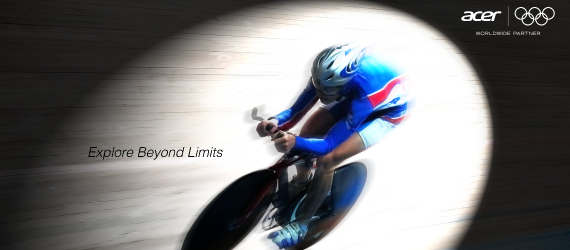
At Gekko, we’re working with Acer in a slightly different capacity, but just as important. As the official hardware provider for the London Games, Acer will be responsible for the entire IT infrastructure across the village – including branded lounges for use by athletes and technicians on-site to provide support where necessary.

This isn’t just about the brand experience, or preventing things from going wrong – these staff will have to ensure they embody the Olympic spirit, and promote the Acer brand in line with its Worldwide Partner Status and the Olympic Spirit; the responsibility that comes with biggest sporting event in the world.

It’s a lot of responsibility, but it’s really about being the greatest ambassador for the brand and truly recognising the world stage you are performing on.

The athletes may be competing for gold, but so are the brands too and with the world watching, experiencing and relating to your product, whether it be visitor or athlete it’s all part of your Olympic journey and our job as marketers is to make it complete.

So it is quite the daunting task, but these brands can get a real head start on what’s looking to be the evolution of the retail industry as we know it. Point of sale, promotion, direct, etc, will all have roles to play, but it is the experience that is the future.

The term brand experience is debated daily, but brands need to really start thinking seriously about just who will be delivering that experience, within the Olympics and beyond.

Full article available:

http://www.brandrepublic.com/opinion/1142222/think-br-key-brand-experience-olympic-proportions

Brand Manager of the Week: Mark Nicholson

Gekko Field Marketing

Mark Nicholson – Trade marketing manager, Digital UK

Q&A:

Describe yourself in three words.

Friendly, honest, fair.

How would you define marketing?

Giving people the chance to benefit from your product.

What would you be if you weren’t a brand manager?

Unemployed.

What advice would you give someone starting their marketing career today?

Take your chances.

What attracted you to your current job?

Working on a campaign that would affect every person in the UK.

When was your finest hour?

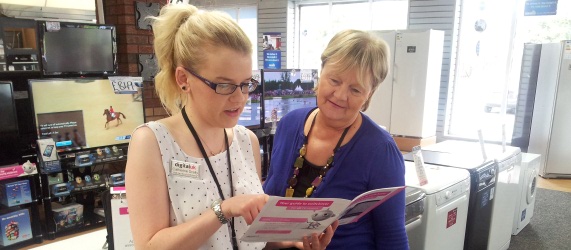
Successfully delivering training for the digital switchover to every TV retailer in the UK (although this took longer than an hour, and I needed my friends at Gekko to do so).

What’s your greatest ambition?

To keep smiling.

If you were a brand, what would you be and why?

Post-it Notes. Clever, practical and you can stick me almost anywhere – I’ll do a good job.

What is your all-time favourite slogan?

‘Beanz meanz Heinz.’

What marketing trend is dominating your job at the moment?

Retail headcount reductions leading to time-pressure in store.

What are your hobbies?

Hockey, tennis and amateur dramatics.

If you weren’t you, who would you be?

Clive Anderson.

What makes you angry?

Email conversations instead of proper ones.

What is your favourite pub?

My house; the company’s good and the refreshments are always to my taste.

If you had three wishes, what would they be?

Liverpool beating Manchester United to win the Premier League (with me at the match); safe and secure future for my family; and more wishes.

What have been your best and worst freebies?

The best was when we flew customers to Euro 2004. The worst? An unsolicited, branded mouse mat.

What headline would you most like to read in Marketing?

‘Jargon banned from marketing meetings’.

Innovation ensures success

Gekko Field Marketing

Brands seeking to connect with consumers in person need to take a creative, integrated approach.  Marketing Magazine features Gekko’s work with Freeview


Brand Q&A: James Chambers, Freeview

What did you do?
To refresh the Freeview brand and promote the benefits of HD, we ran a campaign in key shopping destinations in the run-up to Christmas. Our stand attracted visitors via games and a photo booth, where they could receive a photo to keep. To drive data capture, we ran a prize draw for a 3D Blu-ray home cinema system donated by Panasonic. There were also sales demonstrators in nearby retailers.

What was the biggest challenge you encountered and how did you overcome it?
To cut through and distract people on a mission to shop. We used creative, fun ways to distract them and alleviate the Christmas-shopping stress.

Did digital play a part?
We used Facebook and Twitter to talk about the campaign.

Was there anything about your agency’s approach that contributed to the campaign’s success?
Its efficiency and imagination. The team just gets on with it, with minimum fuss.

Were you satisfied that it met your objectives?
Absolutely. We’re not about the hard sell, but creating empathy and understanding of the brand. The activity achieved this in spades. We gained very positive feedback from having a “face” to the brand, where people could ask questions and gain straight answers.

What would you improve about this campaign if you did it again?
Optimise the games. The photo booth was less popular than the hands-on games that younger kids could get involved with. We will be touring the country again soon with a new execution.


Agency Q&A: Daniel Todaro, managing director, Gekko

What do you think was particularly innovative about the campaign?
The activities on the stand were simple, but effective. Anyone could have a go. This led to a higher rate of interaction and more opportunities to communicate key messages. Across three weekends, we talked to almost 60,000 consumers. More than 10,500, in all age groups, took part in the games and more than 17,400 branded balloons and sweets were distributed.

What advice would you have for other brands who might want to do a campaign like this?
The in-store sales demonstrators worked well. We liaised with store managers, supporting the team on the stand and selling Freeview products to interested shoppers.

Finding the brightest and the very best for Digital UK

Gekko Field Marketing

Locating staff with the right skills and attitude is crucial. Mark Nicholson from Digital UK talks to Marketing Week about Gekko’s involvement in delivering an outsourced team of trainers.

Marketing Week (MW): How hard is it to find good people for your marketing teams? How do you go about this?

Mark Nicholson (MN): We recruited a team of ambassadors to broadcast the Digital UK message to retailers and train their staff on the switchover. Finding candidates of the right calibre in London was very time-consuming.

The flexibility required of such a team working in different regions convinced us to outsource the recruitment and management to field marketing and training specialist Gekko.

MW: There is a trend for marketers to look outside their industry to find people, including from the data or digital sector. Is this something you are doing?

MN: When recruiting for field marketers for Digital UK, there is less of a need for candidates to have a traditional marketing background. Face-to-face roles are best suited to enthusiastic people who can quickly develop strong relationships.

MW: What is the benefit of hiring someone from a technical background into a marketing role, or vice-versa?

MN: While hiring someone with a technical understanding of digital TV would mean a quicker induction process, personal skills are more important. Generally, the technical knowledge required to perform the role can be learnt. It is far more difficult for someone to adopt or develop new communications skills.

MW: Can you give an example of the best internal training course you have run and explain why it was useful?

MN: The most beneficial course run internally for the Digital UK team by Gekko has been the ‘powerful presence’ training.

The course was designed to provide the team with enhanced communication and relationship development skills.

MW: What trends do you see happening in the recruitment of marketers in the coming years?

MN: When outsourcing the recruitment of field marketers, brands will be more involved in staff selection because successful applicants do have a significant impact on a brand’s personality.

Full article available:

http://www.marketingweek.co.uk/trends/finding-the-brightest-and-the-very-best/4001847.article

Gekko wins competitive pitch for Epson

Gekko Field Marketing

Following a competitive agency review Gekko, the UK’s leading field marketing agency for the technology sector, has been reappointed by  No.1 printing and imaging brand Epson.

On behalf of Epson, Gekko is responsible for recruiting, managing and developing the Sales Support Representative (SSR) team with a host of training initiatives. The SSR team operate across Epson’s retail channel in the UK and Ireland.

This specialist  team supports Epson’s store engagement, acting as key Epson sales representatives and brand ambassadors. The team are responsible for supporting sales targets and increasing store staff engagement with the brand.

Dan Todaro, Managing Director, Gekko, comments:

“We are delighted to be continuing our working relationship with such an iconic brand. During the past five years, we have been extremely proud of delivering Epson a team of highly effective individuals, who not only understand the brand inside and out, but realise the impact they have on the company’s sales and profitability. I am confident that the SSR team have fulfilled an important role in assisting Epson become the number one printer brand in the UK”.

UK Marketing Manager, Epson, comments:

“It is great to be able to continue working with Gekko. The company continues to innovate and demonstrated during the pitch process how well they understand the consumer retail sector and more importantly how Epson engages with this sector.”

Full article available:

http://www.fieldmarketing.com/articles/777/70/Gekko-reappointed-by-Epson/

Summer of Sport hits the road

Field Marketing Agency Gekko

Leading field marketing agency Gekko supports Freeview’s ‘Summer of Sport’ campaign with a nationwide roadshow.

Summer 2012 is set to be a sporting season to remember and Freeview will be marking this with the tour of its action packed sports activity zone inviting sports fans up and down the UK to try their hand (or foot!) at an array of exciting sports.  The interactive roadshow, devised, managed and staffed by Gekko, will be pulling up at a number of high footfall locations for passers-by to take part in a variety of sporting challenges including football, tennis and archery.  Visitors to the stand will have the opportunity to win prizes including a 40” Smart 3D Toshiba TV, enabling the winner to enjoy the jam-packed line-up of sporting action in glorious high definition from the comfort of their sofa.

In addition Gekko will be deploying a promotional guerrilla hit squad on behalf of Freeview.  The team will be promoting the Summer of Sport messaging at key locations during  the Euro 2012 and Wimbledon tournaments and throughout the London Olympics in July and August.

Freeview roadshow dates and locations:

  • Basingstoke Festival Place – 9th & 10th June
  • Newcastle Northumberland Street – 16th & 17th June
  • Southampton North Bargate – 23rd & 24th June
  • London Covent Garden – 30th June & 1st July
  • Manchester St Ann’s Square – 7th & 8th July
  • Leicester St Peters Square @ Highcross – 14th & 15th July
  • Leeds Dortmund Street – 20th to 22nd July
  • Birmingham Bullring Rotunda – 27th & 29th July
  • Bristol TBC – 4th & 5th August

Acer launches roadshow to communicate Olympic sponsorship

Gekko Field Marketing

Gekko, the UK’s leading field marketing agency for the technology sector, will be showcasing the Acer product range at shopping centres around the country to celebrate the electronics manufacturer’s tier 1 computer hardware sponsorship of the London 2012 Olympics.

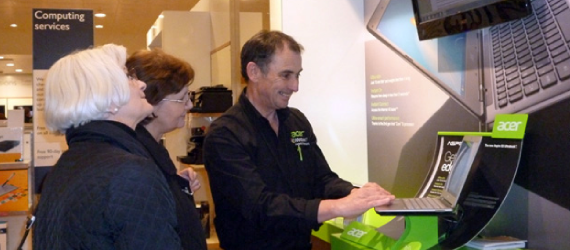
The roadshow, kicking off at the Reading Oracle on the 8th June and running until early July, will include demonstrations of Acer products by the experts within Gekko team. The show continues at venues including Brent Cross Shopping Centre and Bluewater, each carefully chosen by Gekko to drive consumers to participating retailers.

The roadshow will also be supported through Acer’s Facebook channel (Acer UK), keeping fans updated with posts and images from the various events around the country as well as a competition to offer consumers the chance to win tickets for the London 2012 Olympics Games.

The evolution of shopper marketing in the retail space: a decade of change

Field Marketing Agency Gekko

Even a casual observer can see how the in-store retail experience has altered in terms of the shopper experience over the past decade. Since 2002 we have seen an inexorable rise of desirable, lifestyle-led brands from personal technology through to luxury goods. Subsequent growing consumer demands for design alongside functionality loom large over the retail space. How these companies have chosen to communicate with their customers has similarly altered to fit this new landscape – through advertising and product lines but notably how they present themselves in the store environment.

Over the past ten years since our inception, we have worked with a number of tech brands on their retail presence and noted this change in the landscape. Through recession and now double dip, stores have seen ever more sophisticated retail marketing and access to sales and shopper data. A previous rush for retail share of voice is now much less evident but still relevant in crowded categories such as consumer tech. It is now more usual to see modern demonstration days in-store focused on ROI and ensuring a sales upswing from the activity rather than simply brand recognition. Furthermore, this brand experience in-store is often driven in the modern retail world by staff trained to sell ancillary products such as add-on finance or product insurance, than a simple desire to shift the big ticket items alone. This makes for a much more immersive and successful store experience for the shopper, who encounter salespeople able to offer a holistic solution to their needs rather than the hard sell for a specific product.

We have also seen an evolution of the retail space itself – namely, branded displays creating a ‘shop in shop’ format. This represents a great focus from the retailer in terms of recognising the power of the assets they hold – the experience in-store for their shoppers not only for their brand but for the brands they stock. There has been a real increase in the number of name brands seeking standout in the retail space and paying for this space – particularly in specialist consumer tech arena retailers like PC World but also in the major supermarket multiples like Tesco.

The greatest game changer over recent years however, would have to be how brands and consumers alike are demanding ever greater value from their retailers and suppliers – often in return for much less.  For consumers, this may be a combination of a growing awareness of the worth of their personal data to brands and retailers. This is something which has been exacerbated by the proliferation of price comparison sites and discount voucher code amalgamators furthering shoppers already at home with deal seeking. This power reversal in terms of brand communications will only strengthen as marketing channels and technology increases and the individual’s time and attention is spread across ever more gadgets and devices.

Another powerful factor in this drive towards greater value from interactions for both brands and consumers: few will be willing to invest in large financial outlays without some guarantee of return. For retailers this means they are encountering an ever greater drive to discount, cutting their own profits in the process: in the face of threats from online retailers who lack the overheads of physical store space we have seen many electrical retailers themselves move to entirely digital operations, and some – like Best Buy – enter the UK market before sinking. There is little doubt that times are tough for many.

However, investment in the retail space is proven to pay off, and with retailers keen to monetise their space and grow a revenue stream, consumers open to engagement and brands seeking standout, the location where many still make the bulk of their physical sales is the logical place for all three factors to converge. As we have seen, the retail environment has proven a dynamic and changeable landscape over the past decade, shaped by innovative brands and empowered consumers. It is likely that the coming years will see this become ever more marked in the retail space, particularly as brands fight against themselves to encourage repeat purchase and long term customer brand loyalty in an ever fragmenting environment.