Author Archives: Gekko Marketing

Can the In-Store Experience Complement Online Retail?

mall

With e-commerce growing at an exponential rate, the value of bricks and mortar is often overlooked. Yet, with 95% of all retail purchases worldwide still made in-store according to Deloitte, the high street and retail outlets are not the dying breed we’re sometimes led to believe. In-store purchases are projected to grow by over £190 million by 2018, so brands should be putting emphasis on improving the in-store experience to help customers make more informed purchasing decisions.

For brands to fully engage with consumers in-store they need a deeper understanding of the shopper journey as a whole. It’s about getting to grips with increasingly complex buying behaviours. With consumers using both online and in-store research to make purchasing decisions, particularly on considered ‘high ticket’ products, brands should be proactively using online data to enhance the customer experience in-store.

Getting the blend right

Researching products online whilst in-store, using smartphones and even smartwatches is becoming more common among consumers. As shoppers become increasingly more connected, 20% of shoppers measure high street prices online and purchase products via mobile devices in-store, according to research by Shopper Tribes. It’s clear that new technologies are having a significant impact on the retail experience.

To meet the ever-demanding needs of consumers, forward-thinking brands are increasingly using social media to engage with their target audience. Among 18 to 35 year olds, 14% are using Facebook to ‘check-in’ to stores and 15% use social platforms to discuss products with their peers. While social media is a popular way to engage with the younger generation, brands need to understand how to cater to every age group. For example, shoppers aged 55 and over prefer to use online research to help them make informed decisions when purchasing electronic goods in-store. In an evolving omnichannel landscape, a one size fits all approach will not work if brands seek to cater to consumers across the board.

Making it personal

While e-commerce is changing the way people shop, the average online shopping basket is broadly made up of smaller purchases. As such, when it comes to high ticket consumer and luxury brands, the high street remains the destination of choice for making a purchase. As shoppers, we will always be motivated by the ability to touch, feel and experience products before making considered purchases. Living in a digital world, the brand you desire to wear and use remains an expression of your identity and lifestyle. Having the opportunity to view products in-person rather than through a screen is a rewarding experience for shoppers.

Ultimately, the benefits of shopping in-store can outweigh the convenience of purchasing items online. However, for consumers to realise the unique selling points of the in-store retail experience, integrating an omnichannel approach is key. If consumers are researching products online, branding in-store should be streamlined to improve sales and product recall to enhance the customer journey. By using ATL advertising across digital platforms, including social media, brands can drive shoppers in store, leading to improved conversion rates and profitability long term.

Retail outlets and the high street can offer a sensory experience for shoppers that the virtual world struggles to compete with. It’s about building and enhancing this emotional connection with customers to make the in-store experience memorable and rewarding.


Read more at: http://performancein.com/news/2015/08/12/can-store-experience-complement-online-retail/

Tagged , , , , ,

How brands can convert sales during the Rugby World Cup

rwc-trophy

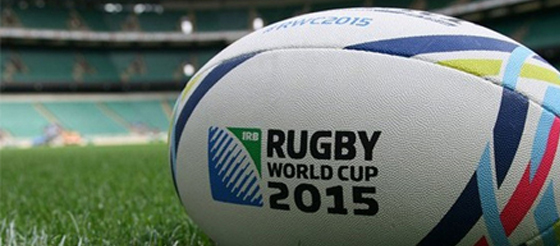
This autumn will see the most significant sporting festival to take place in the UK since the 2012 Olympics – the Rugby World Cup, the third largest international sporting event in the calendar. Taking place in England, the home of rugby, the tournament is a golden opportunity for affiliated brands to reach a global audience.

With worldwide partners such as Land Rover and Heineken, these brands will appeal to consumers irrespective of their knowledge or passion for rugby. However, there is also the chance to attract new fans, even if it is just for the duration of the tournament. It’s an opportunity for brands to tap into the feel -good factor that such events can stimulate.

It happened for some nations and brands at the 2014 FIFA World Cup, just as it did at the Winter Olympics – the one and only time in four years people outside of the curling fraternity schedule viewing time to watch and get excited by the sport!

From the brands’ perspective, in addition to the global exposure, it’s an opportunity to extend their marketing campaigns beyond the stadiums and ATL initiatives that they do all year round. On-pack offers, promotional advertising and experiential campaigns all have the capability to get brands in front of a greater consumer audience, taking the tournament and its associated buzz away from Twickenham and sharing it regionally on the high street and in-store.

During the 2012 London Olympics, Samsung created an engaging campaign that extended experiences outside of Elizabeth Park. The leading electronics brand created pop-up ‘Samsung Studios’ focusing on demonstrating the Galaxy S3 and Galaxy Note. Located in some of the UK’s major shopping centres and Heathrow T1, visitors could play with Samsung’s Olympic Games app and enter competitions. No products were sold at the studios, but having entered into an experience, just over a third (35 per cent) of respondents said they were much more likely to consider Samsung.

Dove Men+Care has been involved with rugby for a number of years, implementing experiential campaigns and demonstrating that even the most macho of men do moisturise and aren’t shy of looking after themselves. In the run-up to the tournament, Dove Men+Care is creating a 360 campaign that connects TV, social and ends with consumers being able to win sold-out world cup tickets in-store.

Beyond this engagement and to drive sales, brands need to be conscious of how their carefully devised messaging is translated at the point of purchase and communicated to store staff and shoppers alike. If sales staff are unaware of Toshiba’s (an  RWC world-wide partner) latest product range, or how to sell their products and what the latest promotions are, then that is a lost opportunity. Similarly if shoppers are left non-the-wiser about the latest offers then there is a diminishing of the wider marketing efforts.

To perfect their in-store execution, merchandising and product demonstrations from trained brand ambassadors need to be linked-up at the point of purchase to complete the omni-channel experience.

Brands need to extend the consumer journey from TV and online to in-store for products that are impulse purchases as part of a weekly shop and for more considered purchases throughout the lengthy six weeks of the tournament (17 September to 31 October). Both, through association, create spontaneous awareness for tournament sponsors with everyone watching, rugby fan or not. Let’s also not forget the B2B opportunities affiliated to some of these brands which can realise an even greater return on sales and brand equity.

The Rugby World Cup is an opportunity for brands to reach consumers, mindful not to create any brand apathy, beyond sponsorship deals. It’s a chance for brands to influence people at all omni-channel touch points globally with physical and experiential campaigns as important as online engagement to create excitement and crucially drive sales.


Read more at: http://www.thedrum.com/opinion/2015/08/14/how-brands-can-convert-sales-during-rugby-world-cup

Tagged , , , , , , ,

Will Rugby World Cup sponsorship reap the benefits for brands?

rwc banner

As the dust settles on the Fifa scandals, meaning sponsors can keep a low profile for now, the attention now turns to the Rugby World Cup which is being held in the UK. Yes that’s correct, here at home, not that many have noticed.

It’s interesting to hear that Heineken is to push 50% of its marketing budget into Rugby World Cup sponsorship in an effort to ‘maintain its recent sales momentum and continue its association with ‘world class events’.

With the tournament starting on 17 September to the 31 October, will supporters – whether die hard or casual – be captivated for a full six weeks? More importantly, will sponsors reap the benefits before viewer apathy possibly settles in?

Statistics have shown that 20.6 million Brits tuned into the Football World Cup final in 2014, compared to just six million for the previous Rugby World Cup final in 2011. So with a longer period to keep a global audience engaged and fewer viewers, the challenge for sponsors is how do you engage with consumers to reap the rewards of sponsorship? That’s a lot of beer over and above that would have been sold to balance the 50% investment.

To keep consumers interested throughout, brands need to involve consumers in the sport, not just the tournament itself. Dedicated fans will stay interest regardless, but to keep non-fans interested there needs to be a connection to the actual sport. Using an omni-channel experience to guide consumers between online and in store is the best way for brands to create this engagement.

As part of its online strategy for the tournament, Coca-Cola is running an on-pack giveaway where consumers can enter a code online to potentially win a Coca-Cola branded, World Cup Gilbert Rugby ball. As with many past sporting events sponsored by the brand, Coca-Cola is encouraging consumers to enjoy their products whilst watching the tournament, but also to get involved and play the game itself.

By creating this engagement, the brand is ensuring continued consumer interest in the sport, and as a result the larger tournament.

Many other sponsors are yet to reveal their online strategies for the tournament, or how they will create this important engagement with fans. With just over a month until the opening ceremony, brands need to start building the hype. Only time will tell if the sponsors can reap the benefits by keeping fans engaged throughout.

Tagged , , , , , , , , ,

Sunday Trading – The 7 Day Shopper

The rise and fall of the UK high street is well-documented and never far from the news agenda. With retailers scrutinising sales figures and competition being fierce, extending opening hours across Sunday could be a vital first step to rejuvenating the high street and beyond this, the UK economy.

Unlike any nation in Western Europe, the UK is unique in that we like to shop, whilst other nations shop out of necessity, we in the UK like to make our retail therapy more of a sociable brand experience. For a long time now people in the UK have used Sundays as they do Saturdays – to carry out one of their favourite hobbies and pastimes, shopping.

George Osbourne’s recent announcement to shake up Sunday trading laws comes as no surprise. In our current consumer climate, purchases are firmly becoming ‘any place, any time’ and Sunday is no longer an exception to this. Combining the rise of consumer appetite with the reality that people lead extremely busy lifestyles means people want to have the choice to shop for more than six hours.

We are witnessing a shift in the way consumers are buying their goods. There is a lot to be said about people moving online, however a recent article from Forbes reported a 95 per cent of retail purchases worldwide are still being made in-store. This alone should be enough to make the retail industry step up and cater to shopper demand.

As well as ensuring they are adapting to customers developing shopping habits, for retailers, the change in Sunday trading laws is an open door of opportunity. Although we should consider those individuals who want to keep Sunday as a sacred day, looking at this from a commercial point of view – this is all about maintaining a strong, healthy economy in our 24/7 lifestyle, the balance is for retailers to make it work respectfully for everyone’s benefit and lifestyle choices.

Currently in some communities or high streets, stores choose not to open due to the high cost of staffing and overheads costing retailers money instead of making a profit. The laws give retailers the ability to create thousands of jobs through the same trading hours offered the rest of the week, having the option to bring staff in and pay them for longer than 6 hours of work and generate millions of pounds in extra income.

Not only will the changes mean more money in people’s pockets, they will help to boost the UK economy and in a sense help reinvigorate communities and the high street.

The shake up of trading laws is not surprising as sticking to traditional, some say outdated laws, links back to a consumer world that ultimately no longer is reflective of the UK’s lifestyle and desire to shop whenever and wherever they like.


Read more at: http://bit.ly/1IGTLVD

Tagged , , , , ,

SDAs: Are they really worth it?

tefal fry sda

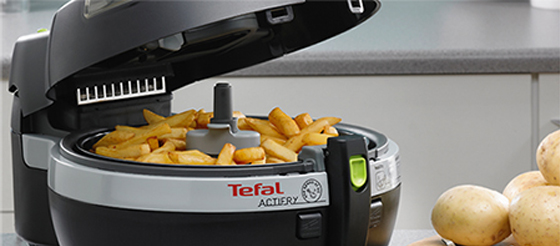
Small appliances attract footfall in-store, encourage impulse purchases and can help make your store look more attractive to customers, says Daniel Todaro, managing director of field marketing agency Gekko

The short answer to that question is yes, and they will always be worth ranging for two good reasons.

Firstly, they attract customers into your store, which is valuable to increase traffic and change perceptions. You don’t want to be perceived as only ranging high-ticket, one-off purchases.

The second is that we are becoming a little more adept in the kitchen, partly driven by celebrity chefs, Great British Bake-Off and MasterChef.

The growing SDA market creates an opportunity for many consumers to replace their old, outdated items and do so guilt-free as the initial outlay is considerably less than some other gadgets and the long-term gain and use are easily justified.

According to researcher GfK, the UK SDA market grew nine per cent in 2014 to surpass £779 million. The research also highlights the growing demand for liquidisers, which grew by 144 per cent with an average price tag rising from £36 to £42, and also a 95 per cent increase in the juicer market.

Our interest in healthy eating is demonstrated by the 48 per cent increase in 2013 of low-fat/no-oil deep fryers. However, do be wary of fads, as low-fat/no-oil SDAs dropped in value by £2m in 2014, losing popularity by becoming mainstream products. I suspect the same will happen to juicers as the market becomes saturated.

The SDA category, which also includes hot beverage makers, kettles, toasters, food preparation, sandwich toasters, health grills and deep fryers, is a staple category that offers consumers convenience and choice at various price points. The UK is one of the most diverse markets for SDAs in the world, with more than 700 new SDA products introduced into the market in 2014 alone, offering retailers an opportunity to refresh seasonal ranges with limited risk.

Although electrical retailers will always thrive on the MDA staples, diversifying your product range to include SDA will make your store more attractive to a broader spectrum of shoppers. Many small appliances are stylish, well designed, and will make your store look better.

With the in-store customer journey becoming increasingly more important in retail, correctly merchandising your store, coupled with training your staff to communicate the benefits of your products, will transform interested shoppers into customers, and will ultimately improve sales.

Gekko suggests that sales staff quickly identify the individual customer’s motivation to buy, whether it is driven by value, style with colour coordinated bundled solutions, or practical features aimed at making life easier.

Remember value is in the eye of the spender, the role of sales staff is to demonstrate that value in each and every conversation.

Tagged , , , , ,

Windows 10: Will Microsoft’s final OS reverse its fortunes?

windows 10 banner

Microsoft’s Satya Nadella has quite confidently said: “Windows 10 is a huge milestone for us as a company, and quite frankly the industry.”

You would expect this from the chief executive of what is still one of the globe’s largest and most influential tech companies, just maybe not as influential as they still perceive themselves to be or as threatening to the big A and G.

Microsoft’s decision to launch its OS for one last time in this manner and seek to upgrade in the same way as competitors do when needed or rather stealthy is a good idea. But financially, it may prove costly to manage when you consider the revenues Windows would generate for the company.

Once upon a time, the company’s OS was on 95% of OEM devices and now on an estimated tiny 14%. That’s a lot of licensing revenue down the tubes and with a mobile platform that is only on 3% of smartphones.

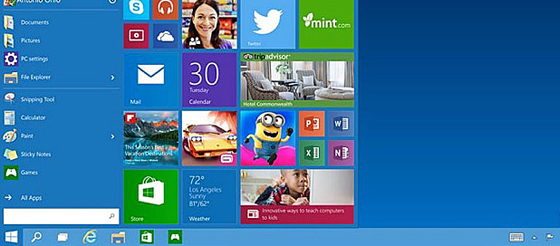
Now with Windows 10, perhaps achieving status as a serious player, offering synergy and a uniformed approach across not just PC’s, tablets and mobile but the Internet of Things will hopefully make Microsoft a more desirable platform to create apps for. The strategy, may just work if marketed and deployed successfully.

What does success look like? Doubling or tripling your share in smartphone penetration to some would be viewed as success but is 6% or 9% penetration even enough? I suspect not.

In order to do so, consumers need freedom of choice and cross-compatibility utilising devices and brands that they chose, with devices and software working in concert serving to enhance, not hinder the user experience. It’s the panacea every tech giant wants to achieve but as humans, we are pre-disposed to never be satisfied.

That’s what makes us unique, which reluctantly keeps tech evolving at a rate that many companies can’t feasibly afford to chase anymore, maybe?

Tagged , ,

Will Apple Music match up to Spotify?

apple music banner blog

Apple oh Apple. While this week it’s been all about Apple Pay, just last month all eyes were on Apple Music. Initially launched on 30 June, the product has so far been made available across all Apple products and PCs, but the global giant naturally has bigger plans.

While the date has not yet been set, rumours are flying that Apple could be making the app available on Android devices this autumn. But what does this move signal, much speculation abound?

Up until now Apple has maintained an ecosystem which is exclusive for its own devices. Could branching out to Android devices point towards an acceptance that Apple is no longer feeling like the ace in the pack?

So far this year, 11.5 billion songs have been streamed in the UK; an 80% increase from last year. While Apple Music customers account for 22%, paying Spotify users are leading the way at 31%.

With half of Spotify users also iTunes members, the question should be asked – can Apple steal the spotlight following its initial three month Apple Music trial?

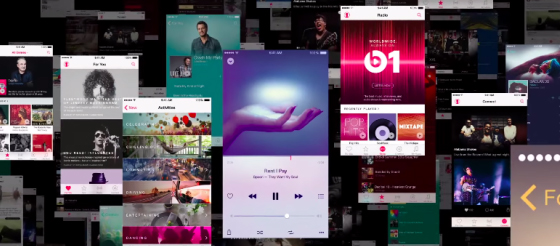
Currently, Beats 1 Radio station on the Apple Music app is free, however it will come at a cost for Android users. The station has received generally positive reviews so far, with 84% of tweets on launch day expressing positive sentiment about the new service.

Whether this encouraging reception towards Apple Music continues is questionable. Already, the app has been criticised for being difficult to use – overwhelming for a first time user and not as sleek and user-friendly as you might expect an Apple product to be.

Apple’s planned partnership with Sonos puts to rest some rumours that Apple Music would only work on Beats speaker devices. With this, Apple Music will match Spotify’s universal reach, meaning users are no longer locked into its exclusive ecosystem. Will this mean extra subscribers? Probably.

Streaming users want the freedom to use any device or speaker system. Locking users out is limiting its audience.

While Apple’s previous strategy has been centred on selling more products, Apple Music is different. As the service is slowly becoming cross-compatible with other devices, users will no longer need to purchase an Apple product to listen.

At this stage, and once again, Apple is the follower rather than the innovator, and is unable to compete with Spotify if its users are limited to Apple’s existing customer base who already own an Apple device.

To catch up with the mass streaming hype (the volume of total streams on audio services hit 5.32bn in Q1 this year, up 81.4% on the equivalent period in 2014), Apple has paid a vast amount for Beats, radio presenters and thanks to Taylor Swift, doing the right thing by paying artists for the work they’ve created. The question is – how can Apple sustain this commercial model and succeed without total control or delving into someone’s pocket, privacy or enjoyment? Where’s the catch?

If Apple is to become a universal music destination it can’t sustain ‘exclusivity’. Music is a consumable product which stimulates our senses rather than a lifestyle choice. It’s what makes us shake that leg spontaneously, and we will continue to seek it out and listen wherever we can find it, usually in the easiest and cheapest manner like free to air radio.


Read more are: http://wallblog.co.uk/2015/07/16/will-apple-music-match-up-to-spotify/

Tagged ,

Does social media ad spend equate to consumer engagement?

social media banner

Instagram and Pintrest have both announced that they are opening the doors to advertisers, and M&S is aiming to invest 20% of total media spend on social media to increase its story telling. And as if that wasn’t enough social media hype, this was hot on the back of the BBC claiming that it is planning to turbocharge its Instagram profile after an executive claimed that it has learned more about social media from brands, including Burberry, Nike and Netflix.

One could say that social media is making an impact on traditional advertising, as expected in a brand’s pursuit of Generation Y. However, what about the rest of us who are a shade older and perhaps with more disposable income, or younger or I hasten to add, just not interested in social media.

After all not everyone who likes M&S or its demographic customer is necessarily a fan of social media.

So is it a case that social media works for some brands but not all?

Gekko has understood through its shopper tribes research that the shopper journey which finished with a purchase in traditional retail has started online for 52% of those shoppers and therefore highlighting the importance of omnichannel for all brands but can you quantify 20% of your media spend on social media to generate 20% of total sales.

Claims by social media platforms would naturally draw any advertiser to favour one platform over another. After all, this is no different to how traditional media works. What’s interesting are the claims which don’t ultimately add up to sales.

Facebook claims that a recent campaign for mobile carrier Three achieved a click through rate of over 4% and reached 21 million unique users. The fact is, how does this translate to sales? No one knows the truth.

We can assume and attribute spikes to marketing spend, but I suspect in the long run we as consumers don’t necessarily want to mix are Social Media with brand advertising, and the negative feedback Instagram is receiving demonstrates this.

Now I don’t deny that social media is an amazing tool with which to engage, enthuse and affiliate a brand to a target audience and with Facebook, Twitter and YouTube claiming over two billion global users (101 million in the UK). It’s undeniably a powerful tool but we use it to connect with friends, tell our story and more importantly for pleasure to view and laugh at videos like Fenton the dog and sadly Psy’s Gangnam style, which to date is the most viewed You Tube video with more than two billion views.

Brands and social media platforms should consider, do we really want to be sold to every time we dip into social profiles and email via our smart phone a recorded 214 times a day. That’s a lot of ads and brands to digest and perhaps get annoyed with

Read more at: http://bit.ly/1KmhGO7
Tagged , , , ,

A sporting chance for 4K

4k banner

This year’s rugby coverage in 4K and improving content availability will play a key part in driving sales, says Daniel Todaro, managing director of field marketing agency Gekko.

It’s springtime and many of us are looking to update and upgrade our homes, not only in the kitchen and garden, but also in the living room and the entertainment we choose for our viewing pleasure.

Sales of 4K TVs are on the increase, with GfK recording 100,000 4K TVs sales in November and December 2014. Sales in the UK are predicted to reach one million by the end of 2015, accounting for 10 to 15 per cent of the total TV market volume. With sales predicted to reach between two and 2.5 million units in three years’ time, are retailers ready?

In September/October, we have the rugby world cup being broadcast by ITV, which is rumoured to be in 4K, as indicated by pay-TV broadcasters, with BT Sport’s director of TV Alex Green admitting that the broadcaster was working “very hard” to secure 4K transmissions of its Premier League matches for the 2015/16 season. The average price of a 4K TV at the end of 2014 was just over £1,000, and the average screen size was 50in. This is clearly a considered purchase and so store staff need to have the knowledge and understanding of not only the technology, but also the sales techniques to succeed in closing those valuable sales.

Last summer, Gekko’s connected home research uncovered that a smart TV was the third most popular choice of smart product, with 36 per cent of shoppers interested in purchasing one.

What’s more, half of women and 42 per cent of men do their research online first. They then buy in-store on the day, with 44 per cent of those aged 35 to 44 and 58 per cent aged 55 plus.

Understanding the importance of the omni-channel proposition in driving sales on the shopfloor is critical. Starting online and ending on your shopfloor, the customer experience is an ever more important aspect of the sales journey for you and your brands.

In the past year, retailers have benefited from two large sporting events, the Fifa World Cup and the Super Bowl in the US, uplifting sales of 4K TVs. More than half (59 per cent) of the 4K market value in April 2014 came from 50in to 60in models, and in May 2014 UHD made up just over eight per cent of market value, assisted by the average price of a UHD TV falling 15 per cent, with GfK stating that this was due to the World Cup effect. With seven out of 10 rugby fans in the UK watching international rugby on TV (Source RadiumOne – Rugby fans and technology) 89 per cent of those will watch at home. Could this sporting event see another boost in 4K sales? I expect so.

But it’s not just about sport. More original 4K content is becoming available via Netflix, Amazon, as well as remastered 4K content. Despite being very quiet since their formation, the UHD Alliance sent out a press release on 
April 7 calling for contributing members to define the next-generation entertainment experience.

They want more companies to get involved in the alliance. We may be at the frontier of the 4K revolution, but with broadcasters, streaming services and not only film studios but also gaming studios creating in 4K formats, the future of 4K is promising.

But, will we have the homes big enough to
 accommodate that optimum viewing experience in 4K? I suspect, driven by studios and broadcasters to inject rapid growth, manufacturers will produce smaller variants of their 4K TVs to drive popularity of the 4K format as the next industry standard. Shipments as a share of the total LED market for 4K are up year-on-year from 5.1 per cent to 14.2 per cent according to data from WitsView, which clearly demonstrates an appetite for growth. Unfortunately, no there’s such story for curved.

The average time spent per day by UK adults using technology increased from 7h:38m in 2011 across all platforms to 9h:34m in 2015, driven primarily by the increase of tablet, PC and smartphone viewing (recorded by eMarketeer).

TV viewing only fell marginally in the same period (3h:19m to 3h:12m), demonstrating that the TV remains the hub of the of the home for our viewing entertainment and shows no sign of dropping off with such appetite for growth in smart TVs, catch-up facilities from Freeview and streaming devices like Chromecast.

It’s a category that drives technological innovation and growth.


Read more at: http://ertonline.co.uk/Opinion/Opinion-Daniel-Todaro0515.htm

Gekko reveal new brand identity and website

gekko reveal banner

Gekko are delighted to reveal our new brand identity and website, that gives a fresh look to the UK’s number one tech-focused Field Marketing agency.

Daniel Todaro, MD, Gekko said “Complementing the recent brand refresh, Gekko continue creating rewarding connections with our new website. Over the past 13 years, Gekko has maintained its ability to adapt in retail, the most dynamic of industries, to bring your brand to the right people and the right people to your brand. Gekko Field Marketing helps complete your customer journey and brand experience with measurable ROI and insight complementing your brand’s ATL.”

Tagged , , , , , , ,