Author Archives: Gekko Marketing

How to make the most of the Back to School period

back to school

With more and more young people going to university, Back to School is becoming increasingly more important alongside Black Friday and the Christmas Peak trading period, with tens of thousands of prospective students looking to upgrade their laptop before beginning their studies in September.

No longer is going to college or university with a laptop a luxury, it’s a necessity with many establishments advising on spec and recommended models that will meet the needs of students whilst in academia. Many students will naturally be looking to the bank of Mum and Dad to fund this investment.

Therefore, your ranging needs to appeal not only to the user, but also their parents, which in some instances means you need to work harder to reassure them that they’re purchasing the right product.

The key to success is ranging a variety of price points, sizes and performance specs, appealing to families of all budgets. Focus your ranging on what consumer are looking to buy – for example ultra-slim convertibles and 2-in-1’s accounted for 21.9% of consumer device sales in Q1 2016, up 16.3% from Q1 2015.

With tablet sales in the UK falling by 8% to 1.8 million units in Q1 2016, convertible and 2-in-1 laptops are the budget friendly alternative to purchasing two different devices. Make this flexibility a key selling point for shoppers looking for the complete solution in one device.

As well as the specs of the laptop, it’s also about the package on offer. It’s not just about the device: it’s about the ability to print, within a budget, and the accessories such as cases, cables and bags that all students will need.

Many shoppers will not realise they’ll need to purchase extra accessories, so use this as an opportunity to increase your average basket value by attaching sales. Printers are an especially important peripheral, which all students will need to use frequently. However, printer sales in the Back to School period in 2015 fell 4%. Perhaps to avoid the same issue this year, and increase your print and peripheral sales, bundle them in with laptops and other accessories.

When attaching a printer to a laptop, speak to the customer about how much they expect to use the product. If they’re worried about ink costs, but are prepared to pay more up front, perhaps suggest a low-running cost printer such as the Epson EcoTank.

What’s important is understanding the needs of each individual customer, and making a suggestion suited to them.

Ensure that your staff in the coming months can speak confidently to customer about your products and can advise on the best options for them. Offering this complete solution, which meets the customer’s needs and at a budget that suits all, will help to increase sales during the Back to School period.


Read more at: http://www.pcr-online.biz/news/read/how-to-make-the-most-of-the-back-to-school-period/038378


With 23 days to go until the EU Referendum, Gekko research has identified that a possible Brexit vote is not hindering shopper confidence

shopping centre banner

A new survey from Field Marketing agency Gekko has revealed that consumer confidence is stable in the face of stark warnings from both sides of the EU debate. Asking 2,000 UK shoppers whether they were worried about the threat of Brexit when making a purchase decision, the survey found that over half (51%) of consumers do not feel the need to put off making an important purchase until after the referendum result. This is especially relevant for older generations, with the survey finding that 60% of those 55 and over are confident in the state of the economy leading up to June 23rd. Thinking about the results of the referendum, a significant 73.5% of UK consumers stated that their decision to make an important purchase would not be affected by the result. In fact, only 6.4% of consumers felt a vote to leave would dissuade them from making a considered purchase such as a consumer electronics or domestic appliance product, which are rarely purchased on impulse.

The survey also found that, despite many brands coming out in favour of either side of the referendum, a high proportion (61.3%) of UK consumers feel that brands should stay out of politics all together, instead leaving the argument to the politicians. This is strong message for many big brands which have come out in favour of either side of the referendum, including Unilever, Ryan Air, EasyJet, HSBC and Marks & Spencer. However, these brands shouldn’t fear any consumer backlash from their stance – whilst the majority feel they shouldn’t get involved in politics, 49% don’t change their opinion of a brand depending on their stance, and only 21% have indicated that they have a negative opinion of brands that do not share their view. Most consumers will still buy a brand regardless of their political leanings.

Daniel Todaro, Managing Director Gekko Group, said: “what’s clear for brands is that consumers are currently very apathetic towards the possible economic impact of Brexit. Brands warning people against leaving the EU are failing to get the economic message across as 32% of consumers polled remain unsure or unaware of the impact of import tariffs being imposed post Brexit.”

“Looking at the high street, brands and retailers should not be putting off any product launches or promotions, as consumer confidence looks to remain high. However brands should avoid entering into political debate where they can. These results are good news for retailers who might have otherwise expected a dip in sales depending on the result.”

Read more at: http://fieldmarketing.com/news/gekkos-2000-shopper-survey-finds-brexit-vote-isnt-hindering-shopper-confidence/

Tagged , , , , , , ,

The main event

ert main event banner

As we approach what promises to be another ‘Summer of Sport’, retailers should remember that John Lewis saw revenues increase 8.6 per cent in the quarter including the 2012 Olympics, thanks both to its own sponsorship of the event and increased sales of third-party brand products who were also sponsors.

Whether large or small, all retailers have an opportunity to use a major sporting event to drive shoppers into store and convert them into customers. Be creative.

Here, I would like to suggest five steps to ensure your store is ready to get the most from this year’s sporting festivities.

Prepare

  • Find out who the sponsors are and which of your product categories will be seeing a potential boost, helping you to prepare by prioritising your planning to focus around the key categories.
  • Although there will be a lot of above-the-line (ATL) campaigns running during the summer, 44 per cent of consumers are not convinced by ATL alone, preferring instead to buy tech and CE products they have seen advertised, in store.
  • Brainstorm ideas to think of innovative ways to engage shoppers, and potential in-store events. Engage your staff with this, as they will likely have some great ideas from their time already spent with customers.
  • Think about asking brands for extra staff in preparation for the busy summer period – will you need more people to run your in-store events and create the customer experience you desire?
  • It seems obvious, but make sure you have enough stock of your main items. None of the events you plan will mean anything without the right stock.
  • Get ahead of the game – rather than waiting for the events to begin, make sure you’re prepared in terms of p-o-s etc. If needed, ask for support from your suppliers who will be running promotions of their own.
  • Use your event sponsor brands logos in your local advertising as an eye-catching link to your promotions and in-store experience.

Train

  • Make sure your staff are knowledgeable on your key product ranges, which may see a boost around the event. With 87 per cent of shoppers commonly asking for assistance in-store, and 36 per cent regularly influenced by advice offered by a staff member, your promotions and product demonstrations will only be effective if your staff can confidently speak to customers about the products and how they meet their needs.
  • Just as you’ll be using demonstration models to engage with shoppers, let your staff have a play with the products, allowing them to understand the unique features and selling points first-hand.
  • Make sure your staff are trained to support all customers coming into your store, regardless of their interest in the sporting events. The last thing you want is for a non-sports fan to be put off by the football-centric sales pitch of your staff. A general approach with good product knowledge will assist sales across all demographics, and aim to sell through the range to match budgets and needs.

Set targets

  • Work out what return of investment you want and set your sales priorities accordingly. Putting on a variety of events and promotions is a great way to engage with shoppers, but most importantly it needs to make financial sense before committing any funds.
  • Make sure your staff know what target they should be aiming for. Without cooperation between the sales office and the shopfloor, you’re not going to see the results you’re aiming for. It’s a team effort.
  • An incentive for increasing sales may help to motivate staff. Perhaps a sales league or a prize for most attachment sales will encourage your staff to join in with the promotions. It’s not just about exciting your customers – get your staff involved to build team spirit and make your store a fun and engaging environment for consumers. Ask brands to support your incentives.

Promote

  • Make window displays and p-o-s visible and branded to reflect any brand ATL campaigns. Brands increase their use of outside advertisement around large sporting events. For example, it increased by 25 per cent during the Olympics in 2012, according to Media Week. This is especially the case for sponsors of large events, so use the brand recall created by these adverts to your advantage, especially if a large outdoor ad space is in sight of your store.
  • Vary the offers you’re running across a sporting event. If there’s an important stage of the competition, such as Super Saturday at the Olympics or a Home Nation match, tailor your promotions and p-o-s to reflect this, rather than just having a generic message. Some variety will help keep your promotions fresh and will continue to entice customers into your store.
  • Get involved on social media. Virtually all the big brands will be getting involved with the official hashtags and messages. Join in online to further engage with customers away from the shopfloor, quoting brand tweets with your store details and promotions. During the 2012 Uefa tournament, 61 per cent of all the social media engagement over the group stage was with the top three sponsors, including the mobile network Orange.This is a huge following that you can tap into. Likewise, although not a sponsor of the 2014 World Cup, Nike was still able to reach more consumers through its social media offerings than the official sponsor Adidas – mainly because of Nike’s smart strategy of jumping on the back of the official hashtags with their own clever campaigns. You can do the same, tweeting and using Facebook to join in with the official social media campaigns.

Customer experience

  • Create engaging demonstration areas to inspire the consumer and allow them to interact with your products. Almost three-quarters (74 per cent) of consumers like to shop in-store because it allows them to experience the product before buying – a service they cannot get online. This first-hand product experience allows consumers to imagine it in their home and converts them from interest shoppers into buyers.
  • Make your store part of the wider experience – make the customer a part of the action by involving them as much as possible, whether through demonstrations or competitions and the like. Having some relevant p-o-s isn’t enough to excite shoppers, but building on their excitement by creating an engaging shopping experience will complete the customer journey through from above-the-line adverts to the shopfloor.
  • Ensure that any demo units are fully working. Shoppers need to see how devices work to know if they’re right for them, so ensure they are web-enabled and linked to other products to provide a truly complete demo. With 70 per cent of consumers saying a demonstration could tempt them to spend up to a third more. This could mean the difference between an entry-level and higher-price-point sale.

For more please visit: http://ertonline.co.uk/opinion/the-main-event/

Tagged , , , , ,

Celebrity Endorsement in Technology Still Requires Innovation to Succeed

huawei_cover

Is it a bird or a plane? No, it’s just Henry Cavill using his new Huawei P9+, making him the Ying to Scarlet Johanssons Yang. Both celebrities have cleverly signed up to be the new ambassadors for China’s most recognised international mobile handset brand, Huawei. As two of the most recognised actors on the planet with a box office track record that spans 44 films, which when aggregated amount to almost $8 billion in box office takings (with an average earning of $190 million for each film), why wouldn’t you? After all, Scarlett Johansson has a history of brand ambassador success (if you ignore the disastrous Sodastream ambassador role), which includes Moët and Dolce & Gabbana. She is also one of the worlds most profitable actors, with her movies making on average $84.90 per $1 spentthe highest grossing being Marvels The Avengers.

Johansson, with her own tech credentials in Her and as the indestructible enigma in Lucy, is a credible weapon in Huawei’s armoury, whose current mobile device market share equates to 7.3% (making it the third largest mobile handset manufacturer behind Samsung and Apple in global shipments). Yet in the West, ask anyone about the brand or how to pronounce it, and it would seem that few have heard or know about the most innovative tech firm to come out of China.

Cleverly, Huawei has not only scored with its choice in celebrities, but also in bringing the brand closer to the psyche of its users. For instance, by partnering with Leica, the German lens and camera manufacture of premium photography devices, they add traditional Western brand credentials to what, in tech terms, is a relative newcomer with ambitious plans. As Richard Yu, CEO, Huawei Business Group, comments, “We believe in cultural technology, born out of people’s curiosity and desire to be creative by changing the way they experience the world around them. With the P9, working with Leica, we have challenged the norm of what was possible in lens technology – a game-changer for smartphone photography.”

In comparison to other brands, its challenges are huge:  How do you engage with an audience who has likely never heard of your brand? Leica, Scarlett, and Henry are good starts to carving out positioning to a wide audience and extending the brand appeal through these partner choices, but it’s the look, feel, and ability of the product that ultimately wins through.

Working on how to engage with audience and retail partners, to convey brand message and vision, is crucial as Huawei embarks on this ambitious ATL product launch. As with any mobile brand, the carrier message and being recommended as the product of choice, will more than likely convert curious shoppers of the brand into customers — who will hopefully not only become advocates, but also loyal brand users beyond their first P9.

The challenge for Huawei is competing against the budgets of other handset manufacturers and creating a cost per acquisition, which makes commercial sense by bringing the ATL to TTL at this critical stage, to engage with carrier staff and ultimately consumers. No celebrity endorsements or brand associations will achieve the cut through your desired target audience without a good product that attracts the backing of retailers and networks to evangelise about your brand and your vision. These will serve to set your brand apart from the usual suspects and achieve financial and customer satisfaction for all.

Establish the brand without gimmicks, lean on your Android platform credentials, become the product innovators to establish your channels, and work hard to develop them. Once you’ve created your core, increasing confidence in your product and brand, go bold and take it to the mainstream — being mindful that you want to keep your premium status whilst remaining profitable, and avoid being yet another brand struggling in a saturated market.

What these clever brand associations and celebrity ambassadors allow Huawei to do is make some significant noise in the market, an enviable position to be in which other brands will scrutinise with envy. This opportunity to make an impact and a positive first impression with many via this campaign, if carried through successfully, will establish and increase brand recall to spark the desired curiosity in the product. This curiosity can be captured and developed by Huawei to become the brand that splits the mobile handset market and gives consumers a choice. Variety in a bland market makes consumers rethink which device to settle for, rather than opting for the default brand they’ve become accustomed to or network they’re familiar with selling.

Now, whilst glamour is assured, I’m not sure if Henry or Scarlet can break the market alone for Huawei. But, with the assistance of an established and respected brand such as Leica and some clever routes to market activation, it’s fair to say that Huawei is in a better position than most to grow market share in a crowded market and position themselves as a recognised brand.

Read more at: http://www.brandingmagazine.com/2016/05/10/celebrity-endorsement-in-technology-still-requires-innovation-to-succeed/

Tagged , , , , , , , , ,

Let’s go surfin’ now, everybody’s learning how

sky q banner

This year we can get set for a summer of sport. The Uefa Euro 2016 is up next in June; then it’s the Olympics in Rio in August, punctuated by the annual tournaments such as Wimbledon. So, it’s understandable why so many fans are streaming content via a variety of devices in the home and on the go.

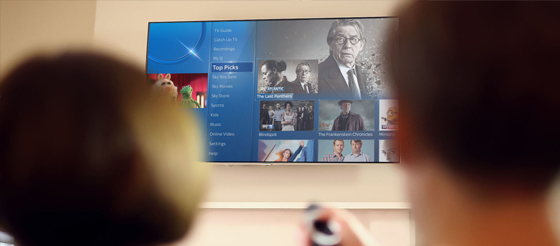
However, sport is not necessarily for all. With the launch of Sky Q, the opportunity for all members of the family to watch what they want, where they want, is an appealing prospect to many. Sky customers already watch 20 per cent of programmes on connected devices – Sky Q and its ‘fluid viewing’ will no doubt appeal to this group and begin to penetrate slowly the 11 million Sky subscribers in the UK.

For those not looking for a contract, there’s always the opportunity that a smart TV – in particular, a Freeview Play-enabled model – offers consumers. Viewing times for Rio 2016 will be unsociable and not necessarily feasible viewing for a wide audience, but catching up over breakfast via an app is an ideal way to keep up to date.

Fans want to see rather than read about those amazing feats that make a major sporting event, such as the Olympics, the spectacle it is, with an estimated 24.2m viewers in the UK and 3.6 billion globally. In 2012, there were 5,600 hours of footage, which aired globally, cross-platform and amassed the equivalent of 801m hours of watched media.

Similarly, the Euro 2012 tournament amassed an average global audience of 150m viewers per match, with 14.2m Brits watching the final.

It’s a fact that 47 per cent of broadband households have a smart TV in the UK and 93 per cent of smart TV owners connect their TVs to the internet (up from 78 per cent in 2013). Furthermore, 37 per cent of TV viewing time on smart TVs is spent watching on-demand content that is only going to grow, as by 2018 it is estimated that 87 per cent of all TVs sold will be smart. Streaming is now the norm and no longer a special feature.

On February 16, BBC Three, the first BBC digital channel, became an online-only channel, provoking a mixed reaction from fans. But is this surprising, when BBC iPlayer saw a 32 per cent year-on-year increase in users using a connected TV to access the service between December 21 and December 31 last year? This is a trend that is set to increase in popularity, making access to iPlayer no longer a luxury, but a necessity through the household TV.

For those avoiding the temptation of making a smart TV purchase or looking to update on a meagre budget, you can do so with a streaming device, such as Google Chromecast, allowing you to stream from your PC, Chromebook or tablet. This allows users to subscribe to Netflix, which now has almost five million recorded subscribers as of December 2015 and cast those box sets, movies, whatever directly to your TV without degrading the quality of picture or sound.

Other devices include the Amazon Fire TV stick and Now TV, with the option to pay for content, as almost 1.7 million people do already in the UK on both platforms. With 4K streaming available from Netflix and BT Sport averaging an extra £4 premium per month to standard HD streaming, competition is becoming fierce, with Amazon and YouTube streaming 4K content at no extra cost.

To some it may seem that content is currently limited, but it is expected to increase, as both studios and platforms commit to a broader 4K offering as an industry standard across streaming services and 4K Blu-ray in 2016.

It is estimated that in 2016 the global share of 4K TVs sold will be 23 per cent, up 35 per cent in the UK as Britons look to future-proof their viewing technology.

With 46 per cent of Brits streaming music, TV or video at least once a week, and online video accounting for 50 per cent of all mobile traffic, it’s no wonder that the popularity of streaming devices is also on the increase.

A UK study released in January identified that seven- to 16-year-olds spend an average of three hours online every day and 2.1 hours of that is watching TV, with 60 per cent watching TV using a device (phone, tablet, or laptop). Of those surveyed, 38 per cent stated that they did most of their viewing on demand.

For retail, there is a huge opportunity to upgrade customers who perhaps have relegated the old LCD to the play room and are looking to go bigger and smarter.

Streaming content is a growth industry and having the freedom to watch when you want is standard, not a luxury. Give customers what they want or haven’t realised they could achieve. Link in-store demos to wi-fi-enabled tablets or similar to bring the concept to life in-situ to complete the customer journey and boost sales.

Read more at: http://ertonline.co.uk/opinion/lets-go-surfin-now-everybodys-learning-how/

Tagged , , , , , , , , ,

A New Reality for Technology Brands

vr banner

Tech brands are by definition considered purchases. We consider innovation, functionality, compatibility, design, budget, and brand in equal proportion to reach an informed decision. Marketers are now very adept at targeting tech through branding and marketing in the same manner FMCG brands have done over the decades.

Our emotional attachment towards brands hasn’t changed, but what has are our perceived needs and desires, in which marketers have done an exceptional job in connecting consumers. This is seamlessly accomplished through ATL and into the customer journey from the point of purchase, whether it be an online, traditional retail, or omnichannel approach.

With luxury brands, keeping consumers engaged and invested throughout the customer experience will never change. Technology is just beginning to utilise this, but is in danger of relying too much on it as tech becomes commoditised — something that, by definition, should not happen with luxury brands. Take Burberry as a prime example who salvaged its brand from the brink of commodity, and is changing the fashion industry through innovative technology to appeal to today’s broader audience.

In recent months, virtual reality (VR) and augmented reality (AR) have begun to change the world of technology once again, introducing a new concept to a global audience. Marketers need to again find a way to excite consumers, much like technology marketers have done in the past. As a new category, largely alien to those outside the world of gaming, consumers need to see for themselves how engaging these new experiences and innovations are.

There are, however, worries that VR will draw people too far into the virtual world, much like social media has created FOMO or “fear of missing out.” Marketers need to supplement this excitement by fighting against a stigma that considers tech “unsociable.”

The reality is that, irrespective of budget, a younger audience’s interest in luxury brands is insignificant when searching for the latest technology from VR to AR (as introduced by Mark Zuckerberg) to gaming or social media. It’s about the experiences that these innovations offer to audiences, allowing tech to be adapted into the mainstream as we become hooked on running our energy, education, social life, and even the fridge and heating from one device. The brand that provides that device, irrespective of how, remains important to today’s consumer.

VR and AR brands know that to become mainstream, as PlayStation is cleverly attempting to do, they must lend their use to advertising and marketing. The challenge is immersing the consumer effectively into the VR and AR world, removing itself from any social or health concerns, by creating experiences that are controlled and appeal to a wide demographic. It’s a marketer’s challenge to realise how they can accomplish this. Of all the brands within the VR and AR category, Sony, Microsoft, HTC, and Oculus will come to market as true consumer propositions we can all purchase, but only a few will survive. The victors will pave the way through avoiding the marketing mistakes of others, establishing VR and AR as mainstream consumer categories that will perhaps shape how we interact and enjoy media in the future.

Read more at: http://www.brandingmagazine.com/2016/04/18/new-reality-technology-brands/

A Major Opportunity

beko machine banner

Unlike the CE category, which for many independent retailers has seen a decline in market share of 10 per cent for the first time since measurements began, the market share in major domestic appliances is positively buoyant.

The MDA market has increased by seven per cent over the past year, boosting the independent retailer’s share to around 20 per cent. This is thought to be helped by the growing built-in market, with increasing amounts of new-builds. And let’s not forget home improvement projects, which are also fuelling sales in this category.

This growing demand is beginning to make an impact on independent retailers, with MDAs now making up around 62 per cent of sales in 2015, up from 57 per cent in 2014.

Yet, there are areas in major appliances where indies are struggling compared with the market as a whole. One of these areas is American-style fridge-freezers, where they have a share of only 12 per cent compared with their share of cooling as a whole (19 per cent). This is perhaps because of space limitations when displaying larger models, but it is not to be dismissed as a source of increased revenue and important margin. However, these appliances are not necessarily to everyone’s tastes and, with our ever-decreasing new-build house sizes, are a limited market.

Irrespective of the purchase reason, distress or upgrade, key to selling premium brands and models is the ability to sell both the benefits presented by unique features. But not every purchase need be premium. Consumers may be purchasing a range to furnish a new kitchen and mix and match from the same brand across appliances to increase average sale value. Demonstrate to your customers how you have enabled them to stick to their budget or, better still, achieved perceived savings by purchasing more products than intended with the inclusion of some premium models.

The difference between a retailer selling premium goods and one selling mid-range products is the staff – how they communicate with shoppers – and also how consumers view the retailer itself. Understand customers’ perceived needs irrespective of whether it’s a distress or a considered purchase and find the right product for them. Careful questioning should enable them to identify premium product features that will appeal, and help the customer decide what is right for them. More often than not, customers will go for a premium model if sold correctly.

Consider your sales environment and its suitability to display and promote premium models. Does your showroom allow these products displayed in a manner that does them justice and creates desire to buy? With analysts predicting the total UK market for major domestic appliances to be worth £4.4 billion for 2015/16 and estimated to grow by 1.5 per cent year-on-year through to 2020-21, there is still scope for growth and opportunity.

As a business that focuses exclusively on CE and tech brands, Gekko is able to review consumer spending habits. Those in their 30s and 40s are purchasing the bulk of MDA products, decreasing significantly among those in their 50s. The lowest demographic is those in their 20s, who account for six per cent of the market.

With the MDA market squeezed, especially in crowded categories, it’s interesting to note that the average MDA spend is £328, increasing to over £400 in cooling products. This is driven higher by closing the gap on the premium market, where a Good, Better, Best strategy is applied across a brand. In such instances, we recorded that 64 per cent of purchases were from females at the top end “Best”, 55 per cent in “Better” and 57 per cent in “Good”. Interestingly males were sitting on the fence, with a highest score of 45 per cent buying mid-range “Better” and were not necessarily the influencers when selling premium MDA products.

Mid-range appliances can be the norm, but upselling to premium products should be the aim. With the right store staff, trained to sell in the right way, and the correct environment that reflects a premium proposition, high-end products are within easy reach for many of your sales.

Tagged , , , , , , ,

How brands are using virtual and augmented reality in the real world

zuckerbergvr banner

With both virtual reality and augmented reality being the headline grabbing attraction at MWC16, its appeal as a marketing tool to drive desire and innovation with any brand is potentially its immediate use, rather than the product itself.

With the exception of the brands who manufacture the products themselves, none use the technology for marketing purposes. Travel, hotel, and adventure clothing companies however are embracing it and seeing positive returns in some cases.

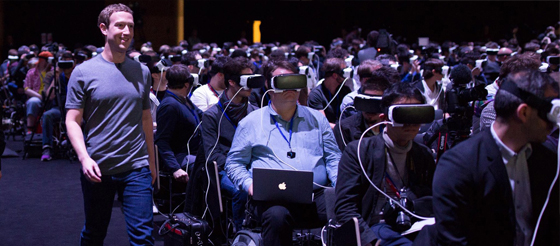
There are of course the odd examples, like Samsung rolling out Zuckerberg for the S7 launch and providing Gear VRs for all the delegates to use which created a media frenzy and a reaction to a photo which will be cemented in history for many years that provoked an odd sense of alarm. However I suspect Mr Zuckerberg was just enjoying the moment seeing several hundred unsuspecting journalists wearing his product, and relishing its third party marketing potential to bolster Facebook’s modest profits.

The clever driver here seems to be how all AR & VR brands have taken the opportunity to raise the profile of their products for their own gain, creating marketing opportunities through brand association, including more recently Coca Cola with Google cardboard and many others as they seek the next cool marketing tool.

Thomas Cook installed Samsung Gear VR headsets in 10 UK stores to let potential holiday makers see 360 degree views of sites in New York, Singapore, Egypt, Cyprus and Greece. Bookings of New York excursions increased by 190% as a result.

Marriott have used VR in a few ways, a 4D “teleporter” experience where users wore a VR headset whilst standing in a pod that would blow wind or splash water on them while they saw views of beaches etc. They have also offered Vroom Service, where guests can order a Gear VR with experiences from China etc. on it. Marriott have yet to see a return on investment.

Northface used Google Cardboard to make viewers feel like they were at the top of Yosemite National Park, achieving coverage in many large news publications.

Virgin Holidays used Google Cardboard in selected shops to show travellers things like a roller coaster at Disney land. Booking through those shops increased 60% YoY.

Now what each of these examples have in common is the experience and associating their brand, rather ironically in the case of a tour operator taking you on a VR journey without moving, with innovation where it would seem innovation is somewhat hard to come by. How else can you innovate a holiday or appeal beyond its practical use and realistic boundaries to capture the imagination and immerse consumers in your brand.

VR and AR without question are going to continue grabbing the tech headlines. And brands are right to align themselves with the technology to create awareness, hype and if possible innovation credentials for a brand, but is it in danger of becoming a bit hackneyed very soon? With VR in its infancy and the above examples being a handful of many, can a brand justify the investment and break through the noise to make it work to engage and drive sales of their products? I suspect brands’ realisation that VR can be used as sales portal is practical but as an advertising tool, it will face the same challenges content providers face with streaming to achieve cognitive brand recall and inevitable advert skipping VR users will demand.

Read more at: http://wallblog.co.uk/2016/03/03/how-brands-are-using-virtual-and-augmented-reality-in-the-real-world/

Social Science

social science banner

Youth is overrated, disposable income should be the focus. While we may be able to believe that the economy is on the up, life for many since 2009 has been tough.

The CE market took a dip and has been only truly in recovery since 2014. More than half of TVs sold are smart (57 per cent). And the market in 2016 looks set to decline further thanks to the use of streaming devices, the breadth of product on offer and platforms from which to stream content.

Innovations such as Freeview Play are therefore essential to assist in reinvigorating the TV industry to a broader and, more importantly, younger audience to increase not only a retailer’s average basket value (ABV), but also the opportunity to attract the younger audience that they desire.

First-time buyers shouldn’t be forgotten either as an opportunity to offer IoT packages that assist in furnishing their homes at a price point that benefits both. With 59 per cent of UK consumers stating they would benefit from having an IoT device in their home, the opportunity is clear for retailers and brands to sell the lifestyle benefits of their products.

Brand experience is not exclusive to older generations – a brand speaks uniquely to every individual and brands can, through arrogance and ignorance, be completely dismissed by a generation making way for new brands perceived by a younger audience as a bit more ‘edgy’ and innovative.

While social media usage in relation to shopping habits is still at a low level within the CE/tech sector, it is on the increase and becoming an increasingly important medium to generate interest in a brand and driving sales among a younger audience in retail.

A recent study on shopper ‘tribes’ revealed 13.3 per cent use social media to tell friends about products and brands that they have bought – a 15 per cent increase on 2014 – and 10.2 per cent share photos of tech and CE products with friends via text or social media, in particular Instagram, before they buy in order to garner opinions. Amazingly, this is a significant 66 per cent increase on the previous year’s study (2014) and demonstrates the increasing importance in merchandising and showcasing your products to optimum effect, so that they appeal to as wide an audience as possible.

Interestingly, almost one-in-10 people (9.6 per cent) use social media to tell friends about the gifts they have just bought. More importantly, such posts are a useful barometer and retailers should consider how people share such posts, especially if the product was bought or available from their store, within a store’s social media platforms.

Social Science fact


Social media is increasingly becoming more prevalent in shaping the decision-making process of considered items, those items we choose to save for and invest in. It is especially relevant with tech and CE purchasing and more so among a younger demographic who seek out new trends and brands.

So, in addition to managing social media, it’s also important to keep those window displays and your signage sharp, avoiding clutter, in order to encourage passers-by to want to come in and browse rather than have to venture in due to a distress purchases.

Visual impact is as important as the service you offer. Avoid handwritten signs and too many offers or price-downs. Keep it clean and seasonal to appeal to shoppers of all ages and in particular those on a budget, such as younger people.

In addition to national TV and print advertising campaigns, look around your region at which brands you stock that are advertising on outdoor media sites, such as bus stops, billboards, etc. There may be one opposite or round the corner from your store that appeals to a certain demographic. So link your display space to drive brand recall and increase the opportunity to invite those valuable browsers in-store and convert them into customers.

Premium pricing and messaging may only serve to deter a younger age group, so retailers should offer products and use messaging – in-store, on their website and on social media – that appeals to all pockets, ages and tastes.


Read more at: http://ertonline.co.uk/opinion/social-science/

Marc Bolland’s departure from M&S leaves behind an omnichannel legacy

m&s bolland banner

Marc Bolland’s announcement yesterday has certainly generated some negative press towards the departing CEO of a UK institution that remains one of the country’s biggest and diverse retailers. With many offering “sage” advice to the perceived problems which contributed to a dip in the share price following a full day’s trading, let’s not forget that where other big retailers have spectacularly failed over the last six years, Mr Bolland and the M&S team haven’t done so bad.

Whilst GM (General Merchandise) sales may be down 5.8% in the last quarter and across the year, Mr Bolland did what he set out to achieve six years ago; to a save the retailer which had no digital strategy.

This included three core objectives: food, infrastructure and online presence for the retailer. Each and every objective has been completed and exceeded with M&S food up 3.7% despite not being a grocer in the traditional sense or having an online home delivery food service which helps to bolster trading.

The infrastructure has avoided any embarrassing PR disasters, unlike many competitors, by maintaining adequate stock of core lines and delivery timescales, but more importantly it’s the M&S online presence, managed by Bolland appointee Laura Wade-Grey, that the exiting CEO should be proud of and praised for.

The omnichannel experience is exemplified with click and collect accounting for an impressive 62% of online orders, revealed by Bolland himself on the BBC Radio 4 Today Programme, a statistic which is far higher than many rivals. It accounted for only 17.7% of the industry’s orders in 2014 and is forecasted to rise by 20% in 2015, far below what M&S has managed to actually achieve in 2015.

M&S has successfully created an omnichannel experience which has embraced a digital platform as not merely an add on, but a standalone experience which lends itself neatly to the M&S customer profile, predicted to be an older customer, to convert them into a satisfied online shopper.

This was perhaps facilitated by avoiding the same levy to customers as main rival John Lewis implemented in 2015, adding a £2 click-and-collect charge on purchases costing less than £30, with Tesco recently following the same course. Many users have complained about the change, and let’s also not ignore that there were a few issues surrounding stability and data protection.

However it can’t be ignored that as an e-commerce site which is easy to navigate and use across any device, M&S has created a true omnichannel experience. Offering a consistent brand identity for consumers and a digital platform which works, sales were up 20.9% over the festive period and served to drive footfall into traditional retail, no doubt to the benefit of other retailers and UK plc.


Read more at: http://wallblog.co.uk/2016/01/08/marc-bollands-departure-from-ms-leaves-behind-an-omnichannel-legacy/

Tagged , , , , , ,