
Tag Archives: money

Five expert Black Friday tips and warnings around finding the best deals

With Black Friday and Cyber Monday comes the chance for consumers to land a bargain. But along with so many reductions in product prices come just as many warnings that all is not necessarily what it seems.

Increasingly, buyers are being urged to double check before they buy – both for their own needs and their own security.

There’s also a wider conversation around affordability and people spending what they can reasonably pay back, if they are using credit cards or buy now pay later deals, to ensure they don’t get trapped in a new year cycle of debt.

With that in mind, here are five tips and warnings from experts around what to do – and not do – as Black Friday deals crop up.

Make sure you really want that deal

Buyer’s remorse: when you regret that impulse purchase soon after the money has left your account.

Research from TrustPilot suggests around £5bn in unplanned impulse purchases will be made by British buyers this Black Friday weekend, after one in three did so last year with an average spend of more than £250 each.

And yet, a quarter of those are predicted to cause buyer’s regret – totalling £1.27bn wasted.

That includes items buyers didn’t need, which didn’t match their expectations or was deemed to be a waste of money. Make sure you know what you want beforehand and stick to that list where possible.

Extensions are your friend for an added bonus

It’s not just about not spending when you don’t need to – it’s about using tools to maximise the purchases you do make.

Using cashback sites like TopCashback and Quidco is an underrated way to make your money go further during Black Friday and beyond, says The Independent’s consumer writer Molly Greeves.

“These websites essentially pay you to buy products through them – for example, when you shop on Boots by clicking through the TopCashback website, you can currently get 20 per cent of what you spend credited back to you,” she explains.

“Once you’ve signed up to TopCashback or Quidco, you can download their browser extensions, which makes the process of earning cashback virtually effortless. Then, when you shop online, you’ll see a pop-up letting you know when you can earn cashback. Click through and the cashback should be credited to your account – easy as that.”

But should is the key word here, Greeves cautions.

“Try to think of cashback as a bonus rather than a guarantee, as sometimes tracking problems can prevent your money from being credited.”

Beware the ‘fake deal’

Most online shoppers will know by now: what says “reduced” isn’t necessarily the case.

Websites have to abide by rules on what most recent prices were but if the higher price was only there for a couple of months before being reduced back down to the previous level, it’s not a particularly great deal.

To get around that, shoppers can use Google’s price history function to show what are effectively fake deals, says search specialist Andrew Witts from Studio 36 Digital.

The hidden Price History tool is one of the easiest ways to spot fake Black Friday deals. You search for a product, click on the Shopping tab, select the item and look down the page at Price History. It can instantly show whether a price has genuinely dropped, or if the retailer did the aforementioned prior increase.

“Fake sales are everywhere. The price history tool is the fastest way to expose them,” says Witts.

You can also see similar features in the Microsoft Edge browser – click the three dots in the top right corner when you’re on a product page, go to ‘more tools’ and hit the ‘shopping’ option.

Double check emails for scams

One now which is easy to get caught out with if you’re doing lots of shopping, or if multiple people shop on the same account.

Fraudsters are “using AI to spin thousands of hyper-personalised phishing scams,” says Jonathan Frost, of banking safety firm BioCatch.

These can include “fake ads, extreme discounts, shipping alerts and refund notices that look indistinguishable from the real thing” he adds.

Take an extra minute to ensure anything you’re about to click on is from a legitimate site, is something you know you’ve ordered and paid for and isn’t just a blind sell to point you to something you wouldn’t previously have been looking for.

Last-minute shopping could see you miss out

Now the other side of the “don’t act too quickly” argument – it’s well established that some prices do indeed go up after Black Friday.

Last-minute Christmas shopping can see buyers pay prices up to 18 per cent higher, suggests recent research by customer agency Gekko – at least when it comes to some electronics.

However, the same research showed that discounts for things like air fryers were actually cheaper before Black Friday – which simply highlights the importance of having your list pre-prepared, keeping an eye on the products you’re keen on and getting them when you’re happy with the price, rather than reacting to highlighted discounts and making your purchases based on them.

To read the full published article by The Independent, click here
Tagged , , , , , , , , , , ,

Are retailers wasting money with their big budget Christmas TV campaigns?

Image

When your local supermarket, department store or specialist retailer breaks a brand new above-the-line ad in November, you know the silly season is upon us. With so much revenue and profit generated in this quarter you can understand why the stakes are high. Ads increase exponentially in prime time slots to lure us and retailers live off the hope that the shopping public will spend their hard earned cash through their cash registers. Production values go up, a memorable ditty is sung and a plethora of celebrity smothers the campaign, but do retailers really need to spend so much on the celebrity endorsement? As a marketer, I fully embrace the necessity of advertising and I understand the value in it. I agree that prime time advertising slots are a must if you want to make an impact, as are production values, but based on the criticism lauded on the lacklustre impact Marks & Spencer’s “Leading Ladies” campaign, can retailers justify the expense?

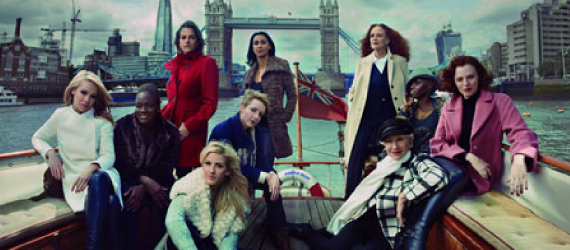
In August Annie Leibovitz shot and featured 10 leading ladies from Oscar winning actress Helen Mirren and artist Tracey Emin to drive sales of ladies fashion (pictured). Did the campaign need to be so “high budget”? Beautiful and well produced was the advert, but I can’t help feel that the garments the ladies were selling were somewhat lost in the foray of the campaign. It was not great fashion and to be honest I doubt many women felt drawn to the concept that these leading ladies really dress in M&S, felt comfortable in what they were told to wear or really engaged with consumers to convince that M&S was back on trend. After all, they’re usually sporting the latest designer labels down the red carpet. With Marks & Spencer posting its ninth consecutive quarter of falling clothing sales, the results certainly don’t live up to the celeb hype. Therefore, you’d believe a rethink was in order for Christmas Peak but not so. Rosie Huntingdon Whitely, David Gandy and another Oscar winner Helena Bonham Carter feature but I reserve my judgment on whether this will truly resonate with the average M&S shopper this time round.

From Waitrose to Debenhams to John Lewis with its just released Lily Allen advert singing the Keane song Somewhere Only We Know, retailers will spend according to market analyst Nielsen, an estimated £390m on advertising over the last three months of 2013. That’s £128m more than one retailer M&S reported in profit for the first 6 months trading. But then John Lewis reported record sales last Christmas, so ads can work but you need the quality products to help close the loop.

Brands in crowded categories may require celebrity endorsement to drive advocacy, however some do it better than others. Do retailers really need to drive our emotion to shop in their stores with the glamour of celebrity wearing, eating or commenting on the quality, style and taste of what are really just run of the mill products? What’s more, how much of the campaign is devoted to the celebrity? I can’t imagine that the aforementioned Oscar winning actresses are inexpensive; on the contrary, they are eating into an already squeezed margin. And do celebrities themselves truly embrace the brand enough to tap into its target audience? I doubt the M&S leading ladies of the summer are donning M&S’ A/W collection, even when they pop out for a pint of milk.

Some of the heavyweights have ditched celebrities this Christmas. Asda has slashed investment in its Christmas advertising campaign and blasted rivals’ “celebrity filled” ads. The grocer has cut its budget by 10% and put value at the heart of its festive messaging.  It has also been announced that the Tesco ad will not be celebrity-focused either. We shall see if they turn their savings this Christmas into profit.

Brands are increasingly defined by experiences, so the use of celebrities has to perpetuate the story and allow consumers to visualise the products as part of their lives. Celebrity ads have become ubiquitous. Marketers often scrap over celebrities for a chance to use their name. The need for standout means marketers are exploring new approaches to maximise the celebrity’s appeal. Some work, others fail, some are unproven. Regardless of approach, the ad has to be credible and authentic.

For brands, often such deals give advertisers a direct line to celebrities’ fan followings via their personal Twitter accounts and Facebook pages. However, the true asset is a star’s relevance, buying a marketer the kind of buzzy exposure that only a Hollywood headliner can bring. The choice has to be right. So why tech brands have enrolled the world’s biggest stars to endorse cutting-edge tech products is anyone’s guess. Kevin Bacon for EE, Robert Downey Jr for HTC and David Beckham for Motorola back in the day; I really can’t see the connections here – please tell me if I’m wrong. Brand recall is vital but let’s not forget the goal here, revenue, and whilst Beyoncé may drive me towards buying Pepsi, do I care which retailer I purchase it in?

No one will argue more than me that ATL campaigns are crucial. But I shall enjoy critiquing from my sofa the raft of celebrity appearances and voiceovers, which will grace my TV screen over the coming months. Perhaps I will be congratulating my choice in viewing via Freeview+ to allow me to pre-record and fast forward past the ads to my favourite Christmas special. Then again I may just hold out for John Lewis’ much lauded Disney –inspired masterpiece.

Read the full article at http://wallblog.co.uk/2013/11/12/are-retailers-wasting-money-with-their-big-budget-christmas-tv-campaigns/

Daniel Todaro is Managing Director at field marketing agency Gekko.

Tagged , , , , , ,