Author Archives: Gekko Marketing

Rajar Q2 2013: Industry reaction

Image

Last week Rajar announced that 91% of the UK population – 48.3 million people aged 15+ – tuned in to their selected radio stations in the second quarter of 2013, up by approximately 1.5 million adults on Q2 2012. The total average number of weekly hours listened to radio for this quarter is 1.03 billion.

Daniel Todaro of Field Marketing agency Gekko comments:

The latest Rajar figures are incredibly significant for we have reached a moment many never thought would arrive: the official ‘tipping point’ for digital radio. Moreso, we’ve reached it nearly 18 months earlier than Ofcom’s estimates which predicted November 2014 as the moment the UK would pass the 50% threshold.

With radio listening figures absolutely booming, no doubt this will prove the catalyst for the government to push ahead with the digital switchover – which this week also published a new report containing very strong hints the foundations are being laid for such a move already.

However, the steady upward trajectory of digital listening – or the consumption of radio via digital formats – should pique the interests of retailers, particularly with thoughts turning to the festive season in the not too distant future.

28 million people now listen to radio digitally – and increase of 16% YoY. If you couple that with the increase in listeners overall (91% of the population), we’re seeing not just a transition but an actual growth in popularity. Thus, particularly as consumers discover new stations through different mediums (TV, in-car, mobile, desktop), there’s a distinct opportunity for retailers to capitalise on this and drive product sales on the shop floor.

Read the full article at: http://mediatel.co.uk/newsline/2013/08/01/rajar-q2-2013-industry-reaction/

Freeview to unveil Great British Tea Party roadshow campaign with Gekko

Image

Freeview will be inviting shoppers to experience the Great British Tea Party this summer with its new roadshow campaign, which aims to promote the value of the service.
 
Freeview will look to celebrate the British summer in its roadshow, which has been conceived, designed and executed by Gekko, and is set to feature a green astro-turf area complete with deck chairs, picket fencing and a pop-up marquee serving refreshments.
 
Daniel Todaro, managing director of Gekko, said: “With the ‘empty’ summer of 2013 upon us, without Jubilee celebrations or Olympics Games to capture the excitement of the nation, we were keen to create a piece of experiential activity that really brought to life the best of British and what better way to celebrate the heat wave than with a proper British summer fete? We’re always delighted to work alongside Freeview and create something that will really surprise and delight consumers.”
 
There will also be Freeview ambassadors on hand to explain Freeview, as well as giving shoppers the chance to take part in a special prize draw to win a six month subscription to Netflix.
 
James Chambers, retail marketing manager for Freeview, added: “We are really looking forward to getting this show on the road this summer. With over 95 per cent of the most-watched TV programmes available subscription-free, we will be letting people know that they could be making considerable savings in the long-run by choosing an alternative to pay-TV. Value has always been really important to us and we have worked with Gekko to create a roadshow that excites, educates and engages the British public.”
 
The roadshow, which is set to take place throughout August, will be coupled with above the line activity.

Read more at http://www.thedrum.com/news/2013/07/26/freeview-unveil-great-british-tea-party-roadshow-campaign-gekko#LosTOrEgwOGVA24R.99

Freeview calls on Gekko for experiential roadshow

Image
Digital television provider Freeview has enlisted field marketing agency Gekko to produce its new Great British tea party-themed roadshow.

The team will recreate a summer fete at four UK shopping centres, comprising of a green Astro Turf area with deck chairs, picket fencing and a pop-up marquee serving refreshments.

The roadshow will include four-day stops at Westfield London Shepherds Bush (1-4 August); Birmingham Rotunda Bullring (8-11 August); Liverpool One E5 (15-18 August); and Brighton Jubilee Square (23-26 August).

Shoppers will be able to relax in the sun, enjoy a cup of tea and cake and watch some clips of the programmes on offer from Freeview on a giant screen.

Brand ambassadors will also be on hand to demonstrate Freeview, including its smart functionality.

James Chambers, retail marketing manager at Freeview, said: “We are really looking forward to getting this show on the road this summer. Value has always been really important to us and we have worked with Gekko to create a roadshow that excites, educates and engages the British public.”

Daniel Todaro, managing director of Gekko, added: “With the ‘empty’ summer of 2013 upon us, without Jubilee celebrations or Olympics Games to capture the excitement of the nation, we were keen to create a piece of experiential activity that really brought to life the best of British and what better way to celebrate the heat wave than with a proper British summer fete? We’re always delighted to work alongside Freeview and create something that will really surprise and delight consumers.”

London Loves Gekko

Image

Field Marketing agency Gekko are delighted to have been highly commended at the inaugural London loves Excellence awards.

 At the inaugural London loves Excellence awards, held at the Marriot Grosvenor Square on June 25th, Gekko’s name was the first out of the hat with a ‘Highly Commended’ recognition in the Business & Financial Services category.  Mixing with some big brands such as Pret a Manger,  Zoopla and Addidson Lee, Gekko are thrilled to have received recognition from a panel of judges that included influential figures in the business community including Willie Walsh, Theo Paphitis and Karen Brady.

The LondonlovesExcellence Awards are presented by www.LondonlovesBusiness.com and London Chamber of Commerce & Industry and are billed as London’s most sought-after business awards. These awards are unique for two reasons: first, they are led by one of industry’s most respected figures, Willie Walsh, Chief Executive of International Airlines Group and President of the London Chamber of Commerce. And second, together with Willie Walsh, they will be judged by arguably the best line-up of business figures, entrepreneurs and public figures assembled in decades.

Full details from the evening can be found at http://www.londonlovesbusiness.com/business-news/business/the-winners-of-the-london-loves-exellence-awards-2013/5816.article and http://www.londonlovesexcellence.com/winners/

Is DAB still the future for radio? No, it’s the present – and history is repeating itself

Image

It seems a long time since 2009, when Lord Carter’s Digital Britain report proposed a target of 2015 for phasing out the radio analogue transmission network. Disappointingly, this was dropped following a back-lash from sections of the industry in the Digital Economy Bill later that year. For a long time, resistance has varied from anger to plain apathy; to the point where many questioned whether DAB would ever achieve ubiquitous adoption before it was usurped by other technology.

Last week, the first digital radio switchover pilot concluded; a six week project in Bath, overseen by the DCMS. With 237 households switched to DAB, a staggering 92 per cent were highly satisfied, 80 per cent preferred it to analogue and 86 per cent would recommend it to another person. So what has changed?

The parallels that can be drawn between the current digital radio switchover campaign and the Digital TV version at the turn of the century are eerily close. It’s difficult now to even fathom a time without HD TV, let a time when analogue was the norm, but the sentiment at the time was identical. In fact, there was a digital TV household research pilot conducted 10 years ago in Bolton, prior to digital TV switchover, just like in Bath, with similar results.

What’s most fascinating about the pilot scheme is that when asked about the event of a radio switchover, respondents said they needed to know more about costs and how to convert their car. The respondents also recommended that Government should provide information about digital radio and the switchover, similar to communications they had seen about the digital TV switchover.

It appears that Ford Ennals has worked his magic for the second time, and therein lies the key to a successful switch: education and collaboration.

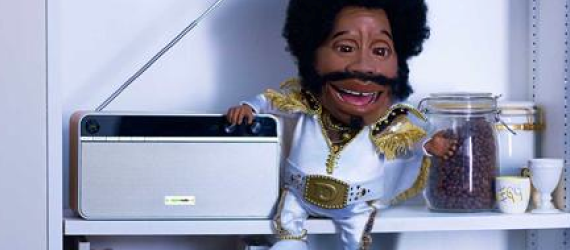
Momentum has slowly been built on multiple fronts in order to push the cause forward. Digital mascot, D Love (pictured) was introduced at the start of the year and we’re now entering the second phase of ATL activity, featuring specialised targeted communications linked to calendar hooks such as Fathers Day and the summer holidays to further build positive sentiment amongst listeners. In addition, Ennals has scored one major coup after another by recruiting Ford, Volkswagen, BMW, Audi, Mini and now Volvo to all fit DAB radios as standard.

Major media owners including Global Radio, the BBC, Bauer Media and Absolute Radio have all have come out in clear, strong support of DAB radio too. With a new TV campaign imminent and digital radio guides also being supplied to retailers such as John Lewis, the official switchover is legitimately imminent.

As called for by the Bath pilot participants, the next step is teams of trained specialists deployed to offer in-store advice and demonstrations, experts manning a call centre and a full national marketing campaign to ensure the public fully understand and fully embrace the process, much like the TV switchover before them.

Change can be a difficult proposition, particularly when the initial perception is that the benefits do not justify the inconvenience. But when managed properly, utilising effective marketing techniques to make that transition as agreeable as possible, anything can be achieved.

Daniel Todaro is managing director of Gekko.

Read the full article at: http://wallblog.co.uk/2013/06/21/is-dab-still-the-future-for-radio-no-its-the-present-and-history-is-repeating-itself/#ixzz2XQ0MbAKm

Next stop: Wonga Circus? The argument against branding Tube stations

tubeblog

This week it emerged that London Underground stations may be allowed corporate sponsors under plans being considered at City Hall. The money-spinning idea, which some predict could raise £136m a year, would see landmark stations renamed and Tube lines given a corporate makeover, paving the way for Burberry by Bond Street, Virgin Euston and the Vodafone Line.

Here brand expert Daniel Todaro presents the case against branding the Tube…

Against – Daniel Todaro, MD, Gekko
Brand sponsorship is one thing, but forgive me if I’m wrong, isn’t the premise of naming a station based upon its location?The idea has been proposed and rejected before for a number of reasons, so it’s difficult to see why anything would have changed. As has been rightly pointed out, I’m sure this map is well-intentioned, but a Tube map is to show people where a station is and how to get to their destination. Can you imagine how obstructive this would be to tourists who are unlikely to speak English fluently? Our trains struggle to run smoothly at the best of times, thus I imagine it would not be wise to discourage tourism further.Some may argue it opens up an interesting debate, but I feel it offers the opportunity to open the corporate floodgates. TfL has insisted they’re against names being sold off “to anyone waving a cheque book and offering a bad pun”. However, selling naming rights aggressively across the public transport network would raise an estimated £136m according to the report. This would pay for just a one-year price freeze, not even a discount for London commuters, just a temporary measure against price inflation.

So while in the initial stages TfL may maintain integrity with brand sponsorship, what happens after the initial three year sponsorship deals finish? The station name changes again (or reverts) causing more confusion, and perhaps a bidding war emerges. Perhaps then we see a lucrative bid from Wonga (which has already sponsored free travel) TfL are unable to turn down and before you know it, we’re travelling to Wonga Circus for a spot of retail therapy.

Back in 2011, winemaker Oxford Landing very nearly exploited London Underground’s need for cash by offering a reported £10m for a station takeover for a minimum of three months. It may sound unbelievable to imagine Virgin Euston, but the only thing that prevented a realisation of Oxford Landing was a niggle over intellectual property law regarding the famous roundels.

The cost of such a rebrand would already be substantial with the need to change media, signage, leaflets, and of course the iconic map. But the greatest impact would be felt through London losing its iconic location identities to brands. Yes we’re in a recession, but has the greatest capital city on the planet really come to this?

Instead of seeking to profit from cultural and historical landmarks, and outraging the London public whilst doing so, brands should be focusing on charity and wider social responsibility. That’s how they can give back to the community, rather than compromising the capital’s heritage.

It’s not the first time we’ve seen this argument crop up and I’m sure it won’t be the last. Admittedly it’s not as absurd as brands sponsoring police uniforms, but like that issue, it can become a very slippery slope.

Read the full article at: http://www.thedrum.com/opinion/2013/06/04/next-stop-wonga-circus-arguments-and-against-branding-tube-stations

Rajar: industry reaction

Image

Last week RAJAR announced that 90% of the UK adult (15+) population – 47.3 million people – tuned in to their selected radio stations in the first quarter of 2013, up by approximately 608,000 on Q1 2012, though the total number of hours listened to radio (1.03 billion) was down marginally, -3% year on year.

Daniel Todaro of Field Marketing agency Gekko comments:

Highly impressive figures last week to see listeners are going to digital in record numbers. DAB sets continue to fly off the shelves and we’re not too far away from seeing over 50% of the UK own a DAB set. It seems a far cry now from the negativity that initially surrounded a potential digital radio switch-over.

However, the move towards that switch-over remains a marathon, not a sprint, and there’s lots that can be done to build upon the great foundations laid by the accomplished Digital Radio UK ATL campaign that’s been capturing the nation’s imagination for the past few months; one that’s already been shortlisted for an Arqiva Award.

Change is still a difficult thing to accomplish, but the success of the Digital TV switch-over should give plenty of cause for confidence and optimism that the public can embrace change if handled with sensitivity and correctly guided at a pace they’re comfortable.

A next step for Digital Radio UK would be to support the ATL investment with experiential activity in order to create a real seamless, multichannel experience to drive that educative and awareness-raising process.

Particularly with a summer devoid of the types of events we saw in 2012, there’s vast opportunity for brands to fill that void with exciting and engaging shopping centre activity to really surprise and delight consumers who may previously have viewed digital radio with trepidation.

By pairing up with the stations proving popular, such as the Absolute Radio Network’s burgeoning brands, a clear message of the great entertainment on offer can really be driven home.

With BMW also now fitting DAB as standard in their cars, we’re well on our way towards a fully digital future.

Seize every opportunity

Image
Daniel Todaro, managing director of field marketing agency Gekko, warns that in an ‘empty’ year, without World Cup or Olympics-style events to stimulate sales, retailers and manufacturers must make the most of opportunities such as Mother’s Day and Father’s Day and offer potential customers a compelling in-store experience

Father’s Day, Mother’s Day, Bank Holidays, Back to School and Christmas are all key occasions for electrical retailers, as consumers hit the high street with the specific intention of buying something.

Traditionally, each year we’ll see the usual raft of short and sharp sales promotions around these events, designed to grab a few impulsive shoppers, with the main investment going towards a big summer campaign.

However, while retailers have been spoilt in recent times, able to piggyback off the World Cup, Olympics, Jubilee and Royal Wedding, 2013 offers next to nothing in comparison to get consumers excited. Therefore, this year it’s imperative that electrical stores make the most of those annual calendar hooks. The ‘empty’ summer of 2013 won’t give retailers the same sales drive, so they must capitalise elsewhere to create a special emphasis to drive sales.

Father’s Day in particular is looming and represents an excellent chance for electrical retailers to push the ‘dad’ market. Long gone are the days when a pair of socks or slippers would cut it, now it’s all about something he can use and enjoy like an iPod or Kindle Fire. A targeted marketing campaign with a timely promotion can provide the lure to get people through the door, while in-store staff can talk customers through the top products and drive the sales. Likewise, Back to School represents another key trading period with compulsory requirements for a demographic that is growing by the year.

The continuing recession in ‘empty’ 2013 means that naturally consumers will cut back and put off spending. Therefore, the lure of promotions around calendar hooks can encourage people to splash out on bigger-ticket items and white goods. Having an experienced and knowledgeable brand representative makes all the difference for the consumer. They not only help to find the right product to meet the individuals needs, but also improve customer service by supplying expert advice, driving standout within crowded categories.

It is now more usual to see modern demonstration in-store focused on ROI [return on investment] and ensuring a sales upswing from the activity rather than simply brand recognition. Furthermore, this brand experience in-store is often driven by staff trained to sell ancillary products, rather than a simple desire to shift the big-ticket items alone. Information and add-ons at the point of sale will also help to boost the average basket value, as customers look to purchase extras such as batteries and cases for products. In-store activity provides the opportunity to home in on an occasion like Father’s Day and make for a much more immersive and successful store experience for the shopper.

Both multiples and independents naturally stock more than just one brand alone and will be primarily concerned with providing service and impartial advice. With products often stocked in hundreds of locations, brands need to ensure the multiples charged with selling their wares are doing them justice. Knowing what the latest situation is out in the channel in real time is even more relevant and valuable on peak occasions such as Father’s Day.

Meanwhile, the slightest slip in standards around stock levels and availability can result in a lost sale within seconds. Likewise, the ability to respond to such issues and prevent them from arising is a big advantage both in terms of short-term sales and the overarching brand experience.

Ultimately, the customer journey remains paramount and its importance for brands can’t be ignored, especially when a promotion is linked to above-the-line comms activity. From first sight of the advertising campaign, that journey must be a seamless and consistent one. Premium brands in particular need to adopt a through-the-line approach to ensure sales are closed successfully at the point of purchase. The more sophisticated a product and the higher the value, the more vital it is that a representative is on hand to emphasise the full capabilities and value of the product. Without impartial guidance, cold feet could result in a consumer resorting back to a purchase decision based solely on the cheapest price.

With the continuing threat of customers using electrical stores as showrooms before they go online to buy, brands need to be savvy. Change customer’s minds about buying a gift online and offer them an experience and after-care that will get take them through to the tills rather than Amazon’s checkout. Within this year where opportunity to celebrate and push sales is sparse, electrical retailers must pull out all the stops.

Read the full article at: http://ertonline.co.uk/default.aspx.locid-05nnew3jv.Lang-EN.htm

Saving the high street is not Mary Portas’s job

Image

Here’s an idea: why don’t corporations fill those empty retail units with their own catalogue of brands, whilst also giving opportunities to ambitious start-ups?

Mary Portas has been practically unavoidable in the media these past couple of weeks, which can only mean one thing: she has a new TV show to promote!

Actually, she has two.

Portas kicked off the “charm” offensive by calling out none other than Sir Terry Leahy for “talking crap” in the Radio Times. Leahy had suggested that the disappearance of family butchers from the high streets is a sign of progress and “the best way of ensuring that the better organisations come through”.

Now, Leahy’s fundamentally wrong to suggest that the disappearance of local butchers is a good thing. Particularly in the FMCG sector, small independent retailers are crucial to provide not just choice, but specialist expertise too (and a more pleasant shopping experience). A visit to the local butchers entails more than the action of purchasing a leg of beef. It’s the social aspect, the expertise and the positive feeling that comes through engaging with the local community. Most of all, it is fun and fulfilling (and much less likely to contain traces of horse).

But it’s equally frustrating to see Portas placing herself as the supposed saviour of the high street. For such an “in the know” expert, I’d love to hear why Portas doesn’t place her own wares on the high street, as opposed to selling it through department stores.

Surely with her unrivalled expertise, it would be a runaway success? But let’s be honest, while Leahy may be looking at a hefty bill for the ill-fated Fresh and Easy venture, considering he turned Tesco into the UK’s biggest retailer, and that he’s the one with the knighthood, I think I’d trust him over Portas on retail execution.

What is abundantly clear to me is that Portas is already preparing her exit strategy from this doomed initiative (an over 65’s employment agency is already lined up for her new show). A second FOI request has revealed the extent to which the Portas Pilots have fallen off the government’s agenda, and sadly the British high street continues to struggle on. According to one recent survey, the retail chains shut an average of 20 shops a day last year alone.

Initiatives are needed that truly bring life back to dead commercial business districts, so here’s an idea: why not get brands to sponsor the high street? It’s about time corporations demonstrated a bit of social responsibility and gave back to the communities from which they profit so ostensibly.

Take Unilever’s vast portfolio of brands: Marmite, Walls, Lynx, Pot Noodle, Dove to name a few. Why couldn’t they take over empty retail units utilising these brands, and then also offer space to small business and students, in order to showcase and sell their products and talents?

The high street is so much more than the point of purchase and it’s so incredibly vital not just to our economy, but our society, too. What better way to engage a community by injecting some belief, inspiration and positive energy to our failing economy?

Daniel Todaro is MD of field marketing agency Gekko.

Read the full article at: http://realbusiness.co.uk/p/19578